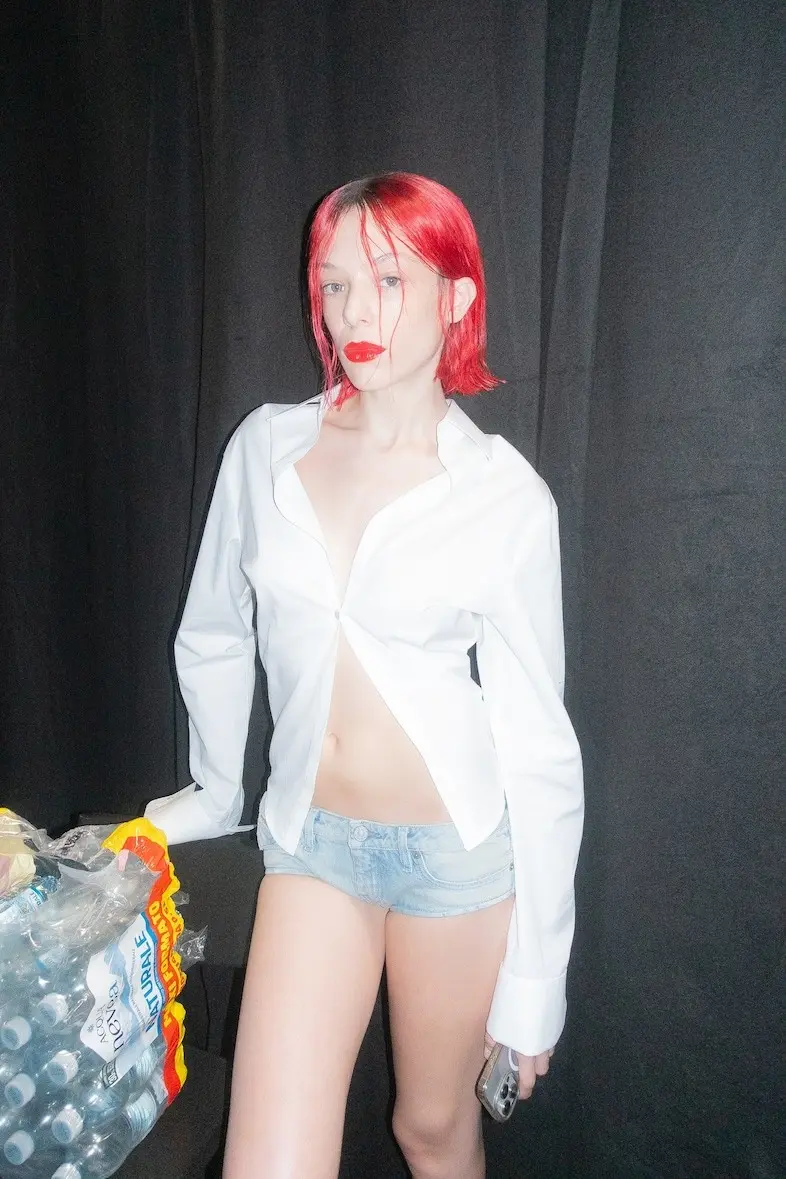
Executive Overview
In the fast-paced, high-stakes ecosystem of modern luxury fashion, few creative directors have managed to completely redefine a legacy brand quite as profoundly as Glenn Martens achieved at Diesel. Over a transformative five-year tenure, the Belgian designer didn’t just update wardrobes; he executed a masterclass in cultural reinvention. He took an Italian denim pioneer that had drifted to the fringes of contemporary relevance and thrust it back into the white-hot center of the global style conversation.
Therefore, when the house announced last week that Martens would officially step down from his post as creative director following his upcoming Spring/Summer 2027 collection, it marked the conclusion of a monumental chapter in contemporary fashion history.
True to form, Martens refused to bow out quietly. Rejecting the traditional, solemn lap of honor expected of departing luxury designers, he orchestrated a theatrical swan song that married the house’s avant-garde approach to materials with its signature, uninhibited ethos of sex positivity. Staged before an electrified crowd of industry insiders, celebrities, and global press, the show was a multi-sensory spectacle. It featured masterclasses in trompe-l’œil leatherworking, expert fabric manipulation, and—in a coup de théâtre executed by the French choreography collective (LA)HORDE—a sprawling, immersive display of public intimacy that blurred the lines between runway and revelry.
This final collection was a definitive encapsulation of the Martens playbook: disruptive, hyper-textured, deeply tactile, and unapologetically hedonistic. As the fashion world begins to look toward an uncertain future for the brand, this comprehensive analysis examines the anatomy of Martens’ final show, the technical brilliance of the garments, the legacy of his sex-positive operational strategy, and the road ahead for Diesel.
Detailed Chronology: Anatomy of a Final Show
The atmosphere inside the venue was thick with anticipation long before the first beat of the bass dropped. Guests arriving at the show space immediately sensed that this would be no ordinary retrospective. Martens, known for breaking the fourth wall between spectator and spectacle, had engineered an environment where the audience was not merely watching the clothes—they were entirely enveloped in the narrative.
The Sartorial Prelude: Denim, Leather, and Trompe-l’œil
Long before the performative provocations began, the collection itself spoke volumes about Martens’ mastery of craft. Opening the sequence with a rigorous exploration of Diesel’s foundational pillars—denim and leather—the designer demonstrated why his technical prowess has earned him the adoration of critics and peers alike.
The runway debut featured a standout leather vest, meticulously topstitched with stark white contrast thread, layered expertly over a distressed, ribbed knit jumper. The garments bore the hallmarks of Martens’ signature deconstructionism: jagged, frayed edges around the cuffs and necklines that lent an aggressive, raw edge to sophisticated silhouettes. The leather palette transitioned from buttery, decadent creams to rich, weathered browns that looked as though they had weathered decades of hard wear.
Perhaps most emblematic of Martens’ trompe-l’œil wizardry were a series of trousers that appeared, at first and even second glance, to be classic, heavy-duty denim. Upon closer inspection—and indeed, upon touching the garments—they were revealed to be ultra-supple leather, meticulously lasered using advanced industrial techniques to replicate the exact grain, fade, and texture of worn-in jeans.
Throughout the presentation, the ribbed jumpers with their distinctive jagged necklines recurred as a unifying motif, paired with outerwear featuring trompe-l’œil shearling effects on coats and jackets. It was a masterclass in material subversion, proving that Martens could manipulate heavy-duty fabrics to feel weightless, fluid, and fiercely modern.
The Crescendo: Performative Intercourse and Auditory Hedonism
As the final phase of the runway walk commenced, the show underwent a seismic shift from traditional fashion presentation to high-art performance. The boundaries of the catwalk dissolved entirely, driven by a series of choreographed interventions devised in collaboration with the renowned French choreography collective (LA)HORDE.
Models planted cunningly throughout the tiered spectator seating suddenly shifted from passive observers to active participants. Beginning in pairs and quickly escalating into trios and larger groups, the Diesel-clad performers began making out with an intense, cinematic fervor. This was not a subtle peck on the cheek; it was a full-throated, uninhibited display of passion that rippled through the audience.
Simultaneously, the venue’s sound system began pumping out a booming auditory landscape punctuated by loud, exaggerated moans and heavy breathing. The juxtaposition of high-fashion garments with raw, unfiltered carnality created an electric, slightly disorienting tension. It was a triumphant, sexed-up celebration of Martens’ entire five-year crusade at Diesel—a final, roaring testament to the brand’s sex-positive identity under his stewardship.
Supporting Context & Metrics: The Martens Effect on Diesel
To fully understand the weight of Martens’ departure, one must look closely at the quantitative and cultural metrics that defined his tenure. When OTB Group—Diesel’s parent company—appointed Martens in late 2020, the brand was suffering from an identity crisis. Once a dominant force in 1990s and 2000s advertising and youth culture, Diesel had become mired in commercial monotony.
Redefining Sex Positivity on the Global Stage
Martens immediately injected a bold, subversive sexuality into the brand’s DNA, transforming its runway shows into massive cultural talking points. His tenure was punctuated by viral, high-concept stunts that engaged directly with themes of consent, pleasure, and bodily autonomy:
- The Durex Collaboration (Autumn/Winter 2023): Martens sent models down a runway flanked by a staggering mountain of 200,000 boxes of Durex condoms, immediately signaling to the fashion industry that Diesel was reclaiming sex as a joyful, safe, and central part of its cultural footprint.
- Anatomical Accessories: From handbags shaped like genitalia to invitations cast in the likeness of butt plugs, Martens systematically dismantled the puritanical boundaries traditionally observed by luxury and contemporary houses.
- Monumental Installations: Towering, giant inflatable figures engaging in explicit positions served as the literal and figurative backdrop for runway presentations, capturing the imagination of Gen Z consumers and generating unprecedented digital engagement.
Commercial and Digital Impact
Beyond the headlines, Martens’ strategy translated directly into commercial revitalization. According to OTB Group financial reports, Diesel experienced a dramatic double-digit revenue surge year-over-year following Martens’ appointment. The brand successfully repositioned itself from a discounted mall brand to a coveted, trend-setting name frequently cited in global search index reports (such as the Lyst Index, where Diesel consistently ranked among the world’s hottest brands).
By democratizing access—streaming shows to thousands of fans in public squares and distributing free tickets to the general public—Martens forged an intensely loyal community that viewed Diesel not just as a label, but as an inclusive subculture.
Official Statements and Industry Reactions
The announcement of Martens’ departure has triggered an outpouring of tributes from fashion critics, corporate leadership, and industry insiders who recognize the magnitude of his contributions.
In the official show notes distributed to guests, Martens offered a succinct yet poignant summary of his creative philosophy and his final collection:
"The collection is the essence of Diesel: disruptive, sexy, fluid, fun. We are all in this together. Let’s take a ride one more time."
Renzo Rosso, the founder of Diesel and chairman of OTB Group, has frequently lauded Martens for his ability to honor the heritage of the house while violently propelling it into the future. While formal corporate statements regarding the succession plan remain tightly under wraps, insiders across Milan and Paris have praised Martens for leaving the brand in a position of immense cultural and financial strength.
Fashion critics have been equally effusive. Writing in major style publications, reviewers have noted that Martens achieved the rare feat of making commercial clothing look genuinely avant-garde. His ability to merge denim heritage with artisanal couture techniques—all while maintaining a cheeky, irreverent wink—has set a high-water mark that his eventual successor will find challenging to match.
Future Outlook: What Lies Ahead for Diesel and Glenn Martens?
As the dust settles on Martens’ explosive final show, the industry’s gaze inevitably shifts toward the horizon. Two distinct narratives now dominate speculation: the future trajectory of Diesel without its talismanic leader, and the next professional chapter for Glenn Martens himself.
The Post-Martens Era at Diesel
For Diesel, the primary challenge will be maintaining the momentum generated over the past half-decade. Martens proved that shock value, when backed by exceptional product quality and inclusive casting, can translate into sustained commercial success.
The brand’s leadership faces a critical fork in the road regarding their next creative appointment. Do they seek out another conceptual provocateur cut from the same cloth as Martens, or do they pivot toward a more minimalist, commercial approach to consolidate their recent market gains? Industry pundits suggest that OTB Group will likely look for a designer who understands the power of digital virality and youth-centric subcultures, ensuring that Diesel does not lose the rebellious spirit that Martens successfully revived.
The Next Chapter for Glenn Martens
As for Martens, his stock has arguably never been higher. Having successfully managed dual creative directorships—simultaneously helm-steering Diesel and the critically adored Parisian independent label Y/Project (where he stepped down earlier this year)—Martens has proven himself to be one of the most versatile and relentlessly inventive minds in contemporary fashion.
Whispers in Parisian ateliers and Milanese boardrooms naturally turn toward which heritage luxury house might snap up the Belgian designer next. With several major European fashion houses undergoing creative realignments, Martens’ proven ability to turn around stagnant brands makes him one of the most desirable free agents in the global design community.
Whether he chooses to focus entirely on independent conceptual design, take the reins of a storied French or Italian luxury house, or take a well-deserved sabbatical, one thing is certain: Glenn Martens has permanently altered the landscape of modern style. And as the echoes of the moans, the flashing strobes, and the lasered leather fade into memory, the fashion world knows it has just witnessed the end of a truly historic chapter.