Executive Overview
It is easy to assume that hairlessness has always been the default Western beauty ideal for women’s bodies. In an era dominated by Brazilian waxes, intimate feminine washes, targeted laser treatments, and algorithm-driven digital platforms, the clean-shaven aesthetic feels absolute. However, a deeper examination of history, art, and socio-cultural shifts reveals a far more complex reality.
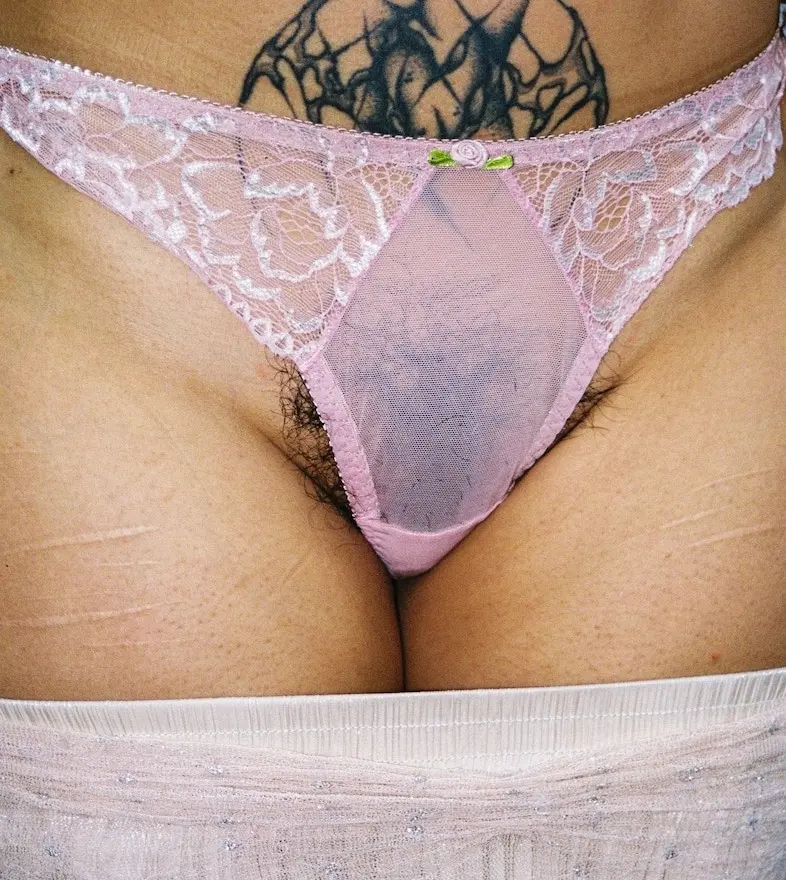
Pubic hair norms have never been static. Instead, they have functioned as a fluctuating battleground for ideas surrounding hygiene, morality, class status, race, and bodily autonomy. From the sentimental keepsake jewelry of the 18th and 19th centuries to the provocative runways of high fashion and the modern resurgence of "BushTok," the cultural trajectory of pubic hair demonstrates that societal attitudes toward the body are deeply political.
This investigative feature examines the historical curation of the human body, tracing the evolution of hair removal and acceptance from ancient civilizations to contemporary digital culture. By analyzing shifts in art history, commercial pressures, and feminist movements, this report uncovers how shifting beauty standards continue to reflect broader societal anxieties about control, nature, and the female form.
Detailed Chronology: From Ancient Antiquity to the Digital Age
Prehistory to Antiquity: The Classical Baseline
Long before the advent of modern stainless-steel razors or clinical laser diodes, humans actively tended to their pubic hair. Archaeological excavations have unearthed bronze tweezers utilized by ancient Romans to painstakingly pluck body hair, including underarm and pubic regions, strand by strand.
Despite these grooming practices, artistic representations of the female form across antiquity rarely featured a visible mons pubis. Art historians, such as Cathelijne Blok, trace this aesthetic standard back tens of thousands of years to artifacts like the Venus of Willendorf. Created approximately 30,000 years ago, this limestone figurine accentuates feminine curves, abdominal contours, and labia, yet notably omits any discernible pubic hair.
This visual tradition persisted for millennia. In Sandro Botticelli’s masterpiece The Birth of Venus, the central figure’s mons pubis is delicately shielded by a cascade of hair flowing from her head—a classical artistic convention known as the Venus Pudica (modest Venus), designed to signify modesty as the subject steps onto land and awakens to her own nudity. More than five centuries later, consumer razor giant Gillette would draw direct inspiration from this historical archetype, naming its flagship women’s razor after the iconic figure.
The Middle Ages: Prosperity, Pestilence, and the Merkin
As societal structures shifted, so too did the cultural connotations of body hair. During the 15th century, according to The Oxford Companion to the Body, a full natural bush was frequently viewed as a symbol of health, fertility, and prosperity. Clean-shaven bodies, conversely, were occasionally met with social suspicion, as they were sometimes associated with the concealment of venereal diseases or infestations.
As European societies grappled with public health crises, pubic hair took on entirely new practical and hygienic functions. During eras plagued by pubic lice and sexually transmitted infections, hairless states were frequently interpreted as signs of affliction. To combat lice—or simply to navigate the social demands of the era—men and women alike turned to the merkin, a decorative pubic wig. Initially popularized by sex workers, merkins were soon adopted by aristocratic women seeking protection from vermin transmitted by unfaithful partners.
The 18th and 19th Centuries: Romantic Relics and the Rise of Explicit Art
By the 18th and 19th centuries, pubic hair had woven itself into the fabric of romantic intimacy. Lovers frequently exchanged locks of their pubic hair as tokens of profound affection. These biological keepsakes were meticulously encased in bespoke jewelry, carried within delicate trinket boxes, or preserved in handwritten envelopes. Renowned diarist Anne Lister, frequently celebrated as "the first modern lesbian," maintained a notable penchant for collecting locks of her lovers’ pubic hair.
Simultaneously, the art world began to challenge strict academic decorum. While male bodies in classical art—such as Michelangelo’s David—were occasionally depicted with neatly trimmed and curled crowns of hair, female nudes remained strictly idealized, smoothed of all natural imperfections to project innocence and chastity.
When male artists like Gustave Courbet, Gustav Klimt, and Egon Schiele began producing explicitly detailed nudes in the late 19th century, they met with immediate institutional outrage. Courbet’s 1866 canvas L’Origine du monde (The Origin of the World), a visceral close-up of a fully bushed vulva, was deemed pornographic rather than artistic. The painting remained hidden from public exhibition in Paris until 1995 and faced algorithmic censorship on social media more than a century after its creation.
The 20th Century: Commercialization and Counterculture
The dawn of the 20th century marked a pivotal turning point driven by industrial capitalism. In 1915, Gillette launched the Milady Decolleté, the first safety razor aggressively marketed specifically to women. Accompanied by marketing campaigns that framed natural body hair as an "embarrassing personal problem," this rollout exemplified the beauty industry’s mastery of inventing artificial flaws to sell commercial solutions.
Despite the rapid mainstreaming of smooth underarms and legs, 20th-century fashion trends—which frequently favored heavier fabrics and conservative hemlines—kept pubic hair largely out of the public eye for decades.
This dynamic shifted dramatically during the sexual revolution of the 1970s. Body hair suddenly transformed into a potent political symbol, aligning with second-wave feminism and a systemic rejection of patriarchal beauty standards. The inaugural issue of Ms. Magazine featured a landmark essay advocating for natural body hair, arguing that juvenile hairlessness enforced an "infantile sexlessness." Shortly thereafter, full bushes emerged prominently across countercultural publications like Playboy and Penthouse.
However, this pro-pube sentiment proved cyclical. The fitness boom of the 1980s, characterized by high-cut leotards and aerobics culture, followed by the heroin-chic minimalism championed by Kate Moss in the 1990s, initiated a gradual return to trimming and hair removal.
The 2000s: The Era of Total Eradication
The turn of the millennium witnessed the near-total eradication of pubic hair from mainstream media and consumer culture. Driven by the commercialization of laser hair removal technologies in the late 1990s and the dominance of ultra-low-rise trousers that left virtually no margin for error, smooth skin became the unquestioned global standard.
When pubic hair did occasionally surface in cinema or television during this decade, it was almost exclusively deployed as a comedic trope. For instance, in the 2000 satirical comedy Scary Movie, Anna Faris’s character features an overgrown, untamed bush designed specifically to elicit theatrical revulsion from the audience.
Supporting Context & Metrics: Cultural Resurgence and Market Shifts
The cultural pendulum swung back dramatically in the 2024 zeitgeist, propelled by a convergence of high fashion, digital platforms, and consumer product design.
[Historical Cyclicality of Pubic Hair Norms]
-------------------------------------------------------------------------
Antiquity          -> Smoothness prioritized (Class, Status, Purity)
Medieval Era       -> Full bush favored (Health, Protection against disease)
19th Century       -> Romantic keepsakes & avant-garde erotic art
Mid-20th Century   -> Commercial hair removal takes hold (Gillette, 1915)
1970s              -> Political reclamation (Second-wave feminism)
2000s              -> Total eradication (Laser tech & low-rise fashion)
2024 & Beyond      -> Digital discourse, runways, and commercial merkins
-------------------------------------------------------------------------
The revival manifested across multiple distinct cultural touchpoints:
- High Fashion Runways: Maison Margiela’s Spring/Summer 2024 artisanal collection prominently featured explicit styling elements that thrust pubic hair back into avant-garde high fashion.
- Digital Communities: Platforms like TikTok birthed viral movements such as "BushTok" and sustained prolonged discourse surrounding the "full bush in a bikini" aesthetic, normalizing diverse grooming choices for younger demographics.
- Commercial Adaptation: Mainstream shapewear and apparel brands capitalized on the trend, most notably through high-profile product launches like Kim Kardashian’s Skims merkin thongs.
Despite this increased visibility, sociologists and cultural critics emphasize that public discourse does not automatically equate to absolute personal liberation.
Official Statements & Expert Perspectives
Industry insiders and cultural historians warn that the modern obsession with natural body hair risks falling into the exact same traps as historical grooming standards.
"Pubic hair has been treated as something private, excessive, or even undesirable for a long time. Social media, contemporary art, and fashion have all played a role in making bodies and body hair more visible again," notes hair artist Yumiko Hikage.
"We’re slowly questioning the idea that the body needs to be constantly controlled, corrected, or made more ‘beautiful’ according to a fixed standard. However, visibility doesn’t automatically mean freedom. Even ‘natural’ body hair can easily become another rigid beauty ideal."
Art historian Cathelijne Blok echoes this sentiment, pointing out how historical art practices systematically weaponized the female form:
"White, male perspectives dominated the art world for centuries, using women’s bodies as a canvas to impose a narrow set of virtues—innocence, divinity, and chastity. Youth and smoothness have long been culturally coded as desirable, while natural hairiness was unjustly associated with animalism."
Future Outlook: The Evolution of Bodily Autonomy
As society navigates the complexities of digital hyper-visibility, the cultural conversation surrounding pubic hair continues to evolve. While movements like BushTok and high-fashion runways challenge the hegemony of the hairless aesthetic, they also underscore a deeper truth identified by feminist historians: body hair norms are never fundamentally about the hair itself.
Instead, they remain inextricably linked to the socio-political regulation of the body underneath: touching directly upon questions of sexuality, reproduction, hygiene, and most importantly, true bodily autonomy.
Whether an individual chooses clinical laser removal, meticulous waxing, or a completely untamed natural state, the ultimate objective of contemporary bodily discourse is freedom from prescriptive algorithmic standards. As cultural paradigms shift away from rigid compliance toward radical self-expression, the future of body hair management points toward a landscape of genuine choice—where no single aesthetic holds a monopoly on beauty.