Executive Overview
In the fast-evolving ecosystem of 2026 digital culture, few phenomena have captured the surreal intersection of generative technology and internet absurdity quite like "AI Viking Rap" (alternatively known as "AI Viking Music Slop," "AI Viking Hip-Hop," or simply recognized by viral lyric fragments like "Viking Hip Hop Queens and Kings"). This niche yet ubiquitous subgenre of artificial intelligence-generated music combines hyper-aggressive trap and hip-hop beats with heavily synthesized vocals, thunderous cinematic drums, and an unapologetic saturation of Norse mythology tropes.
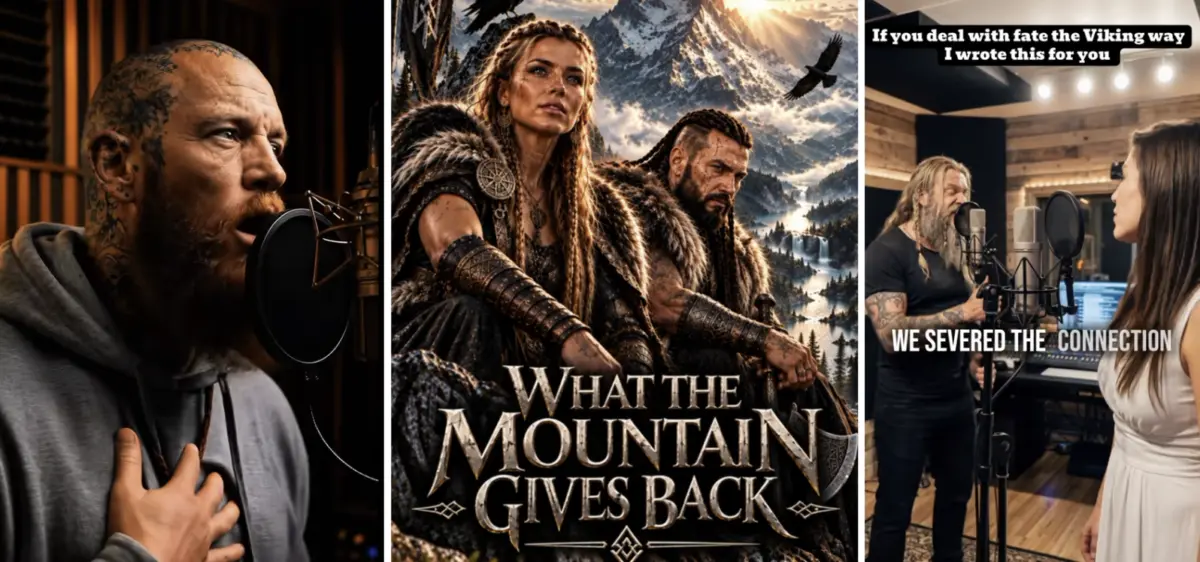
Characterized by fictional artist personas depicting heavily tattooed, hyper-muscular men and braided shieldmaidens in misty, wolf-haunted landscapes, the trend has flooded platforms like TikTok, Spotify, YouTube, and Facebook. Driven by a mix of independent creators utilizing generative engines like Suno and large-scale, automated operations churning out mass content, AI Viking rap has transformed from a quirky technical novelty into a dominant cultural touchstone.
While millions of internet users embrace these tracks either ironically or with genuine enthusiasm—propelling artists like Draugr Balled and Valrya to hundreds of thousands of monthly listeners—the trend has also sparked widespread debates. Critics deride the output as low-effort "slop," while older or less digitally literate demographics have frequently fallen victim to the illusion, treating fully synthetic personas as flesh-and-blood musicians. This comprehensive investigative report examines the origins, unprecedented spread, socio-cultural impact, and future outlook of the AI Viking music phenomenon.
Detailed Chronology: From Algorithmic Oddity to Viral Dominance
The Mid-2020s Technological Catalyst
The groundwork for AI Viking rap was laid in the mid-2020s, a period defined by the explosive democratization of generative artificial intelligence tools. As text-to-audio and text-to-video engines matured, the barrier to entry for producing commercially polished sounding tracks vanished. Creators no longer needed recording studios, session musicians, or vocal training; prompts could synthesize a complete, radio-ready hip-hop track in seconds.
Simultaneously, the online fascination with Norse aesthetics—fueled by historical dramas, video games, and folk-metal bands like Heilung and Wardruna—remained at an all-time high. The synthesis of modern trap cadences with ancient-sounding battle cries, references to Valhalla, Ragnarok, blood oaths, and raven-haunted skies proved to be an irresistible algorithmic cocktail. Rather than stemming from a single pioneer, the aesthetic coalesced organically as multiple independent operators recognized the high engagement rates triggered by epic Viking imagery paired with heavy, bass-boosted beats.
Early 2026: The Emergence of Draugr Balled
The watershed moment for the genre arrived in early 2026 with the emergence of fictional AI musical acts, most notably Draugr Balled. Establishing a multi-platform footprint across TikTok, YouTube, and Spotify, Draugr Balled set the template for what a virtual Viking hip-hop project looked and sounded like.
On February 21, 2026, the project uploaded its inaugural track, "Raven Calls / Vikings song," to YouTube and TikTok. The track immediately outperformed expectations for a nascent AI project. Within months, the TikTok upload amassed over 661,600 views, 29,500 likes, and nearly a thousand comments, proving that audiences were eager to consume high-concept, algorithmically crafted Norse anthems.
Spring to Summer 2026: The "North Wind Calls" Explosion
The tipping point into mainstream viral culture occurred on April 4, 2026, when TikTok user @draugr.balled released "North Wind Calls." This quintessential AI Viking rap track featured a relentless trap cadence layered with gravelly, autotuned battle-rap vocals and lyrics steeped in warrior pride.
The track struck a viral nerve, ultimately surging past 8.5 million views and 315,100 likes on TikTok. Capitalizing on the momentum, the account aggressively re-uploaded the track on May 20 and May 28, 2026. These subsequent drops performed equally well, pulling in an additional 5.3 million and 5.4 million views respectively, cementing the loop-friendly nature of the trend where familiarity bred virality rather than fatigue.
As the summer progressed, the floodgates opened. On June 10, 2026, user @ragalor dropped "RAISE THE BANNER" by the fictional AI act Laga featuring Ragalor, which quickly secured over 3.2 million views. Shortly after, on July 12, @_blackcrownstudio_ introduced "IRON IN MY VEINS (Pt. 1)," pulling in 2.1 million views and demonstrating that the appetite for simulated Viking bangers was far from satiated.
Late Summer and Fall 2026: Institutionalization and Full Albums
By August 2026, the genre had evolved from standalone viral TikTok clips to cohesive, multi-track album rollouts. Creators began establishing complex lore around their virtual bands. On August 19, @viggo.ironside released "In The Breach," followed closely on August 26 by @sigricefang with the emotionally charged track "To My Mother," which garnered 1.7 million views by appealing to the softer, familial side of Viking mythology.
By late autumn, virtual acts like Valrya and Norrune were dropping full-length conceptual albums—such as Valrya’s RǴNATAL—complete with Spotify distribution links, Apple Music pages, and YouTube Music playlists. The trend had officially transformed from decentralized meme fodder into an industrialized conveyor belt of synthetic content.
Supporting Context & Metrics: The Anatomy of "Music Slop"
Production Mechanics and Visual Tropes
The rapid proliferation of AI Viking music is directly tied to the efficiency of modern generative pipelines. A typical workflow involves:
- Lyrical Generation: Utilizing Large Language Models (LLMs) to write stanzas laden with buzzwords like Valhalla, shields, ash, blood, and steel.
- Audio Synthesis: Feeding those lyrics into music-generation platforms (such as Suno or Udio) with style prompts specifying "aggressive trap beat," "gritty male vocals," "cinematic choir," and "Norse folk instrumentation."
- Visual Packaging: Generating hyper-realistic, AI-rendered imagery of muscular, tattooed men and fierce shieldmaidens with intricate braids, standing atop snow-capped fjords or inside neon-lit modern mead halls, animated via video-generation tools.
This frictionless creation process results in an astronomical volume of media. Tracks are explicitly engineered for short-form video algorithms—featuring 15- to 30-second hooks designed to loop seamlessly while users scroll through TikTok.
Audience Demographics and the Generational Divide
The reception of AI Viking rap highlights a fascinating cultural schism across generations:
- Digital Natives and Gen Z: Younger users largely interact with the trend through a layer of postmodern irony. They recognize the uncanny valley of the AI vocals and the cartoonish exaggeration of the muscular warrior imagery. Consequently, the genre has spawned countless reaction memes, parodies, and satirical videos poking fun at the relentless wave of "vikingtok" content.
- Older Demographics: Conversely, the hyper-polished nature of the production has caused widespread confusion among older listeners. Many uninitiated users on Facebook and YouTube regularly mistake the AI-generated personas for real musical acts, leaving earnest comments praising the "real talent" and historic dedication of the virtual artists. This dynamic has fueled a parallel subculture of internet sleuths dedicated to exposing AI music accounts.
Official Statements and Industry Reactions
The explosive growth of AI-generated genre music has not occurred in a vacuum; it has triggered heated discourse within the broader music and tech industries.
"We are witnessing the industrialization of novelty. When anyone can spin up a fully produced, subgenre-specific track and a cinematic music video in under five minutes, the traditional metrics of artistic labor and authenticity are completely upended."
— Dr. Aris Thorne, Digital Media Theorist at the Institute for Advanced Cultural Studies
Independent musicians and metal purists have been particularly vocal in their criticism. Traditional folk-metal and Viking-themed bands—who spend months researching historical instruments, traditional Norse poetry, and complex compositional structures—have expressed frustration over algorithmic platforms elevating low-effort synthetic sound-alikes.
"It’s disheartening to see months of archival research and acoustic instrumentation lumped in the same algorithmic feed as a five-minute text prompt about wolves and Valhalla," noted an independent Nordic folk artist who requested anonymity. "Fans are being flooded with high-gloss acoustic fast food, and distinguishing between human craft and algorithmic slop is becoming increasingly difficult for the average listener."
Streaming platforms like Spotify and Apple Music have faced mounting pressure from rights organizations and independent creators to implement clearer tagging and categorization for fully synthetic audio, though enforcement remains inconsistent as the volume of uploads continues to surge.
Future Outlook: Where is AI Viking Rap Headed?
As we look beyond the horizon of 2026, the trajectory of AI Viking rap offers a glimpse into the future of internet subcultures. Several key trends are likely to shape the genre’s evolution:
- Hyper-Niche Hyper-Saturation: As tools become even more advanced, the aesthetic will likely fracture into hyper-specific micro-genres. Expect to see the emergence of sub-sub-genres like "AI Celtic Grime," "Cyberpunk Viking Drift Phonk," or "AI Viking Sea Shanty Pop."
- Algorithmic Fatigue and Irony Burnout: Like many meme-driven music trends, the novelty of synthetic Viking hip-hop faces a natural shelf life. As feeds become overwhelmingly saturated with identical tracks about Valhalla and ravens, user fatigue will likely set in, pushing internet humor toward the next absurd AI-generated frontier.
- Monetization and Virtual Real Estate: Despite critical backlash, the top-performing AI music accounts have proven that virtual personas can successfully capture lucrative streaming revenue and brand partnerships. We may soon see fully autonomous, AI-driven virtual bands headlining digital festivals, completely detached from human creators.
Ultimately, AI Viking Rap stands as a defining cultural artifact of the mid-2020s—a bizarre, hypnotic collision of ancient mythology, cutting-edge machine learning, and the relentless, attention-hungry engine of modern social media. Whether viewed as an alarming existential threat to human musicians or simply the latest evolutionary step in internet shitposting, the drumbeat of Valhalla will echo across our algorithms for some time to come.