Executive Overview
Meta Platforms has officially kicked off its annual Meta Connect 2026 conference, unveiling a sweeping portfolio of hardware and software innovations that aggressively target the future of ambient computing, personal artificial intelligence, and lightweight wearables. Building on the massive commercial momentum of its previous smart glasses iterations—which shattered sales records with over 7 million units shipped in the first half of 2026 alone—Meta is signaling a massive strategic shift.
The crown jewel of today’s keynote is the Muse Charm, an ultra-portable, palm-sized "holdable" device designed exclusively to house the company’s burgeoning Muse personal AI agent. Developed in collaboration with Meta’s newly established design lab—spearheaded by former Apple interface design chief Alan Dye—the Muse Charm marks a radical departure from traditional screen-first consumer electronics, leaning into tactile, context-aware artificial intelligence.
In addition to the Muse Charm, Meta expanded its hardware ecosystem with a wave of new product categories:
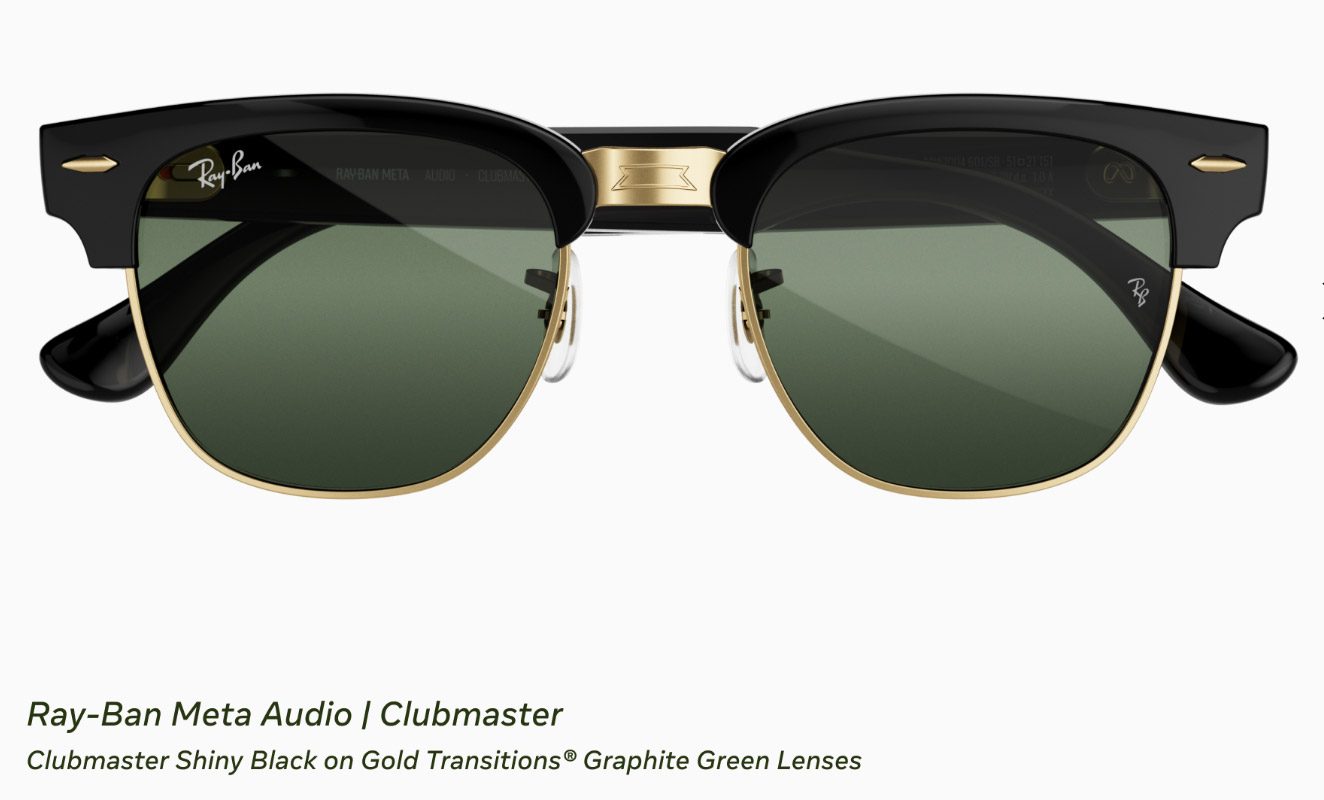
- Ray-Ban Meta Audio: Meta’s first camera-free smart glasses, catering to privacy-conscious consumers without sacrificing audio or AI capabilities.
- Ray-Ban Meta (Gen 3): An evolutionary update featuring a slimmer frame, up to nine hours of battery life, and a customizable hardware action button.
- Meta VR Glasses: A featherlight, 100-gram virtual reality headset utilizing micro-OLED 5K panels and a pocketable processing puck, redefining immersive media consumption and spatial workspace productivity.
- Expanded Glasses Lineup: New styles including Capri, Nova, a LISA-designed collection, the budget-friendly $249 Meta Adventurer, and a limited-edition Meta Fury model.
As Meta’s proprietary Muse AI app continues to dominate app store charts worldwide—having recently overtaken ChatGPT for the number-one spot on both iOS and Android—Meta Connect 2026 illustrates a company transitioning from social media giant to a dominant hardware-first AI ecosystem titan.

Detailed Chronology of Announcements
1. The Muse Charm: A New Paradigm in Palm-Sized AI
The undisputed wildcard of Meta Connect 2026 is the Muse Charm. Following the runaway success of the Muse personal AI agent app—which rocketed to the top of the U.S. App Store and Google Play shortly after its debut earlier this month—Meta has built a dedicated hardware companion for its flagship intelligence platform.
- Design and Form Factor: Dubbed a "holdable" device, the Muse Charm was conceptualized by Meta’s Superintelligence AI group alongside the company’s elite new design lab led by Alan Dye. It measures roughly the size of a palm and features a vibrant, ~2-inch OLED touchscreen at its center.
- The Customizable Muse Persona: The device’s interface revolves around a dynamic, customizable digital character representing the user’s Muse agent. Owners can modify its visual appearance, wardrobe, voice profile, and behavioral parameters directly.
- Sensory Architecture: Equipped with front- and rear-facing cameras, high-fidelity speakers, studio-grade microphones, 5G cellular connectivity, and a USB-C port, the Charm is engineered for constant, on-the-go contextual awareness. Crucially, industry reports indicate that the onboard cameras are not designed for traditional consumer photography; rather, they act as an environmental window, supplying the Muse AI with real-time visual context to assist with physical-world tasks, queries, and proactive decision-making.
- Ecosystem Synergy: The Charm is set up and synchronized seamlessly via the Muse companion app on iPhone or Android. Furthermore, Meta has introduced a proximity-interaction feature, allowing two Charm units to recognize and communicate with one another when brought into close physical contact.
- Pricing and Availability: Meta plans to launch the Muse Charm in December 2026. While official retail pricing has not yet been locked in, internal leaks and industry analysts suggest it will retail at a price point roughly comparable to a premium smartwatch.
2. Ray-Ban Meta Audio: Privacy-First Smart Eyewear
Acknowledging rising societal scrutiny, ethical debates, and regulatory pushesback regarding camera-equipped wearables, Meta introduced the Ray-Ban Meta Audio glasses.
Starting at $349 and shipping on October 13, 2026, these glasses strip away the optical camera sensors entirely while preserving the core audio and computational utilities that made the product line a cultural phenomenon. Users retain full functionality for music and podcast streaming, crystal-clear voice calls, live translation services, and deep integration with the Muse personal AI agent. This variant offers an ideal compromise for enterprise environments, educational spaces, and privacy-sensitive users who desire hands-free AI utility without visual recording hardware.
3. Ray-Ban Meta (Gen 3): Refined Ergonomics and Action Integration
For consumers embracing optical recording, Meta simultaneously debuted the Ray-Ban Meta (Gen 3).
Priced from $449 and available immediately, the Gen 3 model delivers a substantially slimmer profile, extended battery longevity reaching up to nine hours on a single charge, and a newly integrated hardware action button. Fully customizable within the Meta AI companion app, this button grants users instantaneous, one-touch activation for AI queries or contextual shortcuts like real-time language translation. The device retains the exceptional 12MP camera and 3K video recording architecture established by its predecessor.
4. Meta VR Glasses: Spatial Computing at 100 Grams
In what may be the most technologically ambitious hardware disclosure of the evening, Meta unveiled the Meta VR Glasses. Engineered to shed the bulky, face-heavy stigma of traditional mixed-reality headsets, this device weighs a mere 100 grams, resting on the face with the ergonomic familiarity of traditional eyewear.
- Visual Engineering: The headset utilizes ultra-crisp micro-OLED panels to deliver what Meta defines as a "5K Infinite Display," offering breathtaking clarity for text, spatial windows, and entertainment.
- The Computing Puck: To achieve its featherlight weight, Meta decoupled the processing architecture, battery, and local storage into a separate, pocketable compute puck.
- Sensing and Interaction: The device incorporates advanced eye- and hand-tracking matrices alongside native Meta AI integration.
- Media and Productivity: Positioned as an all-in-one personal cinema, gaming monitor, and portable workstation, the Meta VR Glasses carry the distinction of being the world’s first IMAX Enhanced-certified VR hardware, complete with robust support for native 3D cinematic releases and immersive live sports broadcasting.
- Launch Timeline: The Meta VR Glasses are scheduled to hit the consumer market in Spring 2027 with a premium price tag of $1,299.99.
5. Holograms and Spatial Communication
Alongside the Meta VR Glasses, Meta demonstrated a breakthrough volumetric hologram feature. By leveraging advanced neural rendering, the system generates photorealistic digital avatars that mirror a user’s micro-expressions, facial movements, and real-time reactions during video calls.
Meta confirmed that a consumer-ready iteration of this hologram technology is rolling out to the Meta Ray-Ban Display lineup, beginning with WhatsApp integration. This allows users to project lifelike digital representations of themselves for entirely hands-free, spatially immersive video communications.

6. Broadening the Wearable Ecosystem
Meta’s hardware blitz extended across its broader spectacles catalog. The company added two fresh styles—Capri and Nova—developed in partnership with pop icon LISA. Additionally, Meta introduced the Meta Adventurer at an aggressive $249 entry-level price point, making it the most affordable smart glasses model in the company’s history. The showcase was rounded out by a limited-edition Meta Fury design and a sleek new Ivory colorway for the ongoing Kylie Jenner collaborative line.
Supporting Context & Market Metrics
The aggressive expansion announced at Meta Connect 2026 is underpinned by staggering financial and commercial metrics. According to recent market intelligence reports, AI-enabled smart glasses shipments surged by an unprecedented 263% year-over-year in the first half of 2026. Propelled by its lucrative partnership with EssilorLuxottica, Meta successfully moved more than 7 million smart glasses units over the same period, effectively creating and dominating a brand-new consumer electronics category just as competitors like Apple prepare their own market entries.
| Product Category | Key Features | Base Price | Release Date |
|---|---|---|---|
| Muse Charm | Palm-sized "holdable" AI device, 2" OLED, 5G, context cameras | TBA (~Smartwatch pricing) | December 2026 |
| Ray-Ban Meta Audio | Camera-free smart glasses, audio, live translation, Muse AI | $349 | October 13, 2026 |
| Ray-Ban Meta (Gen 3) | Slim profile, 9-hr battery, customizable action button, 12MP/3K camera | $449 | Available Now |
| Meta VR Glasses | 100g micro-OLED 5K display, pocket puck, IMAX Enhanced | $1,299.99 | Spring 2027 |
| Meta Adventurer | Entry-level smart glasses | $249 | September 2026 |
The meteoric rise of the Muse personal AI app—surpassing reigning generative AI applications like ChatGPT to claim the top spot on global application stores within weeks of launch—has provided Meta with the software validation necessary to justify dedicated, single-purpose hardware items like the Muse Charm.
Official Statements & Industry Reception
Meta leadership emphasized that the company’s overarching mission is to dissolve the boundaries between physical realities and ambient intelligence. During the keynote, executives framed the new product rollouts as a direct response to consumer demand for modular, task-specific AI access points rather than monolithic, screen-addicted smartphones.

"We are moving past the era where a single glowing rectangle in your pocket is your sole gateway to digital intelligence," noted a senior Meta product lead during the presentation. "With the Muse Charm, our audio-only smart glasses, and the breakthrough engineering of our 100-gram VR glasses, we are putting artificial intelligence directly into the rhythm of your daily life—wherever you are, however you want to interact."
Industry analysts have responded with cautious optimism paired with acute regulatory awareness. While financial markets have rewarded Meta’s hardware diversification strategy—pushing hardware division valuations higher—civil liberties organizations have already begun expressing renewed debates regarding the environmental scanning capabilities of devices like the Muse Charm and the expanding footprint of facial holograms in private communication networks.
Future Outlook
Meta Connect 2026 marks a decisive turning point for the social media pioneer turned hardware architect. By bifurcating its smart glasses lineup into privacy-focused audio variants and high-performance camera editions, Meta has proactively addressed regulatory friction while expanding its total addressable market.
Looking ahead, the commercial performance of the upcoming holiday season will serve as a critical crucible for the Muse Charm and the Gen 3 Ray-Ban smart glasses. Meanwhile, the impending Spring 2027 launch of the 100-gram Meta VR Glasses positions the company for a direct, high-stakes collision with traditional spatial computing giants in the enterprise and luxury consumer spaces. As artificial intelligence transitions from software prompts residing behind glass screens into tactile, ambient, and wearable form factors, Meta has firmly established itself as the pace-setter for the next decade of consumer technology.