Executive Overview
The landscape of corporate communications, executive representation, and digital journalism is undergoing a structural paradigm shift driven by the rapid evolution of synthetic video generation. At the center of this transition is Synthesia, a digital avatar pioneer originally founded in the United Kingdom. Following a meteoric rise that pushed its valuation past $4 billion and saw its annual recurring revenue (ARR) cross $100 million, the company has expanded its physical and technological footprint with a major new office in New York City.
Synthesia’s growth highlights a broader industry shift: moving beyond static text-to-speech synthetic videos toward real-time, interactive, agentic digital twins capable of dynamic, two-way communication. From automated public relations officers to specialized corporate training modules like "Roleplay Sessions," the company is testing the limits of how far human presence can be duplicated.
To evaluate the operational readiness and psychological implications of this technology, Synthesia created its first custom interactive digital avatar for a working journalist. Trained on a specific investigative dataset regarding corporate fraud in venture-backed startups, this digital twin offers a rare lens into the mechanics, utility, and ethical friction points of personal cloning. While synthetic media provides undeniable efficiencies in asynchronous work and scalable corporate messaging, it simultaneously raises critical questions regarding audience trust, platform guardrails against low-quality "AI slop," and the limits of human-machine interaction.
Detailed Chronology: From Virtual PR Pitches to Digital Cloning
+-----------------------------------------------------------------------------------+
| SYNTHESIA DIGITAL TWIN DEVELOPMENT TIMELINE                                       |
+-----------------------------------------------------------------------------------+
| 1. Virtual PR Proof-of-Concept                                                    |
|    - Alexandru Voica launches interactive PR officer avatar to field press queries.|
|                                                                                   |
| 2. Onsite Studio Capture (NYC Office)                                             |
|    - Subject enters in-house capture studio.                                      |
|    - Multi-angle photography + 2-minute voice sample recorded under consent.       |
|                                                                                   |
| 3. Model Fine-Tuning & Pipeline Integration                                       |
|    - Personal script-reading avatar built (with/without glasses options).         |
|    - Interactive model integrated with agentic LLM & custom domain dataset.       |
|                                                                                   |
| 4. Deterministic Guardrail Configuration                                          |
|    - System trained exclusively on VC-backed startup fraud research.              |
|    - Model instructed to redirect out-of-scope personal queries to core topic.    |
|                                                                                   |
| 5. Multi-User Stress Testing                                                      |
|    - Evaluated across non-tech peers, family members, and industry investors.     |
+-----------------------------------------------------------------------------------+
Phase 1: The Virtual Press Officer Proof-of-Concept
The deployment of interactive avatars in corporate public relations began as an internal experiment led by Alexandru Voica, Head of Corporate Affairs at Synthesia. During the summer, Voica distributed an interactive virtual avatar trained on routine media queries concerning Synthesia’s product offerings, operational mechanics, and corporate history. The release represented a marked departure from standard text-based generative AI pitches, positioning interactive visual agents at the front line of external communications.
Phase 2: The Studio Capture in New York
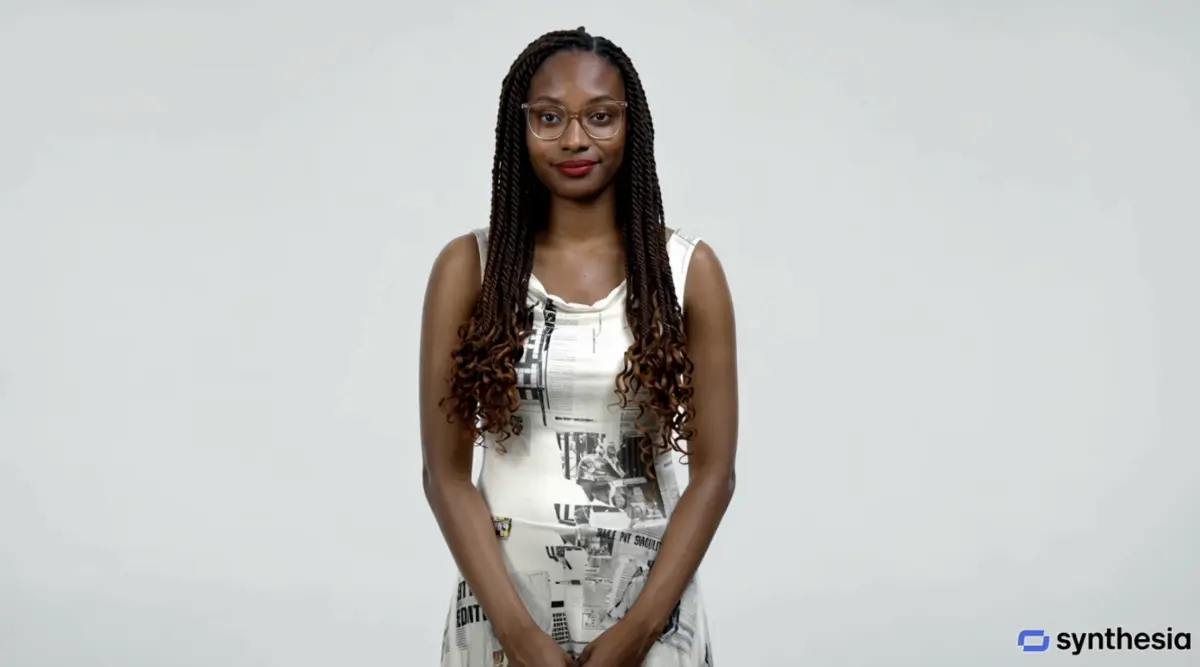
Following its expansion into New York City, Synthesia invited media personnel to its Manhattan location to undergo its proprietary digital twin creation process. The capture took place inside a custom mini film studio constructed within the office footprint.
The studio capture process followed a standardized data-ingestion protocol:
- Consent Verification: Formal explicit consent authorization for likeness and voice cloning.
- Visual Data Ingestion: High-resolution photogrammetry capturing physical expression, lighting variations, and physical markers (including iterations both with and without corrective eyewear).
- Acoustic Profiling: A two-minute high-fidelity audio recording designed to map pitch, cadence, inflection, and vocal timbre.
Phase 3: Technical Synthesis and Data Guardrailing
Over a multi-day build cycle, Synthesia constructed two distinct functional tiers of avatars: personal avatars designed for asynchronous, script-driven narration, and interactive avatars capable of real-time conversational processing.
To test conversational fidelity without risking hallucination or unauthorized data leakage, the interactive twin was configured deterministically. The avatar was trained on a single published investigative report analyzing why venture-backed startups commit fraud at higher rates than non-VC-backed counterparts. The operational instruction set restricted the avatar to discussing facts drawn directly from this document, establishing strict boundaries for user queries.
Phase 4: Deployment and Real-World Stress Testing
Once deployed, the interactive avatar underwent stress testing across diverse user cohorts, ranging from family members to venture capital investors. During these trials, users attempted to bypass topic guardrails using personalized trivia, off-topic questions, and out-of-scope personal history inquiries. In every instance, the agentic layer identified out-of-domain prompts and systematically routed the conversation back to the underlying venture fraud dataset.
Supporting Context & Metrics
Synthesia Market Metrics & Ecosystem Comparison
Synthesia operates in an increasingly crowded market for synthetic video generation and interactive digital representations. Competitors such as HeyGen, D-ID, and Colossyan are similarly competing for enterprise contracts in training, internal communications, and marketing automation.
| Metric / Parameter | Synthesia Profile | Market Context / Competitor Landscape |
|---|---|---|
| Enterprise Valuation | $4.0 Billion (2026) | Rapidly rising valuation tier alongside peers like HeyGen |
| Annual Recurring Revenue (ARR) | Exceeded $100 Million | Driven by enterprise video creation & custom avatars |
| Primary Enterprise Product | Roleplay Sessions & Interactive Avatars | Moves beyond linear text-to-script video creation |
| Strategic Investors | Includes enterprise tech capital (e.g., Adobe) | High focus on corporate workflow integration |
| Model Architecture Support | Modular (In-house + Third-Party LLM/TTS) | Integrates with ElevenLabs, Cartesia, OpenAI, Google |
Multi-Layer Synthetic Architecture
The execution pipeline powering Synthesia’s interactive digital twins relies on a modular, low-latency processing stack. This architecture converts raw user audio into synchronized video frames in real time:
[ User Speech Input ]
         │
         ▼
 ┌────────────────────────┐
 │ Speech-to-Text (ASR)   │ ──► Converts spoken input into plain text
 └────────────────────────┘
         │
         ▼
 ┌────────────────────────┐
 │ Agentic Language Model │ ──► Evaluates domain scope & generates text response
 └────────────────────────┘
         │
         ▼
 ┌────────────────────────┐
 │ Text-to-Speech (TTS)   │ ──► Synthesizes audio (Synthesia, Cartesia, ElevenLabs, OpenAI)
 └────────────────────────┘
         │
         ▼
 ┌────────────────────────┐
 │ Video Render Engine    │ ──► Animates photorealistic facial mesh & lip-syncs frames
 └────────────────────────┘
         │
         ▼
[ Real-Time Video Output ]- Speech-to-Text (ASR Layer): Real-time acoustic analysis transcribes incoming user voice queries into structured text strings.
- Agentic Language Processing Layer: A domain-constrained large language model (LLM) evaluates context, checks against system guardrails, and constructs an appropriate textual response. Enterprise clients maintain the option to deploy models across custom or private cloud environments.
- Text-to-Speech (TTS Layer): Synthesia’s proprietary voice engine—or integrated third-party models from labs like ElevenLabs, Cartesia, Google, or OpenAI—converts the text output back into expressive, high-fidelity audio matching the subject’s baseline vocal profile.
- Video Generation Engine: Synthesia’s neural rendering models map the output audio stream onto the subject’s high-definition visual clone, generating micro-expressions and lip synchronizations in real time.
Official Statements, Ethical Tensions, and Industry Reactions
User and Family Observations
Reactions to the deployed digital twin underscored the presence of the "uncanny valley"—the eerie feeling caused by objects that look almost, but not quite, human. While testing yielded praise for visual fidelity and vocal accuracy, observers consistently noted subtle artificialities in tone and motion dynamics.
"I don’t remember giving birth to two of you," remarked the journalist’s mother during a live demonstration of the model, calling the replication "amazing" while simultaneously attempting to trick the deterministic guardrails with private family history queries.
Despite the visual likeness, non-technical testers highlighted that while the personal script-driven avatar achieved high voice accuracy, the real-time interactive model possessed a subtly altered cadence, reinforcing the perceptual divide between pre-rendered video and real-time interactive synthesis.
       HIGH  │
             │
             │                                       [Human Baseline]
             │                                              /
             │                                             /
  Familiarity│              [Classic Script Avatar]       /
             │                                          /
             │                                         /
             │                                        /
             │                                       /
             │                            [Interactive Twin]
        LOW  │_____________________________________________
             LOW                                           HIGH
                                Human Likeness
The Media and Journalism Perspective
The introduction of digital twins into journalism faces substantial institutional resistance. While avatars offer a way to automate video rundowns of published text articles, media executives and journalists emphasize that journalism relies on authentic human trust—a quality difficult to transfer to a synthetic model.
Industry investors and media analysts remain divided:
- Opposing Viewpoint: Audiences consume news based on editorial credibility, investigative rigor, and personal authenticity. Replacing human reporters with avatars risks alienating viewers who already push back against digital low-effort content across major social platforms like Instagram and Pinterest.
- Proponent Viewpoint: Avatars offer an efficient medium for multi-language dissemination, rapid daily news rundowns, and customizable video summaries tailored to individual subscriber preferences.
Future Outlook: Workload Automation, Avatars vs. Humanoids, and Market Realities
Enterprise Scalability and Asynchronous Labor
Outside of newsrooms, the corporate appeal of digital duplication centers on workload efficiency. The ability for executives, sales representatives, and corporate trainers to deploy interactive clones allows routine engagement—such as onboarding, basic press inquiries, and client roleplay exercises—to occur asynchronously. A synthesized version of an employee can manage queries and deliver standardized training without requiring live human availability.
+-----------------------------------------------------------------------------------+
| COMPARATIVE PROFILE: DIGITAL AVATARS VS. PHYSICAL HUMANOIDS                       |
+-----------------------------------------------------------------------------------+
| METRIC              | DIGITAL TWINS / AVATARS       | PHYSICAL HUMANOIDS          |
+---------------------+-------------------------------+-----------------------------+
| Deployment Medium   | Screen-based / API Streams    | Physical Environments       |
| Hardware Dependency | Cloud Servers / GPU Clusters  | Actuators, Motors, Chassis  |
| Safety Risk Profile | Informational / Hallucination | Physical / Kinematic Faults |
| User Escape Hatch   | Immediate (Close Browser)     | Physical Displacement Req.  |
| Scalability         | Unlimited Concurrent Instances| Limited by Manufacturing    |
+---------------------+-------------------------------+-----------------------------+
Psychological Realities: Deterministic Guardrails vs. Open Conversational AI
The trial underscored a critical psychological boundary between deterministic and non-deterministic conversational models. A deterministic model, limited to verified facts from a specific source document, functions predictably as an interactive search interface.
However, non-deterministic avatars—powered by unconstrained conversational models—introduce psychological risks. Unbounded conversational agents can induce heightened uncanny feelings or speculative dynamic interactions, which highlights the importance of maintaining strict enterprise guardrails in customer-facing and internal corporate deployments.
Avatar Realism Versus Physical Robotics
When evaluated alongside physical humanoid robotics, digital avatars offer distinct operational and psychological advantages. Screen-based twins retain a defined boundary: if an interaction becomes unsettling or technically flawed, the user can terminate the session simply by closing the browser window. This control makes digital avatars far less intrusive than physical humanoid robots operating in real-world spaces.
As corporate America experiments with synthetic media, user adoption will depend heavily on demographic comfort, transparent disclosure, and domain-specific utility. Younger cohorts, particularly Gen Z, display a distinct skepticism toward synthetic media, often viewing ubiquitous AI avatars as unsettling sci-fi tropes rather than essential tools.
Whether digital twins become ubiquitous corporate tools or remain a specialized technology, their trajectory depends on a core requirement: maintaining clear boundaries between automated content generation and authentic human interaction.