Executive Overview
As the media landscape braces for an unprecedented shift in digital authority and identification, Twitter’s impending removal of legacy verified checkmarks on April 1 has sparked a high-stakes standoff between major news organizations and platform leadership. Under Elon Musk’s sweeping platform overhaul, unverified legacy accounts—including those of world-renowned journalists, editors, and major journalistic institutions—will lose their iconic blue badges unless they enroll in paid subscription tiers.
The financial terms are stark: individuals face an $8-per-month fee for Twitter Blue, while organizations are being steered toward a hefty "Verified Organization" enterprise package priced at a minimum of $1,000 per month, plus $50 monthly for each additional affiliated account.
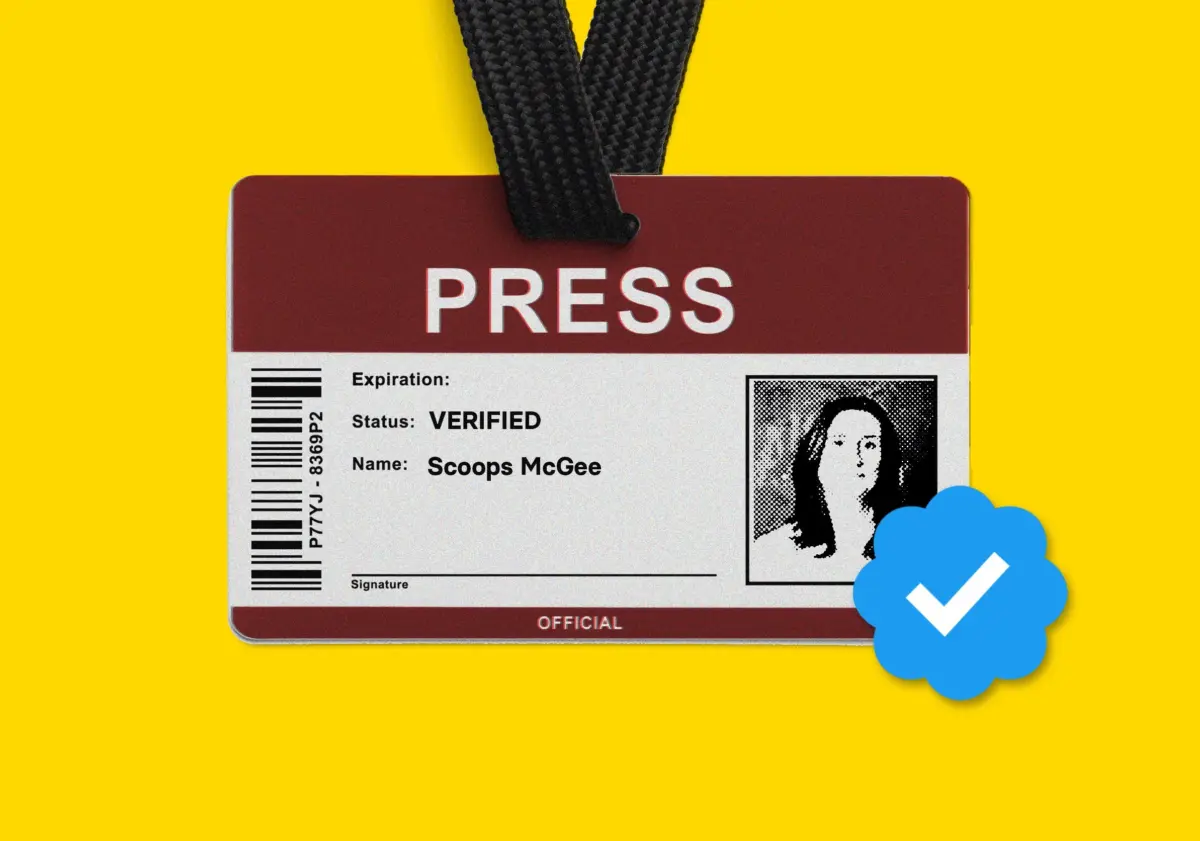
This policy change has triggered a profound identity crisis within the global press corps. For years, the blue checkmark served as a digital press pass—a cryptographic stamp of authenticity distinguishing verified public interest reporting from rampant misinformation, spoof accounts, and digital noise. Today, major journalistic heavyweights—including The New York Times, The Washington Post, The Los Angeles Times, Politico, Insider, and BuzzFeed—have drawn a definitive line in the sand, announcing they will neither pay the institutional fees nor routinely subsidize individual subscriptions for their reporters.
Conversely, a different calculus is emerging among independent journalists, niche entertainment publishers, and digital-first startups like Semafor. For these entities, algorithmic survival on Twitter’s newly modified "For You" feed outweighs ideological objections to the monetization of verification. With Twitter explicitly handicapping the reach of non-subscribers, the platform has transformed verification from a metric of professional credibility into a transactional utility.
This investigative report explores how newsrooms across the spectrum are navigating this existential crossroads, examining the corporate policies, strategic trade-offs, and broader implications for the future of digital journalism.
Detailed Chronology: How Twitter’s Verification Model Collapsed
To understand the current crisis, one must trace the rapid dismantling of Twitter’s legacy trust-and-safety architecture. For over a decade, the verification system operated as a manual, vetting-intensive process designed explicitly to mitigate impersonation among high-profile public figures, politicians, athletes, and working journalists.
Following Elon Musk’s acquisition of the platform in late 2022, the philosophy underlying the blue checkmark underwent a radical inversion. Verification was decoupled from institutional identity verification and hitched directly to a revenue-generating subscription model.
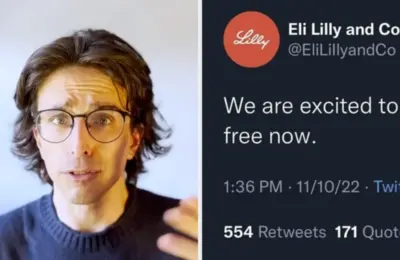
- Late 2022: The chaotic rollout of Twitter Blue introduced widespread impersonation crises, forcing temporary suspensions of the feature as malicious actors purchased checkmarks to mimic pharmaceutical giants, politicians, and corporate brands.
- Early 2023: Twitter signaled the official death knell for the old regime, announcing that all legacy verified accounts would lose their badges on April 1 unless enrolled in the paid subscription tiers.
- March 2023: Details of the enterprise "Verified Organization" tier leaked to newsrooms via targeted email campaigns. The pitch offered institutional accounts a baseline package: five affiliated accounts with Twitter Blue privileges, augmented algorithmic distribution, and a small company logo displayed adjacently to the blue checkmark. Additional accounts were priced at an extra $50 per month.
- Mid-to-Late March 2023: Major news outlets scrambled to formulate internal policies. Bureau chiefs, ethics boards, and finance departments grappled with whether to treat Twitter subscriptions as essential operational expenses or unprincipled vanity purchases.
- April 1, 2023 and Beyond: The deadline arrived, turning legacy verification into a relic of the past and forcing a permanent bifurcation of how news is gathered, distributed, and validated on the platform.
Supporting Context & Metrics: The Economics of the Algorithm
The financial and operational calculus facing newsrooms is not merely about aesthetic badges; it is fundamentally about algorithmic visibility and audience acquisition.
The Algorithmic Toll
According to policy announcements from Twitter leadership, algorithmic distribution is increasingly gated. Only paid Twitter Blue subscribers—alongside accounts manually followed by a user—are guaranteed placement within the primary "For You" feed. For digital-first publications and independent newsletter writers whose readership relies on organic social discovery, this algorithmic penalty is severe.
Enterprise Pricing Breakdown
For a mid-sized to large newsroom, the corporate cost of maintaining an authoritative digital presence is non-trivial:
- Base Enterprise Package: $1,000/month ($12,000 annually) for the primary brand account and up to five designated staff members.
- Expansion Costs: $50/month per additional journalist or branded desk account.
- Individual Workarounds: $8/month ($96/year) per reporter if expensed individually, though many major outlets have outright banned this practice.
The Security and Impersonation Threat
Beyond distribution, newsrooms face a dual-edged sword regarding security. While major outlets worry that paid verification strips away credibility, smaller or specialized publications face immediate operational threats from bad actors. For instance, entertainment and music publications report ongoing battles with scammers who impersonate reporters to solicit money from artists under the guise of offering (fake) editorial coverage. For these desks, enterprise verification remains an imperfect shield against financial fraud.
Official Statements: Where the News Industry Stands
The industry-wide divergence in policy highlights a deep ideological split between legacy print institutions and nimble digital upstarts.
The Institutional Holdouts: "Credibility Cannot Be Bought"
The nation’s leading newspapers have uniformly rejected the new pricing structure, arguing that paying for a checkmark fundamentally undermines the very journalistic authority it was designed to project.
- The New York Times: Charlie Stadtlander, director of external communications, issued a clear directive: "We aren’t planning to pay the monthly fee for check mark status of our institutional Twitter accounts. We also will not reimburse reporters for Twitter Blue except in rare instances where this status would be essential for reporting purposes."
- The Washington Post: A corporate spokesperson adopted an equally resolute stance: "The Washington Post will not pay for Twitter Blue service as an institution or on behalf of our journalists. It’s evident that verified checkmarks no longer represent authority and expertise."
- The Los Angeles Times: Managing Editor Sara Yasin addressed her newsroom directly, outlining multiple rationales for non-compliance: "First of all, verification no longer establishes authority or credibility, instead it will only mean that someone has paid for a Twitter Blue subscription. Secondly, while Twitter remains an important tool for newsgathering, it is not as reliable as it once was."
- Insider: Editor-in-Chief Nicholas Carlson underscored the semantic degradation of the badge: "The value of a blue checkmark was that it said the person was who they said they are. Now a blue checkmark just says they are a Twitter Blue subscriber. That doesn’t help Twitter users or our readers."
- Politico: In a memo shared with the newsroom, Senior Editor of Standards and Ethics Anita Kumar wrote: "In the future, a checkmark will no longer mean you are a verified journalist. Instead, it will simply mean you are paying for benefits such as longer tweets and fewer ads. Politico will not pay for you to subscribe to Twitter Blue. You may, of course, enroll at your own expense."
- BuzzFeed Inc.: Karolina Waclawiak, editor-in-chief of BuzzFeed News, captured the sentiment of many digital-native operations: "As a company, we do not think it’s a wise use of resources to pay for individuals to retain a blue checkmark that is no different from anyone else’s — an amateur medical expert, Elon stan, or otherwise — who is simply willing to pay the fee for a blue check."
The Pragmatists and Independents: "Distribution is the Lifeblood"
Conversely, digital startups, independent newsletter operators, and niche publishers view the platform’s constraints through a strictly utilitarian lens.
- Semafor: Co-founder Ben Smith confirmed his outlet would permit reporters to expense the subscription. "If it has distribution advantages for our content we will," Smith noted, adding: "I just see it as a totally practical issue in that sense."
- Big Technology (Alex Kantrowitz): Independent journalist and former BuzzFeed staffer Alex Kantrowitz explained his personal enrollment: "I’m definitely paying for Twitter Blue. In fact, I signed up this week. I don’t care about the blue checkmark, which might be a liability at this point. But getting added distribution in the For You tab is worth it for me at $8/month, given that distribution is the lifeblood of smaller media brands like Big Technology."
- The Daily Caller: Editor-in-Chief Geoffrey Ingersoll admitted a pragmatic tilt toward the enterprise package despite personal ambivalence. "I had planned to let mine lapse because I have no interest in being nerd famous among journalists on Twitter," Ingersoll remarked. "Ever since verification became a pay-for, it’s lost its utility for me — particularly searching tweets from verified-only people to get a sense of where the media is taking a story." Nonetheless, the Daily Caller planned to trial the enterprise package to evaluate analytical returns.
Future Outlook: The Post-Verification Media Ecosystem
As the dust settles on the removal of legacy checkmarks, the media industry is forced to adapt to a fundamentally altered digital town square. Several long-term consequences are already taking shape:
- The Erosion of Institutional Trust on Social Media: Without standardized visual markers of authenticity, casual news consumers face an increasingly opaque environment. The democratization of the blue checkmark risks elevating well-funded or coordinated bad actors to the same visual tier as institutional newsrooms, potentially accelerating the spread of disinformation during breaking news events.
- The Rise of Alternative Verification Standards: Newsrooms are actively exploring decentralized protocols, cryptographic signing tools, and platform-agnostic authentication systems (such as the Trust Project standards or decentralized social networks like Mastodon and Bluesky) to re-establish verified provenance for digital journalism.
- Internal Friction Over Professional Expenses: The divergence in expensing policies creates an uneven playing field. Freelancers and independent creators—who rely heavily on direct audience monetization—will likely continue absorbing platform taxes as cost-of-doing-business expenses. Meanwhile, staff reporters at legacy institutions must choose between paying out of pocket for professional tools or accepting diminished algorithmic reach.
- Platform Dependency vs. Diversification: Ultimately, this crisis serves as a stark reminder to media executives of the dangers of over-reliance on centralized, algorithmically volatile social media monopolies. As Twitter shifts its product offerings from public utility to subscription-driven network, the press corps is accelerating its pivot toward owned channels—newsletters, direct-to-consumer apps, and diversified digital platforms—ensuring that the future of journalistic reach is no longer rented, but owned.