Executive Overview
The evolution of mobile accessories is intrinsically tied to the relentless pursuit of faster power delivery, enhanced portability, and streamlined ecosystem integration. As Apple users upgrade to newer-generation devices—specifically the iPhone 16 lineup and its successors—the hardware limitations of legacy wireless charging standards have become increasingly apparent. Enter the era of Qi2.2 and enhanced MagSafe technology, a standard that unlocked robust 25W wireless charging capabilities for compatible iPhones.
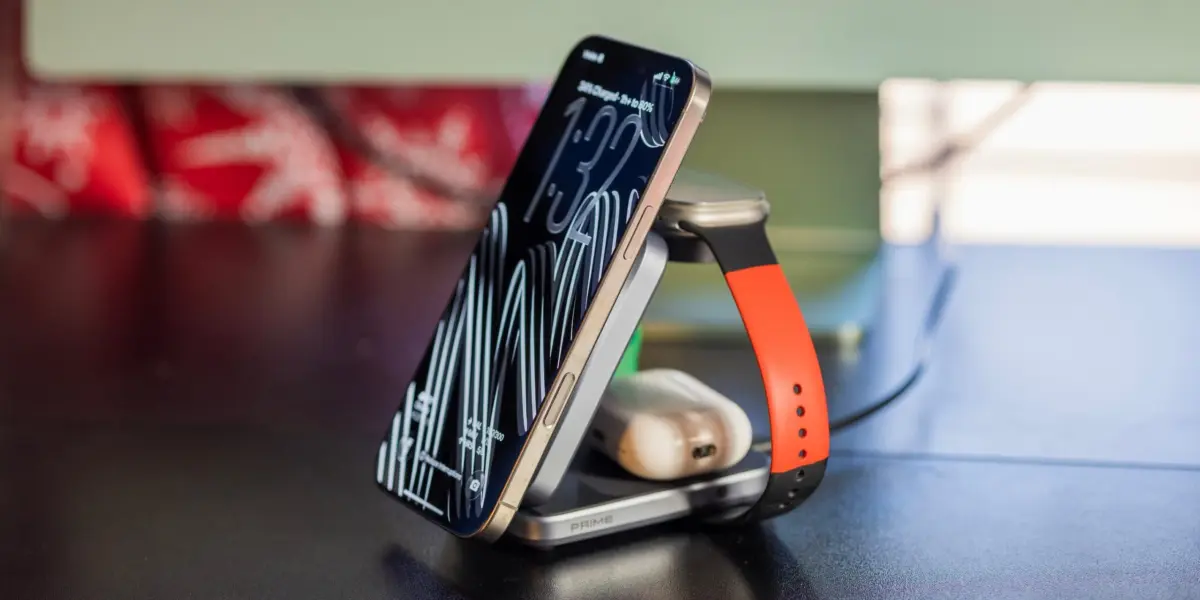
Capitalizing on this industry-wide shift, accessory giant Anker has introduced its latest flagship travel companion: the Anker Prime MagSafe 3-in-1 Charger. Designed to bridge the gap between desktop-class performance and ultra-compact travel gear, this foldable charging solution aims to fill the void left by beloved discontinued products like Apple’s original MagSafe Duo, while aggressively pushing the technical boundaries of fast wireless power.
Featuring built-in active cooling, a robust 45W power brick bundle, a spring-loaded Apple Watch charging puck, and the capacity to juice up three devices simultaneously, Anker’s new offering enters a competitive market with high expectations. Priced at $99 and available in sophisticated black and white finishes, this accessory promises to redefine what users can expect from portable multi-device chargers. This deep-dive review examines the engineering, performance, real-world utility, and market positioning of Anker’s latest hardware triumph.
Detailed Chronology: The Evolution of High-Speed Wireless Charging
To fully appreciate the engineering achievement behind the Anker Prime MagSafe 3-in-1, it is essential to trace the rapid technological trajectory that led to the adoption of 25W Qi2.2 and MagSafe charging standards.
![Anker’s 25W MagSafe 3-in-1 packs active cooling in a travel-sized design [Hands-on]](https://9to5mac.com/wp-content/uploads/sites/6/2026/02/IMG_1339.jpg?quality=82&strip=all&w=1600)
The MagSafe Duo Era and Early Limitations
When Apple introduced MagSafe alongside the iPhone 12 series in late 2020, it revolutionized how users interacted with wireless power. Magnets ensured optimal coil alignment, minimizing energy loss and maximizing charging efficiency. Shortly after, Apple released the MagSafe Duo Charger—a collapsible, two-in-one pad designed for travelers looking to power both an iPhone and an Apple Watch.
While innovative for its time, the MagSafe Duo suffered from significant drawbacks. It was notoriously expensive, lacked a native desk-stand configuration, was restricted to sluggish charging speeds (peaking at 15W under ideal conditions with high-wattage bricks), and was eventually discontinued by Apple without a direct first-party successor. For years, mobile professionals and frequent flyers were forced to compromise, choosing between bulky multi-device desktop stands or slow, underpowered travel pads.
The Advent of Qi2 and the 25W Standard
As wireless charging protocols matured, the Wireless Power Consortium (WPC) introduced the Qi2 standard, bringing magnetic alignment profiles to the broader Android and cross-platform ecosystem. However, the latter half of 2025 marked a pivotal turning point for the industry: the rollout of Qi2.2 and proprietary advancements enabling true 25W wireless charging speeds for next-generation smartphones, including the iPhone 16 and subsequent flagship iterations.
Suddenly, accessory manufacturers faced a new engineering hurdle. Delivering 15W wirelessly generated noticeable heat; scaling that output to 25W meant thermal management was no longer optional—it was a critical safety and performance requirement.
![Anker’s 25W MagSafe 3-in-1 packs active cooling in a travel-sized design [Hands-on]](https://9to5mac.com/wp-content/uploads/sites/6/2026/02/IMG_1333.jpg?quality=82&strip=all&w=1024)
Anker’s 2026 Offensive
Kicking off its 2026 product roadmap, Anker seized upon the 25W ecosystem trend. Recognizing that consumers demanded desktop-level performance in form factors that could easily slip into a backpack or briefcase, the company developed the Prime MagSafe 3-in-1. By integrating advanced thermal management systems directly into a foldable travel footprint, Anker positioned itself at the cutting edge of the high-speed wireless charging renaissance, bridging the gap between raw power and ultimate portability.
Supporting Context & Metrics: Under the Hood of the Anker Prime 3-in-1
Achieving rapid power transfer in a compact, foldable design requires sophisticated electrical engineering and thermal balancing. A breakdown of the hardware specifications reveals why this accessory commands a premium price tag.
Power Metrics and Real-World Speeds
At the core of the Anker Prime MagSafe 3-in-1 is a high-efficiency power delivery system designed to distribute current intelligently across three distinct charging zones:
- Primary MagSafe Pad (iPhone): Outputs up to 25W of regulated wireless power, optimized for Qi2.2 and compatible high-end iPhones.
- Secondary Pad (AirPods/Wireless Earbuds): Delivers standard Qi-compatible auxiliary power for accessory cases.
- Tertiary Pylon (Apple Watch): Provides fast-charging capabilities tailored for modern Apple Watch architectures.
To ensure these components receive adequate current straight out of the box, Anker includes a robust 45W USB-C power brick and a heavy-duty USB-C cable bundled in the packaging. This eliminates the hidden costs and compatibility headaches often associated with third-party chargers that require users to supply their own high-output adapters.
![Anker’s 25W MagSafe 3-in-1 packs active cooling in a travel-sized design [Hands-on]](https://9to5mac.com/wp-content/uploads/sites/6/2026/02/IMG_1349.jpg?quality=82&strip=all&w=1024)
When tested in real-world scenarios, the performance metrics are staggering. Paired with a compatible device such as the iPhone 18 Pro, the charger can drive battery levels from 0% to 50% in a mere 27 minutes. This performance rivals traditional wired USB-C fast charging while maintaining the effortless convenience of magnetic alignment.
The Thermal Challenge: Active Cooling Integration
The laws of physics dictate that higher electrical current through wireless induction coils generates exponentially more heat. Excessive heat not only degrades lithium-ion battery health over time but also triggers thermal throttling, forcing the charging speed to drop drastically to protect the device.
To combat this, Anker has integrated active cooling into the foldable architecture of the Prime 3-in-1. Miniature thermal management systems—similar to those found in high-end charging docks and gaming accessories—actively circulate air across critical components. This ensures that even during prolonged, high-wattage charging sessions, both the charger and the mounted smartphone remain cool to the touch. Consequently, users experience zero thermal throttling, sustaining maximum 25W delivery speeds from start to finish without the safety hazards or negative side effects historically associated with high-wattage wireless power transfer.
Mechanical Innovation: The Spring-Loaded Watch Pouch
Beyond electrical metrics, industrial design plays a massive role in user adoption. The Anker Prime 3-in-1 features a clever mechanical refinement: a spring-loaded Apple Watch charging pylon.
![Anker’s 25W MagSafe 3-in-1 packs active cooling in a travel-sized design [Hands-on]](https://9to5mac.com/wp-content/uploads/sites/6/2026/02/IMG_1357.jpg?quality=82&strip=all&w=1024)
When the charger is fully folded into its compact travel state, the watch module tucks neatly inward, preserving a sleek, uniform profile. When the user unfolds the device for desktop or nightstand use, pressing downward on the watch module causes it to spring outward automatically into position. While entirely mechanical and technically a luxury addition rather than a core electrical necessity, this thoughtful engineering touch elevates the user experience and justifies the device’s premium market positioning.
Official Statements and Industry Perspective
Industry analysts and early reviewers have responded overwhelmingly positively to Anker’s latest design philosophy. While formal corporate press releases emphasize the brand’s commitment to "desktop-grade power in a pocket-sized footprint," consumer tech journalists have focused heavily on how the accessory rectifies past industry missteps.
"With the retirement of Apple’s legacy MagSafe Duo, consumers were left searching for a travel charger that didn’t force them to choose between multi-device support and genuine fast-charging speeds," notes prominent tech analyst Michael Burkhardt. "Anker has not only answered that call with the Prime 3-in-1, but they’ve established a new benchmark for what active thermal cooling can achieve in a portable form factor."
Furthermore, safety advocates within the electronics community have praised Anker’s transparent inclusion of active cooling systems. As mobile devices push past the traditional 15W wireless threshold, regulatory bodies and consumer safety groups have grown increasingly vigilant regarding thermal runaway risks. Anker’s proactive engineering approach serves as an industry example of how high-wattage wireless charging can be implemented safely without compromising device longevity.
![Anker’s 25W MagSafe 3-in-1 packs active cooling in a travel-sized design [Hands-on]](https://9to5mac.com/wp-content/themes/ninetofive/dist/images/google-preferred-source-badge-dark.png)
Future Outlook: The Trajectory of Portable Power Ecosystems
The launch of the Anker Prime MagSafe 3-in-1 charger provides a clear window into the future of personal consumer electronics accessories. As we look ahead through the remainder of the decade, several key trends are poised to shape the market:
- Universal Standardization of High-Wattage Wireless: As Qi2.2 and subsequent iterations become ubiquitous across both iOS and Android ecosystems, 25W (and eventually higher) wireless charging will transition from a premium feature to an expected baseline specification.
- Miniaturization of Active Thermal Solutions: The successful integration of active cooling fans and heat dissipation channels into ultra-thin travel chargers proves that consumers no longer need to sacrifice cooling for portability. Future iterations of travel docks will likely feature even quieter, more energy-efficient micro-cooling arrays.
- The Rise of Smart Ecosystem Integration: Future travel chargers will likely incorporate smart power-allocation chips capable of dynamically shifting wattage based on the thermal and electrochemical state of each connected device, maximizing battery health longevity through machine learning algorithms.
For now, Anker has set a formidable standard. For users navigating the modern multi-device ecosystem—juggling an iPhone, Apple Watch, and wireless earbuds—the Anker Prime MagSafe 3-in-1 offers an uncompromising blend of speed, safety, and sophisticated design. Available now on Amazon via Prime delivery in classic black and white finishes for $99, it stands as an essential investment for anyone looking to harness the full potential of next-generation wireless charging on the move.