Executive Overview
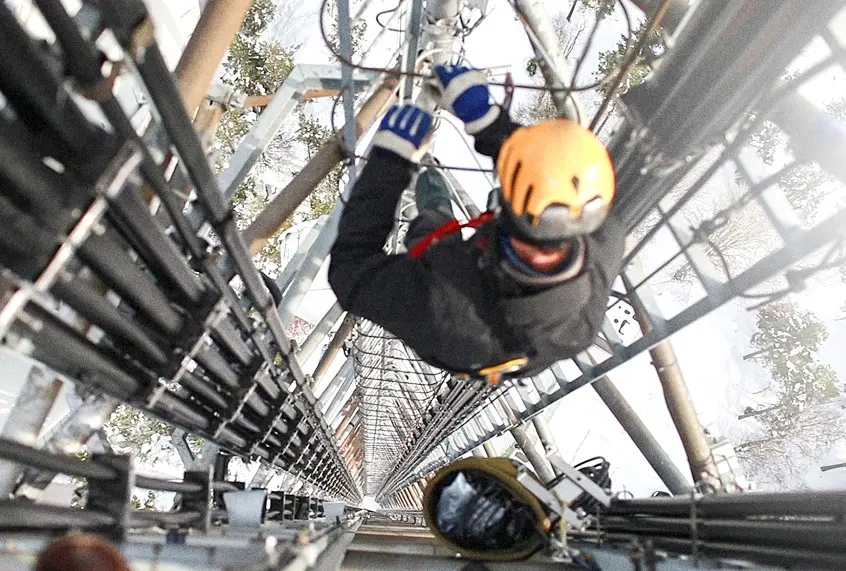
As the United States hurtles toward a fully interconnected, high-speed digital future, a quiet yet catastrophic human toll is mounting thousands of feet above the ground. Driven by sweeping federal mandates to expand wireless broadband and modernize broadcast networks, communications tower climbers are scaling heights of up to 2,000 feet—surpassing the scale of iconic landmarks like One World Trade Center.
However, this rapid digital expansion, accelerated by the Federal Communications Commission’s (FCC) massive spectrum repack and the push for ubiquitous rural connectivity, has collided with a sobering reality: a severe labor shortage of qualified rigging professionals, inadequate federal oversight, and an inherently perilous work environment.
The consequences have been fatal. Across the nation, tower technicians are falling to their deaths, suffering catastrophic equipment failures, and paying the ultimate price for compressed timelines and corporate expedience. While commercial television and radio stations pour tens of millions of dollars into federal lobbying to protect their financial interests, safety advocates, industry leaders, and grieving families are sounding the alarm. They warn that the current rush to meet arbitrary federal deadlines is transforming routine structural upgrades into a game of lethal roulette.
Detailed Chronology: A Trajectory of Tragedy
The dangers inherent in the post-auction spectrum repack and aggressive wireless deployment are not abstract projections; they are written in the tragic fates of workers who have lost their lives on the job.
The Miami Gardens Disaster
In September, a routine antenna replacement project in Miami Gardens, Florida, turned fatal. The assignment—upgrading equipment for WSVN-Channel 7—claimed the lives of three young men working high above the city:
- Brachton Barber, 23, of Longwood, Florida
- Benito Rodriguez, 35, of Tampa, Florida
- Marcus Goffena, 31, of Sidney, Ohio
The triple fatality stunned the tower-climbing community, laying bare the profound risks involved when multiple technicians operate in hazardous, high-altitude conditions under intense pressure to complete upgrades swiftly.
The Fordland Broadcast Tower Collapse
Just months later, in April, structural catastrophe struck a rural community in Missouri. A massive 1,980-foot broadcast tower in Fordland, Missouri—utilized by Ozarks Public Television—suffered a catastrophic structural collapse.
The incident claimed the life of Stephen Lemay, 56, of Blaine, Washington. Lemay, described by loved ones as a dedicated family man, was working on the towering structure when it gave way. The collapse triggered immediate local and federal investigations into the structural integrity of aging broadcast infrastructure subjected to the rigorous demands of modern equipment retrofits.
These incidents are part of a broader, deeply concerning statistical trend. Industry monitors note that fatalities among tower workers continue to occur with alarming regularity, punctuated by high-profile collapses and equipment failures that expose systemic vulnerabilities in how infrastructure projects are managed and executed.
Supporting Context & Metrics: The Scale of the Crisis
To understand why communications tower work has become so hazardous, one must examine the intersection of sweeping federal policy, massive industry lobbying, and an almost completely unregulated labor landscape.
The FCC Spectrum Repack
Nearly 1,000 television stations are scheduled under an FCC mandate to relocate to new broadcast channels to clear airwaves for mobile broadband services. This massive logistical undertaking, known as the "spectrum repack," requires an unprecedented volume of physical labor. Crews must scale thousands of aging towers to install, adjust, or replace heavy antennas and transmission lines.
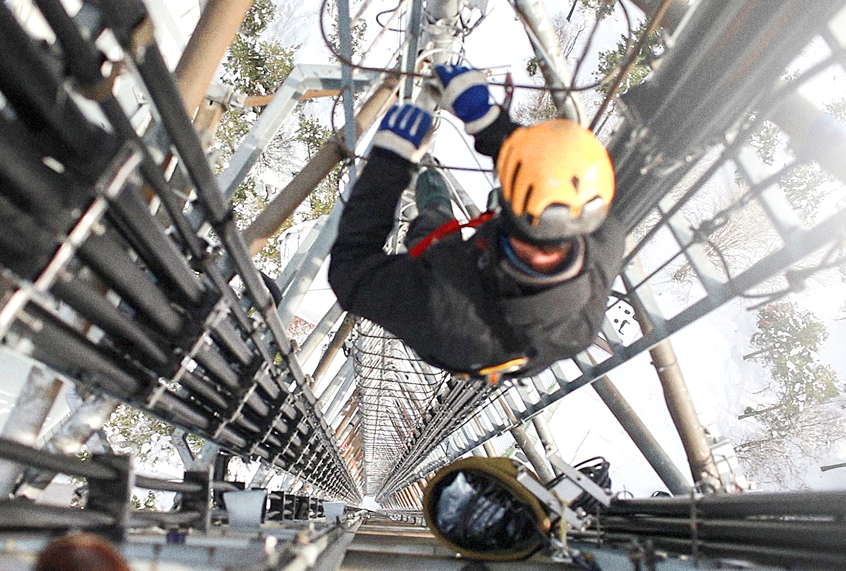
The pressure to complete this work on an aggressive schedule is immense. While the FCC set a target completion date of July 3, 2020, the logistics of upgrading towers that reach heights of 2,000 feet—nearly 250 feet taller than One World Trade Center—present extraordinary engineering and safety challenges. Workers face punishing conditions, including extreme wind shears, heavy structural loads, complex electrical hazards, and the constant threat of catastrophic structural failure.
The Lobbying Apparatus and Economic Pressures
While workers face exponentially higher mortality rates on the job, the commercial broadcast and wireless industries maintain a massive presence in Washington, D.C. Commercial TV and radio stations spent nearly $29 million on federal lobbying in 2017 alone, ensuring that their economic and operational interests remained front and center in legislative debates.
The push for speed is frequently framed as an economic necessity in a globally connected world. Proponents argue that delaying the repack stalls the rollout of rural broadband and damages American technological competitiveness. However, critics argue that this economic framing disregards the human cost absorbed exclusively by the labor force carrying out the physical transformations.
Regulatory Blind Spots and OSHA’s Limitations
Perhaps the most alarming aspect of the tower-climbing crisis is the regulatory vacuum in which these workers operate. The Occupational Safety and Health Administration (OSHA) has historically lacked rules specifically tailored to the unique, high-risk environment of communications tower construction and maintenance.
Although OSHA initiated steps toward dedicated safety standards during the Obama administration—spurred by a grim spike in 2013 that saw 13 tower workers killed, eclipsing the total from the previous two years combined—comprehensive federal enforcement remains elusive.
Experts have repeatedly testified to the inadequacies of current oversight. Dr. David Michaels, who served as assistant secretary of labor for OSHA, previously noted that tower workers face a risk of fatal injury 25 to 30 times higher than the average American worker, characterizing the disparity as "clearly unacceptable."
Furthermore, Thomas Fuller of Illinois State University has pointed out that tower climbing remains a poorly regulated industry with minimal oversight. Speaking before OSHA, Fuller emphasized that as towers age and operators add multiple generations of heavy antennae, these structures become exponentially more hazardous. Compounding the issue, workers and subcontractors frequently hesitate to report structural deficiencies or unsafe site conditions for fear of losing their contracts, knowing there is no responsive federal agency equipped to intervene in a timely manner.
Official Statements and Industry Disconnect
A stark divide exists between federal policymakers pushing for accelerated infrastructure deployment and the industry veterans warning of an impending safety catastrophe.
Warnings from Tower Erectors
Jim Tracy, chairman of the National Association of Tower Erectors (NATE), issued a blunt warning to Congress regarding the unrealistic expectations of the post-auction repack.
"There is one inescapable fact," Tracy stated. "There are not, at present, enough qualified workers to perform all the tower work we will be required to complete."
Tracy and other industry leaders have persistently urged lawmakers not to sacrifice worker safety on the altar of speed, pointing out that rushing complex structural modifications forces companies to rely on undertrained personnel or overworked crews.

Congressional Push for Speed
Conversely, a powerful bloc of 56 members of Congress—including prominent figures such as Representative Steve Scalise (R-La.) and Representative Darrell Issa (R-Calif.)—adopted an opposing stance. In formal correspondence directed to FCC Chairman Ajit Pai, these lawmakers urged the agency to hold firm to the strict July 2020 completion deadline, emphasizing the economic urgency of expanding rural broadband access.
"Ultimately, it’s a matter of economic necessity in today’s globally-connected world," the lawmakers wrote, prioritizing rapid deployment over extended safety windows.
Operational Realities on the Ground
Station engineers caught in the middle of this policy tug-of-war have expressed deep unease. Bill Hayes, director of engineering for Iowa Public Television, captured the ethical dilemma facing station management:
"You can be gambling at best with the reliability of your station’s service, and at worst you’re gambling with people’s lives."
This sentiment underscores the profound tension between corporate delivery schedules and the irreplaceable value of human life. When stations and network operators rush to meet compressed deadlines, safety protocols are frequently bypassed, leading to the devastating outcomes witnessed in Florida and Missouri.
Future Outlook: Charting a Safer Path Forward
As the telecommunications landscape continues to evolve toward 5G, next-generation broadcast standards, and expanded rural broadband networks, the demand for tower infrastructure will only intensify. The lessons drawn from the tragedies of recent years demand a fundamental re-evaluation of how federal agencies, industry associations, and private contractors approach worker safety.
1. Reforming Regulatory Frameworks
OSHA and federal lawmakers must expedite the implementation and strict enforcement of comprehensive safety standards explicitly designed for communications tower workers. Vague guidelines and minimal penalties for safety violations do nothing to deter negligent practices. Regulatory bodies must be empowered to conduct rigorous, proactive inspections of high-altitude work sites before accidents occur.
2. Decoupling Deadlines from Safety
Federal agencies, including the FCC, must build flexibility into infrastructure mandates. Arbitrary completion deadlines that outpace the availability of certified, highly trained rigging professionals create an environment of desperation. Safety must be codified as a non-negotiable prerequisite, superseding commercial speed and lobbying pressures.
3. Professionalization and Accountability of Labor
The tower-climbing industry must transition from an informal, highly subcontracted labor market into a standardized profession requiring mandatory certifications, rigorous safety training, and transparent reporting mechanisms. Workers must be granted robust whistleblower protections, allowing them to halt work on structurally compromised towers without fear of financial reprisal or job loss.
Ultimately, the expansion of America’s digital infrastructure must not be built upon the preventable deaths of its most vulnerable workers. Ensuring that every technician returns home safely from the heights of a 2,000-foot tower is not merely a regulatory obligation—it is a fundamental moral imperative for a modern society.