Executive Overview
In an era defined by hyper-digitization, the architectures that govern how we transfer value, store data, and establish trust are undergoing a foundational transformation. For decades, the digital economy has relied on a centralized paradigm. Whether sending fiat currency online, verifying an identity, or executing a corporate contract, individuals and enterprises have been forced to route their digital interactions through trusted third parties—commercial banks, centralized cloud providers, government agencies, and payment processors. While these institutions provide necessary coordination, they also introduce significant friction: high transaction fees, vulnerability to single points of failure, administrative delays, and a constant exposure to data breaches.
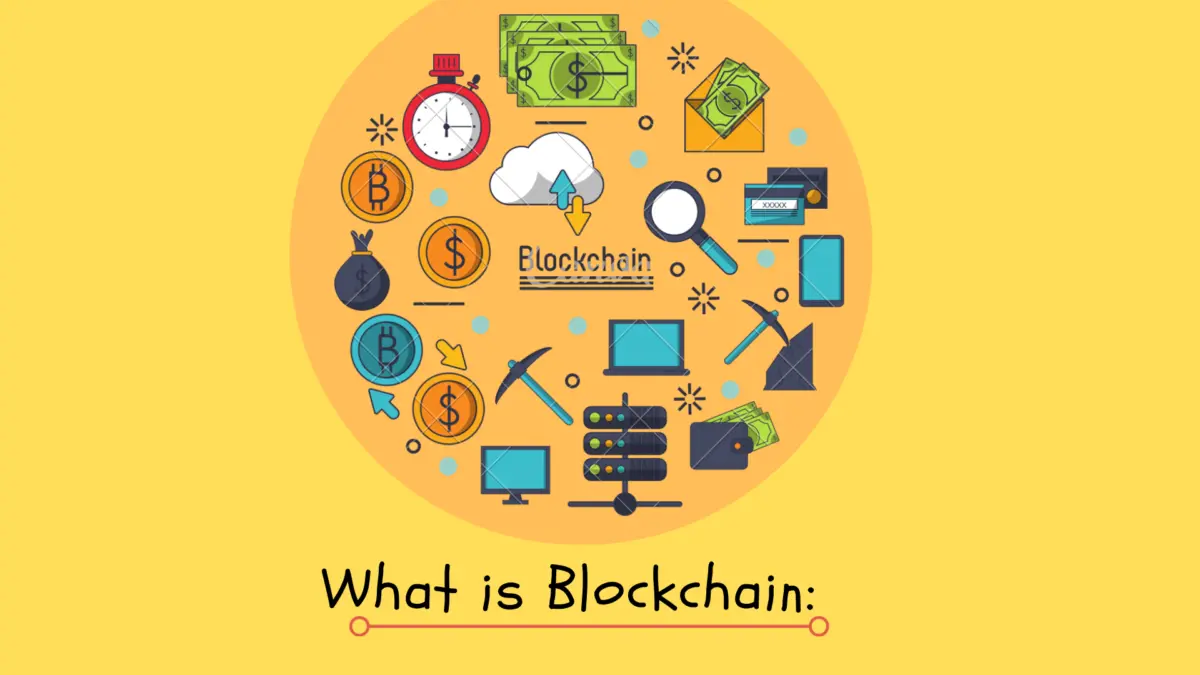
Enter blockchain technology: a decentralized, cryptographically secure digital ledger that upends the traditional centralization model. By distributing a permanent, immutable record of transactions across a vast peer-to-peer network of computers (or "nodes"), blockchain eliminates the need for intermediaries. It allows two parties to execute a transaction directly, transparently, and securely, without requiring mutual acquaintance or institutional oversight.
Although the technology first entered the public consciousness as the cryptographic backbone of Bitcoin, its applications now extend far beyond speculative digital assets. Today, multinational conglomerates—including Walmart, IBM, Siemens, and Pfizer—are deploying distributed ledger technology (DLT) to revolutionize supply chain traceability, secure healthcare records, streamline legal documentation, and transform enterprise operations. This report provides an exhaustive examination of blockchain technology, tracing its historical roots, dissecting its core mechanics, evaluating its real-world enterprise deployments, and projecting its trajectory over the coming decade.
Detailed Chronology: The Evolution of Distributed Consensus
The realization of blockchain technology was not a sudden epiphany, but rather the culmination of decades of research in cryptography, computer science, and distributed systems.
1991: The Cryptographic Genesis
The conceptual foundation of blockchain was laid in 1991 by two research scientists, Stuart Haber and W. Scot Stornetta. Working at Bell Communications Research (Bellcore), Haber and Stornetta sought to address a fundamental flaw in the digital age: the ease with which digital documents could be altered, backdated, or forged without leaving a trace.
In their seminal paper, "How to Time-Stamp a Digital Document," they proposed a cryptographically secured chain of blocks where each document was stamped with a time and securely linked to its predecessor using hash functions. If any data within a document in the chain were modified, the cryptographic hash would change, immediately breaking the chain and alerting observers to the tampering. While this system was never commercialized on a mass scale, it introduced the core architecture of tamper-evident digital ledgers.
1998: The Quest for Digital Scarcity
Throughout the late 1990s, cypherpunks and cryptographers attempted to apply these cryptographic timestamping methods to the creation of decentralized digital cash. In 1998, computer scientist and software developer Nick Szabo proposed a mechanism known as "Bit Gold."
Bit Gold was designed as a decentralized digital currency system that required participants to dedicate computational power to solve cryptographic puzzles, creating verifiable proof-of-work (PoW). Although Bit Gold was never formally launched, it anticipated the core economic and computational mechanics of modern proof-of-work blockchains and introduced Szabo to the concept of "smart contracts"—self-executing code stored on a blockchain.
2008–2009: The Satoshi Nakamoto Breakthrough
The modern era of blockchain began on October 31, 2008, when an anonymous programmer or group of programmers operating under the pseudonym Satoshi Nakamoto published a whitepaper titled "Bitcoin: A Peer-to-Peer Electronic Cash System."
Nakamoto’s breakthrough solved the "double-spending problem"—the risk that a digital asset could be duplicated and spent twice—without relying on a central clearinghouse. By combining Haber and Stornetta’s cryptographic chaining, Szabo’s proof-of-work concepts, and peer-to-peer networking protocols, Nakamoto created the Bitcoin blockchain. On January 3, 2009, Nakamoto mined the genesis block of the Bitcoin network, embedding a satirical news headline regarding bank bailouts into the block’s code, cementing the technology’s anti-establishment ethos.
Technical Architecture: How Blockchain Works
To fully appreciate the disruptive potential of blockchain, one must understand the underlying mechanics that separate it from traditional databases and client-server architectures.
Distributed Ledger Technology (DLT) vs. Traditional Databases
At its core, a database is a collection of structured information stored electronically in a computer system. Traditional databases are typically managed using a client-server architecture, where an administrator maintains absolute control over the database. The administrator can view, edit, delete, or modify records at will. While efficient, this architecture creates a catastrophic vulnerability: if the central server is compromised, hacked, or subjected to malicious insider tampering, the entire system’s integrity is destroyed.
In contrast, a blockchain is a distributed ledger shared across a decentralized network of independent computers, known as nodes.
- Immutability: Once data is written to a blockchain, it is permanent. Because each block contains a cryptographic hash of the previous block, a timestamp, and transaction data, altering historical data would require rewriting every subsequent block—a feat that demands more computational power than any single malicious actor can muster.
- Consensus Mechanisms: Before a new block of transactions can be added to the ledger, a majority of nodes in the network must mathematically verify its validity using consensus algorithms (such as Proof of Work or Proof of Stake).
- Decentralization: Because the ledger is replicated across thousands of nodes worldwide, there is no single point of failure. If one node experiences a hardware failure or a security breach, the rest of the network continues to operate seamlessly, cross-referencing and rejecting corrupted data.
Step-by-Step Transaction Lifecycle
- Initiation: A user requests a transaction, such as transferring digital value or executing a smart contract.
- Broadcasting: The transaction request is transmitted across the peer-to-peer computer network (nodes).
- Validation: Network nodes validate the transaction using established algorithmic rules (checking user signatures, verifying account balances, etc.).
- Block Formation: Validated transactions are grouped together into a data structure known as a "block."
- Consensus & Hashing: Nodes compete to solve a cryptographic puzzle (in Proof-of-Work systems) or validate stakes (in Proof-of-Stake systems). Once consensus is reached, the block is permanently sealed with a cryptographic hash.
- Chaining & Finality: The new block is cryptographically linked to the previous block, creating an unbreakable chain of records. The transaction is now finalized and immutable.
Enterprise Applications and Real-World Metrics
While cryptocurrencies remain the most visible application of blockchain technology, global enterprises are increasingly adopting Distributed Ledger Technology to optimize complex, multi-party business processes.
1. Supply Chain Traceability and Food Safety
One of the most profound enterprise adoptions of blockchain is in global logistics and food safety. Foodborne illnesses such as E. coli and Salmonella, alongside accidental allergen contamination, cost the global food industry billions of dollars annually and pose severe public health risks. Historically, tracing the exact origin of a contaminated batch of food through complex, fragmented supply chains could take weeks or months.
To combat this, retail giant Walmart, in collaboration with IBM and the IBM Food Trust network, implemented blockchain-based supply chain tracking.
- Metric in Action: Prior to blockchain integration, tracing the path of a sliced mango from farm to supermarket shelf took 7 days, 6 hours, and 18 minutes. Using blockchain technology, Walmart reduced that tracing time to 2.2 seconds.
- Impact: In the event of a contamination outbreak, suppliers can instantly pinpoint the exact farm, processing plant, and transportation vector, isolating the affected products immediately and preventing widespread public illness.
2. Pharmaceutical Verification
Pharmaceutical supply chains face severe challenges regarding counterfeit drugs, which account for hundreds of billions of dollars in global trade and endanger patient lives. Major pharmaceutical companies, including Pfizer, are utilizing blockchain to track serial numbers of drug packaging from manufacturing facilities to pharmacies. This cryptographic chain of custody ensures that counterfeit medications cannot infiltrate legitimate distribution networks.
3. Smart Contracts in Legal and Financial Sectors
Beyond tracking physical goods, blockchain enables smart contracts—self-executing digital agreements written directly into code. When predefined conditions are met (e.g., a shipment of goods arrives at a port, verified via Internet of Things sensors), the smart contract automatically executes the transaction, releasing payment or transferring title ownership without human intervention or legal intermediaries.
Comparative Analysis: Blockchain vs. Traditional Infrastructure
| Feature | Traditional Centralized Database | Blockchain / Distributed Ledger Technology |
|---|---|---|
| Control | Centralized (Managed by a single authority/admin) | Decentralized (Distributed across a network of nodes) |
| Data Mutability | High (Administrators can alter, delete, or edit records) | Immutable (Records are permanent and tamper-evident) |
| Trust Model | Institutional Trust (Requires trusting a bank, cloud provider, or broker) | Cryptographic Trust (Trust is established via math and network consensus) |
| Single Point of Failure | Vulnerable (Server downtime or breach compromises the system) | Resilient (Network continues running even if multiple nodes fail) |
| Intermediaries | Required (Clearinghouses, brokers, legal auditors) | Eliminated (Peer-to-peer execution via consensus) |
| Transparency | Restricted (Access is strictly controlled by the database owner) | Public or Permitted (Transparent audit trail for authorized participants) |
Future Outlook: The Next Decade of DLT
As we look toward the latter half of the decade, blockchain technology is transitioning from an experimental sandbox into core enterprise infrastructure.
Integration with Emerging Technologies
The true potential of blockchain will be unlocked through its synergy with other exponential technologies:
- Artificial Intelligence (AI): AI agents can autonomously execute smart contracts, negotiate micro-transactions, and analyze vast datasets secured on public and private ledgers.
- Internet of Things (IoT): IoT devices embedded in shipping containers, vehicles, and smart grids can log telemetry data directly onto a blockchain, creating an automated, tamper-proof audit trail for industrial automation.
Overcoming Scalability and Regulatory Hurdles
Despite its immense promise, blockchain faces ongoing challenges. Scalability remains a primary bottleneck; public blockchains often struggle with high transaction throughput and energy consumption, though the transition to energy-efficient consensus mechanisms (such as Ethereum’s move to Proof-of-Stake) has significantly mitigated environmental concerns. Furthermore, regulatory frameworks are evolving globally. Governments are racing to establish compliance standards regarding data privacy (such as GDPR), anti-money laundering (AML), and know-your-customer (KYC) regulations within decentralized ecosystems.
Conclusion
Blockchain technology represents a fundamental paradigm shift in how humanity establishes trust. By replacing fallible human intermediaries and vulnerable centralized silos with immutable cryptographic math, DLT offers a transparent, secure, and efficient foundation for the future global economy. As CEOs, entrepreneurs, and institutional leaders increasingly recognize these operational efficiencies, blockchain is poised to revolutionize finance, healthcare, logistics, and legal frameworks over the next five to ten years.
For ongoing analysis and updates on blockchain developments, follow the official coverage channels or visit specialized industry archives.