Executive Overview
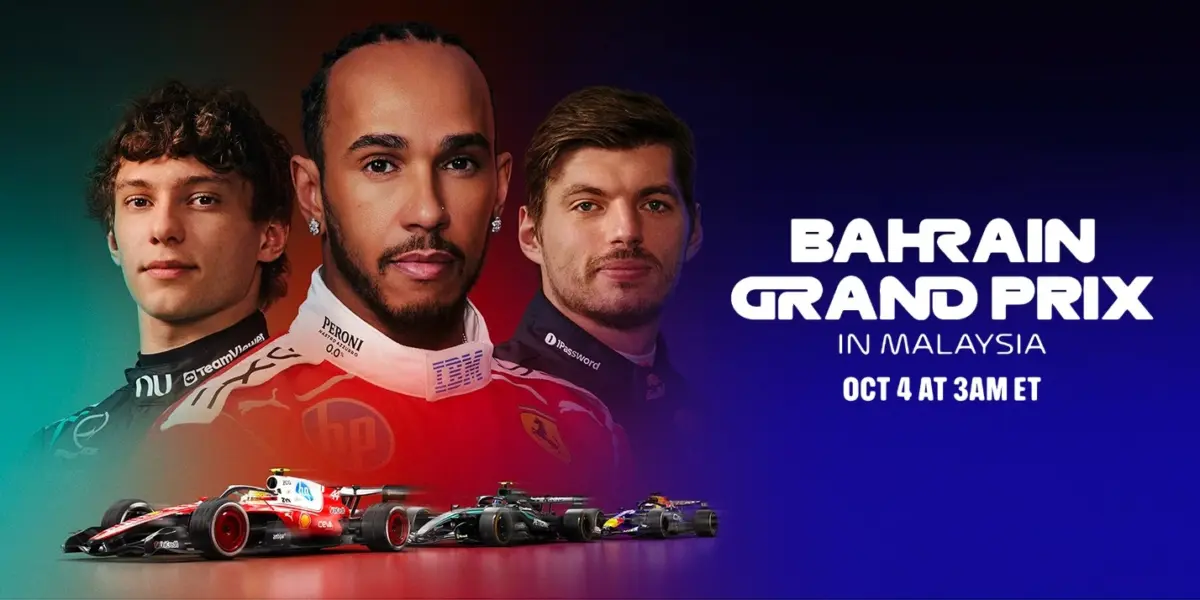
In a rare and unexpected crossover of sports broadcasting, geopolitics, and digital streaming strategy, the Bahrain Grand Prix is available to stream entirely for free on Apple TV this weekend, bypassing the platform’s standard subscription requirements. However, the headline-grabbing event comes with a geographic twist that has captured the attention of motorsport purists and casual viewers alike: despite bearing the official nomenclature of the Bahrain Grand Prix, the race is taking place thousands of miles away at the Sepang International Circuit in Malaysia.
This unusual scheduling anomaly is the direct consequence of escalating regional conflicts, specifically the ongoing war involving Iran, which forced the cancellation of the traditional early-season fixture in Sakhir. Determined to honor commercial obligations and maintain their presence on the global sporting calendar, Bahraini race organizers pivoted, sponsoring a substitute standalone event at one of Formula 1’s most revered historic tracks.
For American motorsport fans, the arrangement offers a massive silver lining. Usually locked behind walled subscription ecosystems, the high-stakes race is accessible to anyone within the United States with a compatible device and the willingness to either stay up well past midnight or catch the action on-demand. With qualifying already having delivered a dramatic shake-up—highlighted by Max Verstappen securing his maiden pole position of the season for Red Bull, flanked by Lewis Hamilton and championship leader Kimi Antonelli—the unscripted drama on the asphalt is matched only by the logistical marvel behind the broadcast.
This comprehensive report examines the convergence of geopolitical disruption, alternative race hosting, and Apple’s aggressive push into live sports streaming. We break down the schedule, the qualifying results, how to access the broadcast, and what this unprecedented event means for the future of Formula 1 distribution.
Detailed Chronology: How Sepang Became "Bahrain"
The journey that led to a Bahrain-branded Grand Prix unfolding on Malaysian soil is a case study in modern motorsport adaptability under duress.
The Original Calendar and Regional Disruption
In a standard Formula 1 season, the Bahrain Grand Prix serves as an early-season staple, typically held under the glittering floodlights of the Bahrain International Circuit in Sakhir. Known for its abrasive track surface, challenging cooling demands, and history of wheel-to-wheel racing, the Sakhir race is a cornerstone of the Middle Eastern leg of the F1 calendar.
However, the geopolitical landscape of 2026 upended conventional scheduling. The ongoing conflict involving Iran introduced severe safety risks, airspace restrictions, and logistical impossibilities for large-scale international sporting events in the immediate Persian Gulf sub-region. In the interests of safety and logistical integrity, Formula 1 management and local authorities jointly decided to cancel the official Bahrain Grand Prix as originally chartered.
The Pivot to Malaysia
Rather than allowing the race slot—and the substantial economic and tourism value it represents for Bahrain—to evaporate entirely, race organizers pursued an innovative alternative. They entered into an agreement to sponsor and promote a standalone Grand Prix weekend at the Sepang International Circuit in Malaysia.
While Sepang was dropped from the official FIA Formula 1 World Championship calendar years ago, it remains a beloved venue among drivers, team principals, and purist fans. Designed by Hermann Tilke, the circuit is famous for its sweeping high-speed corners, long straights that promote heavy braking duels, and notoriously unpredictable tropical weather, which can transform a dry race into a torrential survival test within minutes.
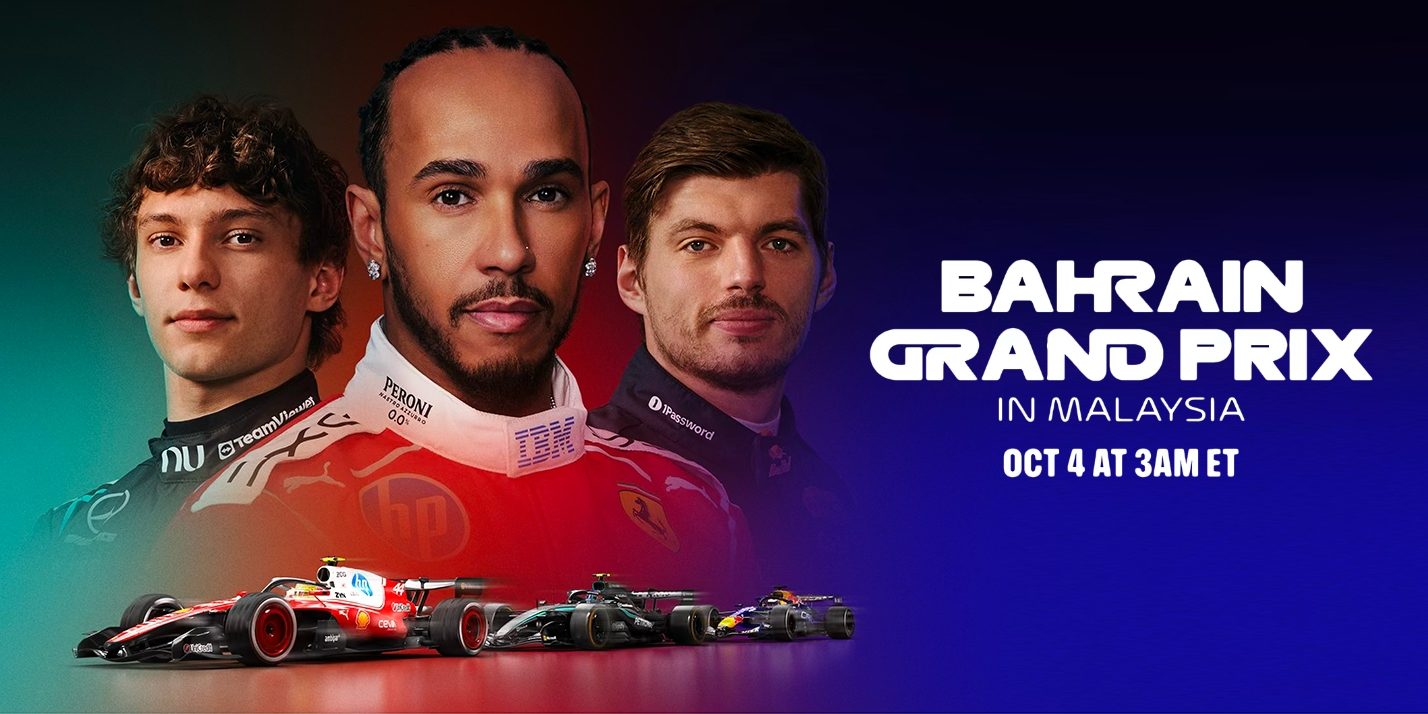
Though this Malaysian event does not count toward the official World Championship points standings in the traditional sense of a calendar slot, it has been structured as a high-prestige exhibition race. It preserves the commercial agreements, satisfies broadcast commitments, and provides fans with a world-class motorsport spectacle on a track long lamented as a loss to the official championship.
The Apple TV Free-Access Window
To maximize global viewership for this one-off event, Apple—which holds regional streaming rights and digital distribution deals—opted for an aggressive promotional strategy. Abandoning the paywall that typically governs live racing content on the platform, Apple announced that the entire weekend’s action, culminating in the live race broadcast, would be available to stream completely free. No active Apple TV+ subscription is required for viewers located within the United States; all that is necessary is a compatible hardware device, a stable internet connection, and a willingness to brave the clock.
Supporting Context & Metrics: Streaming Access, Schedule, and Grid Shake-Up
For viewers hoping to catch the action live, the logistics require careful navigation of time zones, broadcasting windows, and hardware compatibility.
Broadcast Schedule and Viewing Logistics
Because the race is physically taking place in Malaysia (GMT+8), American audiences face a late-night or early-morning viewing commitment:
- Live Broadcast Coverage Starts: 1:50 AM Eastern Time (EDT) / 10:50 PM Pacific Time (PDT)
- Race Start Time: 3:00 AM Eastern Time (EDT) / 12:00 AM Pacific Time (PDT)
- On-Demand Availability: For those unwilling or unable to stay up through the early morning hours, the entire race broadcast will be accessible on-demand via the Apple TV app shortly after the checkered flag drops, allowing fans to watch at a more reasonable hour.
How to Access the Stream
Viewing the Bahrain Grand Prix from Sepang requires no complex subscription sign-ups or payment details. Viewers simply need to:
- Ensure they are located within the United States.
- Download or open the Apple TV app on a supported device.
- Navigate to the featured banner promoting the free stream.
The Apple TV app’s ubiquity ensures widespread accessibility. It is natively integrated into Apple hardware (iPhone, iPad, Apple TV 4K, Mac), but is also readily downloadable across a vast array of third-party ecosystems, including Amazon Fire TV sticks, Roku streaming players, PlayStation and Xbox gaming consoles, select smart TVs running Android TV or webOS, and directly through any standard web browser at tv.apple.com.
Qualifying Results: A New Order on the Grid
While the venue and broadcasting terms are unorthodox, the competitive action on the track is entirely genuine, and Saturday’s qualifying session delivered some of the most surprising and compelling results of the season thus far.
- Pole Position – Max Verstappen (Red Bull Racing): After struggling with balance and car setup during various stages of the regular season, the reigning powerhouse managed to extract every ounce of performance from his Red Bull machine. Verstappen clinched pole position in stunning fashion, marking his first pole of the year. This performance represents Red Bull’s most potent opportunity to secure a victory thus far, injecting fresh momentum into their campaign.
- Second Place – Lewis Hamilton: Proving that class is permanent, the veteran champion put in a masterclass lap during the dying seconds of Q3, placing his machine squarely on the front row. Hamilton’s positioning sets up an electric drag race down to Sepang’s tight Turn 1.
- Third Place – Kimi Antonelli: The rising star and current championship leader continued his remarkable campaign by securing third on the grid. Antonelli’s composure under pressure in unfamiliar track conditions underscores why he is regarded as the benchmark of the current generation.
Official Statements & Industry Reactions
The convergence of geopolitical contingency planning and Big Tech’s expansion into live sports has generated significant commentary across the motorsport and technology sectors.
Speaking on condition of anonymity, a senior commercial representative for the Bahrain promotion highlighted the necessity of adaptability:

"When regional realities prevent us from gathering in Sakhir, our commitment to our partners, our fans, and the sport does not vanish. Sepang welcomed us with open arms, and the collaboration has resulted in a unique celebration of motorsport heritage. We are thrilled that fans worldwide can witness this unprecedented event."
Meanwhile, industry analysts tracking Apple’s media strategy view the decision to lift the paywall as a calculated masterstroke in customer acquisition. By offering a premier motorsport event completely free of charge, Apple lowers the barrier to entry for millions of casual sports fans who have not yet integrated the Apple TV application into their regular viewing habits.
A digital media strategist noted:
"Live sports are the last remaining unifier in television. By coupling a major racing event with a zero-dollar price point, Apple is effectively running a massive, high-visibility customer acquisition funnel. Viewers who download the app to watch Verstappen and Hamilton race at Sepang may well stick around for the platform’s broader slate of original programming and sports offerings."
Future Outlook: What Sepang and Free Streaming Mean for Formula 1
As the dust settles on this unique Malaysian weekend, industry experts are left evaluating the broader implications of what occurred. The intersection of geopolitical vulnerability and digital distribution may well serve as a blueprint for how sports leagues handle future disruptions.
The Resurgence of Classic Circuits
The enthusiastic reception of the Sepang weekend by both drivers and fans has reignited conversations regarding the modern F1 calendar. As the championship expands globally, adding lucrative street circuits and modern purpose-built tracks in new markets, purists have frequently lamented the loss of classic, high-degradation, driver-favoring tracks like Sepang. The success of this sponsored standalone event proves that demand for these circuits remains extraordinarily high. While a permanent return to the official FIA calendar faces numerous logistical and financial hurdles, the viability of exhibition races or special showcases has been firmly established.
The Evolution of Sports Broadcasting
Apple’s strategy of leveraging high-profile sporting events through flexible pricing models points toward an increasingly dynamic broadcasting landscape. As traditional cable packages continue to erode and streaming platforms compete aggressively for subscriber dominance, the deployment of temporary free-access windows to hook audiences is likely to become an increasingly common tactic.
For fans, the takeaway is overwhelmingly positive: a historic track, a completely free broadcast, an unpredictable grid featuring Verstappen, Hamilton, and Antonelli at the sharp end, and a testament to the resilience of international sport in the face of global uncertainty. As the red lights prepare to go out at 3 AM Eastern Time, the motorsport world will be watching—proving that whether in Sakhir or Sepang, the passion for racing transcends borders and broadcasts alike.