In an educational landscape dominated by digital screens, artificial intelligence, and mounting academic pressure, experts argue that unstructured breaks could help teenagers focus, connect, and ultimately learn better.
Executive Overview
As millions of American students transition from the open-ended freedom of summer vacation back to the rigid structures of the K-12 school year, a quiet crisis is unfolding in classrooms nationwide. Young people and educators are returning to school amid a persistent national anxiety over a "learning recession" dating back to 2013. This academic stagnation converges with unprecedented concerns regarding youth mental health, the outsourcing of critical thinking to artificial intelligence, and the relentless proliferation of smartphones and social media, which continuously batter students’ attention spans and self-esteem.
Yet, as students spend upwards of seven hours a day tethered to desks—increasingly interacting with digital learning platforms and mandatory devices like iPads and Chromebooks—an essential pillar of human development is systematically disappearing: unstructured play and physical movement.
While elementary schools frequently grapple with the adequacy of recess, high school students are almost universally denied formal breaks. Recent policy updates, including landmark guidance from the American Academy of Pediatrics (AAP), suggest this oversight is a critical mistake. Emerging research indicates that recess and active "movement breaks" are not mere frivolities or rewards for good behavior, but biological necessities. For teenagers navigating the crucible of high school, scheduled time to goof off, socialize, and rest the brain is vital for cognitive retention, emotional regulation, and combating chronic absenteeism.
Detailed Chronology: The Evolution of Recess Policy and Modern Screen Saturation
To understand how high schools became deserts of unstructured time, one must examine how the modern school day evolved over the past decade.
- 2013: The American Academy of Pediatrics originally issues comprehensive policy guidance on the critical role of school recess. At this juncture, the modern educational technology boom was in its infancy. Smartphones were commonplace, but the ubiquitous integration of one-to-one tablet programs, Chromebooks, and algorithm-driven software had not yet completely colonized the classroom and home environments. Crucially, the 2013 guidelines focused heavily on younger children, leaving older adolescents largely out of the conversation.
- 2013–2026: Researchers note a continuous, stubborn learning recession across American schools. Concurrently, the deployment of ed-tech accelerates. Classrooms shift heavily toward screen-based learning models. Outside of school, commercial entities capitalize on children’s digital dependency—exemplified by products like "Netflix Playground," an app aimed at children aged 8 and younger designed to make it "easier to say ‘yes’ to playtime" via digital characters.
- 2024: Faced with soaring rates of chronic absenteeism following the pandemic disruptions, Medford High School in Medford, Massachusetts, takes a radical step. The administration introduces a daily "movement break" for high schoolers to engage in social and physical activities. The intervention yields staggering results: the percentage of chronically absent students plummets from 36 percent in 2024 to 20 percent by the end of the 2025–26 school year.
- May 2026: Recognizing the profound shift in the technological and psychological landscape of youth, the American Academy of Pediatrics publishes updated guidance titled "The Crucial Role of Recess in School." For the first time, the AAP expands its official recommendation, stating that recess should be a protected part of the school day for children all the way through 12th grade. The policy urges pediatricians to lobby for state laws protecting equal access to daily recess and to educate parents on the cognitive and emotional necessity of play for adolescents.
- Late 2026: State legislatures begin reacting unevenly to the crisis. While states like Oklahoma double elementary recess requirements to 40 minutes daily, and Pennsylvania mandates 30 minutes for kindergarten through fifth grade, high schools remain entirely unaddressed by statutory protections, leaving adolescents to navigate grueling academic marathons without a single mental breather.
Supporting Context & Metrics: The Science of "Wakeful Rest" and Socioeconomic Disparities
The denial of recess to high schoolers is rooted in an outdated pedagogical assumption: that more time spent sitting behind a desk translates directly to more knowledge acquired. Modern neuroscience and developmental psychology decisively debunk this premise.
The Biological Need for "Wakeful Rest"
According to the AAP, "wakeful rest" is an indispensable biological element of learning that must occur immediately after an individual takes in new information. When a student absorbs complex academic data, the brain requires a period free from heavy cognitive demands to initiate memory consolidation and long-term retention.
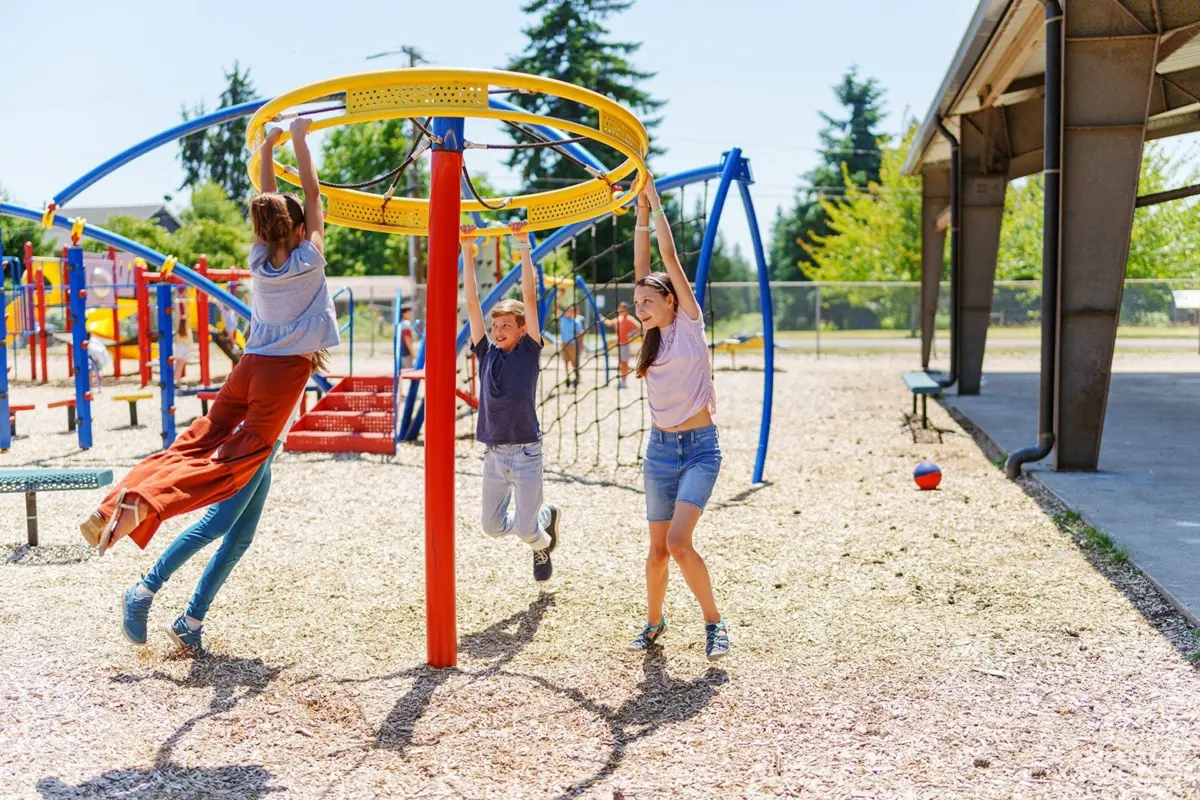
Sitting passively through back-to-back lectures or staring at digital spreadsheets starves the brain of this necessary downtime. Activities typically categorized as "goofing off"—daydreaming, doodling, listening to music, casual chats with peers, or kicking a soccer ball around a field—allow the brain’s default mode network to process information.
Research highlights the tangible cognitive dividends of active breaks:
- Cognitive Performance: A 2025 review of studies encompassing children and teens aged 5 to 18 confirmed that short, active breaks directly assist students in staying on task and drastically improve classroom behavior, thereby reclaiming valuable instructional time for teachers.
- Executive Function: Physical activity during breaks enhances information processing, working memory, attention spans, and overall executive function. As the Centers for Disease Control and Prevention (CDC) notes, students who are physically active consistently demonstrate better grades, higher school attendance, improved classroom behaviors, and superior cognitive performance.
The Equity Gap in Play
The absence of structural recess is not just an academic issue; it is a profound equity crisis. Access to safe physical activity outside of school is starkly stratified by socioeconomic status and race.
Recent federal data from the CDC reveals that nearly a quarter of U.S. children live in neighborhoods completely devoid of a public park or playground, with a similar proportion lacking basic infrastructure like sidewalks and walking paths. When schools fail to guarantee recess, low-income students and children of color bear the brunt of this deprivation.
A landmark 2023 study of 153 low-income California elementary schools, conducted by researchers Hannah Thompson and Rebecca London, found that students in larger, lower-income schools received significantly less recess time than their peers in smaller, wealthier districts. Thompson and London emphasize that "students of color and those in low-income areas routinely have less recess time than students in wealthier and whiter areas."
Because physical activity during the school day is strongly associated with improved academic outcomes—such as better reading scores for third graders in low-income schools—withholding movement as a disciplinary tactic disproportionately punishes vulnerable students and widens achievement gaps.
Official Statements and Expert Perspectives
The pushback against hyper-structured, screen-heavy educational environments is gathering momentum among educators, advocates, and youth leaders who view joy not as a luxury, but as a fundamental human right.
Denisha Jones, executive director of Defending the Early Years—a nonprofit advocating for experiential childhood education—criticizes the aggressive early-childhood tech integration:
"We’re told, ‘Oh no, your kid needs an iPad in kindergarten.’ No, they don’t. They do not," Jones asserts. "To learn, children—and really people of all ages—need opportunities to play, create, and move."
Professor Rebecca London of the University of California, Santa Cruz, author of Rethinking Recess: Creating Safe and Inclusive Playtime for All Children in School, highlights the enforcement gap regarding state-mandated recess laws:
"There are no tracking systems," London explains. "I think the piece of it that’s really important is it gives parents something to fall back on. They can go back to their classroom teacher or their principal and say, ‘My child’s having recess withheld, and that’s against the law.’"
The emotional and psychological dimensions of unstructured time are underscored by young organizers like Aisha Isabel, program director at Youth in Action in Providence, Rhode Island. Facilitating the Outdoor Equity program, Isabel works to help young people of color find belonging in natural spaces while dismantling systemic barriers:
"I always need breaks and discussions to be able to absorb material, and the only time I was able to have that was at recess," Isabel reflects, recalling her own school days. "We would know we had a test after recess, so we’d practice or study together or just talk about it casually, in a way that helped us absorb it—not in a very structured, sit-down way, because that doesn’t help me."
Challenging the rigid paradigms of modern educational institutions, Isabel adds:
"I think it’s important for adults who hold the structure to ask: How can joy come back into these systems? Because so much of school is sitting behind one another, standing and walking in lines, and learning in very specific ways. I would say there are ways to be creative and learn just by being outside. I say this often to adults: Joy isn’t a reward. Joy can be something we draw on when we’re going through obstacles."
Future Outlook: Reimagining the High School Experience
As the American Academy of Pediatrics expands its advocacy to include adolescents through the 12th grade, school districts across the United States face a critical reckoning. The success story of Medford High School—where a simple daily movement break dramatically slashed chronic absenteeism by nearly half—proves that systemic interventions do not always require massive financial investments; rather, they require a paradigm shift in how educational leaders view time management.
Looking ahead, the pressure on policymakers to enact enforceable, universal recess laws for all grade levels is intensifying. However, passing legislation is only the first step. True reform will require dismantling the pervasive "sit-and-get" instructional model, auditing the efficacy of commercial ed-tech products that keep students trapped behind screens, and actively dismantling the socioeconomic and racial disparities that dictate which children get to play and which are forced to sit still.
Ultimately, integrating recess and unstructured movement into high schools acknowledges a fundamental truth about human development: teenagers are not productivity machines designed to process data continuously. They are developing adolescents who require physical freedom, social connection, and moments of unbridled joy to navigate the complexities of education and life. Giving high schoolers time to goof off is not a distraction from learning—it is the foundation upon which true learning becomes possible.