Beneath the sun-drenched, turquoise waters that define the idyllic island nation of Palau lie frontiers that remain more alien to humanity than the surface of the moon. While tourists flock to Micronesia to snorkel among vibrant, shallow-water coral gardens, a team of international marine scientists is plumbing far greater depths. They are hunting for answers in the "mesophotic coral ecosystems"—a twilight zone stretching from 30 to 150 meters (roughly 100 to 500 feet) below the ocean’s surface.
These "deep reefs" exist in a perpetual semi-darkness, squeezed between the sunlit shallows and the pitch-black abyss. Long overlooked due to the immense physical hazards and logistical hurdles of deep-sea diving, these ecosystems represent one of the final blind spots in modern marine biology. Are they safe havens for climate-threatened shallow species? How do their food webs function without abundant sunlight? What hidden biodiversity lurks within their rocky folds?
To answer these foundational questions, a team led by California Academy of Sciences zoologist Luiz Rocha deployed ingenious scientific "time capsules"—Autonomous Reef Monitoring Structures (ARMS)—across the western Pacific. Left undisturbed on the seabed for nearly a decade, these structured PVC hotels accumulated a dense, miniature metropolis of marine life. Following their long-awaited retrieval, scientists are now laboring through thousands of samples at the Palau International Coral Reef Center. Though only a fraction of the collected organisms have been formally categorized, this multi-year effort is beginning to sketch the contours of a profoundly complex, vulnerable, and largely misunderstood underwater world.
Detailed Chronology: A Decade-Long Mission in the Deep
The journey to decode the mesophotic reefs began in earnest nearly ten years ago, driven by a growing urgency to understand ecosystems that were changing before scientists even knew how they operated.
2016–2018: Planting the Seeds of Discovery
Between 2016 and 2018, Dr. Luiz Rocha and his collaborative network of researchers—backed by private funding—embarked on a deployment campaign across the Pacific. Rather than relying solely on fleeting, high-risk technical dives or robotic submersibles, the team wanted a way to systematically sample the microfauna of the deep reefs.
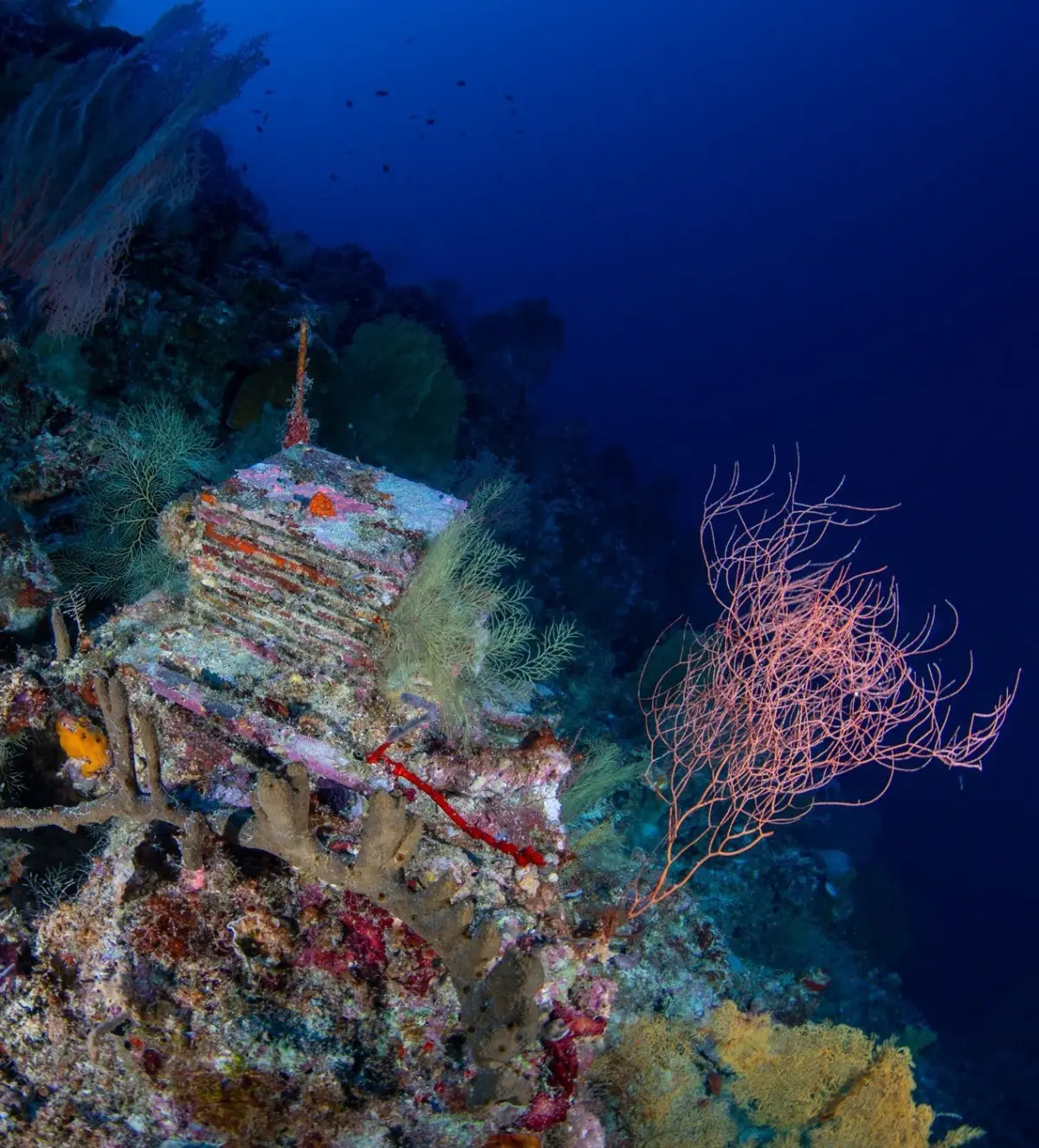
They turned to ARMS: stacks of open, standardized PVC plates bolted together and anchored to the seafloor. Looking like minimalist, gray high-rise hotels for marine life, these devices were installed at precise depth intervals—typically 10 meters for shallow controls, 50 meters for upper mesophotic zones, and 100 meters down in the dim, crushing depths of the deep reefs.
Once secured, the researchers walked away, leaving the ocean to do the work. Over the next several years, drifting larvae of sponges, gorgonians, corals, crustaceans, and mollusks drifted into the plates, colonizing the micro-habitats and creating self-sustaining miniature ecosystems.
May 2024: The Retrieval Expedition
On a bright, sunny afternoon in May 2024, a team of specialized technical divers gathered on a boat in Palau’s waters. Among them was Vox journalist Byrd Pinkerton, documenting the expedition for the Unexplainable podcast. The mission: retrieve the ARMS units submerged nearly a decade prior.
Because human physiology severely limits survival times at 100 meters due to rapid gas absorption in body tissues, the divers faced a razor-thin margin of error.
"We have a very, very short time," Rocha explained from the boat. "And by short time, I mean five minutes. Six, seven minutes."
Working with military-like precision, the deep-diving specialists descended to the platforms, carefully transferred the encrusted structures into clear protective tubs to prevent loose organisms from washing away, and relayed them upward through a staged team of mid-depth divers. The process required hours of slow, deliberate decompression ascents to prevent the dreaded bends, underscoring the severe operational bottlenecks that have historically stymied deep-reef research.
Post-Retrieval Lab Work: The Midnight Assembly Line
The retrieved structures—some sparse, others brilliantly matted with orange, red, green, and white organisms—were rushed immediately to the Palau International Coral Reef Center. There, they were immersed in seawater bins and subjected to a rigorous, multidisciplinary sorting process.
Under the direction of Smithsonian Global ARMS program director Chris Meyer, researchers dismantled the PVC plates layer by layer. Meyer photographed each plate to capture an immutable visual record of the micro-ecosystem, while team members—fueled by coffee and snacks—sifted through sediment trays, scraped tissue samples into cryogenic tubes, and cataloged an astonishing array of life.
Weeks of laboratory work yielded roughly 3,000 biological specimens, ranging from sea squirts (our closest invertebrate relatives) to delicate octocorals, flat sponges shot through with silver filaments, and vivid pink-and-white nudibranchs.
Supporting Context & Metrics: Decoding the Twilight Zone
To understand why projects like ARMS are groundbreaking, one must first grasp the vast operational and biological gulf separating shallow reefs from their mesophotic counterparts.
The Physics and Biology of Mesophotic Ecosystems
In shallow reefs, hard corals thrive through an ancient symbiotic relationship with photosynthesizing algae called zooxanthellae. The algae provide essential nutrients; in return, the corals secrete calcium carbonate, erecting the physical architecture of the reef.
As depth increases, solar radiation plummets, and water temperatures drop. Photosynthesis becomes virtually impossible for traditional shallow-water corals, forcing deep-reef organisms to adapt alternative survival mechanisms. They rely on suspended organic matter, particulate detritus, or chemical energy sources that scientists are only beginning to map.
The Standardized Power of ARMS
Historically, marine biologists sampled deep reefs by snapping off random chunks of encrusted rock or using robotic arms on submersibles. While informative, these samples lacked uniformity.
"Every one’s the same," noted Chris Meyer of the Smithsonian. "It’s prefab housing, and then you just look to see who moves in."
By offering a standardized surface area, uniform hiding spots, and identical materials across diverse geographic locations—from Palau and Guam to the Marshall Islands and French Polynesia—ARMS eliminate experimental variables. This allows scientists to directly compare biodiversity patterns across depths, regions, and decades.
Current Progress Metrics
Months after the May 2024 extraction, processing the massive haul remains an uphill battle:
Total Specimens Collected: Approximately 3,000 individual samples.
Species-Level Identification: Only 3 percent of samples have been definitively matched to known species.
Genus-Level Identification: Slightly under 20 percent possess a genus designation.
The Bulk Classification: The vast majority of specimens currently reside in broad, higher-level taxonomic categories, awaiting intensive DNA sequencing and morphological review to separate known entities from potential discoveries.
Official Statements and Expert Insights
The painstaking labor of cataloging the deep reef’s inhabitants is matched only by the researchers’ profound sense of wonder regarding the ecological relationships hiding within the plates.
Dr. Luiz Rocha, Curator of Ichthyology, California Academy of Sciences:
"Anything between 30 meters and 150 meters is really, really unknown… Whenever we go somewhere, the first thing we find is new species. It’s the most basic thing in science you can do."
Reflecting on the sheer volume of unknowns, Rocha emphasized that marine science lacks even the proper framework of questions for these environments:
"In some ways, we don’t even know what questions to ask. We really only know what the crucial questions are when we have a baseline understanding of the ecosystem. And for deep reefs, we don’t have that yet."
Chris Meyer, Director, Smithsonian Global ARMS Program:
Highlighting the elegance of the monitoring hardware:
"It’s prefab housing, and then you just look to see who moves in."
Sarah Tweedt, Research Biologist, Smithsonian Institution:
Describing the laboratory objectives during the sorting phase:
"We’re looking for every unique thing, which we call a morphospecies… And we’re trying to get some representative tissue samples from all of these things so that we can sequence the DNA—and match the DNA to the organism."
Tweedt and her colleagues found particular joy in uncovering complex symbiotic relationships between species under microscopes—such as pompom crabs brandishing miniature anemones, delicate "skeleton insects" of the sea blending into hydroids, and vibrant red sea snails cohabitating with crimson octocorals.
Future Outlook: Passing the Torch
As global climate change continues to supercharge ocean temperatures and trigger catastrophic bleaching events across shallow-water coral reefs worldwide, the scientific community has increasingly pinned its hopes on the "deep reef refuge hypothesis." This theory suggests that mesophotic ecosystems might act as a biological lifeboat, sheltering species capable of migrating upward if shallows become entirely uninhabitable.
Yet, recent studies have demonstrated that deep reefs are not immune to warming waters, severe storms, and anthropogenic pressures. Without a foundational understanding of their food webs, energy sources, and species connectivity, conservationists have no reliable roadmap to protect them.
When asked whether humanity will successfully piece together the sprawling puzzle of the deep reefs within his lifetime, Dr. Rocha offered a pragmatic, long-view perspective:
"No, we will not assemble the puzzle, no… but we’ll generate some good pieces for the next generation to assemble."
With the ARMS data now locked into genetic sequencing pipelines and international repositories, those pieces are finally coming to light—offering a fragile, glowing glimpse into the ocean’s most well-kept secret.




%2520%25C2%25A9%2520Luiz%2520Rocha.jpg)
%2520%2520%25C2%25A9%2520Steve%2520Lindfield.jpg)