Executive Overview
For decades, digital marketing has operated under a transactional assumption: if you want eyeballs, you have to buy them. Businesses large and small have routinely funneled billions of dollars into programmatic ad spend, paid social campaigns, and search engine marketing (SEM) to secure digital distribution. However, a seismic shift in platform architecture—combined with a deeper understanding of modern algorithmic psychology—offers an alternative route.
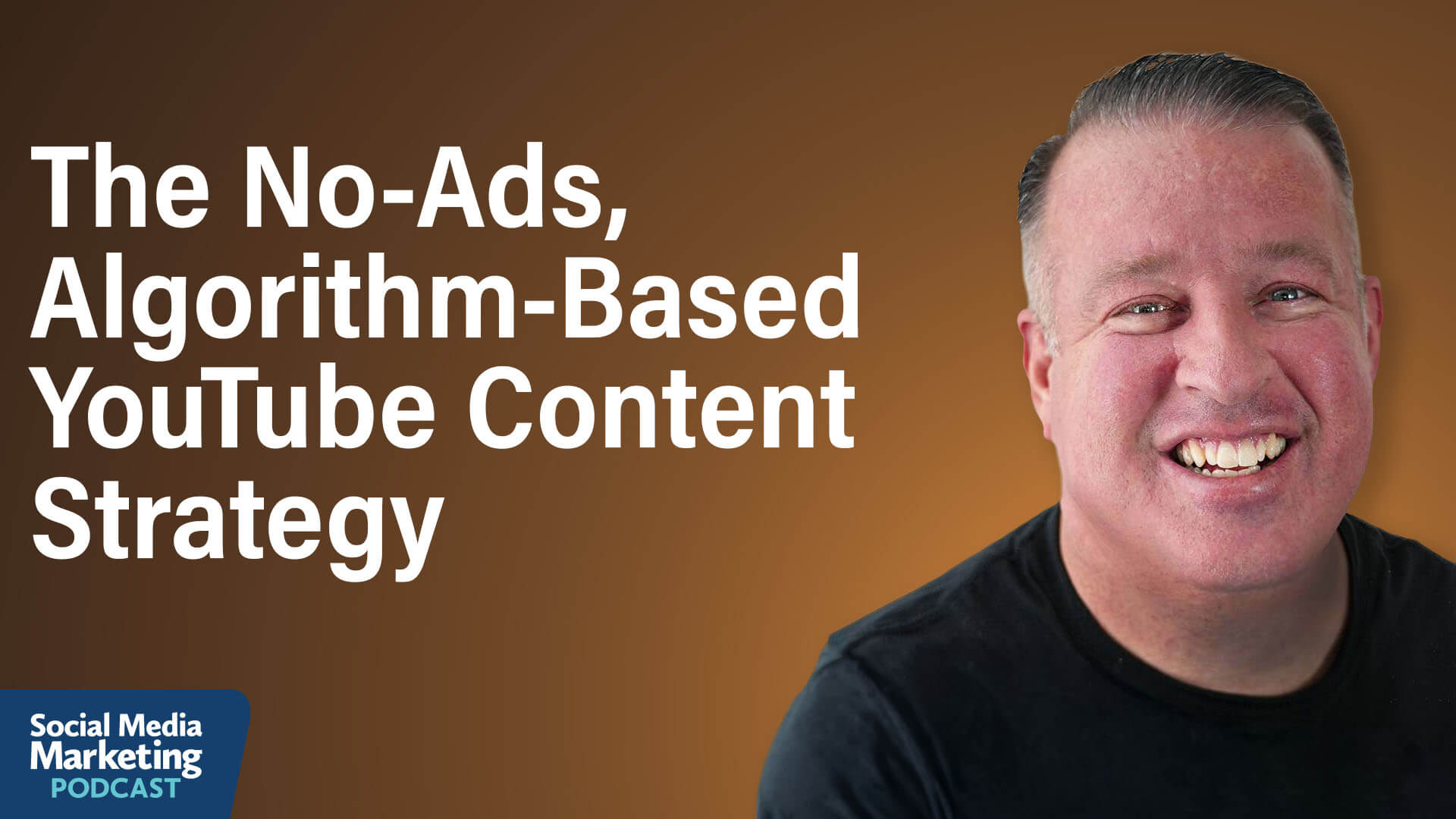
According to YouTube growth expert and strategist Derral Eves, collaborating with YouTube’s artificial intelligence rather than paying for distribution can unlock a powerful, self-sustaining stream of ideal customers without spending a single dollar on traditional advertising.
The core thesis challenges conventional corporate logic. Most businesses approach YouTube as an unorganized content repository or misapply it by directly targeting "customers" instead of "viewers." Since YouTube evolved into an AI-driven ecosystem, its primary objective has shifted from simple view-counting to a more sophisticated behavioral goal: identifying what content individuals want and keeping them engaged on the platform for as long as possible.
By restructuring content strategy around psychographic needs, curiosity gaps, and the "know, like, and trust" marketing framework, brands can tap into YouTube’s organic recommendation engine. This comprehensive guide explores the operational framework behind building an organic customer acquisition funnel on YouTube, featuring case studies from e-commerce, healthcare, and educational niches that prove zero-ad-spend scalability is entirely achievable.
Detailed Chronology: The Evolution of YouTube’s AI and the Shift in Content Strategy
To understand how to leverage YouTube today, one must examine how the platform’s underlying mechanics have transformed over time.
The 2013 Paradigm Shift
Prior to 2013, YouTube’s recommendation architecture was largely view-based. Videos that accumulated raw clicks floated to the top, which frequently incentivized clickbait and low-retention content. Recognizing that this model would eventually degrade user experience, YouTube engineered an AI-driven recommendation system designed to optimize user session duration and satisfaction.
This AI engine does not care about a company’s sales quota or product launch schedule. Its sole directive is to match specific content to specific viewers based on their watch history, topical interests, and behavioral patterns. Consequently, content creators stopped competing merely for isolated clicks and started competing for long-term viewer engagement.
Real-World Validation: The E-Commerce Case Study
The viability of this algorithmic shift is best illustrated by a case study from one of Derral Eves’s students, an e-commerce entrepreneur who built a multi-million-dollar business selling used office furniture sourced from corporate foreclosures. Operating with zero email list and zero ad spend, his initial strategy bypassed promotional product listings entirely.
- Phase 1: Value-First Content. Instead of filming inventory catalogs, the entrepreneur produced review videos, product comparison breakdowns, and educational guides detailing what to look for when buying specific types of office furniture.
- Phase 2: Audience Expansion. Guided by Eves, the student broadened his scope. He introduced format variations such as tier-ranking videos (e.g., S-tier to F-tier office chairs) to capture the attention of adjacent demographics like gamers searching for affordable seating. He also utilized live streams to answer consumer questions directly.
- Phase 3: Dual-Engine Visibility. Because these videos were optimized for viewer value, they surfaced prominently in both YouTube search and Google search results. Roughly 75% to 80% of his views eventually came from YouTube’s organic recommendation engine alone. Viewers who arrived via search would watch three or four consecutive videos, triggering the AI to recommend his channel with increasing frequency.
As the business scaled, the founder layered in traditional marketing tools—such as automated email drip sequences—alongside his YouTube foundation. The result? Total sales surpassed $20 million, completely bootstrapped through organic distribution, with annual May live-streamed sales events routinely outperforming traditional Black Friday metrics.
Supporting Context & Metrics: The Psychographic Framework
Transitioning from a transactional mindset to a value-first model requires a fundamental shift in how creators analyze their audience. Most businesses rely strictly on demographics (age, gender, location). While demographics dictate how content should be presented (e.g., matching the tone of Gen Alpha versus Boomers), they fail to explain why someone watches.
Demographics vs. Psychographics
Psychographics reveal what motivates a viewer based on their values, fears, life circumstances, and deep-seated needs. Eves applies Abraham Maslow’s hierarchy of needs to analyze viewer motivation, noting that the emotional connection a user has to content directly correlates to where they sit on that hierarchy.
Consider the case of an immunologist who wanted to attract new patients to her practice through YouTube. Initial uploads had gained moderate traction, but Eves’s audience analysis revealed that her viewers skewed heavily between the ages of 45 and 65-plus.
Translating that demographic data into psychographic understanding revealed a deeper narrative: these viewers were experiencing health wake-up calls, declining energy, blood pressure irregularities, or processing the loss of loved ones.
- The Content Pivot: Armed with this psychological profile, the doctor published a video titled "10 Foods to Naturally Lower Blood Pressure," which quickly accumulated 1.7 million views.
- The Algorithmic Follow-Up: A follow-up video detailing "5 Mistakes People Make When Checking Their Blood Pressure" garnered over 865,000 views in under two weeks. Recognizing the tight topical connection, YouTube’s AI began actively recommending the second video to everyone who had watched the first.
- The Business Result: As viewers consumed multiple videos, trust compounded. They discovered she sold nutritional supplements like B12 and offered virtual consultations. YouTube functioned as the top of a wide marketing funnel, smoothly moving users through the "know, like, and trust" continuum without a single heavy-handed sales pitch.
Official Strategies & Methodologies for YouTube Mastery
Achieving organic growth on YouTube is not a matter of luck; it requires a disciplined, repeatable methodology. Industry experts outline six core pillars for success:
1. Target the Viewer, Not the Customer
Never start by asking what your business wants to sell. Instead, ask what your ideal customer desperately needs to learn, experience, or feel entertained by right now. Use the Outlier Research Method—searching YouTube for your niche and identifying videos that generated massive view counts on relatively small channels—to analyze what topics resonate. Leverage AI tools like ChatGPT, Claude, or Gemini to sift through comment sections, uncovering gaps in existing content that your brand can uniquely fill.
2. Earn the Click with a Curiosity Gap
Titles and thumbnails must work in tandem to establish a compelling curiosity gap tailored to the viewer’s immediate situation. However, the true test happens in the opening seconds. Viewers decide whether to stay or leave within the first 5 to 10 seconds of a long-form video (and in milliseconds on Shorts). Avoid opening with corporate introductions, logos, or sales pitches. Switch immediately from a "sell" mindset to a "help" mindset.

3. Build Know, Like, and Trust Before Selling
Delivering heavy value upfront creates a psychological compounding effect. When users receive genuine value early on, watch time increases. High watch time signals quality to YouTube’s AI, triggering wider distribution.
- Case in Point: The Dry Creek Wrangler School channel, run by a 60-something cowboy sharing unedited words of wisdom beside a campfire, amassed 1.6 million subscribers and 8.5 million views on breakout videos like "When You Just Ain’t Got It Together." By meeting a profound psychological need for guidance among younger male demographics without commercial polish, his physical cowboy school quickly booked out a three-and-a-half-year waitlist entirely through organic trust.
4. Find an Authentic Voice
Corporate jargon and overly polished marketing scripts sound inauthentic on camera. Eves advises creators to imagine the camera is simply a trusted friend across the dinner table. Environmental adjustments—such as recording in front of a live Zoom audience to capture genuine conversational energy—can help speakers unlock their natural, authoritative voice.
5. Choose the Right Format and Mechanism
Structure your content using proven mechanisms. For beginners, listicles ("5 biggest mistakes…") provide a natural, rhythmic progression that maintains viewer retention. For advanced creators, the ABC Storyline Structure—where Storyline A is the core topic, Storyline B is the underlying "why," and Storyline C is a unifying emotional thread—drives deep engagement. Furthermore, account for device consumption: long-form content performs exceptionally well on living room televisions (lean-back mode), while short-form content excels at top-of-funnel discovery on mobile devices.
6. Utilize Analytics to Iterate and Adjust
Treat every upload as a data-driven experiment. Analyze retention graphs religiously:
- If users drop off in the first 10 seconds, either your title/thumbnail attracted the wrong audience, or your opening failed to honor the curiosity gap.
- If drop-offs occur mid-video, your pacing is sagging or you failed to tease a future payoff.
Creators who systematically analyze these data points and adjust their execution outpace those who rely on guesswork.
Future Outlook: The Intersection of AI and Human Connection
As generative artificial intelligence tools flood the digital landscape with synthetic content, the value of authentic human connection on platforms like YouTube is poised to skyrocket. Consumers are growing increasingly weary of sterile, automated touchpoints and corporate homogeneity.
The future belongs to brands and creators who treat YouTube not as an advertising billboard, but as a community-building engine. By shifting focus away from traditional distribution costs and leaning into the psychological nuances of viewer behavior, businesses can build resilient, organic acquisition funnels that outlast shifting ad algorithms. In an era of infinite noise, the most effective marketing strategy remains remarkably simple: help people first, earn their trust, and let the algorithm do the heavy lifting.