By Global Media Desk
Published: March 2023
Executive Overview
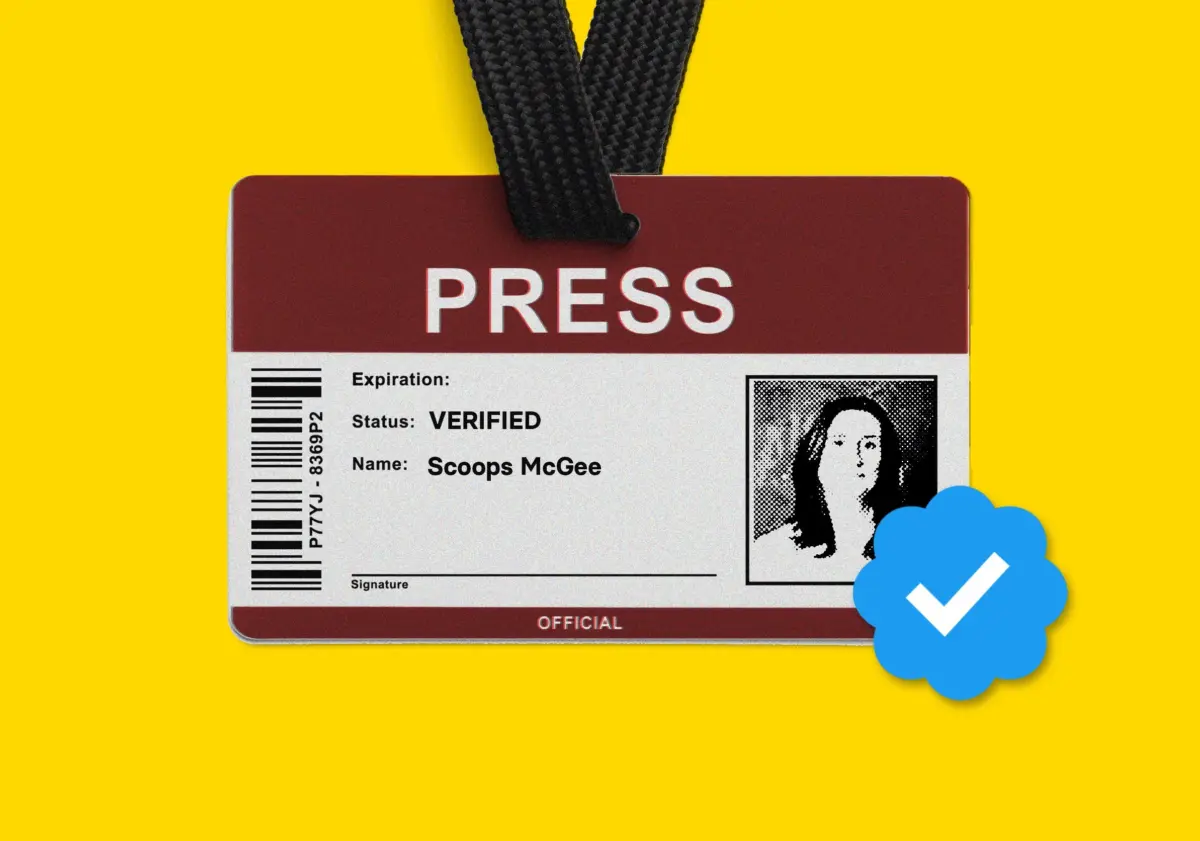
As the media industry navigates an era of unprecedented digital disruption, a seemingly modest software configuration change has ignited a fierce ideological and financial debate across global newsrooms. Beginning April 1, Twitter—under the leadership of CEO Elon Musk—is slated to systematically strip legacy blue checkmarks from accounts that refuse to enroll in the $8-per-month Twitter Blue subscription service or the steep $1,000-per-month "Verified Organization" enterprise tier.
This policy pivot has forced media executives, publishers, editors-in-chief, and independent journalists to confront a fundamental question: What is the true value of digital verification in an ecosystem where authority can be purchased?
While legacy media giants like The New York Times, The Washington Post, The Los Angeles Times, Politico, and Insider have drawn a hard line, declining to foot the bill for institutional or individual subscriptions, smaller digital publications and independent journalists are weighing the hard realities of algorithmic distribution. For them, paying the toll may be a necessary business expense to secure visibility in an increasingly crowded digital marketplace.
This report investigates the high-stakes calculus unfolding across the media landscape, examining how news organizations are responding to Twitter’s new monetization strategy, the structural breakdown of platform authority, and the broader implications for the future of digital news distribution.
Detailed Chronology: The Road to the Pay-for-Verification Model
The impending expiration of legacy verifications represents the culmination of months of chaotic, iterative changes to Twitter’s trust and safety architecture since Elon Musk acquired the platform in late 2022.
The Post-Acquisition Landscape
Following Musk’s takeover, the platform’s verification system—historically designed as a non-transferable marker of authenticity used to confirm the identity of public figures, politicians, celebrities, and journalists—was radically reimagined. The original verification badge was conceptualized in 2009 following a trademark lawsuit against Twitter, serving strictly as a safeguard against impersonation and a beacon of institutional credibility.
Under Musk, that paradigm was upended. The introduction of Twitter Blue tied the verification badge directly to financial contribution rather than background verification. Initial rollouts in late 2022 resulted in immediate waves of sophisticated impersonation campaigns, forcing temporary pauses and subsequent redesigns of the subscription tiers.
The March Toward the April 1 Deadline
By early 2023, Twitter set a firm deadline: April 1 would mark the definitive end of the "legacy" checkmarks. Accounts that failed to subscribe would lose their badges. To capture corporate and institutional spending, Twitter introduced the "Verified Organization" program, priced at a base rate of $1,000 per month. This enterprise package includes:
- Five affiliated user accounts with Twitter Blue privileges.
- A small corporate logo displayed adjacent to the account’s name and verification checkmark.
- Provisions to add further affiliated accounts at a rate of $50 per month per user.
As the deadline approached, media organizations of all sizes were forced to evaluate whether these corporate packages or individual $8 subscriptions were justifiable operational expenses.
Official Statements and Industry Positions
To gauge the industry-wide response, newsrooms across the spectrum were surveyed regarding their internal policies, budgetary allowances, and strategic philosophies concerning Twitter’s platform changes. The responses reveal a fractured media landscape divided between principled resistance and pragmatic adaptation.
The Resistance: Rejecting the Pay-to-Play Model
A powerful coalition of legacy print and digital powerhouses has categorically refused to participate in Twitter’s monetization scheme, citing the erosion of credibility and the blurring lines between verified journalism and paid subscriptions.
- The New York Times: Charlie Stadtlander, director of external communications, delivered a clear institutional stance: "We aren’t planning to pay the monthly fee for check mark status of our institutional Twitter accounts. We also will not reimburse reporters for Twitter Blue except in rare instances where this status would be essential for reporting purposes."
- The Washington Post: A spokesperson for the Post articulated a similar sentiment, emphasizing the devaluation of the badge itself: "The Washington Post will not pay for Twitter Blue service as an institution or on behalf of our journalists. It’s evident that verified checkmarks no longer represent authority and expertise."
- The Los Angeles Times: In an internal memo to the newsroom, Managing Editor Sara Yasin outlined the publication’s refusal to pay: "Some of you may be wondering whether or not the L.A. Times will pay for Twitter Blue subscriptions, and the answer right now is no, for several reasons: First of all, verification no longer establishes authority or credibility, instead it will only mean that someone has paid for a Twitter Blue subscription. Secondly, while Twitter remains an important tool for newsgathering, it is not as reliable as it once was."
- Insider: Editor-in-Chief Nicholas Carlson underscored the semantic shift in the badge’s meaning: "The value of a blue checkmark was that it said the person was who they said they are. Now a blue checkmark just says they are a Twitter Blue subscriber. That doesn’t help Twitter users or our readers."
- Politico: Anita Kumar, senior editor of standards and ethics, communicated a strict company policy to staff: "In the future, a checkmark will no longer mean you are a verified journalist. Instead, it will simply mean you are paying for benefits such as longer tweets and fewer ads. Politico will not pay for you to subscribe to Twitter Blue. You may, of course, enroll at your own expense."
- BuzzFeed Inc. (BuzzFeed, BuzzFeed News, Tasty, HuffPost, Complex): Karolina Waclawiak, editor-in-chief of BuzzFeed News, summarized the company’s cost-benefit analysis: "As a company, we do not think it’s a wise use of resources to pay for individuals to retain a blue checkmark that is no different from anyone else’s — an amateur medical expert, Elon stan, or otherwise — who is simply willing to pay the fee for a blue check."
The Pragmatists and Experimenters: Finding Value in Distribution
Conversely, a different class of digital-native outlets, niche publishers, and independent operations are taking a pragmatic, metrics-driven approach to the platform changes.
- Semafor: Co-founder Ben Smith confirmed that his organization will permit reporters to expense Twitter Blue, viewing the platform primarily through the lens of audience reach. "If it has distribution advantages for our content we will," Smith stated, noting that Musk’s adjustments to the platform’s curation algorithms heavily favor paid subscribers. "I just see it as a totally practical issue in that sense."
- The Daily Caller: Editor-in-Chief Geoffrey Ingersoll admitted personal disinterest in the status symbol—"I had planned to let mine lapse because I have no interest in being nerd famous among journalists on Twitter"—yet indicated that the organization will likely subscribe to the enterprise package to test its utility. Ingersoll noted that the publication plans to analyze performance data over several months to determine if the $1,000 monthly investment yields tangible returns. Additionally, he highlighted the practical downside of losing the ability to filter search results exclusively by verified accounts to track developing news stories.
- Entertainment and Niche Outlets: An anonymous newsroom leader at a prominent entertainment publication revealed that their outlet is leaning toward paying for verification not out of fear of geopolitical misinformation, but as a defensive measure against persistent scammers. Fraudsters frequently impersonate the publication’s writers to solicit fees from independent music artists in exchange for fabricated coverage. Maintaining verified enterprise accounts serves as a protective countermeasure.
The Independent Perspective: Freelancers and Substack Creators
For independent journalists and authors operating outside traditional newsroom structures, the calculus often favors subscription.
- Alex Kantrowitz: Former BuzzFeed News staffer and author of the Big Technology Substack newsletter noted that he subscribed immediately. "I’m definitely paying for Twitter Blue. In fact, I signed up this week," Kantrowitz said. "I don’t care about the blue checkmark, which might be a liability at this point. But getting added distribution in the For You tab is worth it for me at $8/month, given that distribution is the lifeblood of smaller media brands like Big Technology."
Supporting Context & Metrics: The Algorithmic Reality
The debate over Twitter Blue is not merely symbolic; it is intrinsically tied to structural shifts in how content is served to users. Under Musk’s administration, Twitter has heavily promoted algorithmic feeds designed to prioritize monetization and user retention.
Key technical and algorithmic factors influencing newsroom decisions include:
- The "For You" Feed Bias: Reports and platform updates indicate that algorithmic visibility on Twitter’s default "For You" timeline disproportionately rewards paid Twitter Blue subscribers and accounts followed directly by the user. Unverified accounts face potential visibility throttling, severely impacting journalists whose professional output depends on viral distribution and public readership.
- Additional Feature Utility: Beyond the badge itself, Twitter Blue subscriptions bundle several productivity tools that appeal to digital workers. These include the ability to edit tweets, post longer-form text, upload higher-resolution video, and access features that display the most-shared articles within one’s follower network.
- Future-Proofing via Stealth Options: Industry reports suggest Twitter is actively developing features that will allow subscribers to hide their blue checkmarks. For journalists who desire algorithmic reach or posting enhancements without enduring the perceived social stigma of displaying a paid badge, this feature could fundamentally alter their willingness to subscribe.
Future Outlook: The Post-Verification Media Ecosystem
As the April 1 deadline arrives, the media industry stands at a critical crossroads. The removal of legacy checkmarks will fundamentally transform the digital town square, introducing profound systemic changes:
- The Rise of Authenticity Deficits: Without a reliable, platform-backed marker of institutional identity, media consumers may find it increasingly difficult to distinguish between authentic reporting organizations and sophisticated bad actors, parody accounts, or state-sponsored disinformation campaigns.
- Decentralization of Newsroom Policies: Rather than adhering to unified industry standards, newsroom policies are fragmenting. We are entering an era where individual journalists must navigate their own digital security and promotional expenses, with some organizations embracing decentralized, reporter-led subscriptions while others maintain strict corporate detachment.
- Platform Diversification: The friction between traditional media institutions and social media platforms may accelerate the ongoing migration of journalistic talent and capital toward owned-and-operated channels—such as newsletters, direct websites, audio feeds, and alternative decentralized social networks (e.g., Mastodon, Bluesky, and Threads).
Ultimately, Twitter’s gamble to monetize verification forces a long-overdue reckoning within journalism. As platforms shift away from acting as neutral arbiters of trust toward transactional subscription models, newsrooms must decide whether to pay the toll to play on rented land or invest more deeply in direct relationships with their audiences.