Executive Overview
Take a moment to look down at what you are wearing. Did you meticulously curate this outfit to reflect your inner self, or was it chosen for you by a silent, invisible algorithm operating in the background of a multinational digital storefront?
For decades, the answer to that question would have been straightforward. Taste was dictated from the top down by visionary luxury designers—think of Karl Lagerfeld’s monumental reigns at Chanel, or the authoritative, magazine-editor arbiters of cool immortalized in pop culture by the famous "cerulean sweater" monologue in The Devil Wears Prada. Today, however, that traditional hierarchy has been dismantled. In the hyper-accelerated era of digital fast fashion, our wardrobes are increasingly dictated not by human aesthetic judgment, but by lines of code, predictive data models, and instantaneous supply chains.
Yet, this techno-hegemony has birthed a profound cultural counter-movement. As the fashion cycle accelerates into an overwhelming blur of micro-trends, a massive segment of consumers is pushing back, turning away from mass-produced digital catalogs and seeking refuge in the racks of thrift stores and digital resale platforms. Secondhand shopping—once burdened by social stigmas and economic necessity—has undergone a radical metamorphosis, transforming from a marker of scarcity into the ultimate badge of modern, hyper-personalized cool.
This deep dive investigates the friction between algorithmic "instant fashion" giants like Shein and the explosive, multi-billion-dollar secondhand renaissance, exploring how technology has reshaped both the creation of clothing and our desperate attempts to reclaim individuality through thrift.
Detailed Chronology: From Runway Autocracy to Algorithmic Hyper-Speed
To understand how our current wardrobe dilemmas came to pass, one must trace the evolutionary timeline of modern apparel production, distribution, and consumption.
The Era of Couturiers and Editors (Mid-to-Late 20th Century)
For most of the 20th century, the fashion industry operated on a rigid, seasonal calendar. Twice a year, major European design houses—primarily in Paris, Milan, and New York—debuted collections for Spring/Summer and Autumn/Winter. These creations trickled down slowly. Luxury houses set the high-water mark of trend; high-street retailers interpreted those runway silhouettes months later; and fashion magazines like Vogue and Harper’s Bazaar acted as the exclusive gatekeepers of style, telling consumers what was acceptable, desirable, and chic.
The Birth of Fast Fashion (Late 1990s–2010s)
The introduction of traditional fast fashion disrupted this cadence. Pioneered by European giants like Zara and H&M, the model collapsed the timeline between design and retail. Instead of waiting six months for a trend to manifest, these brands used agile manufacturing networks to copy runway looks and place them on store shelves within weeks. While revolutionary for its time, this era still relied heavily on human buyers, store managers’ feedback, and traditional trend forecasting agencies.
The Algorithmic Takeover and "Instant Fashion" (Present Day)
Enter the era of "instant fashion," spearheaded by ultra-fast digital-first behemoths like Shein. According to fashion journalist and Back Row newsletter author Amy Odell, these companies have supercharged the fast fashion model into hyperdrive.
"The way it works is that they use algorithms to track trends and what people are interested in," Odell explains. "And then they make a few hundred of a very large number of different items and they test demand."
This data-driven feedback loop allows companies to bypass traditional design guesswork entirely. If an algorithm detects a sudden spike in interest for a specific neckline, shade of green, or silhouette across social media data streams, it can immediately greenlight small-batch production. If consumers bite, production scales instantly; if they scroll past, the item quietly vanishes.
The scale of this algorithmic production is staggering. Shein reportedly introduces roughly 4,700 new apparel styles per day. To put that staggering figure into perspective, traditional fast-fashion pioneer Zara produces approximately 20,000 distinct styles in an entire year. Our clothes are no longer designed to express an artistic vision; they are mathematically generated to maximize click-through rates and optimize digital impulse purchases.
The Secondhand Rebellion (Pandemic to Present)
As consumers became saturated with a relentless deluge of ultra-cheap, algorithmic clothing, a cultural correction began to take shape. The COVID-19 pandemic acted as an accelerator for a phenomenon that had been bubbling beneath the surface for years: the mainstreaming of secondhand fashion.
Fueled by lockdowns, an abundance of free time, and an economic reckoning, millions of consumers—particularly younger demographics—discovered digital resale apps like Depop, Vinted, Poshmark, and The RealReal. Thrifting transitioned from a marginalized activity associated with poverty or niche countercultures into a high-status social currency traded openly across TikTok, Instagram, and YouTube.
Supporting Context & Metrics: The Anatomy of Two Opposing Markets
To fully grasp the contemporary fashion landscape, one must analyze the contrasting economics and cultural footprints of the algorithmic fast fashion machine versus the booming resale ecosystem.
The Numbers Behind Instant Fashion
- Shein’s Daily Output: ~4,700 new styles per day.
- Zara’s Annual Output: ~20,000 new styles per year.
- Environmental Toll: According to industry estimates, the fast-fashion sector is responsible for roughly 10% of global carbon emissions—more than all international flights and maritime shipping combined. The algorithmic model exacerbates this by encouraging hyper-consumption and instantaneous disposal.
The Stratified Ecosystem of Resale
Fashion journalist Hannah Marriott notes that the modern secondhand market is far from a monolithic entity; rather, it is a vast, stratified ecosystem with distinct tiers catering to different consumer needs, budgets, and desires:
- Luxury Consignment (e.g., The RealReal): These platforms target high-net-worth or aspiring luxury consumers. They take significant commission cuts but provide authentication, professional photography, and targeted promotion. They thrive primarily on high-margin designer goods, particularly luxury handbags and high-end ready-to-wear pieces.
- Gen Z-Centric & Peer-to-Peer Marketplaces (e.g., Depop, Vinted): Skewing heavily toward younger demographics, these platforms function almost like social media apps. Sellers curate personalized storefronts, style their listings with aesthetic photography, and treat secondhand clothing as an extension of personal branding and entrepreneurial side hustles.
- Mass-Market Digital Resale (e.g., eBay, Poshmark, ThredUp): These platforms occupy a broader middle ground, serving everyone from bargain hunters to vintage dealers. They offer massive inventories across all price points, acting as digital equivalents of massive department store clearance floors.
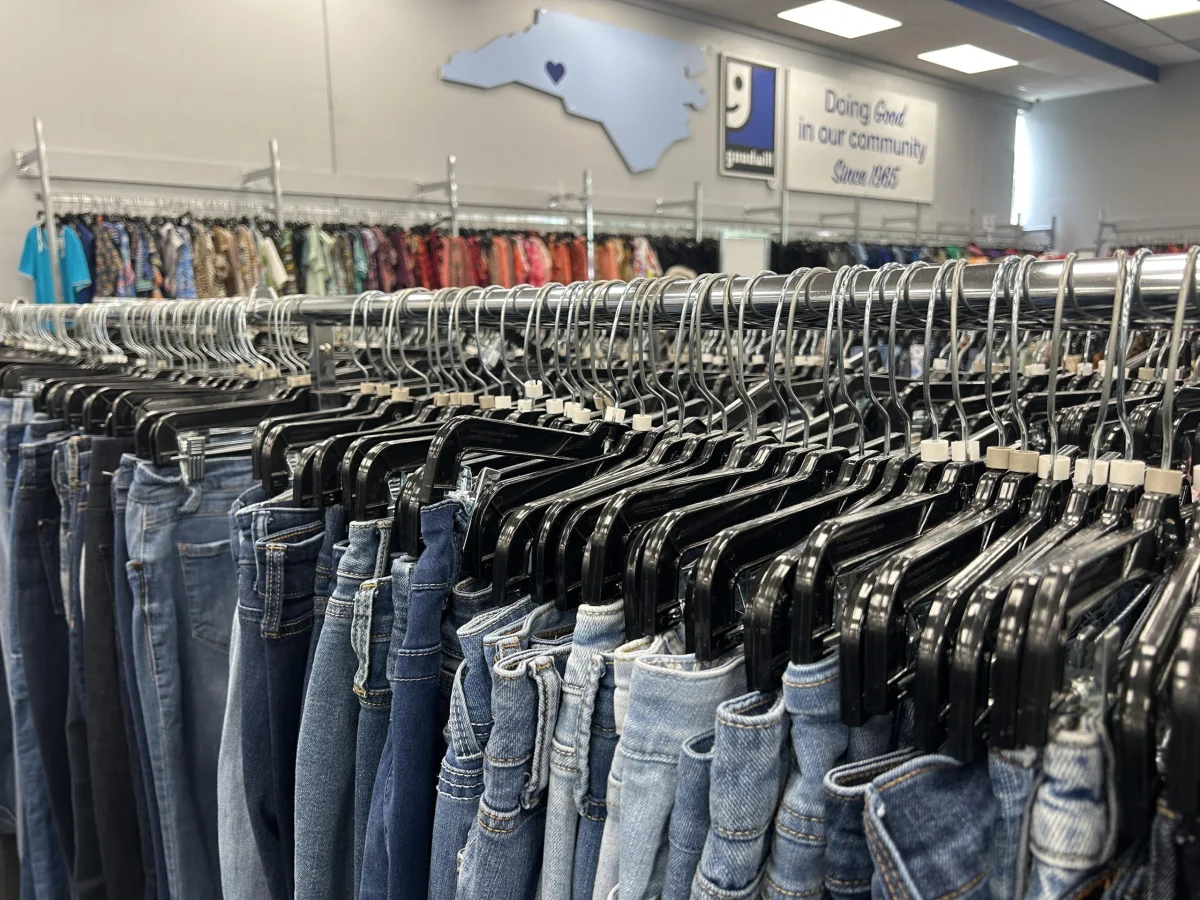
- Traditional Brick-and-Mortar Thrift Stores (e.g., Goodwill, Salvation Army): Historically serving as essential safety nets for lower-income communities, these physical storefronts are increasingly feeling the squeeze of the modern resale boom.
Official Statements & Expert Insights
Industry insiders and cultural critics offer a nuanced view of how the relationship between consumers, clothing, and capital has shifted.
Amy Odell on the Mechanics of Ultra-Fast Fashion
Reflecting on the psychological and operational shifts in modern apparel, Amy Odell emphasizes how far the industry has drifted from human-centric design:
"I’ve also heard it called instant fashion. The way it works is that they use algorithms to track trends… This model has allowed companies like Shein to completely rewrite the rules of what it means to manufacture clothing, turning wardrobe curation into a real-time data science experiment."
Hannah Marriott on the Evolution of Thrift Culture
Hannah Marriott, speaking on Vox’s Explain It to Me podcast, contextualized the historical evolution of buying secondhand:
"Secondhand clothing used to be something that there was a real sense that if you couldn’t buy new, you would buy secondhand. At the same time, it has had lots of moments where it has been cool within countercultures. People within countercultures—whether it’s grunge, or the surrealists in the 1920s, or the Rolling Stones in the 1960s—secondhand clothing was cool because of the stigma."
Marriott further highlights how the stigma has not just faded, but entirely inverted:
"I remember when I was much younger, people would say, ‘Ooh, you got that secondhand.’ I just don’t think anyone would ever say that now because that’s kind of how we shop."
The Controversy Over Thrift Store Gentrification
As physical thrift stores experience a massive influx of mainstream interest, tensions have arisen regarding accessibility and pricing. Traditional neighborhood shops like Goodwill have found themselves caught between their historical mission as affordable resource centers and the pressures of modern inflation and commercial resale.
"Goodwill undeniably has put its prices up," Marriott notes. "Inflation is such an issue for everyone, so I’m sure that there would be an element of prices going up anyway, but a lot of shoppers feel strongly that they’ve gone up a lot—that you can’t find bargains anymore, that the bargains get sent online to either their website or are bought by resellers who sell them for an inflated price online."
This commercialization has manifested in unexpected ways. For instance, some Goodwill branches—such as a notable branch in Connecticut—have begun hosting ticketed events, charging up to $75 for a "thrift tour coach" ticket that grants early access to inventory ahead of the general public. For lower-income shoppers who relied on these stores for decades, the democratization of thrifting has paradoxically introduced new barriers to access.
Future Outlook: Reclaiming Personal Style in an Automated World
As we look toward the future of fashion, the tension between algorithmic conformity and secondhand rebellion will likely define consumer culture for the foreseeable future.
Fatigue with the Algorithmic Loop
The mainstream adoption of thrifting is ultimately a symptom of a broader cultural exhaustion. After three decades of fast fashion accelerating into an endless cycle of micro-trends—where garments are worn twice for a TikTok video and discarded into landfills—consumers are experiencing severe fatigue. The promise of the algorithmic wardrobe has proven hollow; when a computer program dictates what millions of people buy simultaneously, true individuality is extinguished in favor of mass uniformity disguised as choice.
The Path Forward: Intentional Curation
The secondhand market offers an antidote to this industrial fatigue. By looking backward rather than forward, shoppers are finding garments with history, durability, and unique character that cannot be replicated by automated factories pushing out thousands of styles a day.
Whether through browsing a local thrift store, hunting for rare vintage pieces on Depop, or investing in timeless garments from transparent, independent brands, consumers are signaling that they want their clothing to tell a human story rather than output a data point.
The algorithm may have hijacked our closets for a time, but the ongoing renaissance of secondhand fashion proves that the human desire for authentic self-expression remains stubbornly resilient.