Published: May 24, 2025
Author: Investigative Desk
Category: Technology, Politics, and Public Policy
Executive Overview
TikTok is a severe national security threat—until, of course, there are vacation packages to sell, state parks to promote, and tourist dollars to capture. This is the striking contradiction currently defining the digital strategies of more than 30 U.S. states. Over the past several years, governors, state legislatures, and federal lawmakers have united in a bipartisan crusade to purge TikTok from government-issued devices and official networks, warning of espionage, data harvesting, and undue foreign influence. Yet, a closer look at the digital footprint of these very same states reveals a glaring double standard: state-funded tourism boards continue to maintain active, thriving, and highly produced accounts on the platform.
From the sun-soaked shores of Florida to the rugged mountains of Montana and the sprawling highways of Texas, official state and regional tourism entities are utilizing TikTok’s addictive, algorithm-driven ecosystem to court younger demographics. They post viral trends, scenic reels, and upbeat travel advice, behaving precisely as any commercial brand chasing consumer attention would.
This profound disconnect exposes a friction point between hardline political rhetoric and pragmatic economic necessity. While Washington and state capitals paint the Chinese-owned application as a Trojan horse capable of handing sensitive user information to foreign adversaries, local economic engines view the platform as an indispensable marketing tool. As political expediency collides with the unyielding gravity of modern social media marketing, the resulting landscape is one of sweeping hypocrisy—where moral panics and security directives yield to the relentless pursuit of tourism revenue and the almighty click.
Detailed Chronology: From Legislative Bans to Social Media Business as Usual
To understand how state governments reached this point of stark operational contradiction, it is necessary to trace the timeline of political hostility toward TikTok alongside the quiet, uninterrupted persistence of state-backed marketing.
2022–2023: The Wave of State-Level Bans
The systemic crackdowns began in earnest during the closing months of 2022. Citing unverified vulnerabilities and potential data extraction by its parent company, ByteDance, a cascade of U.S. governors enacted executive orders and signed legislation banning TikTok from state-owned hardware, university Wi-Fi networks, and government-managed accounts.
Texas Governor Greg Abbott led a prominent charge in December 2022, directing state agencies to eliminate the application to prevent what he characterized as a mechanism that "offers this trove of potentially sensitive information to the Chinese government." Shortly thereafter, Florida Governor Ron DeSantis championed similar restrictions, scrubbing the app from state institutions and public universities. Montana went a step further, attempting a statewide consumer ban that would later face fierce legal challenges. Across more than 30 states, public employees were officially told that TikTok represented an unacceptable risk to institutional integrity and data privacy.
The Legislative Blind Spot
Crucially, these initial bans were narrowly tailored to internal government operations and state-owned devices. They targeted state bureaucrats, administrative agencies, and public safety personnel. However, because tourism boards often operate as quasi-public entities, public-private partnerships, or destination marketing organizations (DMOs) funded partially by lodging taxes rather than direct general funds, they frequently slipped through the enforcement cracks or were granted implicit workarounds.
While a state employee working in a department of transportation could face disciplinary action for opening TikTok on a state-issued iPhone, a state-funded tourism contractor could freely manage a viral destination marketing campaign from personal or agency-sanctioned separate hardware.
The Federal Standoff and the 2024 Deadline
The tension escalated to the federal level in April 2024, when President Joe Biden signed legislation giving ByteDance roughly nine months to divest its U.S. assets or face a nationwide ban. As the statutory deadlines loomed and subsequently passed into late 2024 and early 2025, TikTok remained fully operational, mired in ongoing courtroom battles over First Amendment protections and corporate ownership rights.
Yet, rather than retreating in anticipation of a federal blackout, state tourism boards doubled down. Accounts such as Texas’s official tourism presence and Florida regional entities accelerated their content creation. They leaned heavily into viral meme culture, food tourism, and immersive travel vistas, operating under the implicit assumption that economic survival outweighs political optics.
Supporting Context & Metrics: The Undeniable Gravity of Gen Z and TikTok’s Ecosystem
Why do state governments risk looking hypocritical to maintain a presence on an app they officially condemn? The answer lies in hard, unvarnished numbers. TikTok has evolved from a dance-centric pastime into a dominant global search engine and discovery platform, particularly for younger demographics whose vacation-planning habits entirely bypass traditional travel agencies, brochures, and cable advertisements.
Global and Domestic Dominance
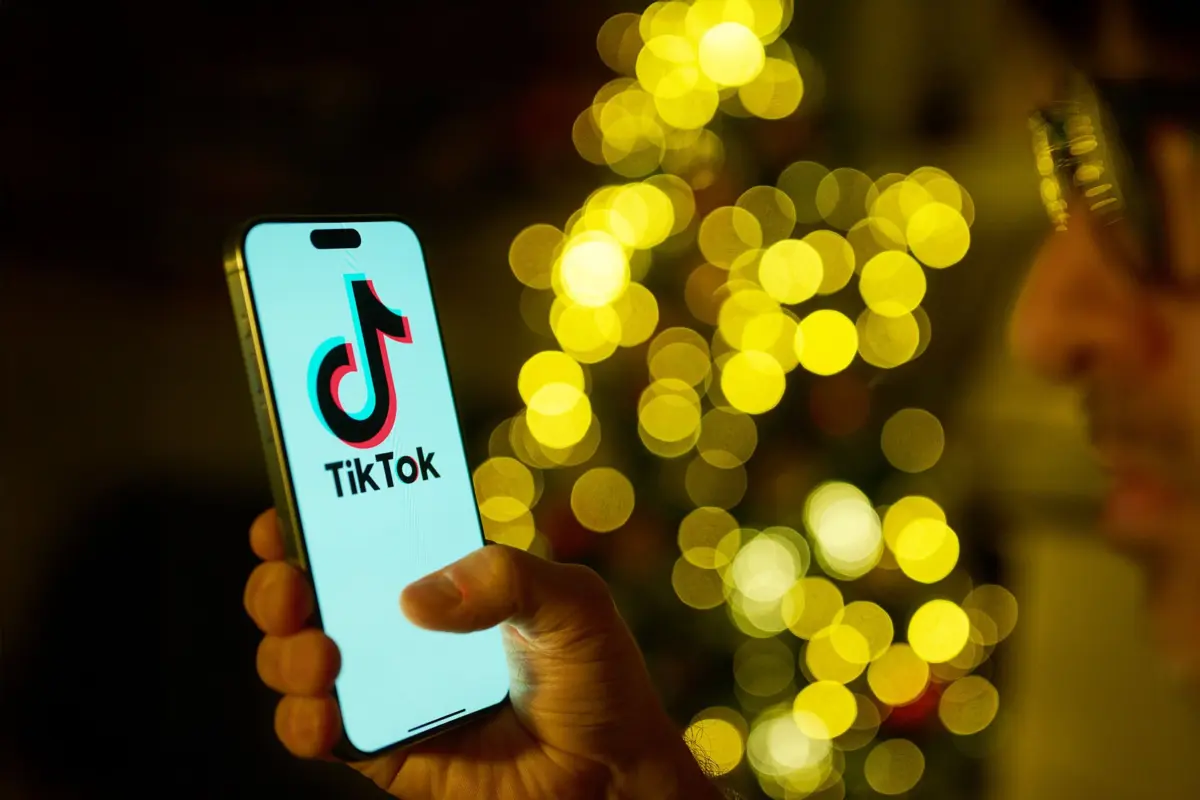
Despite political headwinds, TikTok’s user base has expanded exponentially. By the close of 2024, the platform had added approximately 100 million new active users globally, driving its total worldwide footprint to roughly 1.6 billion monthly active users. Within the United States alone, the platform boasts an audience exceeding 135 million active users.
| Metric Category | U.S. Statistics | Global Statistics |
|---|---|---|
| Total Active Users | 135+ Million | ~1.6 Billion |
| Annual User Growth (2024) | Significant market penetration across Gen Z & Millennials | +100 Million net new users |
| Primary Demographic Engagement | High concentration of 18–34 year-olds | Broadening demographic reach (all age brackets) |
| Search & Discovery Impact | ~40% of Gen Z use TikTok as a primary search engine over Google | High conversion rates for localized experiential travel |
The Death of Traditional Travel Marketing
For decades, state tourism boards relied on glossy print magazines, television commercial spots during morning talk shows, and banner ads on static websites. These mediums are not only increasingly expensive to produce and broadcast, but they also completely fail to resonate with Generation Z and younger Millennials.
For modern travelers, vacation inspiration begins on social media. Algorithms dictate where people eat, which hidden beaches they visit, and which roadside attractions they photograph. When Texas tourism boards showcase eccentric roadside stops or Florida regional boards highlight crystal-clear springs and family attractions via short-form video, they are tapping directly into a multi-billion-dollar psychological pipeline. A single viral video can generate millions of impressions, yielding higher engagement than a million-dollar television ad buy—at a fraction of the cost. State officials, pragmatic to their core, recognize that ignoring this channel is economic suicide for local hospitality industries that employ hundreds of thousands of residents.
Official Statements and Political Rationalizations
The coexistence of sweeping bans and active marketing campaigns has forced public officials and tourism executives into complex linguistic gymnastics.
When pressed by investigative journalists and local media outlets about the stark contradiction of banning TikTok on state laptops while simultaneously uploading promotional videos to the same platform, state representatives often retreat behind administrative distinctions.
The Bureaucratic Firewall
A common defense offered by state agencies is the firewall separating administrative IT governance from commercial marketing strategy. State chief information security officers (CISOs) frame the ban strictly as a cybersecurity measure designed to protect state-owned servers, employee credentials, and infrastructure databases from potential foreign surveillance. Meanwhile, destination marketing organizations frame their presence on the platform as a commercial necessity—a tool utilized strictly for consumer outreach on separate, non-governmental networks and devices.
"Our security directives are designed to safeguard state networks from known vulnerabilities," noted one state technology spokesperson who spoke on the condition of anonymity. "However, promotional initiatives aimed at external audiences operate under different marketing protocols and are managed independently of core state IT infrastructure."
Critics, however, find this defense unconvincing. Privacy advocates argue that if TikTok is genuinely dangerous enough to compromise state security, deploying state funds and institutional branding to drive citizens onto the platform is morally indefensible. By endorsing the app through official tourism handles, state governments implicitly legitimize a platform they have officially branded as a national security hazard.
Future Outlook: Where Do We Go From Here?
As the legal battles surrounding TikTok’s ownership continue to wind their way through federal courts, and as lawmakers periodically introduce renewed measures to restrict foreign-owned tech platforms, the dilemma facing state tourism boards will only intensify.
The Convergence of Geopolitics and Commerce
The reality illuminated by state-level TikTok usage is a broader symptom of America’s digital economy: globalization and national security interests are frequently at war, and commerce almost always wins. State economies depend heavily on hospitality, retail, and tourism. In hyper-competitive tourism markets, states cannot afford to unilaterally disarm while neighboring jurisdictions—or foreign competitors—court lucrative younger travelers on the world’s most powerful short-form video platform.
What Lies Ahead?
- Proliferation of Alternative Platforms: Many state agencies are increasingly diversifying their social media portfolios, hedging their bets by building robust presences on Instagram Reels and YouTube Shorts. Should a federal ban eventually materialize, these platforms are positioned to absorb redirected marketing budgets.
- Persistent Regulatory Blind Spots: Unless federal legislation specifically outlaws commercial marketing on foreign-owned applications—a step that would raise monumental First Amendment and free speech challenges—state tourism boards will likely continue to exploit every legal loophole available to maintain their digital presence.
- The Normalization of Hypocrisy: Ultimately, the public will likely continue to witness this bizarre choreography. Governors will stand at podiums warning of existential foreign threats, while the very same state governments use viral dances and scenic drone shots to sell weekend getaways on TikTok.
In the modern political economy, national security is a vital talking point, but tourism dollars pay the bills. Until lawmakers find a way to reconcile those two competing imperatives, state governments will continue to walk a very public, highly visible tightrope—dancing on the very platform they claim puts them at risk.