Executive Overview
Take a moment to look down at what you are wearing. Did you consciously curate this outfit based on your personal aesthetic, or was it quietly selected for you by a machine learning algorithm you have never even considered?
While most of us like to believe our sartorial choices are an expression of independent free will, the harsh reality of the modern fashion industry suggests otherwise. We have officially transitioned from an era where taste was dictated by legendary human arbiters—such as visionary designers like Karl Lagerfeld at Chanel or formidable magazine editors like The Devil Wreads Prada’s fictionalized Anna Wintour—into the cold, hyper-efficient domain of predictive computing.
In the contemporary landscape of ultra-fast fashion, clothing options are no longer born out of creative inspiration; they are mathematically generated. Yet, as algorithms increasingly homogenize global style, a counter-movement is brewing. Consumers are aggressively clawing back their personal agency through an unexpected medium: the thrift store. Once viewed primarily through a lens of economic necessity or social stigma, secondhand shopping has exploded into a multi-billion-dollar cultural phenomenon. This investigative feature explores how algorithms took over our closets, how thrifting transitioned from taboo to mainstream chic, and whether the secondhand market can survive its own commercial success.
Detailed Chronology: From Runway Autocracy to "Instant Fashion"
To understand how our wardrobes fell under the control of digital code, we must first look backward at how the fashion cycle used to operate.
The Era of Fashion Autocracy (Mid-to-Late 20th Century)
For decades, the fashion industry followed a strictly top-down hierarchy. Luxury fashion houses dictated trends months, sometimes years, in advance. Designers showed their collections on Parisian and Milanese runways, elite magazine editors filtered those collections down for the public, and department stores stocked their floors accordingly. The consumer was at the receiving end of a long, deliberate pipeline of taste-making.
The Dawn of Fast Fashion (Late 1990s–2010s)
The introduction of traditional fast-fashion giants like Zara and H&M compressed this timeline. Suddenly, runway looks were being reverse-engineered and pushed onto high-street shelves within weeks rather than seasons. Zara famously pioneered a model that produced roughly 20,000 distinct apparel styles annually, allowing consumers to rapidly update their wardrobes at accessible price points. However, even this model relied on human designers and store managers predicting what people might want to wear.
The Rise of "Instant Fashion" and Algorithms (2020s–Present)
Today, that process has been pushed into hyperdrive by companies like Shein, a titan that industry experts now classify as an "instant fashion" retailer rather than a mere fast-fashion brand.
Speaking to Vox’s Explain It to Me podcast, Amy Odell, author of the Back Row newsletter and podcast, broke down how this new model functions. "The way it works is that they use algorithms to track trends and what people are interested in," Odell explains. "And then they make a few hundred of a very large number of different items and they test demand."
This algorithmic approach bypasses traditional forecasting entirely. Instead of guessing what will sell, digital platforms monitor real-time internet data, search queries, and social media behavior to manufacture thousands of micro-trends daily.
Supporting Context & Metrics: The Scale of Algorithmic Production
The numbers behind the algorithmic fashion revolution are staggering and point to an unprecedented environmental and cultural crisis.
- 4,700: The approximate number of new apparel styles introduced by companies like Shein every single day.
- 20,000: The annual output of new styles produced by traditional fast-fashion pioneer Zara for comparison.
- 30+: The number of years consumers have endured an accelerating fast-fashion cycle, leading to widespread fatigue and a cultural search for alternatives.
The Mechanics of Algorithmic Control
How does an algorithm decide what you wear? By capturing the digital exhaust of human behavior. Every time a consumer likes an outfit on TikTok, searches for a specific shade of green, or clicks on a targeted Instagram ad, data is fed back into corporate servers.
Within hours, automated design software can generate digital patterns for new garments. Manufacturers produce micro-batches—say, 200 units of a specific top. If the digital demand surge meets expectations, the algorithm triggers massive, automated reorders. If it fails, the item quietly disappears from the site, replaced instantly by another computer-generated iteration.
The result is a global population subtly steered toward homogenized micro-trends, wearing garments designed not by human artists, but by predictive text and trend-scraping bots.
Official Statements & Industry Perspectives
The rapid commercialization of both ultra-fast production and mainstream secondhand markets has transformed the retail landscape. Industry experts offer critical insight into this shifting paradigm.
Amy Odell on the Death of Traditional Taste
"There was a time when taste was decided by designers at luxury fashion houses… Now, in the era of fast fashion, our clothing options are often dictated by computers," Odell notes. She emphasizes that the sheer velocity of instant fashion has broken the traditional psychological connection between consumers and their clothes, turning garments into disposable, digital-first commodities.
Hannah Marriott on the Countercultural Roots of Thrifting
Fashion journalist Hannah Marriott sheds light on why secondhand clothing has historically held such powerful cultural resonance.
"For the last probably a hundred years, [the thrift store] has had lots of moments where it’s been cool within countercultures," Marriott tells Vox. "Whether it’s grunge, or the surrealists in the 1920s, or the Rolling Stones in the 1960s, secondhand clothing was cool because of the stigma."
Marriott explains that for generations, buying secondhand was viewed as a marker of financial hardship—a fallback option for those who could not afford new clothes. Yet, this very stigma is what made it attractive to rebellious subcultures looking to reject mainstream bourgeois values.
The Pandemic Pivot and the Resurgence of Gen Z
The modern normalization of thrifting, however, was cemented by a confluence of global events. According to Marriott, the COVID-19 pandemic acted as a major accelerator, fueling an absolute influx of digital resale apps like Depop, Vinted, Poshmark, ThredUp, and The RealReal.
"Thrifting became a social currency on social media platforms, especially on TikTok," Marriott notes. "It’s a vast ecosystem at the moment, and all of them have slightly different business models, slightly different fees that they charge, and slightly different audiences that they’re reaching. The stigma has really gone away, and it’s almost reversed."
The Evolution of Legacy Thrift: The Goodwill Paradox
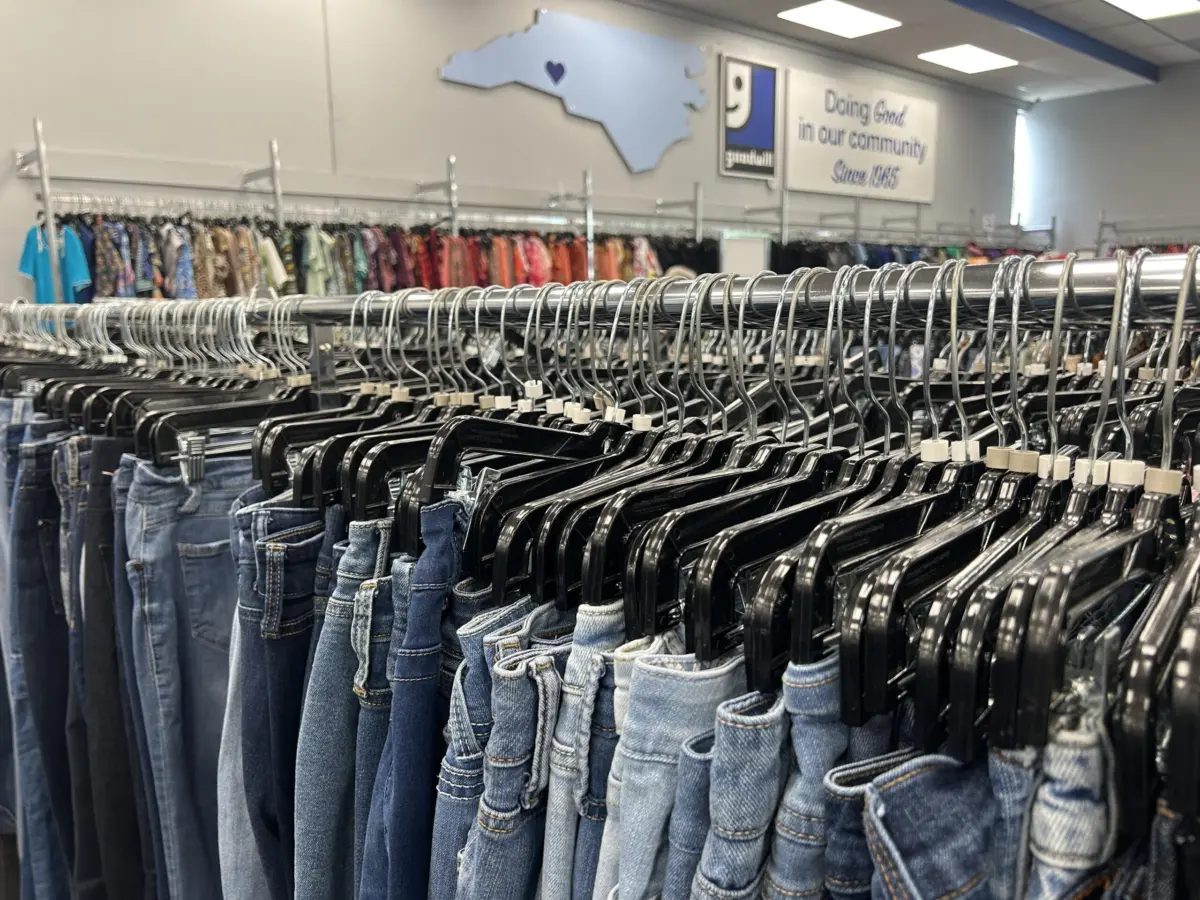
As digital resale platforms capture younger, trend-focused demographics, traditional brick-and-mortar thrift stores face a complex identity crisis. Goodwill, one of the largest secondhand institutions in the United States, has experienced radical shifts in how it operates amid the secondhand boom.
While neighborhood thrift stores have historically served as vital lifelines for low-income communities seeking affordable, non-trend-led clothing, inflationary pressures and commercial exploitation have complicated their mission.
"Goodwill undeniably has put its prices up," Marriott observes. While inflation plays a role, shoppers frequently complain that traditional bargains are disappearing. Many desirable items are increasingly intercepted and funneled into online auctions or bought up in bulk by aggressive commercial resellers who flip them at inflated prices.
The commercialization of traditional thrifting has reached striking new levels. In Connecticut, for instance, a Goodwill branch recently began charging $75 for a "thrift tour coach" ticket, granting participants early access to select stores. As Marriott points out, "You used to be able to buy 10 things in Goodwill for $75."
Future Outlook: Has Thrifting Sold Out, or Is It Our Last Stand?
As secondhand shopping transitions from an edgy, countercultural practice to the default way modern consumers shop, a pressing question remains: Has thrifting sold out?
It is difficult to find anyone today who would express shock at the revelation that an outfit was bought secondhand. That phrasing itself—once whispered with a hint of defensive embarrassment—has vanished from modern lexicon because thrifting is how we shop now.
Yet, despite corporate encroachment, inflated pricing, and algorithmic reseller culture, the core appeal of the thrift store endures. It remains one of the few spaces where consumers can unearth original, idiosyncratic pieces that algorithms cannot predict or replicate en masse.
Ultimately, the explosive popularity of both digital resale apps and physical thrift stores is not just a passing fad; it is a profound sociological rebellion. It represents a collective exhaustion with 30 years of fast fashion accelerating into oblivion. By turning away from the algorithmic assembly line and embracing the worn, the weird, and the pre-loved, consumers are signaling that they want their style back—and they are willing to dig through the past to find it.