Executive Overview
Take a moment to look at the fabric resting against your skin right now. Did you deliberately select that garment out of a deep personal appreciation for its cut, color, and texture? Or was it quietly chosen for you by a distant, invisible algorithm—a complex web of machine-learning models predicting your next micro-trend obsession before you even knew you had it?
For generations, the anatomy of personal style was dictated by a tightly guarded hierarchy. In decades past, aesthetic choices flowed downward from the elite ateliers of European luxury houses—think of Karl Lagerfeld’s monumental reign at Chanel—or were anointed by powerful magazine editors whose word was absolute law. (Pop culture famously immortalized this dynamic in The Devil Wears Prada, through Meryl Streep’s icy, definitive monologue on how a cerulean sweater trickles down from high fashion to the clearance racks of a local department store).
Today, that meticulous, human-curated pipeline has been utterly dismantled. In the hyper-accelerated ecosystem of modern retail, our clothing choices are increasingly dictated by computers. Driven by real-time data harvesting, artificial intelligence, and automated supply chains, the contemporary fashion landscape has transitioned from seasonal collections to an unending, algorithmic stream of apparel.
Yet, this hyper-digitized conformity has triggered a powerful cultural counter-movement. As consumers grow exhausted by a system that pushes thousands of new styles onto the market every single day, millions are turning backward to move forward. Thrift stores, vintage markets, and digital resale apps have transformed from stigmatized repositories of last resort into the ultimate arbiters of cool. But as second-hand shopping goes mainstream—and is simultaneously squeezed by inflation, algorithmic flipping, and digital resellers—we are left to wonder: Has the counterculture of thrifting sold out, or is it the only remaining escape from the algorithmic closet?
Detailed Chronology: From Runway Autocracy to "Instant Fashion"
To understand how our current wardrobe crisis unfolded, it is necessary to chart the evolution of the fashion calendar over the last half-century.
The Era of the Runway Dictators (1950s–1990s)
For the better part of the 20th century, fashion operated on a rigid, predictable schedule divided into two primary seasons: Spring/Summer and Fall/Winter. Designers spent months conceptualizing collections, staging dramatic runway shows, and building anticipation. Retailers bought these collections months in advance, and consumers adapted their wardrobes to the seasonal cadence dictated by the industry’s gatekeepers. Taste was slow, deliberate, and fiercely protected by tastemakers in Paris, Milan, New York, and London.
The Birth of Traditional Fast Fashion (2000s–2010s)
The turn of the millennium marked the first major disruption. Pioneered by European giants like Zara and H&M, traditional fast fashion compressed the pipeline from runway to retail rack down to mere weeks. Instead of waiting for seasonal shifts, these brands responded to runway trends by rapidly manufacturing replica styles in low-cost overseas factories. This model democratized trends, allowing average consumers to wear designer-inspired looks almost immediately. However, it still relied heavily on human buyers predicting what would sell, resulting in occasional overproduction and inventory waste.
The Rise of "Instant Fashion" and Algorithmic Dictatorship (2010s–Present)
In the current decade, traditional fast fashion has been pushed into unprecedented hyperdrive by companies like Shein, Temu, and other ultra-fast digital retailers. Fashion journalist and Back Row newsletter author Amy Odell describes this new paradigm not just as fast fashion, but as "instant fashion."
Unlike their predecessors, these ultra-fast-fashion behemoths do not wait for runway shows or rely solely on human intuition. Instead, they deploy sophisticated algorithms that scrape social media, search engine queries, and browsing behavior in real time to capture fleeting consumer desires.
Once a potential trend is identified, the production model shifts to a test-and-repeat strategy. "The way it works is that they use algorithms to track trends and what people are interested in, and then they make a few hundred of a very large number of different items and they test demand," Odell explains. If an item garners clicks and purchases, automated systems instantly scale up production; if it fails, manufacturing ceases immediately, minimizing waste for the company while inundating the market with hyper-specific micro-trends.
This algorithmic pipeline has fundamentally rewired consumer psychology, transforming clothing from durable, long-term investments into disposable, single-season content.
Supporting Context & Metrics: The Scale of Overproduction and Resale
The numbers behind this contemporary style revolution reveal a staggering industrial footprint on one side, and a booming circular economy on the other.
The Industrial Output
- Shein: Through its algorithmic test-and-repeat model, Shein introduces an astonishing 4,700 new apparel styles per day.
- Zara: As a benchmark for traditional fast fashion, Zara produces roughly 20,000 styles per year—a massive figure by historical standards, yet completely dwarfed by its digital-first competitors.
- The Environmental Toll: The cumulative effect of thousands of daily styles entering the market is an ecological crisis. Millions of garments are manufactured from synthetic, petroleum-based fibers like polyester and nylon, wearing out quickly and ending up in landfills where they take centuries to decompose.
The Secondhand Renaissance
In direct opposition to the tsunami of new, cheap garments, the secondary market has experienced a massive boom. Fashion journalist Hannah Marriott notes that this shift was supercharged by a confluence of cultural and technological factors, most notably the COVID-19 pandemic.
During lockdowns, a surge of digital resale platforms captured the attention of younger consumers, particularly Generation Z. Apps like Depop, Vinted, Poshmark, ThredUp, and luxury consignment giant The RealReal turned secondhand shopping into a gamified, highly social experience.
- Social Currency: On platforms like TikTok, unboxing secondhand hauls and styling vintage pieces became a primary form of social currency. Thrifting ceased to be viewed as a financial necessity and was instead re-branded as an ethical, highly individualized aesthetic choice.
- A Fragmented Ecosystem: The contemporary resale market is no longer a monolith; it is a complex, multi-layered ecosystem:
- High-End Consignment: Platforms like The RealReal take a substantial commission in exchange for authenticating, photographing, and marketing luxury goods, catering primarily to high-margin items like designer handbags.
- Peer-to-Peer Marketplaces: Apps like Depop skew toward younger, trend-driven audiences looking for Y2K aesthetics and streetwear, while eBay maintains a broader, more mature user base.
- Mass-Market Resale: Platforms like Vinted and Poshmark offer casual, everyday apparel exchanges across broad demographics.
Official Statements & Expert Insights
As the friction between algorithmic fast fashion and the circular economy intensifies, industry experts are grappling with what this means for human identity and consumer rights.
Reflecting on the historical evolution of thrifting, Hannah Marriott highlights how secondhand clothing has historically served two entirely different masters:
"Secondhand clothing used to be something that there was a real sense that if you couldn’t buy new, you would buy secondhand. At the same time, it has had lots of moments where it’s been cool within countercultures. People within countercultures—whether it’s grunge, or the surrealists in the 1920s, or the Rolling Stones in the 1960s—secondhand clothing was cool because of the stigma. It’s also been a really important resource for people on lower incomes for a long time."
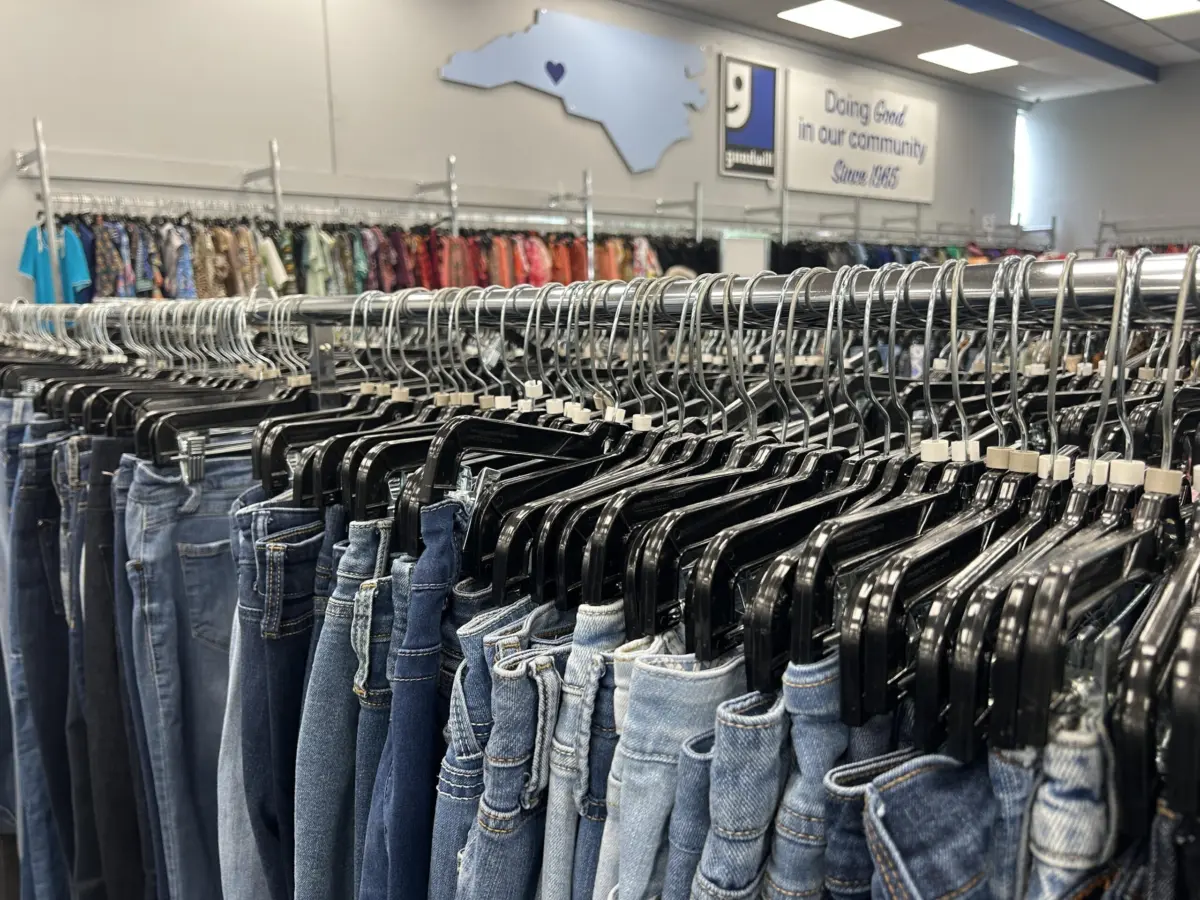
The irony of the modern era is that this once-marginalized practice has been thoroughly co-opted by the mainstream, altering the very nature of brick-and-mortar charity shops. Discussing the challenges facing institutional thrift organizations like Goodwill, Marriott points out the growing economic friction:
"Neighborhood thrift stores of that kind are the sort of stores that people on lower incomes do rely on more. It’s less trend-led than something like Depop. And it is somewhere that people have often been going for decades to get clothes that they can afford. Goodwill undeniably has put its prices up. Inflation is such an issue for everyone, so I’m sure that there would be an element of prices going up anyway, but a lot of shoppers feel strongly that they’ve gone up a lot—that you can’t find bargains anymore, that the bargains get sent online to either their website or are bought by resellers who sell them for an inflated price online."
This commercialization of charity retail has even manifested in novel, highly commodified experiences. Marriott points to instances such as a Goodwill branch in Connecticut charging $75 for a "thrift tour coach" ticket, granting participants early, exclusive access to merchandise before the general public—a stark contrast to an era when shoppers could easily acquire ten items for that same total sum.
Ultimately, Marriott frames the massive migration toward secondhand and alternative shopping as an inevitable fatigue:
"I think maybe this is a reaction to 30 years of fast fashion just getting faster and faster and faster. I think we’re all feeling a bit tired of that business model, so we’re trying to find other ways to shop and express ourselves."
Future Outlook: Reclaiming Personal Agency in the Algorithmic Age
Where does the fashion consumer go from here? As we look toward the horizon of the retail industry, several critical questions and trajectories emerge.
The Battle for the Thrift Rack
As digital resellers utilize automated tools and algorithmic scanning to harvest undervalued items from physical thrift stores to flip them at a markup online, traditional low-income shoppers face increasing financial pressure. Non-profit thrift networks will need to balance their charitable missions with market realities. Will institutions implement stricter purchase limits to curb algorithmic resellers, or will they continue to lean into digital auction models to maximize revenue?
The Counter-Trend to Hyper-Speed
Just as fast fashion has pushed velocity to its absolute technological limit, the counter-movement is leaning into slowness. Consumers are increasingly valuing durability, repairability, and traceable provenance. The rise of "de-influencing" on social media—where creators urge followers to stop buying haul items and instead wear what is already in their closets—signals a cultural pivot away from endless accumulation.
Reclaiming Personal Style
The ultimate challenge for the modern consumer is reclaiming agency over their own reflection. When algorithms are engineered to exploit psychological vulnerabilities and predict trend cycles before they manifest organically, choosing what to wear becomes an act of resistance. Whether through vintage hunting, supporting independent slow-fashion designers, or simply wearing garments until they fray, the future of style depends on human intentionality pushing back against automated obsolescence.
As Amy Odell and Hannah Marriott emphasize, the antidote to an era dictated by computer code is the messy, unpredictable, human story embedded in a worn-in, secondhand garment. In a world of infinite algorithmic choices, true individuality may finally lie in choosing nothing that a computer told you to buy.