Executive Overview
The landscape of artificial intelligence content creation has long been defined by isolated prompt engines—generative tools capable of conjuring striking illustrations from text, yet notoriously inept at organizing those assets within an intentional, functional layout. For years, solopreneurs, marketers, and small businesses faced a frustrating bottleneck: generating imagery was effortless, but composing those graphics alongside typography, negative space, and strict brand guidelines required complex design software and specialized human skills.
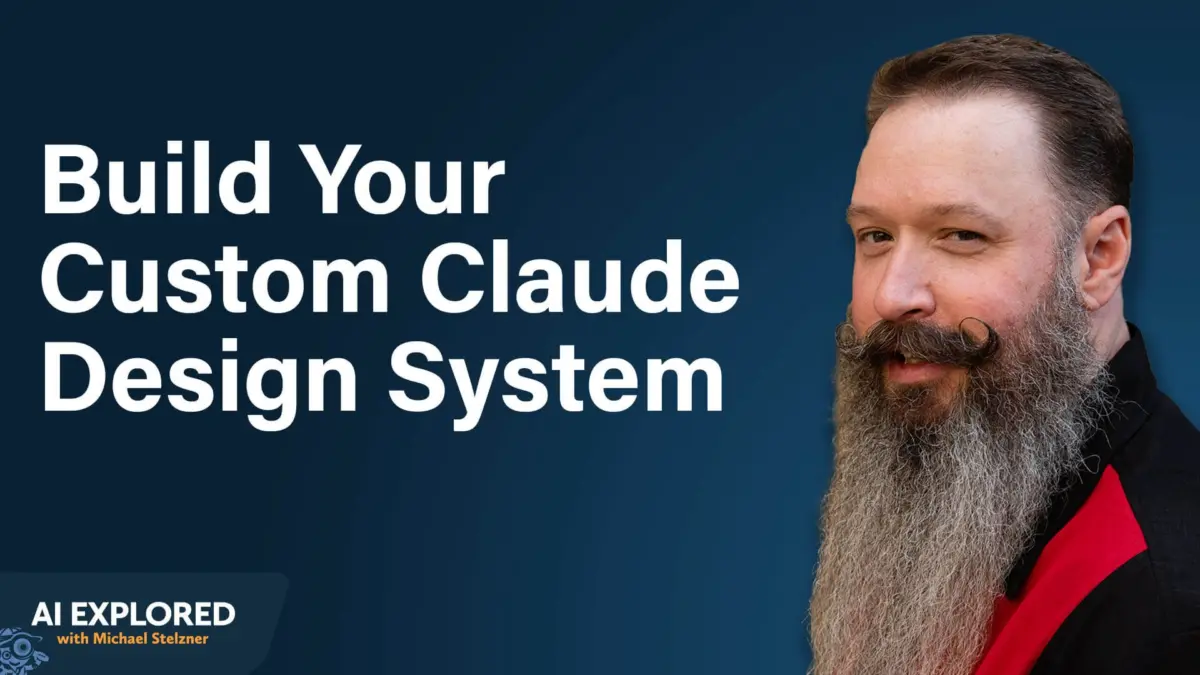
Anthropic’s Claude Design bridges this capability gap. Rather than acting as an image generator, Claude Design functions as an on-demand front-end designer and layout engine. Modeled after professional desktop publishing software like Adobe InDesign, the platform orchestrates fonts, color palettes, spacing rules, and visual elements to produce polished websites, slide decks, landing pages, and interactive wireframes.
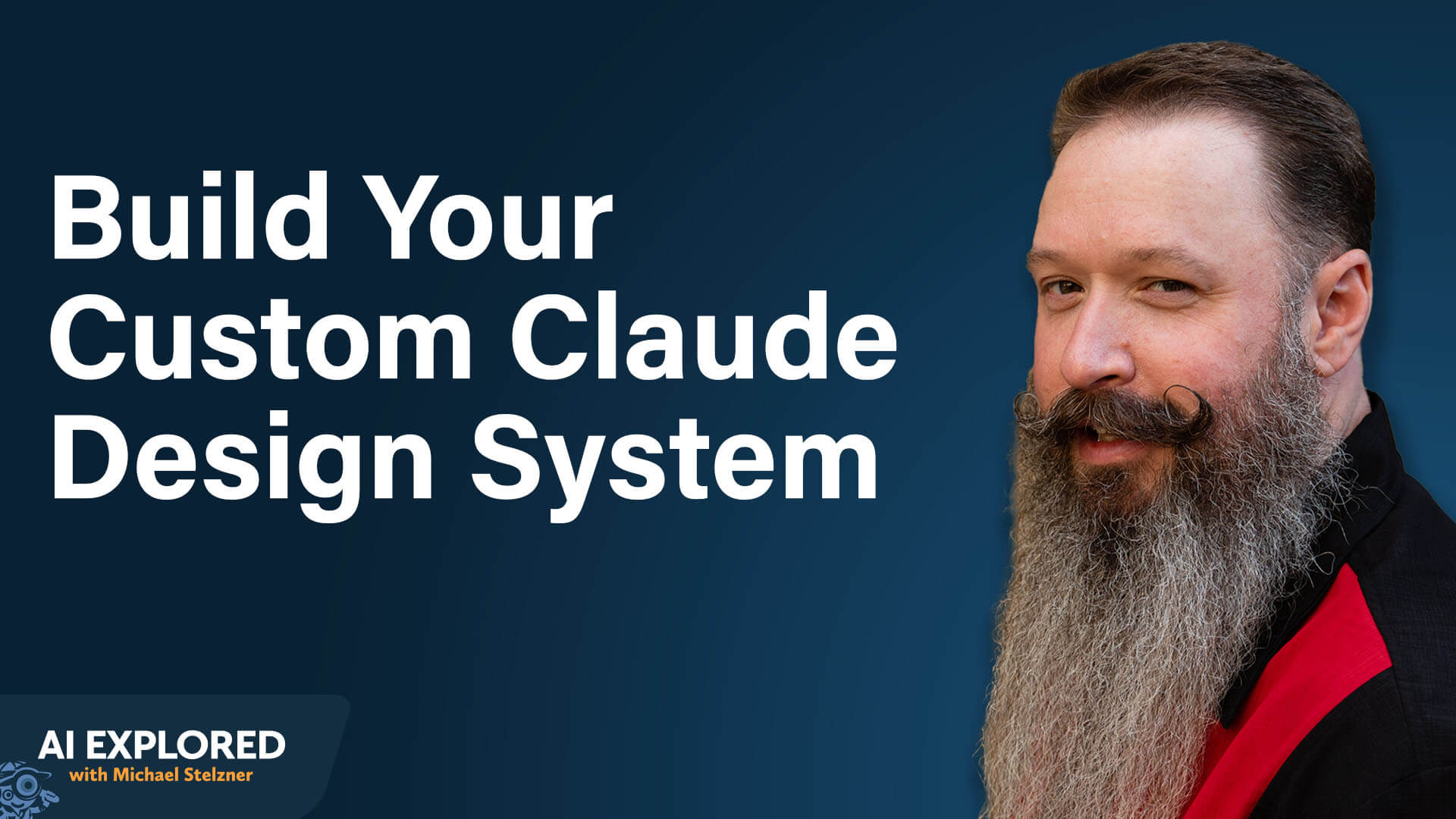
Co-created by digital strategists Jeff Sieh and Michael Stelzner, workflows leveraging Claude Design allow creators to build portable design systems, orchestrate complex automation pipelines, and eliminate the hours typically spent on manual asset formatting. This report explores the core mechanics of Claude Design, detailing how creators can establish programmatic design systems, interact with the tool using natural language, execute advanced automation workflows, and future-proof their creative operations.
Detailed Chronology: The Evolution of AI-Driven Visual Layouts
The transition from prompt-based image generation to contextual front-end design marks a significant maturation point in generative AI applications. Understanding how Claude Design fits into modern workflows requires tracing its core architectural components and interface developments.
From Generative Art to Front-End Architecture
When generative art tools first entered the mainstream, users quickly realized that creating a standalone image was only a fraction of the digital production lifecycle. Translating that image into a cohesive landing page, a multi-slide presentation, or a brand-compliant PDF demanded tedious manual manipulation in traditional design suites.
Claude Design addresses this limitation by focusing exclusively on structural composition. Operating within the claude.ai ecosystem (accessible via a dedicated design button in the desktop application and web interface), the platform translates descriptive intent and brand parameters into production-ready front-end code and visual arrangements. Crucially, Anthropic’s integration of Claude Design limits into general credit pools has streamlined usage, removing the friction of separate subscription meters or disruptive timeouts.
Establishing the Groundwork: The Design System
The foundational step within any Claude Design workflow is the establishment of a design system. Moving far beyond simplistic brand kits that store static logos and web fonts, a Claude Design system functions as a comprehensive, portable standard operating manual.
- Portability via Markdown (
design.md): Design systems are compiled as code, specifically structured Markdown files known asdesign.md. This architecture ensures that a brand’s visual identity—ranging from specific hex codes and grid spacing to animation styles and voice parameters—is not locked into a single proprietary ecosystem. The file can be exported and deployed across diverse AI platforms, including Claude Code, Claude Cowork, and third-party integrations like Gamma. - Contextual Intelligence: During a 10-minute onboarding process, users supply logos, color palettes, reference screenshots, and website URLs. Claude Design actively scrapes supplied URLs to absorb both visual aesthetics and written tone of voice. Furthermore, the system encourages detailed conversational input—accelerated through voice-to-text tools like Wispr Flow—to capture nuanced stylistic directions, such as specific architectural movements (e.g., Googie retro-futurism).
Interactive Workflows and Direct Editing
Interacting with Claude Design mirrors collaborating with a human art director. Creators provide conversational instructions—such as adjusting padding, shifting color schemes, or modifying typography hierarchies—using natural speech.
To maximize creative output, experienced practitioners rely on dual strategies:
- Multi-Option Iteration: Rather than requesting a single landing page layout and refining it linearly, users prompt the system to generate five distinct design variations simultaneously, drastically accelerating the exploratory phase.
- Direct Click-and-Drag Manipulation: Once the foundational layout is generated, creators can directly manipulate text, reposition headers, and adjust spacing manually. These direct modifications consume zero platform credits, offering a seamless hybrid of generative automation and granular human control.
Supporting Context & Metrics: Unlocking Advanced Capabilities
Beyond basic layout generation, Claude Design supports robust templates, motion graphics engines, and tight integrations with auxiliary AI tools.
Built-In Templates and Custom Frameworks
The platform features an extensive array of default templates spanning mobile application design, interactive slide decks, wireframes, HTML emails, UI mockups, and 3D objects. However, the true utility of Claude Design emerges when pairing these templates with custom design systems.
For instance, live-stream producers and digital creators construct reusable templates for recurring formats—such as live-stream scene layouts in software like Ecamm Live or high-conversion landing pages. These custom frameworks ensure brand consistency across every operational output without requiring repetitive manual setup.
Software Mockups and Web Development
For software development teams, Claude Design introduces an invaluable prototyping phase. Instead of instructing coding agents to build complete application features from scratch—only to discover architectural or visual flaws later—teams use Claude Design to build detailed user interface mockups.
- Functional HTML Output: Web pages and landing pages generated within the tool output clean, functional HTML. This code can be deployed immediately or handed off to engineering teams for production integration.
- Custom Plugin Generation: Advanced users leverage the underlying architecture to solve operational bottlenecks. When legacy services shut down, creators can point coding tools referencing their
design.mdfile to rapidly develop custom CMS plugins (such as automated YouTube feed integrations) styled entirely to brand specifications.
Vector-Based Motion Graphics
Unlike traditional video editors that process heavy raster files, Claude Design’s animation engine produces vector-based motion graphics rendered directly in code.
- Optimized File Sizes: Because these animations are code-driven, they consume negligible storage space and can be embedded seamlessly into web pages without compromising load speeds.
- Custom Effect Generation: The system is capable of programmatically constructing advanced camera movements, such as custom push-in or pull-back effects, expanding motion design capabilities far beyond rigid, pre-packaged templates.
Official Statements & Industry Perspectives
The integration of structured design systems into daily production workflows has fundamentally altered output capacities for independent creators and small agencies.
According to digital strategist Jeff Sieh, who co-created these foundational methodologies alongside Michael Stelzner:
"Building design systems for clients is not just an internal efficiency play; it is a premium service offering. When reports, email templates, and digital collateral are generated using a dedicated design system, the resulting professionalism consistently exceeds client expectations."
Furthermore, industry experts emphasize the shift from reactive prompt engineering to proactive workflow automation. By anchoring generative processes to a centralized design.md file, creators eliminate the erratic stylistic drift common in early AI content generation. Every downstream asset—whether an Instagram carousel, a YouTube thumbnail, or an automated podcast cheat sheet—adheres strictly to programmatic brand guidelines.
Future Outlook: Automating the Creative Lifecycle
The ultimate expression of Claude Design’s architecture is its ability to orchestrate fully automated content workflows. By connecting visual design systems to coding agents, transcription engines, and media processors, modern creators can compress days of production into automated background routines.
Case Study: Automated Podcast Production Pipelines
In advanced production environments, the journey from an hour-long media recording to multi-channel distribution has become entirely streamlined:
- Transcript Ingestion: An automated script processes the episode transcript immediately following recording.
- Content Extraction: The system identifies key takeaways, structuring them into high-value downloadable cheat sheets or multi-slide carousel frameworks (incorporating proven copywriting formulas like hook, build, payoff, and call-to-action).
- Design Application & Rendering: The established design system formats the layout, while integrated image generation tools (such as ChatGPT or Midjourney) receive precise prompts embedded with brand hex codes.
- Automated Assembly & Distribution: Python scripts analyze rendered images for optimal text placement, package the final assets into platform-specific formats (such as LinkedIn PDFs and Instagram carousels), draft accompanying platform-specific copy, and deliver the complete review package directly to team communication channels like Slack.
The Expanding Ecosystem
As Anthropic and allied developers continue to expand integration pathways—linking design engines with presentation tools like Gamma and video editors like ChatCut—the boundary between text, code, and visual design continues to dissolve.
For organizations navigating the crowded AI landscape, adopting a portable, code-based design system represents a critical strategic advantage. By decoupling brand identity from proprietary software interfaces and codifying aesthetic rules into structured Markdown files, businesses ensure their visual communications remain consistent, adaptable, and primed for the next generation of intelligent automation.