Executive Overview
In an era defined by hyper-realistic synthetic media, deepfakes, and automated misinformation, the boundary between human-crafted and artificial intelligence-generated content has blurred to an unprecedented degree. Enter SynthID Detector—Google’s proprietary digital watermarking and identification suite, which has officially transitioned from a restricted tool for journalists and select media professionals into a free, publicly accessible web service.
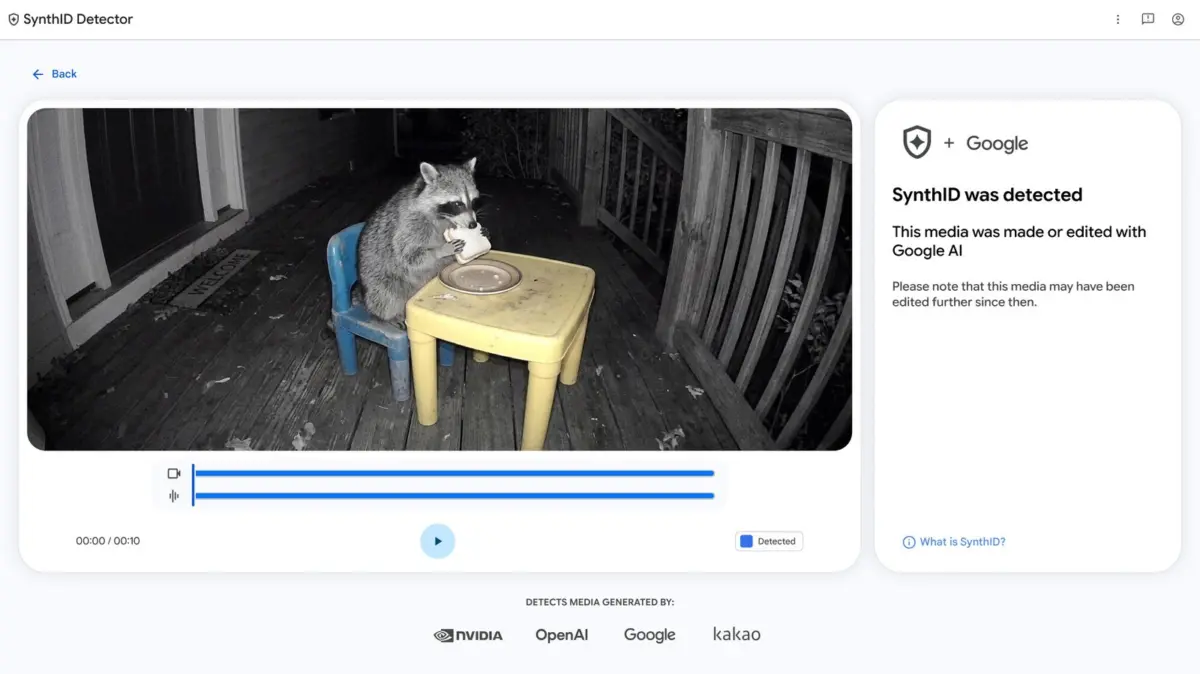
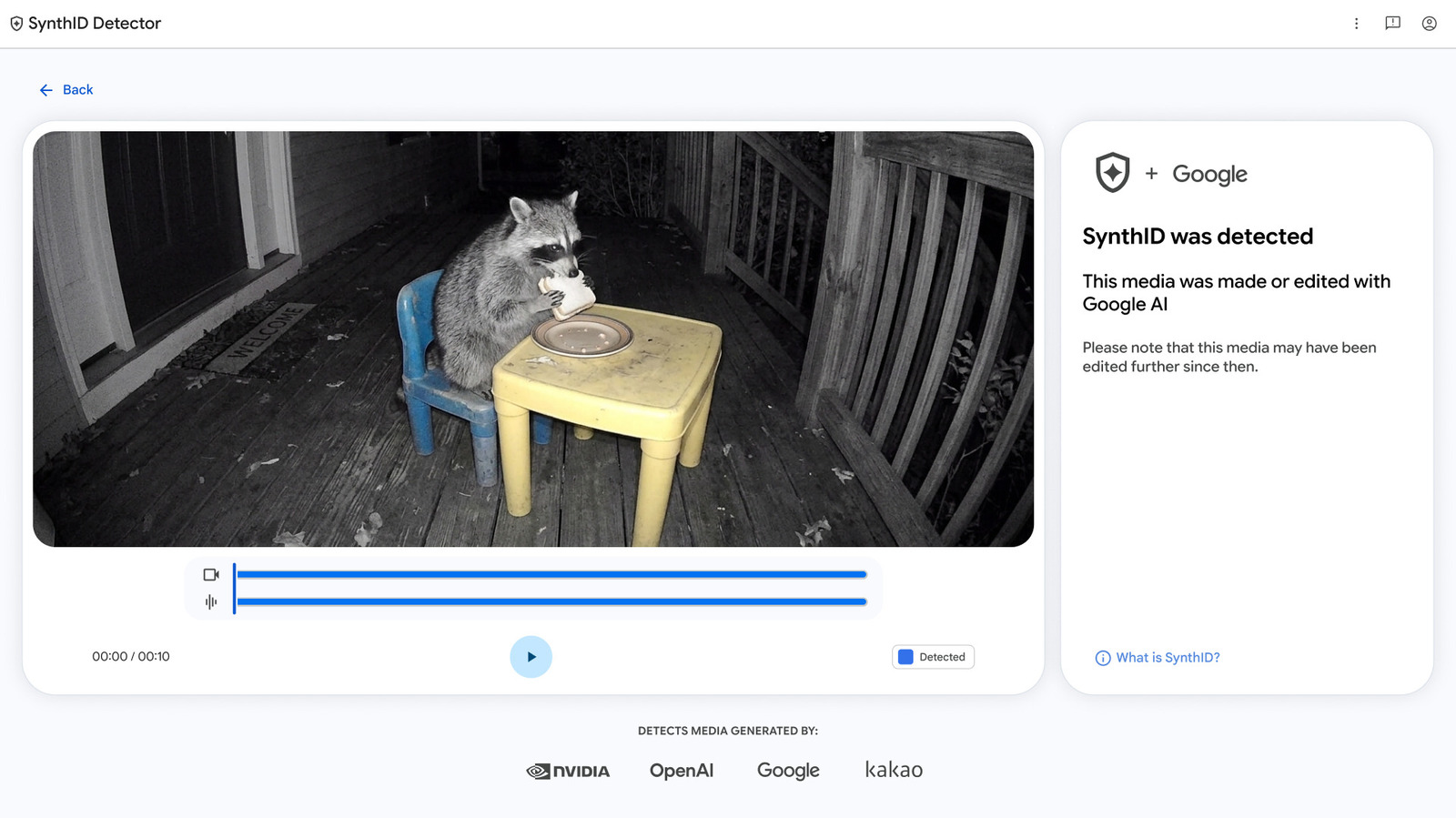
Hosted at synthid.com, the newly launched platform allows everyday internet users, researchers, and digital investigators to check images, video, and audio clips for invisible, machine-readable cryptographic watermarks. By seamlessly recognizing artificial content generated or manipulated by tools across the tech ecosystem—including models from Google, OpenAI, NVIDIA, Kakao, and soon, Apple—SynthID Detector represents one of the most ambitious cross-industry attempts to establish accountability and transparency in the modern digital media landscape.
However, the launch also underscores the systemic fragmentation plaguing the tech industry’s approach to AI safety. While Google’s platform is a monumental step forward, it operates within a patchwork of competing standards, proprietary formats, and platform-specific policies. As synthetic media continues to flood social feeds, newsrooms, and search engines, the release of SynthID Detector sparks crucial conversations about the viability of digital watermarking, the limitations of current detection algorithms, and whether a universal standard for verifying digital truth is truly within reach.
Detailed Chronology: The Evolution of Google’s SynthID
The journey toward a publicly accessible, cross-industry AI detection engine was neither swift nor straightforward. It represents years of advanced cryptographic research, deep-learning optimization, and strategic industry negotiations led by Google DeepMind.
1. The Genesis: DeepMind’s Invisible Watermark
Long before the general public became obsessed with generative video and conversational agents, Google recognized that traditional metadata tags were insufficient for tracking AI-generated media. Metadata can be easily scrubbed, altered, or stripped during standard file compression, social media uploads, and downloads.
To solve this, Google DeepMind engineered SynthID, an innovative approach that embeds digital watermarks directly into the content itself—the pixels of an image, the frames of a video, or the soundwaves of an audio clip. Crucially, this watermark is imperceptible to the human eye and ear, yet robust enough to survive common forms of media manipulation, such as cropping, screenshotting, filtering, and lossy compression.
2. Phased Rollouts and Media Partnerships
Google initially deployed SynthID in closed and semi-closed ecosystems to test its resilience:
- August 2023: SynthID was first introduced for AI-generated images produced by Google’s Imagen models via Vertex AI.
- May 2024: The technology expanded to cover audio generated by Google’s cutting-edge text-to-speech models, ensuring spoken synthetic words could also be traced.
- Late 2024: Recognizing the urgent needs of the press during election cycles and heightened geopolitical instability, Google began making specialized versions of SynthID Detector available to journalists, select newsrooms, and fact-checking organizations.
Simultaneously, Google began forging alliances across the technology sector. Crucially, audio giant ElevenLabs committed to integrating SynthID watermarks into its voice-generation models, establishing an early precedent for cross-company cooperation.
3. The Public Launch at SynthID.com
Today, the barrier to entry has evaporated. Anyone with internet access can navigate to synthid.com, log in with a Google, OpenAI, or Apple account, and upload media files to verify their provenance. Furthermore, Google has integrated these capabilities natively into everyday consumer workflows, including the Android ecosystem’s "Circle to Search" feature and the Gemini app interface.
By decentralizing access, Google is shifting the burden of verification away from specialized gatekeepers and placing it directly into the hands of global consumers.
Supporting Context & Metrics: The Mechanics and Limitations of AI Detection
To understand the true significance—and the inherent vulnerabilities—of the SynthID Detector, one must examine how the underlying technology functions, alongside the stark mathematical and logistical realities of modern AI detection.
How SynthID Works Under the Hood
Unlike traditional reactive detectors—which analyze an image or video after the fact to look for statistical anomalies, artifacts, or unnatural lighting (methods that quickly become obsolete as generative models improve)—SynthID is proactive.
When an AI model generates an image, video, or audio clip using a participating platform, the generation algorithm subtly alters the probability distribution of the output pixels, sound frequencies, or video frames. These alterations form a distinct mathematical pattern that remains statistically detectable by the SynthID algorithm, even if the file undergoes minor alterations.
Because the watermark is baked into the very fabric of the media file rather than sitting on top of it as metadata, it remains resilient against attempts to conceal its synthetic origins.
Cross-Platform Interoperability
A major breakthrough of the public release is its broad compatibility. The tool is capable of flagging content generated not just by Google’s internal models, but also by architecture from industry heavyweights like OpenAI and NVIDIA, as well as international innovators like Kakao.
Notably, Google has confirmed that support for images generated and edited using Apple Intelligence features—such as Apple’s Image Playground—is rolling out "soon." This makes SynthID one of the first verification portals to bridge the gap across competing consumer ecosystems.
The Limits of Detection: What SynthID Can—and Cannot—Do
Despite its technical sophistication, security analysts and AI researchers are quick to emphasize that SynthID Detector is far from a silver bullet. The platform faces several distinct limitations:
- The Patchwork Standard Problem: SynthID is not universal. Meta, for example, has developed its own proprietary web verification tools to identify images and videos created with its Muse Image models, but those tools cannot read Google watermarks—and vice versa. Without a universally mandated, open-source standard adopted by every major tech conglomerate, users must navigate a fragmented landscape of checker tools.
- The Stripping Vulnerability: While the watermark is resilient, highly aggressive editing pipelines, specialized adversarial attacks, or extreme downscaling can occasionally degrade the signal below the threshold of detection.
- The Binary Blind Spot: SynthID Detector provides a binary or probabilistic confirmation of whether a watermark is present; it does not distinguish between content that was entirely manufactured by artificial intelligence versus content that was merely edited using AI tools. For instance, if a human photographer takes a genuine photograph and uses an AI brush tool to remove a stray object in the background, SynthID may flag the image as synthetic without detailing which specific elements were altered. This creates potential grey areas in photojournalism and legal evidentiary contexts.
Official Statements and Industry Perspectives
The release of a centralized, multi-company AI detection portal has elicited strong reactions from industry leaders, policy experts, and open-source advocates alike.
In its official release documentation, Google emphasized its long-term commitment to collaborative digital safety:
"Building trust in the digital ecosystem requires cross-industry cooperation. We are continuously working on extending our partnerships to allow detecting more generated media, ensuring that creators, platforms, and everyday users have the transparent tools they need to navigate an increasingly complex information space."
Independent cybersecurity analysts, however, maintain a cautiously optimistic perspective. While praising the democratization of detection tools, experts warn against over-reliance on automated verification.
Dr. Elena Vance, a senior researcher in digital forensics at the Oxford Internet Institute, noted:
"Tools like SynthID Detector are vital infrastructural investments, but we must manage public expectations. Watermarking is only effective if adoption is universal and mandatory. If malicious actors can easily bypass watermarking tools by using open-source, un-watermarked models downloaded from Hugging Face, public-facing detectors run the risk of providing a false sense of security regarding unverified media."
Furthermore, privacy advocates have raised questions regarding the login requirements. The necessity of authenticating via a Google, Apple, or OpenAI account to use a free public tool has sparked minor debates surrounding user privacy and data collection practices, though Google maintains that uploaded files are processed securely and handled in accordance with strict privacy guidelines.
Future Outlook: Where Do We Go From Here?
As generative AI models evolve toward hyper-realistic real-time video generation, flawless conversational voice cloning, and autonomous multi-modal creation, the necessity for robust provenance tracking has never been more urgent.
The public launch of SynthID Detector acts as a bellwether for the future of digital verification. Several critical trajectories will define the coming years:
1. Mandatory Regulatory Frameworks
Governments worldwide are beginning to eye AI transparency laws with renewed aggression. The European Union’s Artificial Intelligence Act already places strict transparency requirements on deployers of AI systems, mandating that machine-generated content be clearly labeled. As regulatory compliance tightens globally, proprietary watermarking initiatives like SynthID may soon transition from voluntary corporate responsibility measures into legally mandated industry standards.
2. The Battle Against Open-Source Loopholes
While major corporate players like Google, OpenAI, Apple, and Meta can implement proprietary watermarking into their closed APIs and consumer applications, the explosive growth of open-source AI presents a formidable challenge. Developers can freely download foundational models (such as Meta’s Llama or stability-focused diffusion models) and strip out or disable watermarking code entirely. The future success of tools like SynthID will heavily depend on whether the open-source community can establish decentralized, community-driven watermarking standards that rival corporate solutions.
3. User Literacy and Critical Media Consumption
Ultimately, technology alone cannot solve the crisis of authenticity. As synthetic media becomes indistinguishable from reality, public digital literacy will serve as the final line of defense. Platforms will need to educate users on how to interpret detection flags, understand the probabilistic nature of watermarks, and cultivate healthy skepticism toward high-stakes media encountered online.
Google’s decision to open SynthID Detector to the masses marks a defining chapter in the maturation of the generative AI era. It moves the conversation away from abstract ethical debates and lands practical tools directly in the hands of the public. Whether it paves the way for a unified global standard or remains just one prominent piece of a fractured digital puzzle, the launch at synthid.com has permanently altered how humanity verifies the truth of what it sees, hears, and reads online.