Executive Overview
The landscape of professional software development is undergoing a seismic shift. As artificial intelligence models scale in complexity, parameter size, and inference demands, the hardware required to build, train, and test these systems must evolve in lockstep. While Microsoft’s recent AI-focused Windows hardware event generated considerable buzz around consumer-facing products like the Surface Laptop Ultra, the tech giant quietly stole the show for enterprise engineers with a first close-up look at the Surface RTX Spark Dev Box.
Priced at a staggering $5,999.99 and available now for pre-order, the Surface RTX Spark Dev Box is unapologetically tailored for high-end AI developers, data scientists, and machine learning engineers. Microsoft initially teased the device earlier this year, framing it as a "compact PC." However, firsthand examinations reveal a more nuanced reality: while it is exceptionally space-efficient for the computational horsepower it houses, it is a heavyweight enterprise workstation in spirit and build.
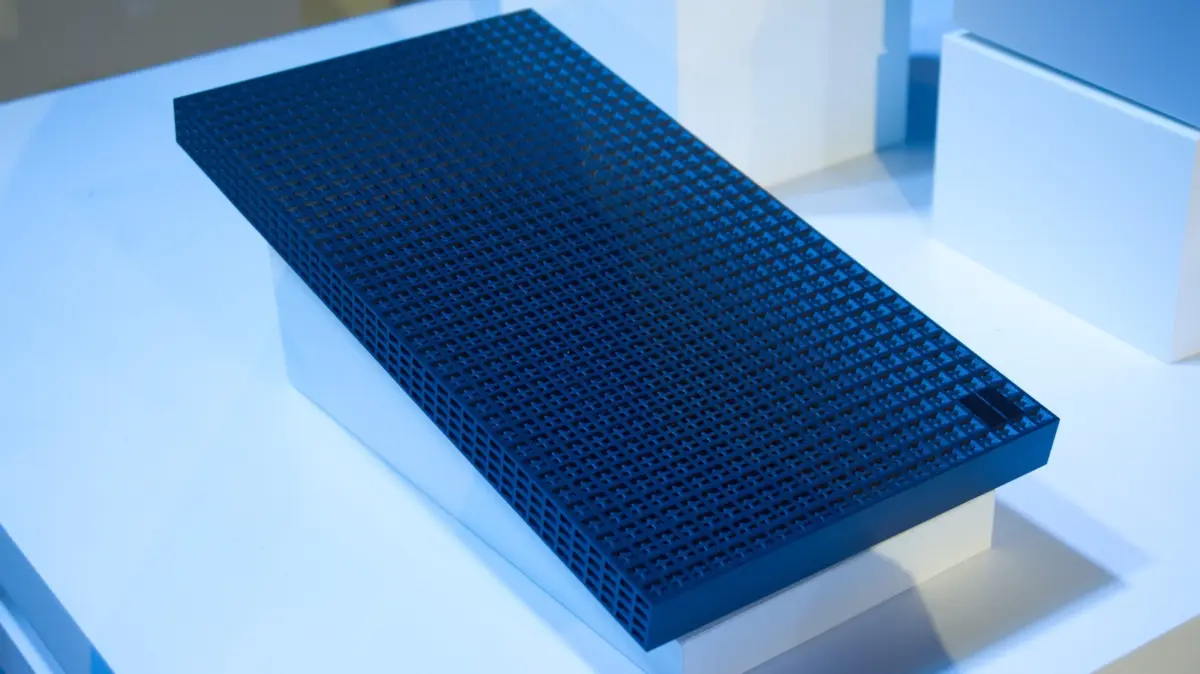
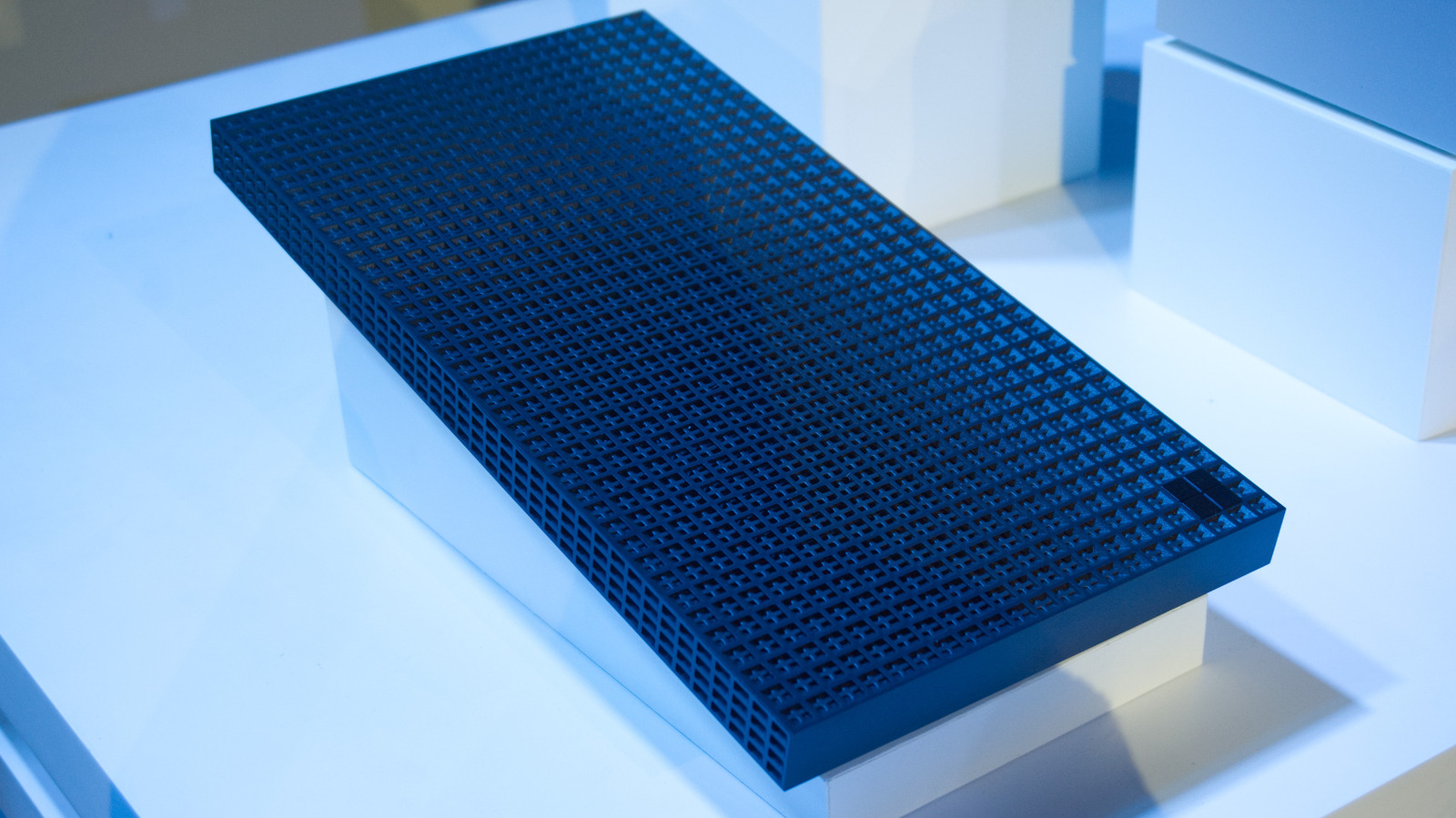
Covered in an estimated 1,000 distinct air vents that give it the striking aesthetic of an oversized Lego brick, the Spark Dev Box is engineered to handle punishing computational loads. Beneath its perforated exterior lies a formidable configuration: a massive 6,144-core GPU, 128GB of high-speed unified memory, and a 2TB NVMe SSD. Weighing in at an awkward 5 to 6 pounds—anchored by an elevated base designed to optimize thermal intake—this machine is clearly intended to serve as a fixed desktop powerhouse, directly challenging Apple’s dominant Mac Studio ecosystem in the professional developer arena.
This comprehensive report examines the design philosophy, technical architecture, thermal engineering, port ecosystem, and market positioning of Microsoft’s most expensive and specialized desktop workstation to date.
Detailed Chronology: From Teaser to Hands-On Reality
To understand the positioning of the Surface RTX Spark Dev Box, one must trace the trajectory of Microsoft’s recent hardware evolution, which increasingly mirrors the vertically integrated strategies of competitors like Apple.
Phase 1: The Initial Tease
Earlier in the year, Microsoft dropped hints regarding a specialized workstation designed to bridge the gap between cloud-based AI training and local development. During these preliminary announcements, the machine was briefly referenced as a "compact PC," setting expectations for a small-form-factor desktop that could easily slip into minimal desk layouts. At the time, details regarding exact specifications, pricing, and structural design were kept tightly under wraps, leaving the developer community to speculate on whether Microsoft would lean into an ARM-based architecture or an x86/NVIDIA hybrid approach.
Phase 2: The Windows AI Hardware Event
The anticipation culminated at Microsoft’s flagship Windows AI event. While consumer devices commanded the primary keynote slots, the company dedicated crucial floor space to the physical exhibition of the Surface RTX Spark Dev Box. Tech journalists and industry analysts were given their first hands-on opportunities with production-ready hardware units.
It was during these hands-on sessions that the "compact PC" moniker was immediately challenged by physical reality. Reviewers attempting to lift the machine noted its surprising heft—estimated at well over 5 pounds—and its peculiar structural geometry. Rather than a simple box, the unit features an elevated base and an external chassis saturated with micro-perforations. Although the units were powered down during the showcase, preventing real-time benchmarking or acoustic testing, the sheer density of the hardware cemented its status as a serious enterprise tool rather than an experimental novelty.
Phase 3: Commercial Availability and Pre-Orders
Hot on the heels of the physical showcase, Microsoft officially opened pre-order channels through its enterprise and consumer online stores. With a firm price tag of $5,999.99, the device transitioned from an elusive developer curiosity to a commercially available workstation targeted at well-funded enterprise labs, independent AI development studios, and corporate engineering departments looking to accelerate local model fine-tuning.
Supporting Context & Metrics: Architectural Breakdown
To justify a $6,000 price point in a market saturated with high-performance custom-built PCs and established workstation laptops, the Surface RTX Spark Dev Box relies on a spec sheet engineered specifically for deep learning workflows.
+--------------------------------------------------------------------------+
|                       SURFACE RTX SPARK DEV BOX                          |
+--------------------------------------------------------------------------+
|  Price    | $5,999.99                                                    |
|  GPU      | 6,144-core architecture                                      |
|  Memory   | 128GB high-capacity RAM                                      |
|  Storage  | 2TB high-speed NVMe SSD                                      |
|  Chassis  | Perforated aluminum/composite with ~1,000 air vents            |
|  Weight   | Approx. 5 to 6+ lbs (with elevated base)                     |
+--------------------------------------------------------------------------+
Computational Muscle: The 6,144-Core GPU
At the beating heart of the Spark Dev Box is its graphics processing unit, boasting an astonishing 6,144 cores. In the realm of artificial intelligence and machine learning, core count and tensor processing capabilities dictate how rapidly a developer can iterate on neural network training, execute local Large Language Model (LLM) inference, and process complex computer vision pipelines. By packing this level of parallel processing power into a localized desktop unit, Microsoft is enabling developers to run and test demanding AI models directly on their desks, reducing latency and dependency on cloud-based clusters during early-stage coding.
Memory and Storage Configurations
The system ships standard with 128GB of memory. For software engineers working with modern transformer models, multi-modal AI systems, or large containerized development environments, 128GB is rapidly becoming the baseline requirement rather than a luxury. This abundant memory pool prevents system bottlenecks when loading sprawling datasets or compiling massive codebases alongside active AI copilots. Complementing the memory is a swift 2TB solid-state drive, ensuring rapid read/write speeds for massive machine learning weights, checkpoints, and project assets.
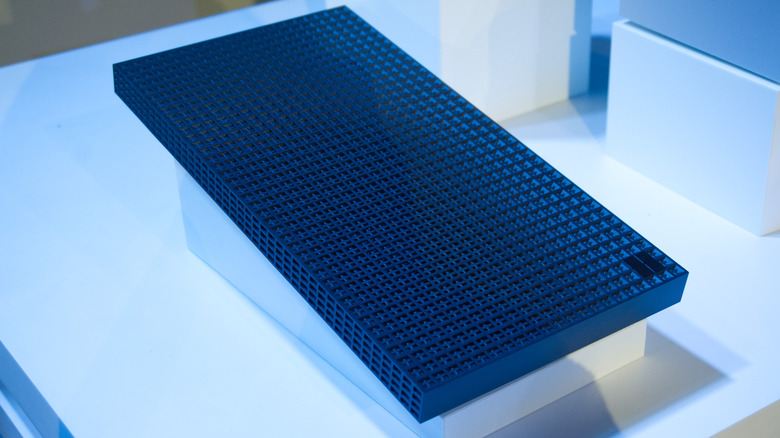
Thermal Engineering and the "Lego Brick" Aesthetic
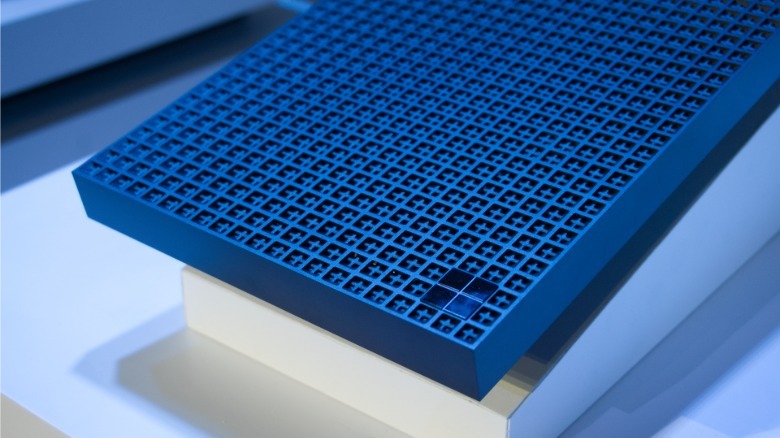
Perhaps the most striking physical characteristic of the Spark Dev Box is its exterior design. Covered edge-to-edge in an estimated 1,000 air vents, the machine bears a striking visual resemblance to an oversized, industrial-grade Lego brick.
This extreme perforation is not merely stylistic; it is a thermal necessity. Packing a 6,144-core GPU and enterprise-grade processors into a relatively thin and elongated chassis generates immense heat dissipation challenges. To mitigate thermal throttling—a common plague of high-density hardware—Microsoft designed the chassis to maximize passive airflow, supplemented by internal active cooling solutions. Furthermore, the unit rests on an elevated base, creating an essential clearance gap underneath the chassis to facilitate unimpeded air intake.
However, this design introduces practical trade-offs. The device is notably heavy, tipping the scales at roughly 5 to 6 pounds. Combined with the awkward geometry of the elevated base, picking up and repositioning the machine with a single hand is a clumsy endeavor. It is a desktop appliance in the truest sense: designed to be placed on a desk, plugged in, and left undisturbed.
Connectivity and Peripheral Ecosystem
In terms of Input/Output (I/O), the Spark Dev Box offers a curated, albeit somewhat conservative, selection of ports located primarily on the rear panel:
- USB-C Ports: Three high-bandwidth connections for modern displays, external storage arrays, and high-speed peripherals.
- Video Output: Dedicated HDMI port for standard monitor integration.
- Legacy and Network Connectivity: A standard USB-A port for traditional peripherals, a physical Ethernet port for stable, high-speed corporate network access, and a dedicated 3.5mm headphone jack.
Notably, unlike Apple’s Mac Studio—which the Spark Dev Box directly targets—Microsoft’s workstation omits a built-in SD card slot. While this may disappoint media professionals and photographers, the primary target demographic of AI developers and data scientists will likely find the port array sufficient for connecting multi-monitor arrays, mechanical keyboards, mice, and external debugging hardware.
Official Statements and Industry Positioning
Microsoft’s strategic pivot toward high-end developer hardware underscores a broader corporate ambition: dominating the entire lifecycle of AI creation, from silicon design and cloud infrastructure down to the physical machines sitting on engineers’ desks.
Industry observers have been quick to draw comparisons between the Surface RTX Spark Dev Box and Apple’s Mac Studio. While Apple has successfully captured a massive share of the creative and software engineering market with its unified memory architecture and power-efficient Apple Silicon chips, Microsoft is carving out a distinct niche for developers who require deep integration with the Windows developer ecosystem, DirectX ray tracing pipelines, and local NVIDIA-accelerated AI frameworks.
While executive commentary from Microsoft during the launch event emphasized the device’s role as a "desktop powerhouse," independent analysts have highlighted the pricing strategy. At $5,999.99, the Spark Dev Box occupies an ultra-premium tier that places it beyond the budget of individual hobbyists. Instead, it is squarely aimed at enterprise corporate budgets, well-funded research laboratories, and specialized software development agencies where hardware costs are easily amortized against engineering productivity gains.
Future Outlook: The Road Ahead for Enterprise AI Workstations
As the artificial intelligence boom matures, the demand for specialized local hardware will only intensify. Cloud-based development remains dominant for massive, enterprise-scale training runs, but the friction of round-trip cloud latency has catalyzed a massive resurgence in edge and local development workstations.
The launch of the Surface RTX Spark Dev Box signals a critical inflection point for Microsoft. By moving deeper into custom, high-end desktop hardware, the company is signaling that Windows is not merely an operating system for general productivity, but an uncompromising platform for the most advanced computing tasks of the 21st century.
Over the coming months, as review units make their way into independent testing labs, the industry will watch closely to see how the Spark Dev Box handles sustained thermal loads, how effectively its 1,000 air vents manage acoustics under full GPU load, and whether software developers embrace Microsoft’s vision of a $6,000 localized AI command center.
For now, the Surface RTX Spark Dev Box stands as a bold, heavy, and meticulously engineered monument to the current gold rush of artificial intelligence—proving that when it comes to the future of software development, the hardware must be just as revolutionary as the code it compiles.