In the late autumn of 2022, filmmaker Oscar Boyson and journalist Ricky Camilleri sat down to write a screenplay born from a grim, contemporary American tragedy. Their inspiration was not the carnage itself, but a chilling footnote from the May 2022 mass shooting at Robb Elementary School in Uvalde, Texas. On the morning that 18-year-old gunman Salvador Ramos murdered 21 people, he messaged a 15-year-old girl in another country, hinting darkly at his intentions. In the chaotic aftermath, that young girl—who had never met Ramos—became the target of global vitriol. She was harassed online, and later prosecuted in Germany for failing to alert authorities.
That haunting intersection of global connectivity, digital isolation, and sudden violence crystallized into Our Hero, Balthazar, a provocative dark comedy. Channeling the uncompromising spirit of its Robert Bresson-referencing title, Boyson’s feature-length directorial debut tackles gun violence, systemic loneliness, and the modern incel subculture. The film boasts a stellar, counter-casting ensemble of former YA heartthrobs, including Asa Butterfield, Jaeden Martell, Noah Centineo, and Avan Jogia.
Yet, despite earning critical acclaim, the button-pushing feature nearly failed to secure a UK theatrical distribution. In an industry increasingly risk-averse to controversial subject matter, Our Hero, Balthazar stands as a rare, hazardous attempt to stare directly into the digital abyss that breeds modern mass shooters.
Detailed Chronology: From Uvalde Footnote to Screen
The path from a real-world news alert to a cinematic narrative was fraught with rejection. Boyson, a 42-year-old New Yorker and co-founder of Elara Pictures alongside the Safdie brothers—with producer credits on celebrated indie titles like Uncut Gems, Good Time, and Frances Ha—found that traditional gatekeepers were hesitant to touch the project.
Our Hero, Balthazar was rejected by major independent film festivals, including Sundance, SXSW, and Cannes.
"It’s very hard right now, unless it’s a horror movie, for an independent film to cut through," Boyson reflects. "We didn’t get that festival anointment that indie films need, but I knew the movie worked. It sucks when festivals function from a place of ‘I don’t want to offend anyone.’ Every time we’ve put it in a theatre, people have a memorable, emotional experience."
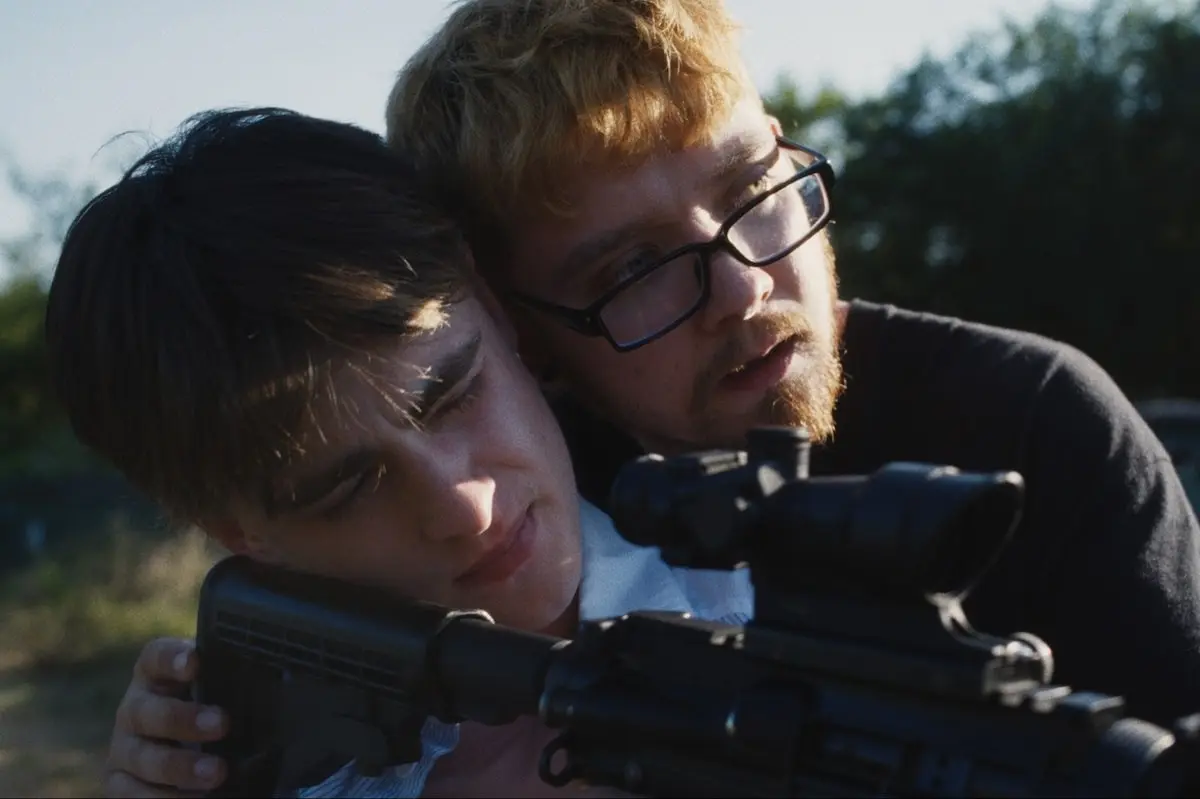
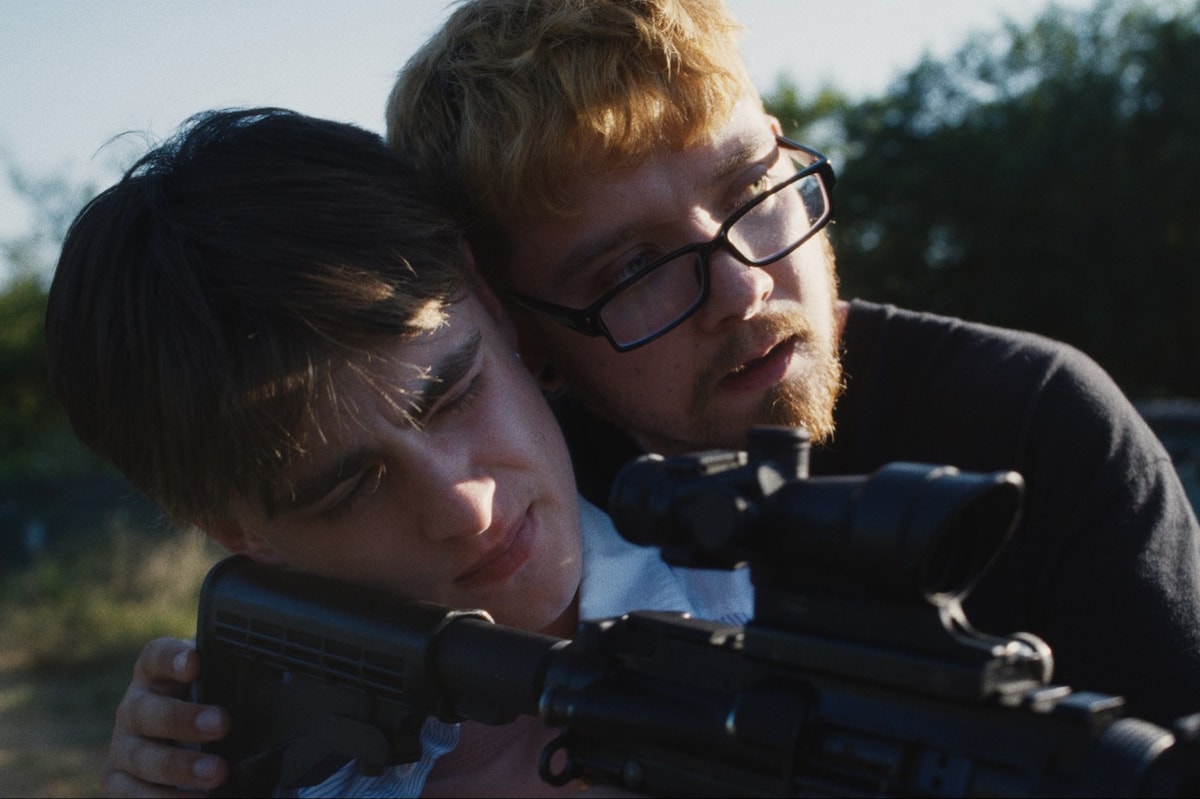
The film’s plot subverts expectations from its opening frames. A common misconception among early reviewers is that the narrative centers entirely on Balthazar (played by Jaeden Martell), a privileged, emotionally stunted teenager who uploads tearful YouTube videos about gun violence simply to woo a girl he has a crush on, Eleanor (Pippa Knowles). When Eleanor expresses skepticism regarding his performative activism, Balthazar devises an extreme solution to win her heart: he tracks down a stranger named Solomon (Asa Butterfield), whom he believes is on the verge of executing a school shooting. Balthazar’s plan is simple—talk Solomon out of mass murder and emerge as the hero.
What follows is a seductive, masterclass manipulation. Balthazar catfishes Solomon—a Texas-based loner—using AI-generated images, explicit sexual promises, and a manufactured persona claiming to be a woman whose desires cannot be fulfilled in New York.
However, the film shifts gears when the two men finally meet face-to-face in Texas. Rather than reacting with rage upon discovering his online girlfriend is a fraud, Solomon is ecstatic that someone traveled across the country just to see him.
"There’s a certain kind of person who wants it to be those first 20 minutes, and, when it changes, they get uncomfortable," Boyson notes. "But that’s the point. This film isn’t about a school shooting. It’s about loneliness and isolation."
Supporting Context & Metrics: The Anatomy of Modern Isolation
The cultural anxieties explored in Our Hero, Balthazar touch upon raw nerves in contemporary psychology. Mass shootings and political assassinations have increasingly mutated into performative spectacles.
"School shootings are like a performance today. Political assassinations get meme-ified," Boyson explains. "If you’re on the internet, you think about what you play in that performance. For Balthazar, it’s the public victim, and for Solomon, it’s the shooter — to the extent that Solomon admits in real life he can’t do that."
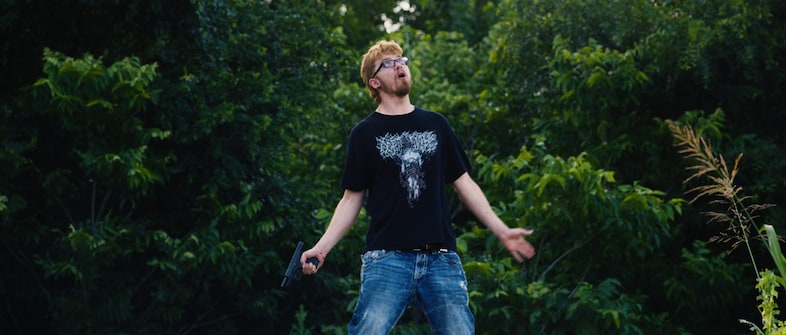
For Asa Butterfield—historically celebrated for portraying sweet, empathetic youths in projects like Hugo, The Boy in the Striped Pyjamas, and Netflix’s Sex Education—taking on the role of Solomon required a radical physical and psychological transformation. Sporting dyed hair and a gritty Texan drawl, Butterfield’s character streams adult content in public spaces and routinely creeps out his female coworkers. If Solomon belongs in the cinematic pantheon of Martin Scorsese characters, he is Travis Bickle from Taxi Driver, not the wide-eyed orphan of Hugo.
To build the character, Butterfield and Boyson engaged in rigorous research, studying the digital footprints of real-world attackers.
"We sent each other pictures of real people and school shooters, and were drawing on real things to build Solomon," Butterfield reveals.
When pressed on specific inspirations, Boyson points directly to real-world figures such as Anderson Aldrich and Randy Stair, whose unhinged manifestos and YouTube archives remain chilling digital artifacts.
The filmmakers also highlight the systemic failures of artificial intelligence and tech conglomerates in monitoring troubled youths. Boyson references the case of the 18-year-old Tumbler Ridge shooter, who detailed his violent plans to ChatGPT prior to his attack. According to reports, employees flagged the interaction to upper management, only to be rebuffed out of fear of corporate liability.
"Employees of ChatGPT flagged it to their bosses, and their bosses said, ‘No, we don’t get involved. If we did, that would mean we know we’re responsible in some way,’" Boyson states. "OpenAI don’t want people reading about that story."
Official Statements & Industry Perspectives
The release of Our Hero, Balthazar has sparked intense debate regarding the ethics of humanizing characters inspired by mass shooters. In interviews promoting the film’s preview screening in London, Butterfield and Boyson defended their uncompromising approach to character psychology.
"You need to find the humanity inside characters to put yourself in their shoes," Butterfield says. "A big challenge was getting audiences to empathise with Solomon despite his abrasiveness, misogyny and loud, uncomfortable behaviour. How do we show audiences why he’s like this, and for them to think they failed him?"
Boyson echoes this sentiment, criticizing mainstream media coverage for reducing complex societal fractures into a binary of good versus evil.
"You can’t help but feel bad for them. The media has no interest in everything leading up to the tragedy. It’s always: ‘These are the good guys, these are the bad guys.’ This movie was a response to that. It’s about the decisions, nuances, behaviours, and failings that lead to violence, instead of the movies we usually get where people survive this terrible thing, break through the trauma and keep on. That, to me, is not interesting, and kind of offensive."
The conversation naturally extends to the commodification of isolation, including the polarizing label of the "incel" (involuntary celibate). While Balthazar weaponizes his public loneliness for social clout, Solomon vehemently rejects the classification—a nuance Boyson deliberately baked into the screenplay.
"It’s a new thing to take your loneliness, the way Balthazar does, and to make it public on social media, even if nobody’s listening," Boyson observes. "Being an incel is part of that. People take on this identity that they’re never going to get laid, and make it public. But for me, it’s a little reductive."
Butterfield adds that the digital age has fundamentally warped human connection: "The internet has made people lonelier because you’re aware of how big the world is, and how tiny you are within it. This movie shows how dangerous that can be."
Boyson offers a final, sobering statistic regarding the true scale of modern desperation: "There’s another part to that shame. The number-one gun violence in America is people killing themselves. For every kid who goes online and tries to make a friend, there’s probably a lot more who don’t even try, and just waste away in isolation."
Future Outlook
As Our Hero, Balthazar rolls out across digital and theatrical platforms, its trajectory will serve as a bellwether for independent cinema’s appetite for dangerous, socially volatile narratives. In an era dominated by algorithmic safety, sanitized intellectual property, and risk-averse festival programming, Boyson’s film proves that independent art can still puncture the cultural zeitgeist.
By refusing to offer easy moral resolutions or comforting cinematic catharsis, Our Hero, Balthazar forces audiences to confront the uncomfortable architecture of modern rage. Whether the industry learns from its willingness to engage with the root causes of digital isolation remains to be seen, but the conversation it has ignited is one Hollywood can no longer afford to mute.