Executive Overview
The web development landscape is experiencing a period of profound architectural evolution, driven by a wave of forward-thinking specifications, browser implementations, and developer tooling. As modern CSS matures, the boundary between what requires heavy JavaScript logic and what can be natively handled by HTML and CSS continues to shrink.
This edition of What’s !important captures a critical inflection point in frontend engineering. Over the past couple of weeks, the community has dissected groundbreaking proposals and emerging browser APIs that promise to fundamentally change how we build user interfaces. From the introduction of the native <geolocation> HTML element and interest-based tooltip configurations to revolutionary CSS features like the class prefix selector (.something-*) and the named-feature() support query, developers are being handed powerful new primitives to write cleaner, faster, and more accessible code.
Simultaneously, complex design challenges—such as determining grid cell coordinates, balancing multi-row flexbox layouts, and managing stateful UI preferences like dark mode—are finding elegant, native CSS-only solutions. This report explores these developments in depth, analyzing their technical implications, current browser support trajectories, and the broader impact they will have on the future of web architecture.
Detailed Chronology
1. The UX and Architecture of Modern Tooltips
The fortnight began with a focus on a ubiquitous yet notoriously finicky UI component: the tooltip. Abhishek Jakhar published a comprehensive guide addressing a classic usability flaw—tooltips that trigger instantly upon accidental mouseovers and linger awkwardly when the user has already moved on. Jakhar outlined a "delayed-then-instant" pattern, where the initial appearance of a tooltip is throttled to prevent accidental flickers, but subsequent hovers within the same micro-interaction zone appear instantly and disappear the moment the cursor leaves the target.
Responding to Jakhar’s implementation, Chris Coyier demonstrated a modern, declarative alternative utilizing browser-native interest invokers. This approach relies on two emerging CSS properties: interest-delay-start and interest-delay-end. While currently restricted to Google Chrome under experimental flags, interest invokers shift the burden of timing and state management from custom JavaScript to the browser engine, showcasing the power of progressive enhancement.
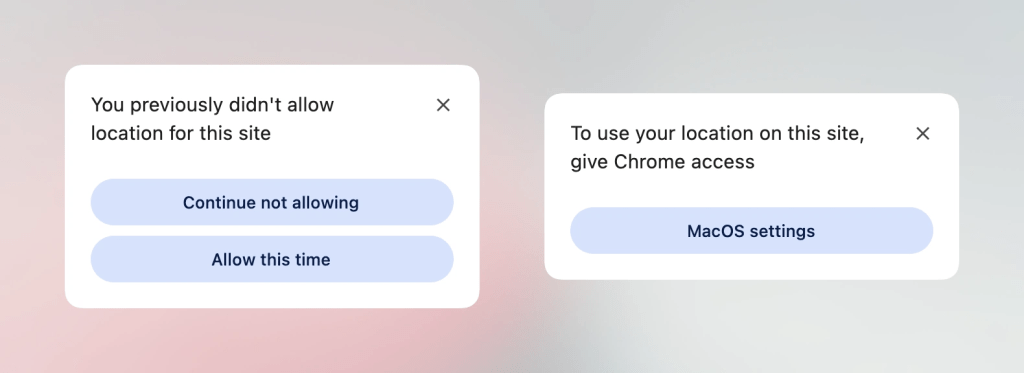
2. Streamlining Location Access with <geolocation>
Hardware-integrated APIs have historically been plagued by configuration hurdles, complex permission models, and external hardware dependencies (GPS satellites, Wi-Fi triangulation, and cellular towers). The introduction of the <geolocation> HTML element aims to streamline this experience, though it brings its own set of styling restrictions and browser availability quirks.
Because adoption is currently limited to Chrome, developers are relying on hybrid strategies. Tutorials published across the community detailed how to bridge the gap by deploying the new <geolocation> element alongside legacy JavaScript Geolocation APIs, ensuring robust backwards compatibility while letting modern browsers take advantage of the simplified declarative syntax.
3. Syntax Highlighting via the Custom Highlight API
The frontend ecosystem continues to move away from heavy, DOM-manipulation-based syntax highlighters. Dave Rupert introduced MicroLighter, a lightweight syntax highlighter built on top of the native Custom Highlight API and the ::highlight() pseudo-element. By leveraging the browser’s internal rendering pipelines to style text ranges directly without injecting spans into the DOM tree, MicroLighter dramatically reduces memory overhead and improves performance on large documents.
4. Extracting Grid Intelligence into CSS Custom Properties
CSS Grid has long been a layout powerhouse, but passing structural layout data back into CSS variables for reactive styling remained a missing link. Temani Afif unlocked new architectural possibilities by demonstrating how to extract CSS grid information—specifically row and column counts, as well as precise cell x/y coordinates—into CSS custom properties.
While currently requiring columns of equal width, this technique unlocks remarkable downstream possibilities. Afif showcased how this layout intelligence can be leveraged to compute hover proximity entirely via modern CSS, eliminating the need for complex JavaScript bounding-client-rect calculations.
5. The Great Dark Mode Debate: Two-State vs. Tri-State
As UI themes become a standard user expectation, architectural debates surrounding state management have intensified. Lea Verou advocated for a streamlined two-state toggle, while Bramus made a compelling case for a tri-state approach (Light, Dark, and System Auto). Adding nuance to the discussion, Vale.Rocks proposed an "auto-until-overridden" two-state model, which respects the operating system preference by default while gracefully persisting manual user overrides.
6. Advancing Selectors and Feature Queries
Bramus dominated the latter half of the cycle with two major selector and feature-query proposals:
- *The Class Prefix Selector (`.something-
):** Offering a clean, performant alternative to verbose attribute selectors like[class^="something-"]`, this syntax allows developers to target classes with matching prefixes natively and efficiently. - The
@supports named-feature()Function: Expanding the capabilities of feature queries, this function enables developers to query hyper-specific browser behaviors—such as whether a browser correctly respects CSS transforms when calculating anchor positioning—paving the way for more resilient CSS fallbacks.
7. Balancing Flexbox Layouts
Rounding out the updates, Chrome introduced support for flex-wrap: balance. Much like its textual counterpart text-wrap: balance, this property automatically distributes flex items evenly across multiple rows or columns, putting an end to awkward, lopsided final rows in flexible grids.
Supporting Context & Metrics
To understand the weight of these recent developments, one must examine the shifting metrics of frontend performance and code maintainability.
| Feature / Tool | Primary Mechanism | Current Support | Performance / DX Impact |
|---|---|---|---|
| Interest Invokers | interest-delay-start / end |
Chrome (Experimental) | Eliminates custom JS timers for tooltips. |
<geolocation> Element |
Native HTML Tag | Chrome Only | Simplifies permissions and hardware integration. |
| MicroLighter | ::highlight() API |
Broad Modern Support | Eliminates DOM bloat for syntax highlighting. |
| Grid Custom Properties | Layout Variable Binding | Universal Grid Engines | Enables pure CSS hover proximity and state tracking. |
| Class Prefix Selector | .something-* syntax |
Proposed / Under Discussion | Replaces slow attribute selectors with high-performance matching. |
flex-wrap: balance |
Layout Engine Rule | Chrome | Solves aesthetic imbalances in flex-wrap layouts. |
The overarching trend is clear: the web platform is aggressively absorbing common third-party utility patterns. Features that once required kilobytes of external JavaScript libraries—such as syntax highlighters, tooltip managers, and layout balancers—are steadily migrating into the native CSS and HTML specification layer.
Official Statements
Industry experts and specification authors have weighed heavily on the implications of these updates. Highlighting the shift toward native platform capabilities, community leaders emphasized the philosophy of progressive enhancement:
"The goal is never to wait for 100% universal support before exploring a pattern; rather, it is about building resilient architectures where modern browsers receive hyper-optimized, native browser behaviors while older clients gracefully fall back to robust alternatives."
Regarding the introduction of advanced selectors like the class prefix selector, architectural discussions highlight the performance gains over legacy attribute matching:
"Attribute selectors force the browser engine to perform string-matching operations across class attribute strings. Introducing dedicated syntax primitives like `.something-` aligns class targeting with optimized internal selector lookup tables, yielding measurable performance improvements in large applications."*
Furthermore, the introduction of specialized feature detection via named-feature() signals a shift away from brittle user-agent sniffing and toward hyper-granular capability queries, ensuring that developers can safely adopt cutting-edge layout and transformation features without breaking rendering consistency.
Future Outlook
As we transition into the autumn season, the trajectory of CSS and HTML development points toward a more declarative, performant, and developer-friendly ecosystem.
Several key developments will shape the coming months:
- Broader Engine Adoption: Features currently isolated to Chromium (such as interest invokers,
<geolocation>, andflex-wrap: balance) will face scrutiny and potential implementation timelines from Gecko (Firefox) and WebKit (Safari). - Standardization of Advanced Selectors: Proposals like the class prefix selector are expected to move quickly through standardization committees due to their immediate utility and clean syntax.
- Ecosystem Refactoring: Tooling authors will continue to rewrite libraries (such as syntax highlighters and UI component toolkits) to leverage native APIs like the Custom Highlight API and anchor positioning, driving down bundle sizes across the board.
The web is evolving faster than ever. By embracing these native primitives, developers are not only reducing their reliance on JavaScript frameworks for basic UI mechanics—they are laying the groundwork for a faster, more accessible, and profoundly more capable digital landscape.