Berlin, Germany — The modern narrative surrounding endurance sports is undergoing a fundamental paradigm shift. For decades, the cultural archetype of the marathon runner was built on relentless deprivation: predawn wake-up calls, grueling suffering in silence, strict asceticism, and an uncompromising "no pain, no gain" ethos that routinely alienated casual athletes and busy professionals.
However, a new wave of urban endurance athletes is rewriting the rulebook. Leading this charge is Hong, a Berlin-based designer, international flight attendant, and veteran marathoner currently preparing for her seventh 42-kilometer race. Hong’s journey challenges the traditional dogma of high-performance athletics, demonstrating that athletic excellence, mental well-being, and a comfortable, socially rich lifestyle do not have to be mutually exclusive.
This deep dive explores how modern runners are redefining training methodologies, balancing demanding professional schedules with elite-level endurance goals, and proving that consistency is born not from suffering, but from comfort, community, and joy.
Executive Overview
The contemporary fitness landscape faces a distinct paradox: while wearable technology and data analytics have made training more precise than ever, drop-out rates among recreational runners remain stubbornly high. Burnout is frequently cited as the primary culprit, triggered by rigid training plans that ignore the complexities of modern working life.
Hong’s training philosophy offers a compelling antidote to this modern malady. Juggling the unpredictable jetlag of a flight attendant, the creative deadlines of a graphic designer, and a robust social calendar in one of Europe’s most vibrant capitals, Hong represents the archetype of the holistic runner. Her approach rests on three core pillars:
- Radical Comfort: Prioritizing psychological and physical ease—from supportive, responsive footwear to customized playlists.
- Integrated Recovery: Treating rest days, physiotherapy, and yoga not as passive lapses in training, but as active, non-negotiable components of performance.
- Community Integration: Anchoring solitary miles within a vibrant running collective and anchoring rigorous weeks with social rituals, art exhibitions, and culinary rewards.
By dismantling the myth that serious training requires misery, Hong’s routine provides a scalable blueprint for how busy professionals can achieve elite endurance goals without sacrificing their quality of life.
Detailed Chronology: A Week in the Life of a Holistic Marathoner
To understand how high-volume endurance training integrates into a high-stress lifestyle, one must examine the micro-level execution of a weekly schedule. Far from a military-style drill, Hong’s week is a delicate, intentional orchestration of energy output, active recovery, and social connection.
Monday: Combating Fatigue and Finding Rhythm
Mondays present a universal challenge for urban professionals: transitioning from the weekend to a high-demand work environment. For Hong, who splits her professional life between graphic design and commercial aviation, the start of the week requires immediate psychological priming.
"I’m not a morning person," Hong admits candidly. "Like many others, I hit the snooze button far too often, and I am completely useless before my morning coffee."
To combat early-week lethargy, Hong relies on a curated acoustic environment. Her running playlist—a dynamic mix of disco, house, and techno—acts as a psychological catalyst on low-energy days. Furthermore, Hong employs a unique behavioral hack when physical fatigue threatens to derail her pace: she sings.
"If I run out of breath during a run, I drop a gear and start singing," she explains. "It forces me to slow down and bring my breathing back under control. The run immediately becomes much more fun, and I notice people smiling as I run past them singing."
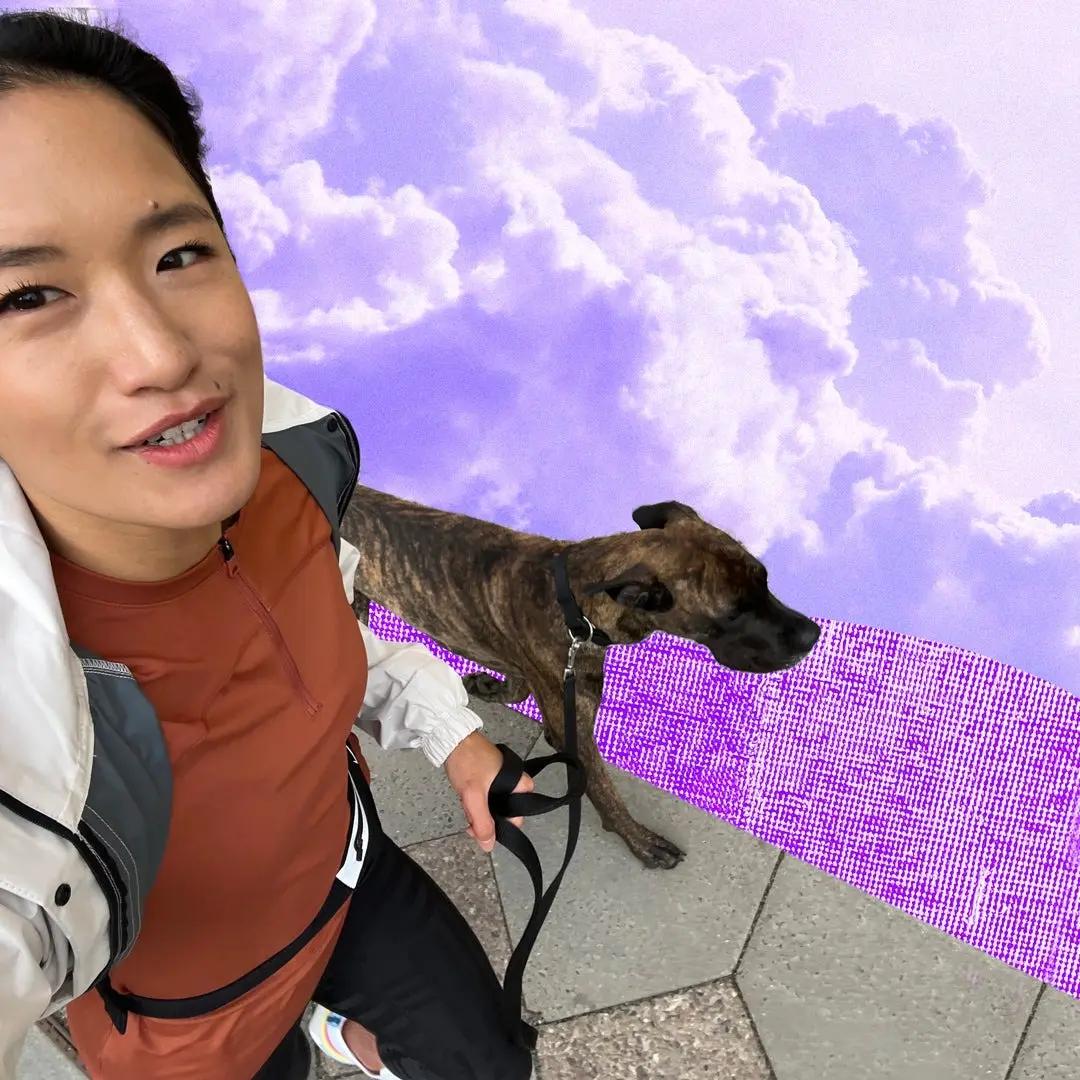
Adding a layer of unpredictability to Monday’s session, Hong often borrows a friend’s dog, Mia. The energetic canine provides both biological pacing and psychological companionship. "At the beginning, she pulls me; at the end, I pull her. I might not be as fast as her, but when it comes to endurance, I win."
Tuesday: Cross-Training and Injury Prevention
While running is the primary vehicle for marathon preparation, running alone is a fast track to the orthopedist’s office. Tuesday is dedicated entirely to cross-training, structural integrity, and injury mitigation.
Hong skips the asphalt entirely on Tuesdays, opting instead for dedicated yoga sessions, targeted strength training, and physiotherapy. This multidisciplinary approach builds a robust musculoskeletal foundation capable of absorbing the repetitive impact of high-mileage weeks.
Sports scientists and running coaches increasingly emphasize this holistic programming. By strengthening stabilizing muscles and maintaining joint mobility, runners can safely push their comfort zones during high-intensity intervals without tipping over into overuse injuries. Crucially, this structured cross-training ensures that Hong finishes hard runs feeling challenged rather than completely depleted.
Wednesday: Active Rest and Professional Synergy
Wednesdays highlight the intersection of physical recovery and social preservation. As a flight attendant traversing global time zones, Hong’s time in Berlin is precious.
Rather than viewing rest days as periods of inactivity where life is put on hold, Hong utilizes Wednesdays to nourish her cultural and social life. Taking a deliberate break from structured workouts, she frequently visits local art exhibitions with friends. This mental detachment from training metrics reduces cognitive fatigue, ensuring she returns to her running shoes with renewed psychological hunger.
Thursday: Pushing Limits and Track Science
If Monday and Wednesday are about rhythm and recovery, Thursday is where the physiological adaptation occurs. Training for a marathon requires structured speed work, and Thursday is designated for track workouts.
"Some people think marathon runners bounce out of bed at 5:00 AM and effortlessly run 20 kilometers," Hong notes. "In reality, I sometimes need an extra dose of motivation. That’s why comfort is so important to me, whether I’m facing an easy recovery run or a brutal track session."
During Thursday’s high-intensity interval training, Hong tests her lactate threshold, evaluating how fast she can run and how long she can maintain target paces. Footwear plays a critical tactical role here. Hong relies on shoes featuring high-energy-return foam and bouncy soles—such as the Nike Invincible 3—which provide secure footing across varying track surfaces while mitigating high-impact joint stress.
Friday: Reflection and Cultural Re-entry
Following Thursday’s anaerobic threshold session, the body demands physiological recalibration. Friday serves as a secondary buffer day.
After a gentle morning yoga flow to release tight hip flexors and calves, Hong keeps the physical agenda light. True to her philosophy of integrating her athletic life with her urban environment, she spends the afternoon exploring Berlin’s creative spaces and catching up with friends before the weekend arrives.
Saturday: The Meditative Long-ish Run
Saturday morning in Berlin offers a sacred ritual: the Landwehrkanal route. Serving as Hong’s standard testing ground, the route presents a varied terrain of asphalt, grass, and mud, requiring active neuromuscular engagement.
Equipped with an engaging podcast or simply tuned into the ambient soundscape of the city, Saturday is an exercise in mental decompressions. "I love watching the people around me," Hong reflects.
The run concludes with an intentional post-workout ritual: a specialty coffee and a savory snack from a local market stall in Kreuzberg, transforming a training requirement into a sensory reward.
Sunday: Collective Endurance and Culinary Culmination
The culmination of the training week takes place on Sunday with the long run, executed in tandem with her running community, the Joy Run Collective.
Long-distance running in colder climates requires meticulous preparation—layering technical fabrics, managing hydration, and pacing conservatively to preserve core temperature. Running as a pack transforms the psychological burden of a 20+ kilometer effort into a shared communal victory.
The reward waiting at the finish line is equally calculated: a post-run brunch featuring handmade dumplings prepared by a host whom Hong has spent the entire week anticipating.
Supporting Context & Metrics: The Science of Sustainable Running
Hong’s trajectory—transforming from a self-proclaimed non-runner into a seasoned marathoner targeting her seventh 42K at age 30—highlights several physiological and sociological trends currently transforming endurance sports.
| Metric / Parameter | Traditional Approach | The Holistic Approach (Hong’s Method) |
|---|---|---|
| Primary Motivation | Grit, guilt, and strict discipline | Comfort, community, and culinary rewards |
| Training Composition | High-volume running, minimal cross-training | Balanced mix: Running, Yoga, Strength, Physio |
| Rest Philosophy | Viewed as weakness or lost time | Integrated as a vital performance tool |
| Social Integration | Often solitary; social life sacrificed | Community-driven (collectives, shared meals) |
| Psychological State | High risk of burnout and mental fatigue | Sustained motivation through sensory variety |
The Biological Dividend of Consistency
Sports science continually validates that consistency outweighs momentary heroism. A runner who logs four moderate, enjoyable sessions per week over three years will vastly outperform an athlete who sprints into high-volume training for three months before suffering a stress fracture or severe psychological burnout.
Furthermore, physiological markers reveal that individuals who begin endurance training in their late twenties or early thirties—like Hong, who started running four years ago—frequently experience significant improvements in cardiovascular efficiency, insulin sensitivity, and body composition, often surpassing the fitness levels they maintained in their twenties.
The Psychology of Comfort in Endurance
Perceived exertion is heavily modulated by environmental and psychological factors. Research in sports psychology indicates that tactile comfort—such as supportive footwear, breathable apparel, and familiar running routes—lowers the cognitive load required to initiate exercise. By removing friction points (e.g., foot blisters from ill-fitting shoes, or dreading a silent, grueling run), athletes can direct their mental bandwidth toward pacing and form.
Official Statements and Industry Insights
The democratization of running has forced major athletic brands and coaching associations to rethink how they market and design products for endurance athletes.
Industry analysts point out that running is no longer dominated by elite time-trialists; instead, it is being shaped by lifestyle runners who view their sport as an extension of their personal identity, aesthetic preferences, and social circles.
"We are witnessing the death of the suffering narrative in endurance sports," notes Dr. Elena Vance, a kinesiologist specializing in urban athletic performance. "For years, brands sold pain. Today, modern runners are demanding products that optimize recovery, provide uncompromising comfort, and seamlessly bridge the gap between high-performance training and urban social life. Athletes like Hong prove that you don’t have to destroy your body or isolate yourself from society to conquer a marathon."
Footwear engineers similarly emphasize that modern shoe design must cater to this holistic mindset. The demand for maximum-cushion, high-energy-return daily trainers—such as the models favored in Hong’s rotation—stems directly from the need to protect joints during high-mileage blocks while maintaining an enjoyable, "bouncy" running sensation.
Future Outlook: The Next Frontier for Urban Marathoners
As Hong prepares to toe the starting line for her seventh marathon, her journey offers a prophetic glimpse into the future of endurance sports.
The division between the "serious athlete" and the "casual fitness enthusiast" is rapidly dissolving. In its place, a sophisticated subculture of urban runners is emerging—individuals who balance demanding professional careers in design, aviation, tech, and the arts with rigorous training cycles. They utilize community collectives instead of sterile track clubs; they trade post-workout protein shakes for artisanal dumplings and specialty coffee; and they treat their mental health and social connections with the exact same rigor they apply to their weekly mileage splits.
Hong’s three golden rules for running longevity—wear comfortable shoes, curate a vibrant playlist, and pair every scenic route with a delicious reward—may sound deceptively simple. Yet, beneath their accessible exterior lies a profound psychological framework: the realization that longevity in sport is achieved not by breaking oneself down, but by building a lifestyle that you actually look forward to waking up for. Even if it takes an extra press of the snooze button to get started.