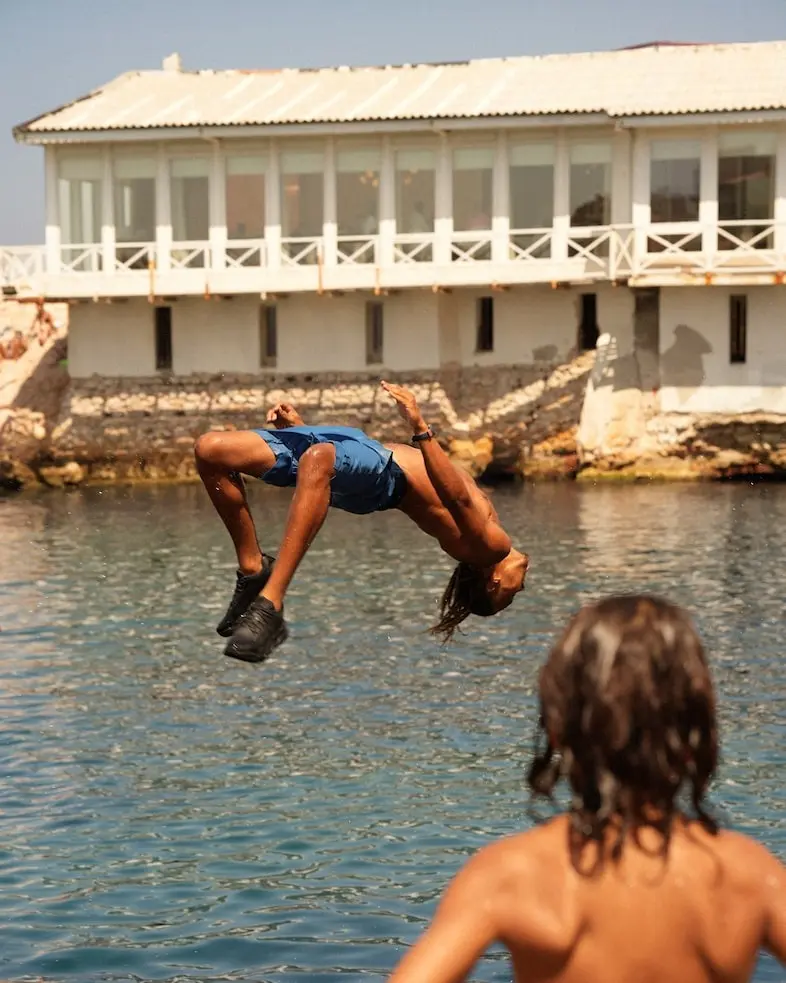
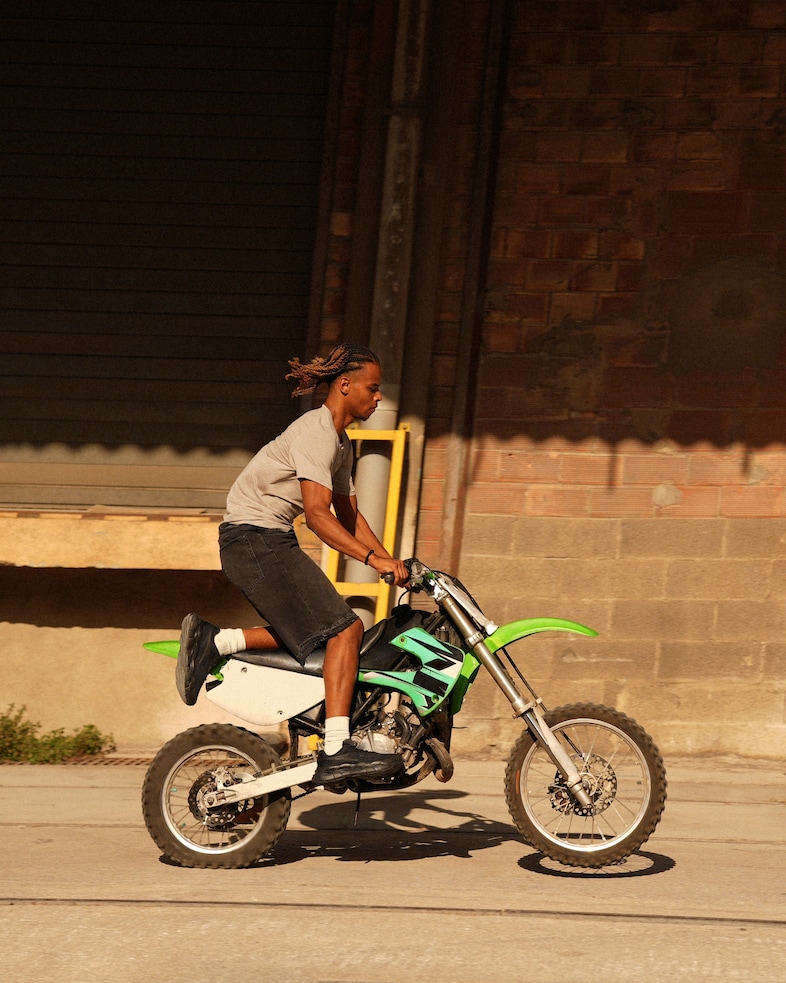
In an era dominated by curated digital personas and hyper-individualized pursuits, the sun-drenched streets of Marseille offer a striking antidote. Picture a green dirt bike revving past pastel facades, a tight-knit cluster of friends cruising on skateboards down to the Mediterranean shoreline, and a breathless backflip executed straight into the glittering waves. For the average observer scrolling through Instagram stories, the scene triggers a familiar pang of digital wanderlust—a fleeting aesthetic captured for algorithmic consumption.
Yet, for Ismael (known to his friends as Bako), Fares, Mohamed, and Sheri, this cinematic tableau is not a staged piece of content. It is simply Tuesday.
Originating from diverse social, cultural, and economic backgrounds, these young men represent a cross-section of modern urban life in France’s second-largest city. Their paths crossed not through deliberate networking or curated social circles, but through the organic friction of urban existence: shared moments at local skate parks, chance encounters on sun-baked beaches, and fleeting nods in neighborhood alleys. What began as casual acquaintanceship gradually evolved into something far more potent—a chosen family unbound by bloodlines or socioeconomic status.
This feature explores the mechanics of their bond, examining how geographic convergence, shared adversity, and a radical philosophy of collective abundance have allowed them to construct a resilient micro-community. Part of Under Armour’s “Rest Less” storytelling initiative—which highlights real-world collectives channeling their restless energy into tangible human connection—this group offers a compelling blueprint for modern solidarity. In a world increasingly fractured by isolation, Bako and his brothers demonstrate that the most radical act of self-expression is mutual care.
Detailed Chronology: From Stranger to Kinfolk
To understand the intimacy shared by Bako, Fares, Mohamed, and Sheri today, one must trace the organic evolution of their relationships. Urban friendships rarely follow a linear trajectory; instead, they are forged in the crucible of shared spaces and repeated, accidental proximities.
Phase One: The Convergence of Orbits
Marseille functions as a unique sociological checkpoint in southern France. As a bustling port city defined by historic waves of migration, diverse cultures, and rugged topography, it naturally throws disparate lives into shared orbits. Bako and his peers existed in separate social spheres across the city—navigating distinct family backgrounds, financial realities, and daily pressures.
However, the city’s public infrastructure acted as a social equalizer. Skate parks carved into concrete plazas, public beaches stretching along the Corniche Kennedy, and neighborhood alleyways became the neutral territory where their paths inevitably crossed. Initial interactions were transactional and light: a nod of acknowledgment over a trick landed at the skate park, a shared cigarette near the seawall, or a casual conversation about local transit.
Phase Two: The Crucible of Crisis
While leisure activities—such as impromptu motorcycle rides and ocean swims—cemented their early rapport, it was adversity that tested the structural integrity of their nascent brotherhood.
The turning point for the collective occurred when Bako faced a severe, prolonged health crisis. In contemporary youth culture, friendships are frequently tested by inconvenience; chronic illness or personal hardship often precipitates distance as peers retreat into their own busy lives. For Bako’s circle, the opposite occurred. The group deployed a protective ring around him, demonstrating that their bond extended far beyond weekend leisure.
“They never stopped being there for me throughout that difficult time,” Bako reflects, looking back on the ordeal. “Today, I’m just happy to be surrounded by them.”
This period transformed a group of neighborhood friends into an unshakeable support system. It established an unspoken precedent: individual struggles are collective burdens, and personal success is meaningless if achieved in isolation.
Supporting Context & Metrics: The Sociology of Modern Urban Collectives
The phenomenon observed in Marseille is not merely a heartwarming personal anecdote; it reflects broader shifts in how contemporary youth—particularly in European urban centers—are redefining community in the wake of systemic alienation.
The Urban Loneliness Epidemic vs. Chosen Families
Sociological data from across Europe highlights a paradoxical reality: while young adults are more digitally connected than at any point in human history, rates of reported loneliness and social isolation have skyrocketed over the past decade. The traditional institutions that once provided community—neighborhood associations, religious institutions, and stable multi-generational households—have receded.
In response, urban youth are increasingly relying on "chosen families." These micro-communities, formed organically around subcultures (skateboarding, motorcycling, music, and art), provide the psychological safety and social capital historically secured by nuclear families. Marseille, with its distinct socio-economic landscape and vibrant street culture, serves as a fertile breeding ground for these adaptive social structures.
The Economics of Abundance
Economists and cultural theorists frequently point to the hyper-competitive nature of modern life, where individuals are conditioned to view peers as rivals in a zero-sum game of career advancement and social status. Bako’s collective operates on an entirely different economic and philosophical paradigm: the "abundance mindset."
By rejecting the scarcity model—where one person’s gain is perceived as another’s loss—the group has institutionalized a code of shared resources. Their operational philosophy, encapsulated by Bako’s "5-5 mentality," redefines ownership. In their world, resources are communal assets. If one member possesses something, the entire collective has access to it. If a resource is missing entirely, the group mobilizes to solve the deficit cooperatively.
Official Statements & Core Principles: Bako’s Rules for Community
To maintain a brotherhood capable of weathering both external socioeconomic pressures and internal interpersonal friction, the group relies on a strict, unwritten code of ethics. Bako articulates these foundational principles not as academic theories, but as survival mechanisms for urban life.
1. Never Lie
"We’re a family, and we trust each other. As we say: ‘A lie takes the elevator, and the truth takes the stairs.’"
Trust is treated as the non-negotiable bedrock of the collective. In an environment where external pressures can be overwhelming, internal transparency ensures that emotional energy is spent navigating real-world challenges rather than decoding interpersonal deception.
2. Always Stick Together
"Despite the ups and downs, we stay in the same car, and nobody jumps out while we’re on the road."
This metaphor speaks directly to the volatility of youth and the inevitability of interpersonal conflict. Disagreements and moody phases are expected, but abandonment is prohibited. Commitment to the collective supersedes temporary emotional friction.
3. Laughter as Social Glue
"Honestly, when we’re together, we do not even have to try."
Joy is viewed as a vital restorative resource. The ability to find effortless humor amidst the grit of daily urban existence acts as a psychological buffer against burnout and anxiety.
4. Move Forward Together
"For us, we like to lift each other up so that we can move forward together and see each other grow."
Individual ambition is subordinated to collective elevation. If one member secures an opportunity—whether professional, creative, or personal—the victory is leveraged to benefit the entire ecosystem.
5. Radical Sharing (The 5-5 Mentality)
"This is the most important one. The 5-5 mentality. It means that if I have something and you don’t, we have it. If you have something and I don’t, we have it. And if neither of us has it, we figure it out. In our family, when one person eats, everyone eats. And it applies to everything. We make sure that nobody is missing anything."
Perhaps the most potent rule of the collective, this egalitarian approach to material and emotional resources dismantling hyper-individualism at its root. It transforms friendship from an abstract social construct into a concrete, material safety net.
Future Outlook: Escaping the Algorithm
As Bako, Fares, Mohamed, and Sheri continue to navigate their lives in Marseille, their story serves as a timely reminder of what is lost when human interaction is mediated entirely through screens. Their partnership with initiatives like Under Armour’s "Rest Less" campaign provides a platform to broadcast these values globally, yet their feet remain firmly planted in the physical asphalt of southern France.
The future for this collective does not lie in scaling up, commercializing, or transforming their brotherhood into a brand. Instead, their trajectory points toward deepening local roots. In an increasingly digital world that demands constant self-optimization and algorithmic compliance, their blueprint is refreshingly analog: show up for your friends, tell the truth, share what you have, and never let anyone jump out of the car when the road gets rough.
For those trapped behind screens, endlessly tapping through the highlights of other people’s lives, the message from Marseille is clear: put down the phone, step out into the physical world, and build something real. Because if you know, you know—and if you don’t, it’s time to start looking.