Executive Overview
In the modern landscape of endurance sports, the prevailing narrative is often one of relentless grit, punishing dawn-patrol wake-up calls, and uncompromising sacrifice. Society frequently equates athletic achievement—particularly marathon running—with suffering. We are conditioned to believe that to earn a finisher’s medal, one must endure endless discomfort, strict asceticism, and a rigid, joyless routine.
Berlin-based designer, flight attendant, and seasoned endurance athlete Hong is actively dismantling this exhausting myth. Once firmly identifying as a non-runner, Hong is now training for her seventh marathon, all while maintaining a lifestyle that prioritizes coziness, socializing, and mental well-being. Her approach proves a revolutionary concept in modern fitness: consistency and comfort do not have to be mutually exclusive.
This article explores Hong’s weekly training regimen, diving into a balanced routine that harmonizes grueling track workouts with restorative yoga, cultural excursions, canine companionship, and post-run dumplings. By examining her methodology, we uncover a sustainable blueprint for everyday athletes seeking longevity, mental resilience, and genuine joy in movement.
Detailed Chronology: A Week in the Life of a Cozy Marathoner
Balancing a demanding dual-career—working as both a creative designer and an international flight attendant—alongside a rigorous marathon training schedule requires meticulous time management. For Hong, the secret to staying on track is removing the friction from her workouts. Here is an exclusive, day-by-day breakdown of how she successfully navigates her busy week.
Monday: Overcoming Resistance with Rhythm and Pacing
Mondays can be notoriously difficult for anyone, let alone an athlete juggling erratic sleep schedules from long-haul flights. Hong admits to loving the snooze button and being entirely non-functional before her morning coffee.
To combat early-week lethargy, her primary weapon is her customized running playlist, featuring an eclectic mix of disco, house, and techno. While she doesn’t listen to music on every run, it acts as an immediate psychological lifeline when motivation runs low.
Furthermore, Hong employs a brilliant self-regulation technique when fatigue sets in mid-run: she starts singing.
"If I run out of breath, I shift down a gear and start singing. This forces me to slow down and bring my breathing back under control. The run becomes instantly more fun, and I notice people smiling as I jog past them."
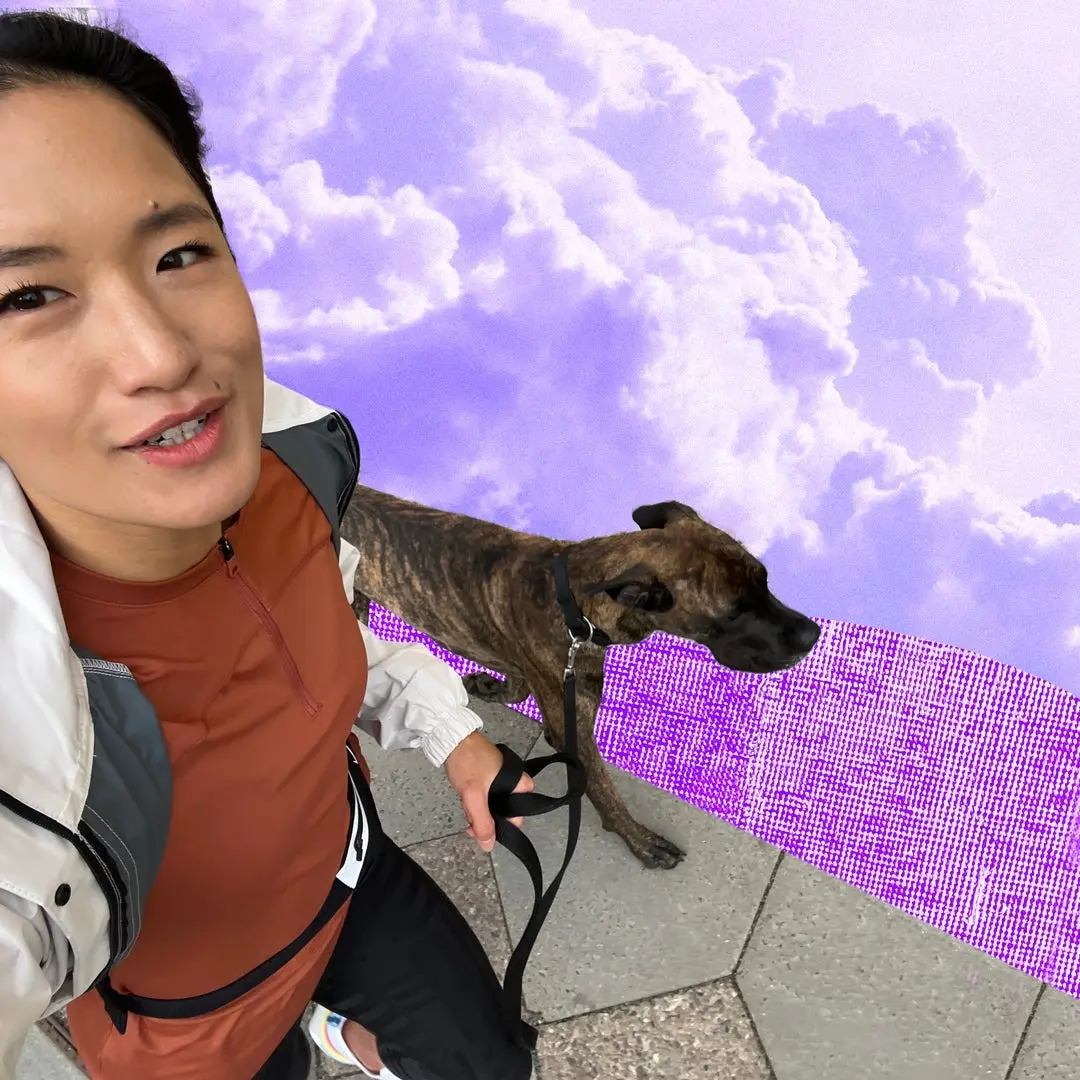
To add extra companionship and unpredictability to her Monday routine, Hong frequently borrows a friend’s dog, Mia. Brimming with high energy, Mia provides the perfect pacing partner. "At the beginning, she pulls me; at the end, I pull her," Hong notes. While she may not match the dog’s explosive sprint speed, Hong’s superior endurance always wins out in the long run.
Tuesday: The Pillars of Longevity – Yoga, Strength, and Recovery
Marathon training is rarely just about logging high mileage on asphalt. On Tuesday, Hong swaps her running shoes for the yoga mat. Cross-training is a non-negotiable element of her weekly routine, incorporating targeted strength training to bulletproof her joints against repetitive-strain injuries, alongside regular physiotherapy sessions.
This holistic conditioning program is what allows Hong to comfortably step outside her comfort zone during intense running sessions without breaking down physically. By building a solid muscular and skeletal foundation, she ensures her body is never completely depleted after hard workouts. Strategic rest days—treated with the same reverence as active training days—allow her to bounce back quickly.
Wednesday: Cultivating the Social Fabric
As a globetrotting flight attendant, Hong’s time in Berlin is precious. Wednesday serves as a crucial bridge for her social and professional life. Rather than cramming her schedule exclusively with physical output, she prioritizes human connection.
Recognizing that mental health is just as critical as physical conditioning, Hong often dedicates Wednesdays to resting her legs and visiting local art exhibitions with friends. This intentional pause prevents psychological burnout, ensuring that running remains a joyful outlet rather than a burdensome chore.
Thursday: Pushing the Limits on the Track
While comfort is central to her philosophy, Hong is still an ambitious competitor preparing for her seventh marathon. Thursday is dedicated to high-intensity track workouts where she tests her speed thresholds and pace-maintenance capabilities.
Preparing for such intense efforts requires gear she can implicitly trust. On these high-stress days, Hong relies heavily on specialized footwear, noting:
"During track workouts, I love wearing the Nike Invincible 3 because they give me a secure feeling on any terrain and I love the bouncy sole."
Even when tackling grueling interval sessions, her foundational philosophy remains intact: physical challenges should be met with supportive, high-performance gear that minimizes discomfort and maximizes safety.
Friday: Active Recovery and Cultural Immersion
The cumulative fatigue of Thursday’s track session demands respect. Friday is marked by active rest, typically limited to a gentle, restorative yoga flow.
Hong uses the rest of the day to dive back into Berlin’s vibrant cultural scene, meeting friends for gallery visits and exhibitions. Because her profession keeps her away from home for extended periods, maximizing her time in the German capital with enriching, low-impact social activities is a vital part of her mental recharging process.
Saturday: Mindful Miles Along the Landwehrkanal
Saturdays are reserved for routine and mental decompression. Hong’s standard running route takes her along the picturesque Landwehrkanal, offering a varied terrain of asphalt, grass, and occasional patches of mud.
During these weekend miles, Hong practices mindful detachment. Sometimes she listens to an immersive true-crime or society podcast; other times, she turns off her headphones entirely to absorb the ambient sounds of the city, enjoying the simple pleasure of watching everyday life unfold around her.
True to her self-care ethos, the run always concludes with a well-earned reward: a hot artisanal coffee and a delicious light snack from a local market stall in Kreuzberg.
Sunday: Long Runs and Dumpling Traditions with the Community
Sunday marks the pinnacle of the training week: the long-distance endurance run. As a proud member of the Joy Run Collective running group, Hong tackles longer-duration efforts through the expansive, scenic pathways of Berlin’s Tiergarten.
Because these weekend long runs expose her to cumulative fatigue and colder weather, preparation is key. She dresses warmly, paces herself intelligently, and leans heavily on the collective energy of her peers.
The social payoff of Sunday’s endurance session is legendary within her circle: a massive, celebratory group brunch. Following a particularly grueling long run, Hong’s running group gathered for a meticulously planned feast featuring homemade dumplings—a culinary reward she eagerly anticipates throughout the entire training week.
Supporting Context & Metrics: The Evolution of Modern Running Culture
Hong’s journey is emblematic of a broader, highly encouraging shift in endurance sports demographics. Over the past decade, the archaic archetype of the hyper-competitive, metrics-obsessed runner has slowly given way to a more inclusive, lifestyle-oriented culture.
Key Industry & Cultural Metrics:
- The Inclusivity Boom: According to recent sports participation surveys across Europe, urban running communities have seen a 45% growth in membership over the last five years, largely driven by social running clubs that integrate post-run cafes and cultural events into their core missions.
- Age and Athletic Peak: Counter to the youth-centric bias of professional sports, amateur endurance data reveals that runners frequently hit their physical and mental stride in their 30s and 40s. Like Hong, who started running at age 26 and feels healthier in her 30s than she did a decade prior, experienced runners leverage emotional maturity and self-awareness to prevent burnout.
- The Psychology of Comfort: Sports science literature increasingly supports the "comfort-first" training model. Psychological studies indicate that positive reinforcement—such as pairing exercise with palatable rewards, supportive footwear, and social bonding—drastically reduces drop-out rates among novice and intermediate endurance athletes.
Future Outlook: The Next Horizon
As Hong sets her sights firmly on her seventh marathon, her trajectory offers a profound blueprint for the future of everyday fitness. The fitness industry is moving away from the toxic mantra of "no pain, no gain" toward a sustainable, longevity-focused paradigm.
Athletes are realizing that longevity in sport is not achieved through reckless self-flagellation, but through intelligent load management, mental health prioritization, and the cultivation of supportive communities. Hong’s philosophy proves that you do not need to sacrifice your social life, your love for good food, or your comfort to achieve elite amateur milestones.
Hong’s 3 Golden Rules for Maximum Running Enjoyment:
- Invest in Supportive Gear: Prioritize footwear and apparel that eliminate physical friction and protect your joints on varying terrains.
- Curate Your Psychological Soundtrack: Build an inspiring, genre-spanning playlist (think disco, house, and techno) to rescue you from mental slumps.
- Embrace the Destination: Pair every challenging route with a scenic environment and a delicious post-run treat shared with good company.
As Hong laces up her shoes for her next milestone race, she leaves us with an empowering reminder: the finish line tastes infinitely sweeter when you actually enjoy the journey getting there.