Executive Overview
The rapid evolution of generative artificial intelligence and enterprise cloud infrastructure continues to reshape the technology landscape at an unprecedented pace. In a significant development for cloud architects, AI developers, and enterprise IT leaders, Amazon Web Services (AWS) has announced the public preview of Amazon Bedrock Managed Agents powered by OpenAI. This strategic integration marries a customized version of OpenAI’s advanced Agents API with the robust, secure, and natively integrated infrastructure of AWS. By bridging these two technological powerhouses, AWS is providing organizations with the ability to deploy sophisticated, model-optimized AI agents that operate entirely within their trusted AWS environments, leveraging existing corporate governance, identity management, and fine-grained access controls.
Alongside this flagship AI release, AWS continues to refine its expansive ecosystem. The company is actively expanding its roster of frontier models on Amazon Bedrock to offer developers greater flexibility and performance optimization. However, enterprise IT management is not solely about continuous expansion; it also requires disciplined governance of legacy architectures. In tandem with these cutting-edge feature rollouts, AWS has published critical updates regarding its product lifecycle changes, detailing service migrations to maintenance phases, sunset trajectories, and scheduled ends of support.
This comprehensive report provides an in-depth analysis of the latest AWS announcements, exploring the architectural mechanics of Amazon Bedrock Managed Agents powered by OpenAI, evaluating the operational implications of recent service lifecycle updates, and examining the broader strategic roadmap presented by AWS community leaders and upcoming developer events.
Detailed Chronology & Technological Breakthroughs
The Integration of OpenAI Agents within the AWS Ecosystem
The announcement of the public preview of Amazon Bedrock Managed Agents powered by OpenAI represents a major milestone in cross-ecosystem collaboration and developer enablement. Historically, organizations utilizing OpenAI’s cutting-edge models and agentic workflows often had to navigate fragmented deployment patterns, balancing external API endpoints with internal cloud infrastructure, data governance frameworks, and compliance mandates.
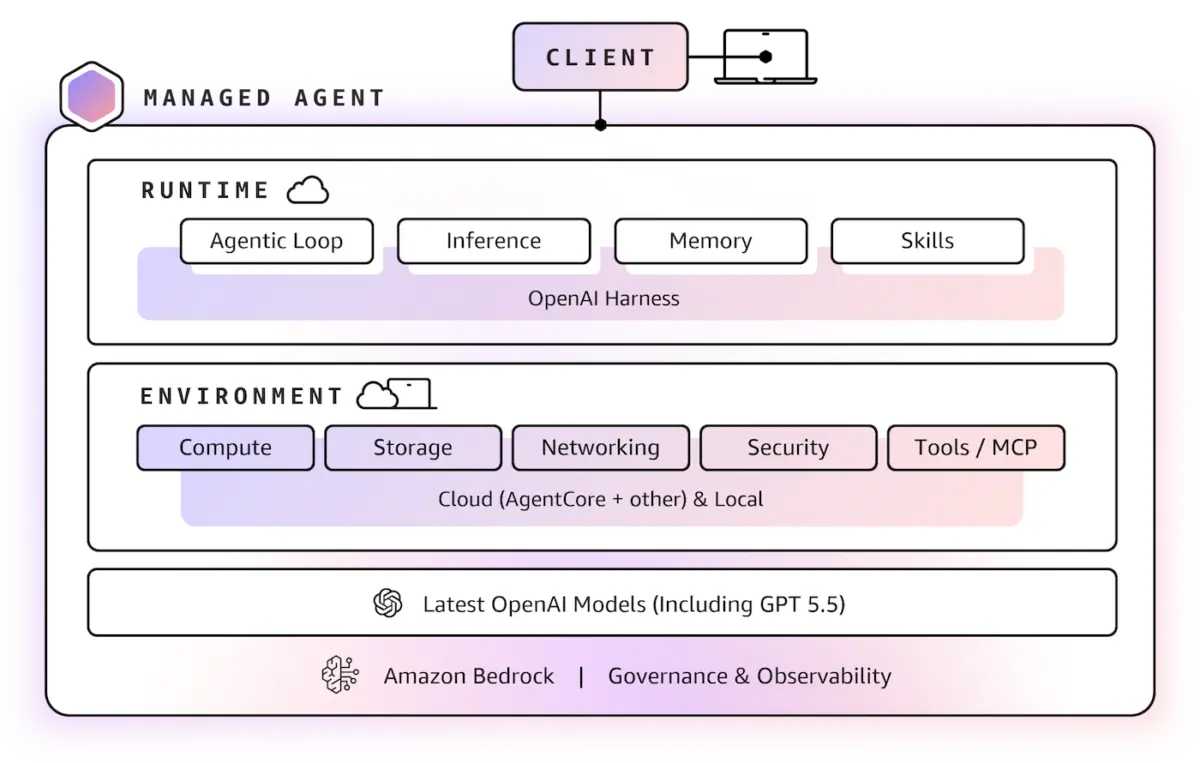
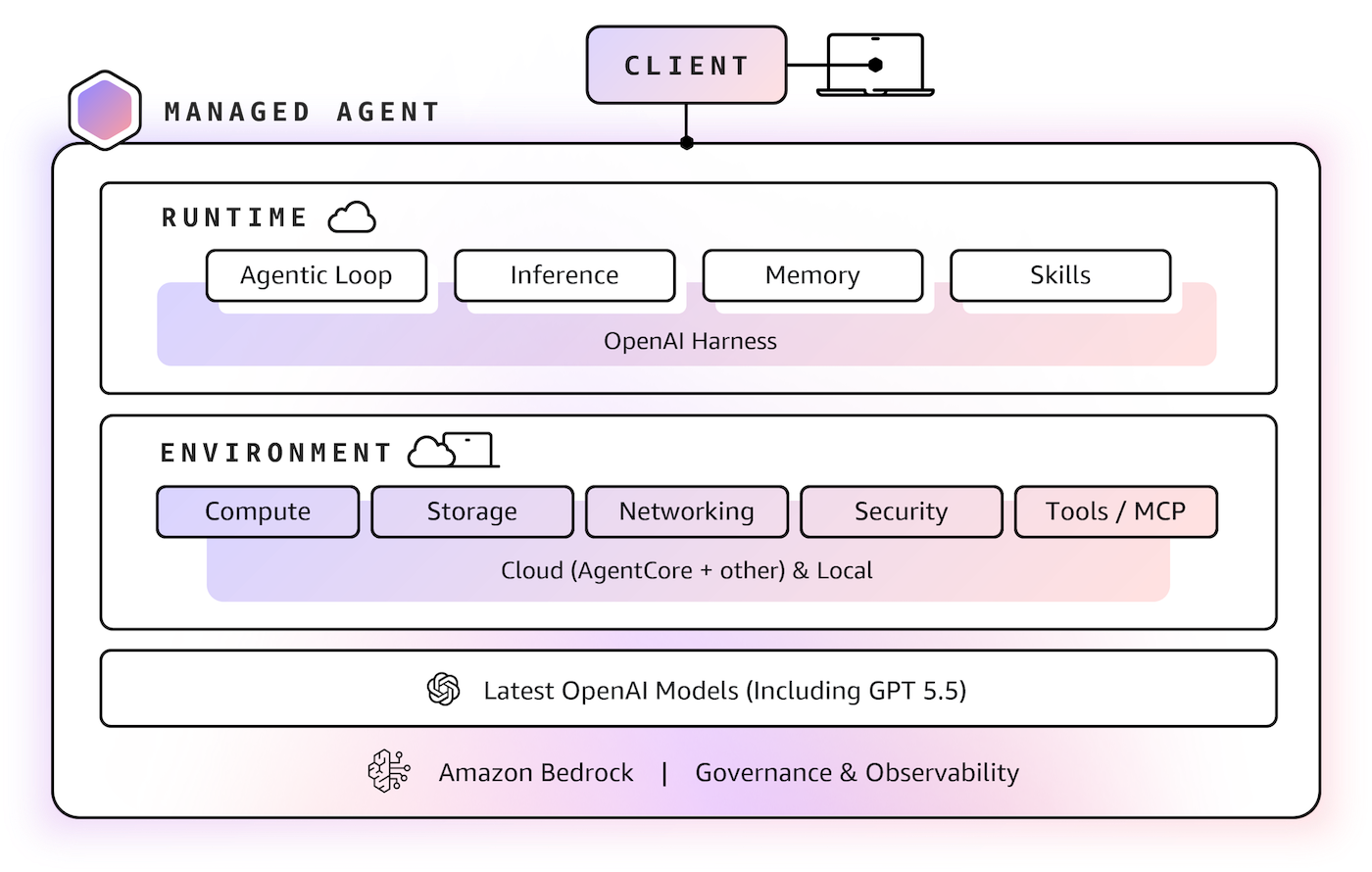
The newly introduced capability is built upon a customized version of OpenAI’s Agents API that has been specifically engineered to be AWS-native. This ensures deep integration with core AWS resources, allowing enterprises to build, test, and scale autonomous agents optimized specifically for OpenAI models without sacrificing security or operational oversight.
+-----------------------------------------------------------------+
|                       AWS Cloud Environment                     |
|                                                                 |
|  +---------------------------+   +---------------------------+  |
|  |     IAM & Governance      |   |  AWS-Native Resources     |  |
|  |  (Identities & Permissions) |   |  (Storage, DBs, Compute)  |  |
|  +-------------+-------------+   +-------------+-------------+  |
|                |                                 |              |
|                +----------------+----------------+              |
|                                 |                               |
|                                 v                               |
|         +-----------------------------------------------+       |
|         |        Amazon Bedrock Managed Agents          |       |
|         |             (Powered by OpenAI)               |       |
|         +-----------------------+-----------------------+       |
|                                 |                               |
|        [ Choice of Execution Environment Integration ]          |
|                                 |                               |
|         +-----------------------+-----------------------+       |
|         |                                               |       |
|         v                                               v       |
|  +--------------+                             +--------------+  |
|  | Self-Hosted  |                             | Amazon       |  |
|  | Compute      |                             | Bedrock      |  |
|  | (Dev Machine /                             | AgentCore    |  |
|  |  Containers) |                             | Runtime      |  |
|  +--------------+                             +--------------+  |
+-----------------------------------------------------------------+
Flexible Execution Environments for Enterprise Workloads
To accommodate diverse organizational workflows and development pipelines, AWS has introduced dual execution environment options for these managed agents:
- Self-Hosted Compute: For development teams seeking granular control over their immediate testing environments, developers can utilize existing local development machines, customized containers, or bespoke compute environments. This flexibility allows engineers to prototype rapidly within familiar developer tooling before promoting workflows to production.
- Amazon Bedrock AgentCore Runtime: For production-grade deployments requiring high availability, scalability, and managed operational overhead, AWS offers the Bedrock AgentCore Runtime. This fully managed service handles runtime sessions, state management, and configurable secure storage directly within the user’s AWS account boundaries.
By providing these distinct operational pathways, AWS ensures that both agile startups and heavily regulated enterprise environments can harness the reasoning power of OpenAI models while maintaining strict adherence to internal compliance policies.
Expanding the Frontier: Model Choice on Amazon Bedrock
In tandem with the managed agents announcement, AWS is continuing its aggressive strategy of model democratization. The platform is integrating new frontier models into Amazon Bedrock, ensuring that developers are not locked into a single technological paradigm. Whether an organization requires specialized multimodal reasoning, ultra-low latency inference, or domain-specific language generation, the expanded catalog on Bedrock enables engineering teams to benchmark and select the exact model architecture best suited to their economic and performance KPIs.
Supporting Context & Lifecycle Governance
While innovation drives the top line of enterprise technology strategy, operational hygiene and risk management dictate its baseline stability. AWS maintains a transparent, predictable product lifecycle framework that alerts customers well in advance of architectural deprecations, ensuring minimal disruption to production workloads.
Navigating the AWS Product Lifecycle Changes
The transition of cloud services from active development to maintenance, sunset, and ultimate end of support is an inevitable aspect of modern IT infrastructure evolution. When AWS adjusts the availability of a service or specific feature, it provides structured guidance via the AWS Product Lifecycle Changes documentation, alongside recommended migration pathways and alternative services.

The latest lifecycle updates categorize services into three distinct phases:
- Maintenance Phase: Services entering this phase are no longer accessible to new customers as of the designated threshold. Existing customers are strongly urged to begin architectural reviews and plan migrations to modern alternatives to ensure long-term support continuity.
- Sunset Phase: Services in the sunset stage are actively winding down operations. During this window, support is strictly limited, and migration tooling or direct technical advisory is critical to prevent downstream application failures.
- End of Support: Reaching this milestone means the service no longer receives security patches, bug fixes, or operational assistance. Maintaining legacy workloads past this point introduces severe security vulnerabilities and compliance non-conformity.
Minimizing Operational Disruption
Enterprise architects must treat cloud lifecycle management as a continuous process rather than an ad-hoc emergency response. Organizations running legacy architectures on AWS should cross-reference their current resource inventories against the AWS Product Lifecycle Changes portal. Utilizing automated infrastructure-as-code (IaC) scanning tools can rapidly identify deprecated dependencies, allowing engineering teams to budget sprint capacity for refactoring applications toward modern, fully supported AWS primitives.
Official Statements & Community Insights
The weekly rhythm of AWS innovation is anchored by transparent communication from engineering and advocacy leaders within the ecosystem. Channy Yun, principal developer advocate at AWS, regularly curates these developments to help builders navigate the expansive cloud portfolio.
"By bringing customized OpenAI Agents API capabilities directly into Amazon Bedrock, we are empowering developers to combine state-of-the-art AI reasoning with the gold standard of cloud security, governance, and identity management that AWS provides," notes the engineering advisory documentation surrounding the public preview. "Builders no longer have to choose between advanced model performance and enterprise-grade operational control—they can harness both natively within their AWS accounts."
Engaging with the Builder Community
Beyond software releases, AWS continues to foster a collaborative culture through targeted educational initiatives and global gatherings. Developers seeking to deepen their technical expertise, share architectural patterns, and network with peers have access to a robust calendar of events:
- AWS re:Invent and Community Days: The premier annual gathering for cloud professionals, alongside hyper-localized Community Days, offer deep-dive technical sessions, hands-on workshops, and direct access to AWS service teams.
- Specialized Events: Tailored programming for startups and developer-centric communities ensures that builders at every stage of organizational growth—from early-stage founders to enterprise chief technology officers—can find relevant peer groups and technical mentorship.
- AWS Builder Center: An interactive online hub designed for technical practitioners to collaborate, share open-source solutions, and access curated documentation that accelerates cloud adoption and application modernization.
Future Outlook & Strategic Roadmap
As we look toward the remainder of 2026 and beyond, the trajectory of cloud computing is unmistakably intertwined with agentic artificial intelligence and autonomous systems. The convergence of third-party frontier models—exemplified by the integration of OpenAI capabilities into Amazon Bedrock Managed Agents—signals a mature shift in how cloud providers view the AI ecosystem. Rather than attempting to monopolize foundational model training, leading hyperscalers are positioning themselves as the ultimate orchestration, security, and execution layer for enterprise intelligence.
Key Trends to Watch:
- Deeper Governance for Autonomous Agents: As AI agents transition from conversational interfaces to autonomous actors capable of executing multi-step business transactions, enterprise demand for fine-grained IAM permissions, audit logging, and guardrails will intensify. AWS is uniquely positioned to lead this governance wave through native integrations with services like AWS CloudTrail, AWS IAM, and Amazon Bedrock Guardrails.
- Hybrid and Multi-Model Orchestration: Organizations will increasingly move away from single-model strategies toward poly-model architectures, routing specific sub-tasks to the most cost-effective or highest-performing model available via managed runtimes like Bedrock AgentCore.
- Proactive Lifecycle Automation: Expect to see enhanced automated tooling from AWS that not only flags deprecated services and lifecycle transitions but also provides automated refactoring recommendations via generative AI assistants embedded directly into the AWS Management Console.
By maintaining a rigorous focus on security, model optionality, and seamless developer workflows, AWS ensures that builders can innovate with confidence, turning complex technological breakthroughs into robust, scalable enterprise solutions. Keep a close eye on the What’s New with AWS page and upcoming weekly roundups as these previews mature into generally available enterprise powerhouses.