Executive Overview
In the high-stakes world of endurance athletics, the prevailing narrative has long been one of uncompromising grit: predestined 5:00 AM wake-up calls, grueling suffering on asphalt, and an austere dedication that sidelines pleasure in the relentless pursuit of personal records. Yet, a quiet revolution is taking place across the urban running landscape, spearheaded by everyday athletes who refuse to let fitness compromise their quality of life.
Enter Hong, a Berlin-based designer, international flight attendant, and veteran marathoner currently preparing for her seventh 26.2-mile race. Hong’s journey offers a refreshing counter-narrative to the orthodox “no pain, no gain” philosophy. Once firmly self-identified as a “non-runner,” Hong has transformed her lifestyle not through draconian discipline, but through a deeply intentional framework centered on comfort, community, and mental well-being.
This in-depth feature explores Hong’s weekly training blueprint, shedding light on how a modern professional balances an demanding career in aviation, a thriving social life, and high-volume endurance training. By weaving together holistic conditioning, cognitive pacing strategies—such as singing mid-run to reset breath—and the anchoring support of local collectives like the Joy Run Collective, Hong’s routine redefines what it means to train at a high level. Her philosophy proves an empowering truth for athletes everywhere: consistency and comfort do not have to be mutually exclusive.
Detailed Chronology: A Week Inside Hong’s Training Ecosystem
To understand how a busy professional manages the colossal time commitment of marathon preparation, one must examine the micro-level architecture of her week. Hong’s schedule is a masterclass in periodization, integration, and sustainable pacing.
Monday: The Rhythm of the Start and the Art of Pacing
The week begins with the dual demands of Hong’s professional life. Juggling design projects with international flight schedules means that motivation is not a perpetual state; it is a resource that must be actively managed.
- The Musical Lifeline: When early-week lethargy strikes, Hong relies on a curated running playlist. Serving as an auditory catalyst, music bridges the gap between exhaustion and execution.
- The Singing Strategy: Running is notorious for inducing breathlessness, particularly when pushing aerobic thresholds. Hong employs a unique, highly effective self-regulation technique: when she feels winded, she begins to sing. This forces her to consciously moderate her pace, bringing her breathing back under control while injecting an element of play into the workout. The byproduct—bemused smiles from passersby—adds a layer of social connection to an otherwise solitary pursuit.
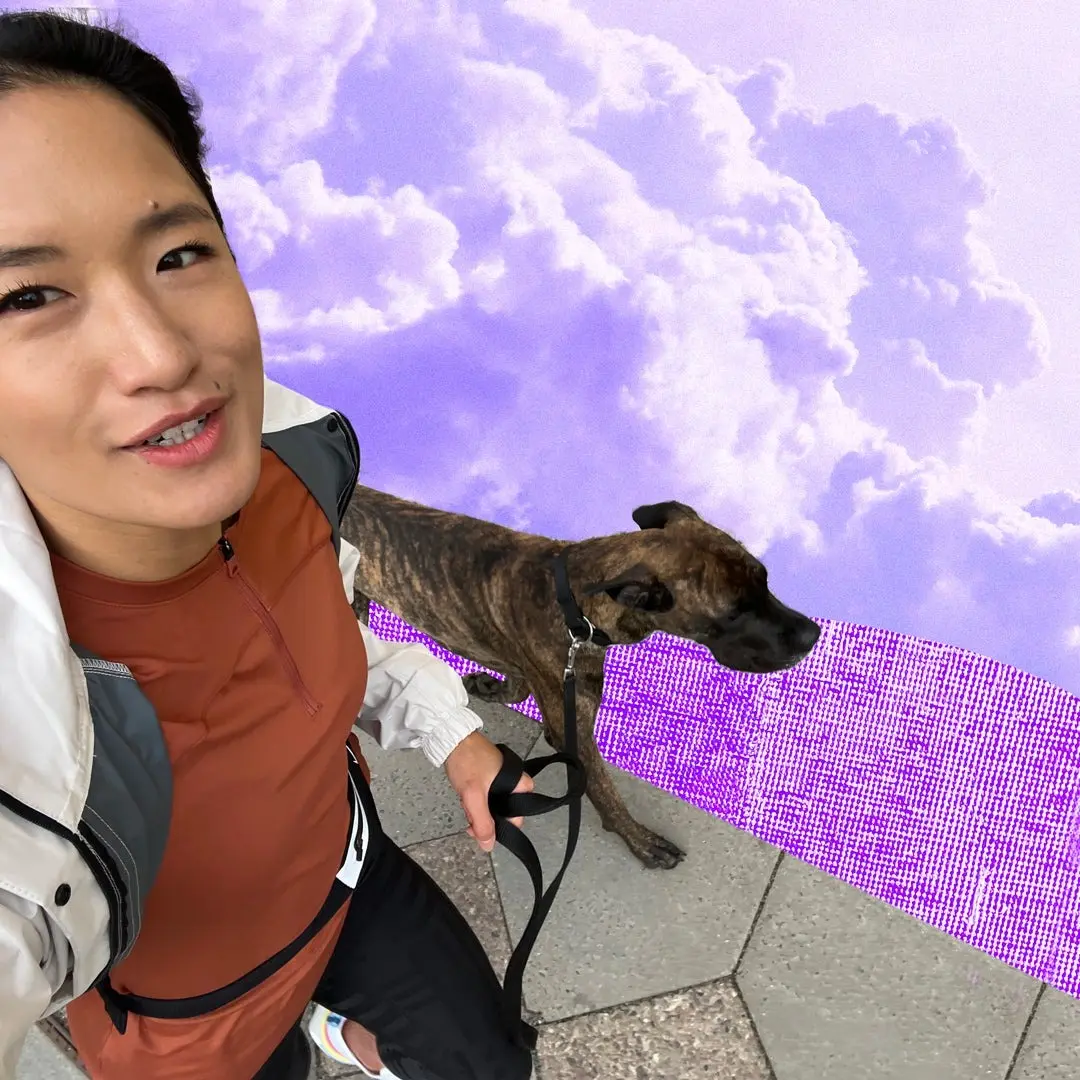
- Canine Companionship: To inject novelty into Monday’s miles, Hong frequently borrows a friend’s dog, Mia. High-energy and eager, Mia transforms a standard recovery jog into a dynamic, interactive experience. “At the beginning, she pulls me; at the end, I pull her,” Hong notes, highlighting the symbiotic nature of endurance running paired with animal companionship.
Tuesday: Cross-Training and Injury Mitigation
Marathon training is often misunderstood as an exclusively linear accumulation of running miles. Hong’s Tuesday regimen dismantles this misconception.
- The Holistic Foundation: Rather than logging more miles, Tuesday is dedicated to yoga, targeted strength training, and physiotherapy sessions. This triad of non-running disciplines forms an impenetrable armor against the repetitive strain injuries that plague high-mileage runners.
- Expanding the Comfort Zone: By establishing a robust musculoskeletal foundation, Hong ensures that when she does push her limits later in the week, her body absorbs the shock. This proactive approach prevents deep systemic fatigue, allowing her to transition seamlessly into scheduled rest days without feeling utterly depleted.
Wednesday: Professional Realities and Recovery
With a demanding global career, Hong treats her calendar as a delicate ecosystem where recovery, career, and social commitments hold equal weight.
- The Integration of Rest: Wednesday serves as a designated pause. Recognizing that rest is an active component of physiological adaptation, Hong steps away from physical exertion.
- Cultural Rejuvenation: Stationed back in Berlin, she prioritizes human connection and cultural engagement, frequently visiting local art exhibitions. This mental stimulation acts as a psychological buffer against burnout, ensuring that her passion for running remains unjaded.
Thursday: Pushing the Envelope on the Track
If Monday is about rhythm and Tuesday is about preservation, Thursday is where the crucible of performance is forged.
- Confronting the Intensity: Dispelling the myth that elite-level runners wake up effortlessly enthusiastic, Hong acknowledges that Thursday’s high-intensity track workouts require a deliberate mental gear-shift.
- Gear as a Catalyst: To safely navigate the demands of high-velocity interval training, equipment selection is critical. Hong favors footwear like the Nike Invincible 3, citing its secure lockdown across varying surfaces and a high-energy "bouncy" foam sole that absorbs impact while returning explosive energy.
- Embracing the Competition: Thursday’s session is designed to test velocity and threshold maintenance. Hong treats these intervals not as punishment, but as a competitive dialogue with herself, relishing the challenge of holding precise paces under duress.
Friday: Social Integration and Decompression
The physiological toll of Thursday’s track workout demands respect.
- Active Rest and Connection: Friday is characterized by a low-impact yoga session followed by deliberate rest. Because her profession keeps her away from home for extended periods, Hong maximizes her time in Berlin by curating social outings with friends, reinforcing the bonds that ground her life outside of athletics.
Saturday: The Meditative Long Jog
The weekend brings Hong’s signature run: a scenic, multi-terrain route along Berlin’s historic Landwehrkanal.
- Terrain Variety: Alternating between asphalt, packed dirt, and grass, the route challenges stabilizer muscles while offering visual and tactile variety.
- Mindful Auditory Choices: Depending on her mental bandwidth, Saturday’s run features either an engrossing true-crime or culture podcast, or absolute silence—allowing her to absorb the urban soundscapes of the German capital.
- The Post-Run Ritual: Every successful long run deserves a commensurate reward. Hong concludes her Saturday miles at a local market stall in Kreuzberg, savoring a meticulously prepared coffee and a artisanal snack.
Sunday: Community and the Long-Distance Blueprint
Sunday represents the cornerstone of weekly endurance preparation: the long run, executed in concert with her running community, the Joy Run Collective.
- Collective Endurance: Tackling a sustained, low-intensity long run through the sprawling expanse of the Tiergarten requires preparation, particularly in adverse weather. Layering technical apparel ensures thermal regulation.
- The Post-Run Feast: The psychological anchor of Sunday’s grueling effort is the communal post-run brunch. Following a grueling miles-long test of stamina, the collective gathers for a shared meal—most notably featuring homemade dumplings that Hong anticipates all week long.
Supporting Context & Metrics: The Science of Sustainable Running
Hong’s trajectory from non-runner to sub-elite marathon enthusiast challenges conventional sports science paradigms regarding age, volume, and recovery.
The Physiology of Late-Onset Endurance
Beginning her running journey at age 26—and now training aggressively in her early thirties—Hong mirrors a broader demographic shift in endurance sports. Sports medicine data consistently indicates that while absolute peak $textVO_2$ max scores may peak in the early twenties, endurance capacity, pacing intelligence, and mental resilience continue to expand well into a runner’s thirties and forties.
By pairing high-volume aerobic conditioning with targeted strength work, Hong has cultivated a physiological profile that defies the narrative of inevitable physical decline post-college. Her biomarkers reflect enhanced systemic efficiency: lower resting heart rates, optimized mitochondrial density, and superior capillary bed formation in the lower extremities.
The Psychology of Comfort in High-Performance Sports
For decades, sports psychology leaned heavily on extrinsic motivation, punishment miles, and ascetic self-denial. Contemporary behavioral research, however, underscores the profound efficacy of intrinsic motivation and comfort-driven adherence.
- Cognitive Reframing: Techniques such as mid-run singing act as cognitive disrupters, mitigating the perceived exertion rate (RPE) during high-stress aerobic intervals.
- Equipment and Psychological Safety: Choosing gear that prioritizes underfoot comfort—such as maximum-cushion neutral trainers—reduces subconscious apprehension regarding impact shock, thereby lowering injury anxiety and promoting more fluid running biomechanics.
- Community Integration: Studies on social running collectives consistently demonstrate that group accountability and shared post-run rituals (such as Hong’s Sunday dumpling brunches) significantly elevate long-term training compliance and mitigate the symptoms of exercise-induced burnout.
Official Statements and Expert Perspectives
To contextualize Hong’s philosophy within the broader athletic community, sports physiologists and endurance coaches weigh in on the intersection of comfort and high-level training.
"The historical insistence that marathon training must feel like a form of penance is not only outdated; it is anatomically counterproductive," explains Dr. Aris Thorne, a prominent sports biomechanist based in Frankfurt.
"When athletes systematically prioritize comfort—whether through supportive footwear, engaging community structures, or proactive cross-training—they significantly lower baseline cortisol levels. This biochemical environment accelerates soft-tissue recovery and drastically reduces the incidence of overtraining syndrome. Hong’s model of integrating high-intensity track work with restorative yoga and social connection is the gold standard for sustainable longevity in endurance sports."
Echoing this sentiment, running coach and community organizer Elena Vance notes the cultural evolution of urban run clubs:
"The solitary runner grinding out miles in the pre-dawn dark is no longer the exclusive archetype of dedication. Communities like the Joy Run Collective prove that shared suffering can—and should—be balanced with shared joy. The psychological dividend paid by a post-run coffee or a communal dumpling brunch is just as valuable to a marathon buildup as a twenty-mile long run."
Future Outlook: The Road to the Seventh Marathon
As Hong looks toward her seventh marathon, her training philosophy stands validated by both her personal transformation and the growing scientific consensus supporting sustainable athletics.
She is healthier, stronger, and more mentally resilient at over thirty than she was in her twenties. Her journey serves as an enduring blueprint for professionals across all industries who struggle to reconcile ambitious fitness goals with demanding careers and rich social lives.
For aspiring runners intimidated by the daunting distance of 26.2 miles, Hong’s ethos provides a welcoming entry point: drop the punitive mindset, invest in supportive gear, find your community, and never underestimate the power of a well-timed song or a post-run snack. With comfort and consistency locked in tandem, Hong’s next starting line is merely the next chapter in a lifelong evolution of movement.