Executive Overview
The independent gaming landscape is no stranger to tonal whiplash, but few studios manage to blend the cozy and the terrifying quite like Magic Design Studios. Best known for their vibrant, darkly comedic 2022 roguelike hit Have a Nice Death, the development team has officially pulled back the curtain on their next major endeavor: Nautus: Echoes from Below. Slated for a PC release via Steam Early Access in 2027, this upcoming title represents a bold stylistic and mechanical departure for the studio, juxtaposing serene, sun-drenched island life with the claustrophobic, pitch-black terrors of the deep ocean.
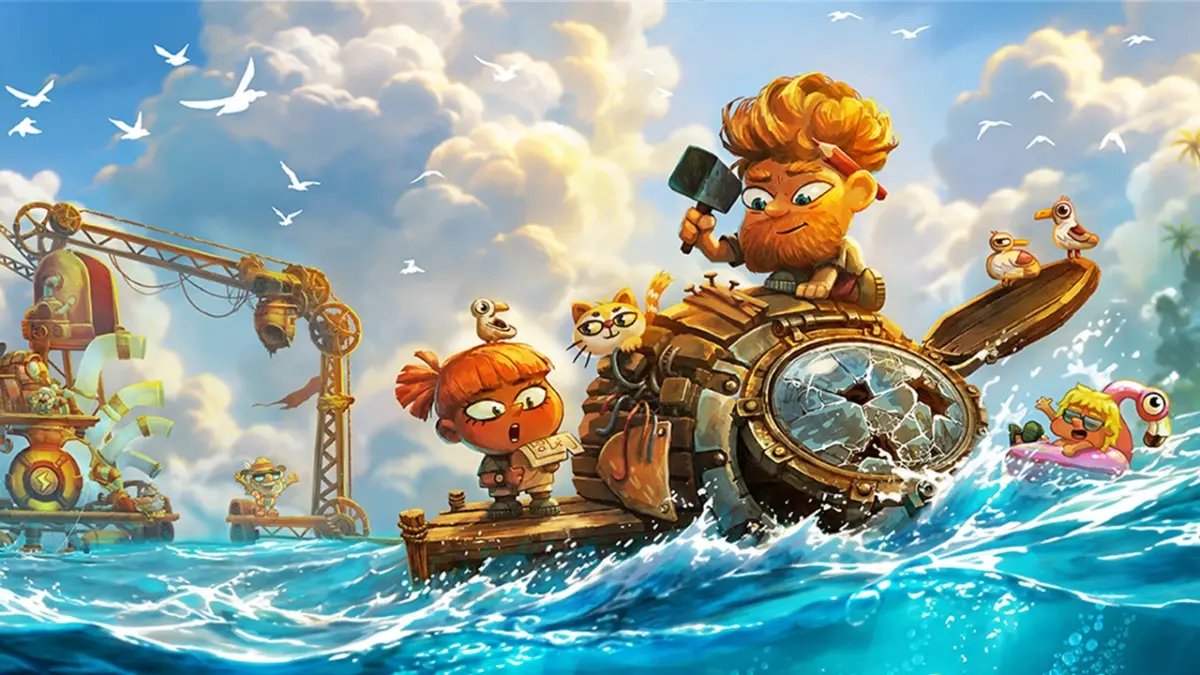
Announced alongside an inaugural reveal trailer and a comprehensive batch of screenshots, Nautus: Echoes from Below has been framed as a "double-sided exploration game." The concept is as ingenious as it is unsettling: players spend their time on land building, crafting, socializing, and managing resources in a comforting, idyllic environment. However, the moment they step—or rather, submerge—into their fully customizable and upgradeable submarine, the game transforms into an atmospheric, tension-filled mystery adventure.
Designed from the ground up to support both solo adventurers and cooperative crews of up to four players, Nautus tasks players with investigating a remote marine research station, unraveling a psychological mystery among its amnesiac staff, and searching for a missing uncle. With base-building, resource management, tactical submarine piloting, and eldritch encounters awaiting beneath the waves, Magic Design Studios is positioning its latest project as one of the most anticipated indie titles on the horizon. For those eager to chart the unknown, the game is already live for wishlisting on Steam, with the development team aiming for a 2027 Early Access debut to refine the experience alongside community feedback.
Detailed Chronology: Unraveling the Mystery of the N.A.U.T.U.S. Station
To fully understand the premise of Nautus: Echoes from Below, one must trace the inciting incidents that kick off the game’s narrative campaign. The journey begins not with a grand expedition, but with an ominous, fragmented radio transmission received from the player’s uncle—a seasoned researcher stationed at the remote and isolated N.A.U.T.U.S. research facility.
Concerned for his safety and driven by the distressing nature of the broadcast, the protagonist sets sail for the isolated island home of the facility. Upon arrival, however, the situation proves far worse than anticipated. The research station is entirely operational yet fundamentally broken. The local scientists and inhabitants are physically safe, but they have suffered a catastrophic psychological blow: they have completely lost their memories and, more alarmingly, developed a sudden, paralyzing phobia of the ocean that surrounds them. They are paralyzed by the very depths they once dedicated their lives to studying.
With the island’s populace rendered immobile by their newfound terror, the burden of truth falls entirely upon the player. As the sole individual possessing the courage—or perhaps the foolishness—to face the deep, the player must step into the role of deep-sea investigator, engineer, and salvager.
The core gameplay loop unfolds across a distinct duality. On the surface, players must interact with the traumatized scientists, manage their island outpost, and construct infrastructure using gathered resources. But progress cannot be made on land alone. To uncover the truth behind the uncle’s disappearance and the station’s sudden psychological collapse, players must board a mechanical submersible and descend into the abyss.
Down below, the environment shifts from a bright, breezy tropical haven to a high-stakes, pressure-crushed battleground. Players will navigate treacherous underwater trenches, fend off hostile mutant sea creatures that lurk in the dark, and hunt for hidden, mysterious artifact stones. Each recovered artifact serves a vital narrative and mechanical purpose: returning these glowing relics to the surface helps restore the memories of the afflicted scientists, gradually piecing together what went wrong in the depths while unlocking new tiers of technological advancement for the player’s submarine and island base.
Supporting Context & Metrics: Magic Design Studios’ Evolution
The announcement of Nautus: Echoes from Below marks a significant milestone in the trajectory of Magic Design Studios. Founded by industry veterans with deep roots in traditional animation and game development, the studio initially gained international acclaim with Unruly Heroes, an action-platformer inspired by the classic Chinese novel Journey to the West. However, it was their sophomore release, Have a Nice Death, that truly cemented their reputation as masters of tight mechanics and striking artistic direction.
Have a Nice Death, released in full in 2023 following a successful Early Access run, cast players as a burned-out CEO version of Death trying to regain control of his overworked, chaotic corporate underworld. The game was widely praised for its hand-drawn 2D animation style, fluid combat, and witty writing. Transitioning from a fast-paced, action-oriented 2D roguelike to a 3D (or heavily layered 2.5D) cooperative exploration and survival crafting game represents a massive leap in scope and technical ambition for the studio.

While Magic Design Studios has kept specific engine details and team size metrics close to the chest, the design philosophy behind Nautus clearly builds upon lessons learned during their time with Have a Nice Death. The emphasis on iterative development via Steam Early Access proves that the studio values community collaboration, recognizing that balancing a game with both solo and four-player co-op dimensions requires extensive stress-testing from real players.
Furthermore, the genre mashup present in Nautus taps into several booming trends within the modern PC gaming market. Over the last half-decade, titles that pair cozy, low-stress base-building with high-stakes exploration or survival mechanics—often playable in cooperative groups—have captured the hearts of millions of players. By anchoring this proven gameplay loop to a deeply atmospheric, narrative-driven mystery involving deep-sea horror, Magic Design Studios has carved out a unique niche that differentiates Nautus from standard survival-crafting fare.
Official Statements and Gameplay Pillars
While the initial reveal trailer provided a cinematic taste of the game’s contrasting aesthetics, official statements from Magic Design Studios have helped flesh out the mechanical pillars that will sustain the player’s journey.
The development team summarized the core fantasy of the game in a recent press briefing:
"After getting an unsettling radio message from your uncle you’ll go out on an adventure, where you arrive at the remote N.A.U.T.U.S. research station only to find the local scientists have lost their memories and developed a paralyzing phobia of the ocean. As the only one brave enough to face the deep, you must take the helm of an upgradable submarine, encounter and at times, fight off mutant creatures, and recover hidden, mysterious artifact stones to restore the inhabitants’ memories and uncover the truth."
This narrative hook translates into a diverse array of gameplay mechanics that players can expect to juggle throughout their playthrough:
- Dual-Environment Exploration: A stark atmospheric contrast between the sunlit, manageable island surface and the oppressive, high-tension ocean depths.
- Submersible Customization: Players will not rely on a static vehicle; the submarine serves as both a mobile base and a combat vessel, capable of being heavily upgraded with defensive shielding, offensive weaponry, and advanced sonar tracking systems.
- Cooperative and Solo Flexibility: Whether diving alone into the dark abyss or coordinating resource management and defense roles with up to four friends, the game scales to accommodate different playstyles.
- Base Building and Crafting: Survival on the island and beneath the waves requires gathering raw materials, constructing outpost facilities, and refining technologies necessary to dive deeper into uncharted trenches.
- Narrative Restoration: The quest is driven by the gradual healing of the island’s population, tying mechanical progression directly to story-based discoveries.
Future Outlook: Charting a Course to 2027
As the gaming industry looks ahead, the announcement of Nautus: Echoes from Below sets the stage for a compelling journey over the next several months. With a targeted Steam Early Access launch window in 2027, Magic Design Studios has given themselves ample time to polish the intricate mechanics of submarine navigation, base-building economies, and cooperative netcode.
For PC gamers who relish atmospheric exploration, base management, and a healthy dose of Thalassophobia-inducing mystery, Nautus checks all the right boxes. The ability to experience this psychological maritime adventure either entirely on one’s own or alongside a crew of trusted friends ensures high replayability and varied tactical approaches.
As development progresses, prospective players will undoubtedly be keeping a close eye on Magic Design Studios for further deep dives into the game’s mechanics, system requirements, and specific Early Access roadmap milestones. Until then, the message from the development team is clear: pack your gear, upgrade your hull, and prepare yourself for what lies waiting in the dark. Just remember—if the ocean starts whispering back, it might be time to head back to the beach.