Executive Overview
In the wake of profound personal loss, journeys often take unexpected turns. Shortly after the passing of both parents, a psychologist and restorative justice practitioner traveled to Medellín, Colombia, to facilitate a restorative justice circle. Though the trip had been planned months in advance and cancellation crossed their mind, the commitment was honored—marking the practitioner’s tentative and emotionally tender return to professional life.
What began as a deep dive into restorative practices—a methodology grounded in active listening, human connection, and the understanding that individuals cannot be defined solely by the events that bring them into a room—soon intersected with a broader, more visceral human crisis. Midway through the session, an earthquake struck Colombia, rattling the room and transforming an intimate dialogue about accountability and healing into a collective exercise in survival, connection, and identity.
This article explores the convergence of personal grief, collective trauma, and identity restoration theory. Through the lens of the Medellín circle, we examine how human behavior shifts during emergencies, the ways in which crises reveal our fundamental reliance on relationships, and why deep listening remains the cornerstone of both psychological rehabilitation and human empathy.
Detailed Chronology: From Restorative Dialogue to Seismic Disruption
The Setting: An Atmosphere of Openness
The restorative justice circle in Medellín commenced in an atmosphere of quiet vulnerability. Restorative justice has long shaped the author’s professional trajectory, teaching a foundational truth: listening must precede accountability. People speak differently when they sense genuine receptivity to their stories.
Free from the constraints of rigid, adversarial frameworks, the participants in Medellín spoke openly and fluidly. They shared accounts of:
- Painful familial histories and fractured relationships.
- Pivotal life decisions that altered their trajectories.
- Personal struggles and systemic hurdles.
The conversation unfolded naturally. No one felt rushed, and interruptions were nonexistent. Every participant was granted the time required to articulate their lived experiences, unhurried and uninterrupted.
The Interrupted Conversation
The steady rhythm of the circle was abruptly broken when mobile phones across the room began vibrating simultaneously. Initially treated as a minor distraction, the mood shifted instantly when a participant glanced at a screen and delivered a sobering announcement: an earthquake had struck.
The dialogue instantly fractured. The structured circle dissolved into a frantic wave of survival instinct and familial duty as individuals reached for their devices to contact loved ones. The facilitator joined them, dialing anxiously while observing the shifting dynamics of the room:
- One participant paced toward the doorway, hunting for a stronger cellular signal amid the sudden network congestion.
- Camilo, who had been speaking moments earlier, remained rooted to his chair, systematically trying alternative numbers to reach his family.
- Across the circle, tension gave way to visible relief as a woman received an affirmative response, smiled through her stress, and quietly slid her phone away.
Resuming the Circle
Minutes later, as connectivity stabilized and initial checks confirmed the safety of immediate families, the participants drifted back to their seats. With a collective sigh of stabilization, Camilo picked up the thread of his narrative precisely where it had been severed.
The conversation resumed as if paused on a recording device. Yet, the atmosphere had transformed. Freed from superficial anxieties, the facilitator began paying hyper-focused attention to the room’s subtle undercurrents: the weight of the silences, the micro-expressions of enduring stress, and the deep, abiding patience participants extended to one another. The interruption had not derailed the core purpose of the circle; rather, it had exposed the raw, beating heart of human interconnectedness that undergirds all restorative work.
Supporting Context & Metrics: Identity Restoration and Collective Behavior
Identity Restoration Theory (IRT)
The juxtaposition of a restorative circle and a seismic emergency triggered deeper academic and philosophical inquiries into human identity. Identity Restoration Theory (IRT)—explored extensively in frameworks such as Castell Britton’s (2026) work on Caribbean criminal justice, education, and rehabilitation—begins with a singular, driving question: What helps people begin seeing themselves differently?
For years, psychological consensus dictated that behavioral modification was the primary driver of personal change. However, IRT posits that lasting transformation requires a cognitive paradigm shift: individuals must fundamentally believe that their lives can move in a new, redemptive direction.
The Medellín earthquake provided a living, breathing case study of identity under pressure. Before the phones rang, the room knew each other through curated narratives—the stories people chose to tell within the bounds of a restorative framework. Minutes later, stripped of social performance by the threat of a natural disaster, every individual defaulted to their core relational identity: they were mothers, fathers, sons, and daughters trying to reach their kin.
Collective Emergencies and Prosocial Reactions
Sociological and psychological research into collective emergencies corroborates this behavioral shift. Studies on public behavior during crises—such as Drury and colleagues’ (2020) research on group processes during large-scale emergencies—consistently demonstrate that human beings do not typically descend into chaotic, hyper-individualistic panic during disasters.
Instead, collective stress routinely activates prosocial behavior. People instinctively:
- Prioritize contact with immediate family and trusted social networks.
- Immediately look after vulnerable individuals in their immediate physical proximity.
- Exhibit heightened empathy and cooperative problem-solving.
The first person an individual attempts to reach during an unexpected crisis is far more than a logistical priority; it is a profound sociological marker. It exposes the anchor of their identity, illustrating who they are at their core when the scaffolding of daily life is suddenly shaken away.
Official Statements and Societal Impact: Medellín in the Aftermath
The Wider Crisis Across Colombia
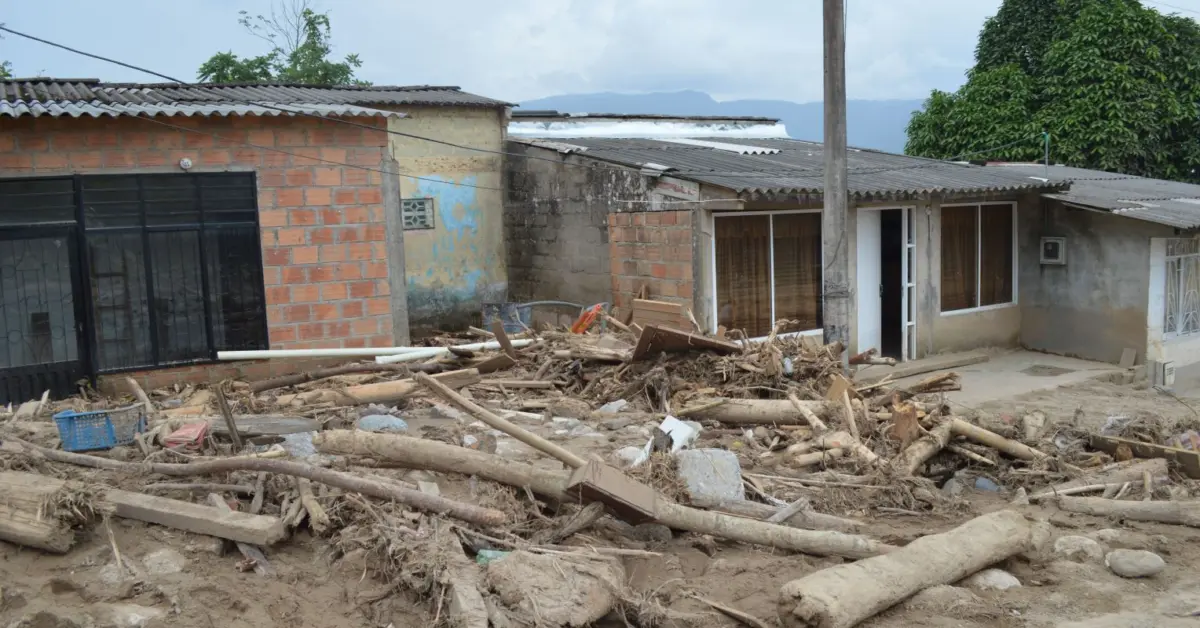
In the days following the seismic event, the reality of the disaster set in beyond the walls of the restorative justice room. News outlets across Colombia began broadcasting harrowing reports of widespread devastation, structural collapses, and infrastructural failure. Countless families across the country were forced to confront unimaginable loss, displacement, and trauma.
While the restorative circle participants had weathered the immediate tremor safely, the broader community entered a grueling recovery phase. Local emergency services, civil defense units, and humanitarian organizations mobilized rapidly to assess structural damages and deliver emergency relief to hard-hit zones.
Professional Reflections on Trauma and Loss
For the facilitator, the macro-level tragedy in Colombia intertwined inextricably with a micro-level personal reality. The recent death of both parents cast a long shadow over the proceedings. As the author notes:
"I realize now that I did not leave my grief behind when I boarded the plane to Medellín. It was with me throughout the circle, even if I did not recognize it at the time. I listened differently that morning, and I suspect my own loss had something to do with it."
This intersection of professional practice and acute personal bereavement highlights a vital truth in the fields of psychology and restorative justice: practitioners do not operate in a vacuum. Unprocessed grief does not disqualify a professional from holding space for others; rather, it can fundamentally deepen their capacity for empathetic attunement. By sitting with their own sorrow, the facilitator was able to witness the participants’ vulnerabilities—and their instinctual panic during the earthquake—with a heightened level of emotional resonance.
Future Outlook: Reimagining Justice and Human Connection
As the dust settles in Medellín and international relief efforts continue to address the structural fallout of the earthquake, the long-term implications of these overlapping events invite deep reflection for the fields of psychology, conflict resolution, and criminal justice.
1. Integrating Trauma-Informed Responses into Restorative Practices
Future restorative justice frameworks must increasingly account for sudden, macro-level collective traumas. When community-level disasters intersect with interpersonal conflict resolution, facilitators must be equipped to navigate dual layers of stress: the individual histories brought into the room, and the shared environmental anxieties unfolding in real-time.
2. The Evolution of Identity Restoration Theory
As works like Castell Britton (2026) continue to chart the integration of IRT into institutional and rehabilitative settings, insights from crisis psychology will likely play a larger role. Understanding that human identity is radically relational—evidenced by who we instinctively call when disaster strikes—offers new pathways for rehabilitation. If criminal justice and social reintegration programs focus on repairing and strengthening healthy relational bonds rather than merely enforcing behavioral compliance, recidivism rates and social alienation may drop significantly.
3. The Enduring Power of the Unhurried Conversation
In an increasingly fast-paced, digital world characterized by instant communication and shallow engagement, the Medellín circle stands as a testament to the radical power of presence. The earthquake interrupted the words, but it could not disrupt the human bonds forged through attentive listening.
Reflecting on the experience, the takeaway is remarkably simple yet revolutionary. We never meet people at the absolute beginning of their stories; by the time they cross our paths, they carry a lifetime of accumulated experiences. Yet, when we offer them the rare gift of genuine, unhurried attention, and when we hold space for them through both structured dialogue and sudden, terrifying interruptions, transformation becomes possible.
The memory of those few minutes in Medellín will endure—not merely as a narrative of a natural disaster, but as a profound reminder of what remains when the ground beneath us gives way: each other.
References
- Castell Britton, S. (2026). Identity Restoration Theory (IRT) in Caribbean Criminal Justice: Education and Rehabilitation for Reintegration. Springer Nature Switzerland. https://doi.org/10.1007/978-3-032-20756-2
- Drury, J., Carter, H., Ntontis, E., & Guven, S. T. (2020). Public behaviour in response to the COVID-19 pandemic: Understanding the role of group processes. BJPsych Open, 7(1), e11. https://doi.org/10.1192/bjo.2020.139