Executive Overview
In an era dominated by relentless hustle culture and the grueling demands of extreme athletic preparation, the prevailing narrative surrounding endurance sports often leans toward suffering. We are conditioned to believe that becoming a marathon runner requires waking up at 4:30 AM, enduring punishing, joyless mileage, and strictly adhering to rigid, ascetic lifestyles. However, a quiet revolution is taking place on the pavements of global metropolises, challenging this puritanical approach to fitness.
Enter Hong, a Berlin-based designer, international flight attendant, and veteran endurance athlete currently preparing for her seventh marathon. Hong’s journey offers a refreshing, counter-cultural blueprint for modern athleticism. Once identifying firmly as a "non-runner," she has transformed her relationship with physical fitness not by embracing misery, but by prioritizing comfort, mental well-being, social connectivity, and holistic self-care.
This deep-dive journalistic feature explores Hong’s weekly training regimen, dissecting how she balances a demanding dual-career schedule with high-level athletic output. By examining her approach—ranging from spontaneous canine running partners and psychological playlist strategies to structured cross-training and community-driven long runs—we uncover a sustainable philosophy of movement. Hong’s trajectory proves that elite endurance performance and personal comfort are not mutually exclusive; rather, they are symbiotic pillars of long-term athletic longevity.
Detailed Chronology: A Week in the Life of a Marathon-Training Flight Attendant
Balancing the erratic schedules of an international flight attendant and a digital designer while accumulating high weekly mileage demands meticulous time management. Hong’s routine is a masterclass in flexibility, proving that marathon preparation can be seamlessly woven into a vibrant, multifaceted lifestyle without causing burnout.
Monday: Overcoming Inertia with Beats and Canine Companions
Mondays are notoriously challenging for the workforce at large, and for someone juggling multiple careers and an escalating training log, the psychological hurdle of starting the week can be immense. Hong approaches Monday not with rigid dread, but with psychological scaffolding designed to protect her intrinsic motivation.
"I’m a designer and a flight attendant," Hong explains, reflecting on her packed weekly ledger. "Combined with my training volume, my weeks get quite full. I cannot lose the joy of running, otherwise I won’t stay consistent."
To combat low-energy mornings—during which she readily admits to hitting the snooze button multiple times—Hong relies on sensory and social catalysts. Her primary psychological shield against listlessness is her running playlist. While she does not mandate music for every outing, utilizing upbeat tracks serves as an immediate behavioral trigger when inertia threatens to derail her plans.
Furthermore, Hong utilizes clever self-regulation techniques when pacing becomes difficult. "If I run out of breath during a run, I drop the pace and start singing," she notes. This ingenious self-correction mechanism forces a controlled deceleration, bringing her respiratory rate back to baseline while infusing a sense of play into the workout. "It makes the run much more fun, and I notice people smiling as I run past them singing."
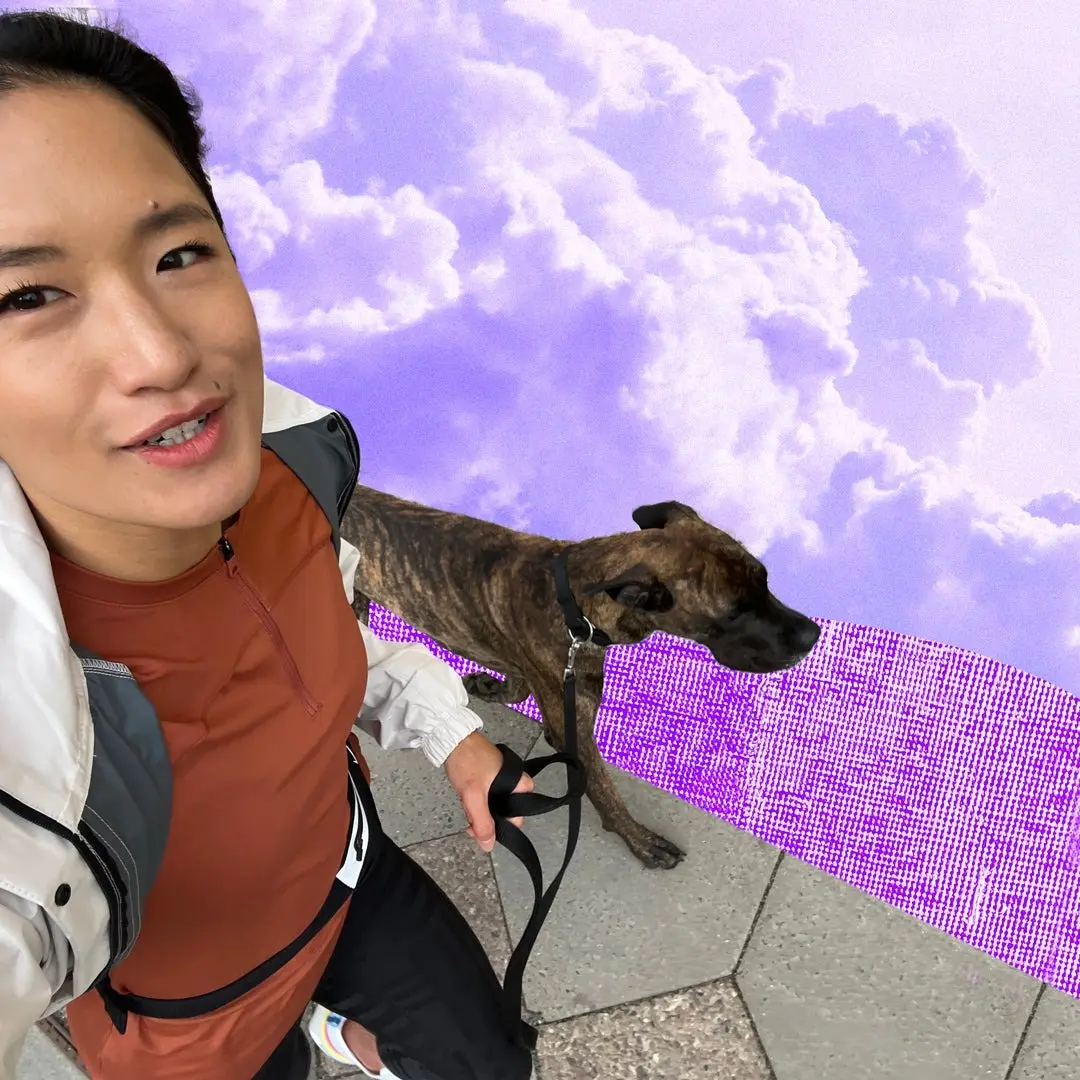
To inject fresh energy into Monday’s miles, Hong frequently integrates social elements, such as borrowing a friend’s energetic dog, Mia. "Mia has so much energy, and it’s fun to race against her. In the beginning, she pulls me; at the end, I pull her. I might not be as fast as her, but when it comes to endurance, I win."
Tuesday: The Architecture of Longevity – Cross-Training and Recovery
Marathon training is rarely just about running; running is merely the output of a complex, behind-the-scenes physiological infrastructure. On Tuesday, Hong steps away from the asphalt entirely, dedicating her time to yoga, targeted strength training, and physical therapy sessions.
This holistic methodology is non-negotiable for athletes pushing their comfort zones. By fortifying stabilizing muscles, improving joint mobility, and addressing biomechanical imbalances proactively, strength training and physio work act as vital injury-prevention shields.
"This holistic program helps me when I want to leave my comfort zone and test my limits during runs," Hong states. "It ensures I have a solid foundation." Consequently, after particularly grueling workouts, her body does not enter a state of total depletion. By respecting the physiological necessity of rest days—treating them with the same reverence as high-intensity sessions—she ensures that her body is primed to lace up her running shoes again within 24 to 48 hours.
Wednesday: Navigating Professional Demands and Social Capital
Life as an international flight attendant means navigating shifting time zones, unfamiliar cities, and periods of prolonged absence from home. Wednesday serves as a crucial buffer in Hong’s weekly architecture—a day intentionally dedicated to professional obligations, personal relationships, and cultural enrichment.
Recognizing that psychological recovery is just as vital as muscular repair, Hong uses her time back in Berlin to reconnect with her social circle. Rather than squeezing in a junk-mile run out of guilt, she treats herself to a mental break, frequently visiting local art galleries and exhibitions. This deliberate detachment from training metrics prevents psychological burnout and maintains the rich, multifaceted identity necessary for sustainable long-term athletic engagement.
Thursday: Pushing Limits with High-Performance Gear and Track Intervals
If Monday and Tuesday are about ease and foundation, Thursday is about friction, speed, and confronting the razor’s edge of athletic capability. As an athlete training for her seventh marathon, Hong embraces structured speedwork and competitive environments.
"Some people think marathon runners bounce out of bed at 5:00 AM and effortlessly run 20 kilometers," Hong remarks, dispelling the myth of effortless elite consistency. "In reality, I sometimes need an extra dose of motivation. That’s why comfort is so important to me, whether I’m facing an easy recovery run or a tough track workout."
Thursday’s session is a classic track-workout designed to test anaerobic thresholds, velocity, and pacing endurance. To mitigate the physical stress of high-impact speed work, Hong relies on specialized gear engineered for impact absorption and responsive energy return. She frequently opts for the Nike Invincible 3, praising its high-stack, "bouncy" foam geometry and stable platform. "They give me a secure feeling on any surface," she notes, emphasizing how high-performance footwear removes micro-barriers to entry.
Friday: Active Recovery and Cultural Reintegration
Following the high-intensity physiological demands of Thursday’s track session, Friday is designated for deliberate decompression. Aside from a restorative, low-impact yoga flow, Hong prioritizes recovery through social engagement and cultural exploration.
As someone whose career keeps her constantly on the move, returning to Berlin triggers an active desire to absorb the city’s cultural pulse. Meeting friends for gallery walks and museum visits acts as a form of active mindfulness, lowering cortisol levels and keeping her mentally refreshed ahead of the weekend’s endurance challenges.
Saturday: The Meditative Rhythm of the Landwehrkanal
Weekend mileage often forms the psychological anchor of a distance runner’s week, and Saturday represents Hong’s ritualistic connection to her home city. Her standard training route meanders along the historic Landwehrkanal, offering a dynamic mixed-terrain course of asphalt, packed dirt, and grass.
This flexibility of terrain engages stabilizing muscles differently than monotonous treadmill running or flat concrete paths. With an engaging podcast playing through her headphones—or sometimes completely silent, absorbing the ambient urban soundscape of Berlin—Saturday runs serve as a moving meditation.
"I enjoy watching the people around me while I run," Hong reflects. True to her philosophy that running must integrate seamlessly with life’s simple pleasures, the conclusion of her Saturday route features a built-in culinary reward: fresh coffee and a light artisanal snack from a local market stall in Kreuzberg.
Sunday: Collective Endurance and Community Rituals
While solo runs offer introspection, Sunday is dedicated to collective effervescence. As a proud member of the Joy Run Collective, Hong approaches Sunday’s long-distance run as both an athletic milestone and a social anchor.
Long runs through the sprawling expanses of Berlin’s Tiergarten park present significant physiological and environmental challenges, particularly during colder months when thermal regulation becomes critical. "Because of the longer duration and the cold, I want to be well-prepared, so I bundle up warmly," she explains.
The psychological benefits of running within an organized collective are profound; shared suffering and mutual pacing dissolve the perceived difficulty of high-mileage efforts. True to form, the culmination of Sunday’s long run transcends fitness metrics, resolving into a communal ritual. This week, the running collective gathers for a post-run brunch featuring handmade dumplings—a culinary reward that Hong admits to anticipating throughout the entire week.
Supporting Context & Metrics: The Paradigm Shift in Modern Endurance
Hong’s journey reflects a broader, highly documented paradigm shift within the global running community over the past decade. Historically, distance running was viewed through the prism of austere self-denial—a subculture where high mileage and psychological suffering were badges of honor. Today, data from global sports science institutions and market research firms indicates a democratization of the sport driven by inclusivity, community, and holistic wellness.
The Rise of the Casual-Elite Athlete
According to recent sports industry analytics, the fastest-growing demographic in endurance sports consists of working professionals—particularly women aged 25 to 40—who refuse to let athletic training cannibalize their professional ambitions or social lives. This cohort rejects the "no pain, no gain" dogma, recognizing instead that sustainable performance relies heavily on psychological safety and physical comfort.
Biomechanical Support and Injury Mitigation
Hong’s reliance on high-cushion footwear (such as the Nike Invincible series) mirrors modern sports medicine recommendations. High-volume training places immense repetitive stress on the lower kinetic chain—specifically the patellar tendons, Achilles tendons, and plantar fascia. Innovations in foam technology, which provide high energy return paired with maximal impact attenuation, have fundamentally altered injury statistics among recreational runners, allowing athletes to accumulate higher weekly volumes with significantly reduced localized trauma.
The Neurological Impact of Music and Singing
Hong’s strategy of regulating her respiratory rate by singing during high-intensity moments is supported by exercise physiology. Controlled vocalization forces diaphragmatic breathing, preventing the shallow, erratic breathing patterns commonly associated with the onset of the anaerobic threshold. Furthermore, auditory stimulation via curated playlists has been clinically proven to lower perceived exertion (RPE) during steady-state endurance efforts by up to 10%, masking fatigue signals sent from the central nervous system to the skeletal muscles.
Official Statements and Personal Philosophy
Reflecting on her four-year evolution from a reluctant novice to a veteran of six marathons with her eyes firmly set on her seventh, Hong articulates a philosophy that bridges recreational accessibility with high-level performance:
"I started running four years ago. At 30, I am healthier and fitter than I ever was in my twenties. But running is so much more than physical training. I have gained a tremendous amount of self-confidence as a runner because I now know how hard I can push myself, even when I feel a bit low.
I have learned a vital lesson: consistency and comfort do not have to be mutually exclusive. I can set new boundaries and challenge my limits while feeling completely comfortable in my own skin. Next stop: my 7th marathon."
Hong’s 3 Golden Rules for Joyful Running:
- Prioritize Biomechanical Comfort: Invest in supportive, high-performance footwear that protects your joints and enhances your stride on any terrain.
- Leverage Auditory Motivation: Curate an uplifting playlist (spanning genres from disco and house to driving techno) to reset your mental baseline on sluggish days.
- Integrate Environmental Rewards: Plan scenic, engaging routes that culminate in a meaningful social or culinary reward—because the run shouldn’t end when your watch stops.
Future Outlook
As Hong trains for her seventh marathon, her journey serves as an inspiring blueprint for the future of endurance sports. The old guard of grueling, joyless athletic preparation is giving way to a more compassionate, sustainable, and socially enriched model of fitness.
By demonstrating that high-level athletic ambition can coexist harmoniously with a love for good food, artistic exploration, social connectivity, and personal comfort, Hong redefines what it means to be a modern endurance athlete. Her trajectory indicates that the future of running belongs not to the tortured ascetic, but to the mindful, consistent practitioner who knows how to push their limits while still enjoying the journey—one comfortable, purposeful stride at a time.