Executive Overview
The augmented reality (AR) hardware landscape is currently undergoing a high-stakes evolution, characterized by a fundamental philosophical divide. On one side of the market, tech giants like Meta lean heavily into ambient computing, integrating outward-facing cameras and microphone arrays to capture the world, field questions via multimodal artificial intelligence, and facilitate hands-free content creation. On the other side, specialized display-centric manufacturers like Xreal are doubling down on privacy, ocular ergonomics, and high-fidelity private display tech.
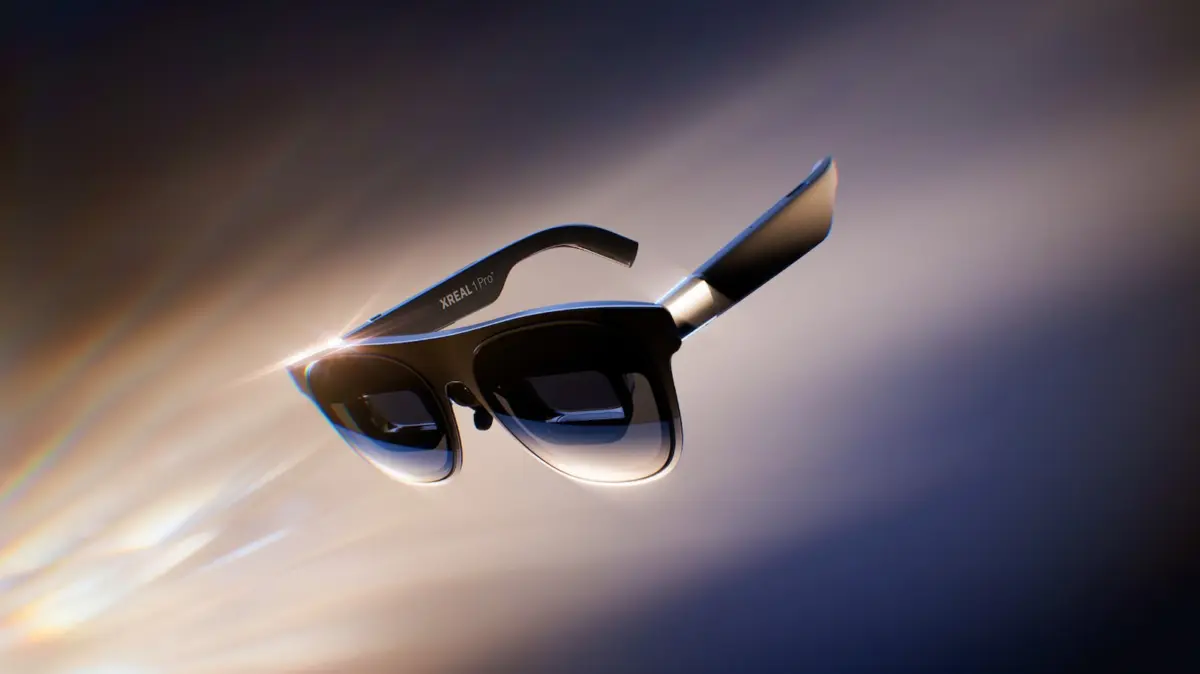
Xreal has officially announced the launch of its newest wearable display: the Xreal One Pro+. Serving as a targeted, quality-of-life iteration of the critically acclaimed One Pro AR glasses, the new hardware release does not attempt to reinvent the spatial computing paradigm. Instead, it addresses the granular, real-world pain points that have historically plagued extended-wear AR hardware: panel brightness, motion-to-photon responsiveness in 2D-to-3D algorithmic conversion, ergonomic weight distribution, and prolonged structural comfort.
Priced at $600—matching the launch MSRP of its predecessor—the One Pro+ hits the global market at a pivotal moment. As consumers increasingly scrutinize the privacy implications of camera-laden smart eyewear, Xreal’s deliberate omission of an integrated lens or sensor array positions the One Pro+ as a stealthy, camera-free alternative. Whether users are commuting on public transit, analyzing sensitive spreadsheets in a crowded coffee shop, or kicking back for a multi-hour cinematic binge in a cramped airplane seat, the One Pro+ promises a private virtual workspace and entertainment hub without the social friction or surveillance baggage associated with camera-equipped wearables.
This comprehensive report explores the architectural enhancements, performance metrics, ergonomic refinements, market context, and long-term industry implications of the Xreal One Pro+.
Detailed Chronology of the Xreal One Series
To understand the strategic significance of the One Pro+, one must trace the rapid technological cadence of Xreal’s product lineage over the past several product cycles.
The Foundation: Establishing Spatial Productivity
Xreal first captured the attention of remote workers, tech enthusiasts, and media consumers by shifting the conversation away from bulky, tethered virtual reality (VR) headsets. While devices like the Meta Quest ecosystem prioritized fully immersive, closed-world virtual environments, Xreal’s philosophy centered on "wearable displays"—transparent optical combiners that project high-resolution virtual monitors directly into the user’s natural field of view.
The introduction of the original Xreal One Pro marked a watershed moment for the company. Equipped with Xreal’s proprietary custom silicon—the X1 spatial computing chip—the One Pro delivered robust spatial anchoring, low-latency screen mirroring, and a respectable 57-degree field of view (FoV). Reviewers and early adopters lauded the device for out-of-the-box productivity enhancements, noting that it effectively solved the digital nomad’s dilemma: how to achieve a multi-monitor workflow while traveling light.
The Pivot to Pro+: Addressing User Feedback
Despite the commercial and critical success of the One Pro, early adopters and field testers quickly identified specific limitations that constrained the glasses to shorter sessions.
- Brightness Constraints: While adequate for indoor use, the 700-nit peak brightness of the standard One Pro could wash out when users stepped into brightly lit environments or near sun-drenched windows.
- Algorithmic Latency: The initial 2D-to-3D spatial conversion engine ran at a 30Hz refresh rate. While functional, fast-pacing panning shots in legacy 2D video content occasionally exposed algorithmic artifacts or stutter.
- Ergonomic Fatigue: Extended wear beyond the 60-minute mark frequently induced pressure points on the bridge of the nose, a universal hurdle for lightweight glasses that must simultaneously house micro-OLED projection optics and routing hardware.
Recognizing these friction points, Xreal’s engineering teams initiated a rapid-response hardware refresh cycle. Rather than overhauling the core optical stack or introducing unproven sensors, the company focused its capital and engineering hours on targeted, high-impact refinements. The result is the One Pro+: a device that maintains the beloved architectural DNA of its predecessor while systematically eliminating its most prominent ergonomic and optical bottlenecks.
Supporting Context, Technical Metrics, and Hardware Upgrades
A deep dive into the technical specifications of the Xreal One Pro+ reveals a series of calculated engineering choices designed to maximize visual fidelity and user comfort without inflating the retail price or thermal footprint.
1. High-Nit Micro-OLED Panels and AI HDR Upscaling
The most immediately noticeable upgrade in the One Pro+ is the dramatic leap in raw luminance. The device now achieves a staggering 1,200 nits of peak brightness, nearly doubling the 700-nit ceiling of the standard One Pro.
Why does brightness matter so much in an AR form factor? Traditional birdbath optical architectures—the standard optical system used in modern lightweight AR glasses—suffer from light loss as imagery is bounced from internal micro-OLED panels down to the user’s eyes via a semi-reflective combiner glass. By pushing the baseline luminance to 1,200 nits, Xreal ensures that virtual screens remain crisp, vibrant, and legible even in challenging ambient lighting conditions.
To complement this luminance boost, Xreal has integrated advanced AI HDR upscaling technology. This proprietary processing layer analyzes incoming video feeds frame-by-frame, dynamically expanding dynamic range, boosting contrast ratios in dark shadow regions, and preventing blown-out highlights. Whether a user is reviewing color-graded video footage or streaming HDR cinematic content, the visual pipeline delivers punchier colors and deeper blacks than previous generations.
2. Doubling the Depth: 60Hz 2D-to-3D Conversion
One of the standout software-hardware integrations in the Xreal ecosystem is its real-time 2D-to-3D conversion algorithm. Originally capped at 30Hz in earlier iterations, this spatial imaging engine has been upgraded to 60Hz.
In practical terms, this upgrade bridges the experiential gap between flat legacy media and native spatial computing devices like the Apple Vision Pro. When users consume standard 2D YouTube videos, Netflix streams, or local media files, the Xreal One Pro+ processes the depth cues in real-time at a silky-smooth 60 frames per second. This eliminates the stutter and motion artifacts previously associated with algorithmic depth injection, resulting in a more immersive, comfortable viewing experience that mimics true stereoscopic 3D without inducing digital eye strain.
3. Ergonomic Engineering: The Redesigned Nose Pad
Hardware comfort is frequently the silent killer of wearable tech. A device can possess the most advanced micro-display panels on the planet, but if it digs into the user’s nasal bridge after twenty minutes, it will ultimately collect dust in a drawer.
Xreal dedicated significant design resources to solving this structural dilemma for the One Pro+. The One Pro+ introduces a newly engineered nose pad optimized for long-term comfort and facial stability.
- Weight Distribution: The new compound material distributes the overall weight of the frame more evenly across the zygomatic arches and nasal bridge.
- Zero FoV Compromise: Crucially, Xreal achieved this comfort upgrade without shifting the focal plane or reducing the expansive 57-degree field of view.
As industry testers have noted, there is an immense functional chasm between putting on AR glasses for a quick twenty-minute commute check and settling in for a grueling two-to-three-hour deep-work session. The One Pro+’s refined ergonomics directly target the latter use case, transforming the glasses from a novelty peripheral into a legitimate all-day productivity tool.
4. The Core Architecture Retained
Underneath these new enhancements, the One Pro+ retains the proven core components that made the original line a commercial success:
- The X1 Spatial Computing Chip: Powers low-latency tracking, display management, and on-device processing.
- 57-Degree Field of View: Delivers a massive virtual screen equivalent to sitting feet away from a massive home theater display or managing multiple virtual desktop monitors simultaneously.
- Plug-and-Play Versatility: Seamless compatibility with modern laptops, tablets, smartphones, and gaming handhelds via USB-C alt-mode.
Official Statements, Market Positioning, and the "Anti-Meta" Philosophy
To fully grasp the cultural and market positioning of the Xreal One Pro+, one must examine the broader socio-technological backlash currently facing camera-equipped smart glasses.
The Camera Controversy and the "Pervert Specs" Backlash
Over the past year, the mainstream rollout of AI-powered smart glasses equipped with outward-facing cameras—most notably Meta’s collaboration with Ray-Ban—has triggered a fierce public debate regarding personal privacy, surveillance, and consent.
In public spaces, cafes, public transit lines, and private gatherings, the presence of an always-ready camera lens mounted on a user’s face has led to widespread anxiety. Bystanders are frequently left uncertain whether they are being photographed, recorded, or scanned by facial recognition algorithms. This cultural friction has birthed derogatory slang within tech subcultures, with camera-laden wearables frequently dubbed "pervert specs" or surveillance glasses. The resulting social backlash has fundamentally changed how, where, and whether consumers feel comfortable wearing smart eyewear in public.
Xreal’s Privacy-First Stance
Xreal has deftly capitalized on this cultural anxiety by leaning in the exact opposite direction. The Xreal One Pro+ features absolutely no cameras, no outward-facing sensors, and no ambient recording hardware.
In official product communications and executive briefings, Xreal representatives have emphasized that the One Pro+ is designed strictly as a personal, private display and productivity tool—not a surveillance device. By stripping out the camera stack entirely, Xreal eliminates the root cause of the social anxiety plaguing competitor devices.
When a user wears the Xreal One Pro+ on an airplane, train, or in an open-plan office, bystanders can plainly see that no recording is taking place. This deliberate architectural choice grants users total social immunity:
- Zero Surveillance Anxiety: Wearers do not need to worry about inadvertently filming strangers or violating corporate non-disclosure policies in secure office environments.
- Uncompromised Privacy: The virtual screens projected inside the lenses are strictly confidential; onlookers cannot see the user’s private spreadsheets, personal messages, or cinematic media streams.
- Unfettered Public Usage: Users can stride through urban centers, coffee shops, and corporate boardrooms without facing the side-eye or outright bans increasingly directed at camera-equipped wearables.
This "camera-free" philosophy positions Xreal as the pragmatic, consumer-friendly champion of privacy in a tech landscape increasingly obsessed with ubiquitous data harvesting and ambient recording.
Future Outlook: Where the AR Industry Goes From Here
The release of the Xreal One Pro+ at a steady $600 price point signals a maturing market trajectory. As the augmented reality sector transitions away from speculative, science-fiction hype toward utilitarian, productivity-driven hardware deployments, several broader industry trends come into sharp focus.
1. The Convergence of Comfort and Optical Performance
For years, the AR industry was trapped in a binary compromise: manufacturers could build lightweight, comfortable glasses with mediocre displays, or immersive, high-brightness headsets that weighed heavily on the user’s face and induced severe neck fatigue.
The Xreal One Pro+ demonstrates that this binary compromise is beginning to dissolve. By pairing 1,200-nit micro-OLED panels with advanced thermal management, AI-driven visual upscaling, and scientifically contoured ergonomic nose pads, Xreal has proven that high-end optical performance can coexist with all-day wearability. Future iterations of AR hardware will undoubtedly look to this model as the baseline standard for consumer comfort.
2. The Great Dichotomy: Ambient AI vs. Private Displays
The market is rapidly splitting into two distinct ideological camps:
- The Ambient AI Camp (e.g., Meta, Google, Apple): Focused on multimodal AI assistants, outward-facing cameras, contextual awareness, and physical environment interaction. These devices function as extensions of the internet, capturing the world to process it.
- The Private Display Camp (e.g., Xreal): Focused on display tech, virtual monitors, private entertainment, and digital isolation within public spaces. These devices function as portable extensions of the user’s personal workstation, shutting out the physical world to enhance focus and privacy.
As privacy regulations tighten globally and public pushback against unregulated recording intensifies, the "Private Display" market segment championed by Xreal is primed for accelerated growth, particularly among corporate professionals, digital nomads, and media enthusiasts who value autonomy over ambient tracking.
3. The Road Ahead for Xreal
Looking forward, Xreal’s strategic playbook appears clear: incremental, highly responsive hardware iteration coupled with aggressive software optimization. By listening closely to user feedback regarding brightness, conversion frame rates, and ergonomic comfort, the company has fostered immense brand loyalty among its customer base.
As spatial computing software matures and ecosystem integrations deepen, devices like the Xreal One Pro+ will likely serve as the primary gateway for mainstream users transitioning away from physical multi-monitor setups. By keeping the price anchored at $600 while steadily upgrading the internal tech stack, Xreal is systematically building an unassailable stronghold in the portable AR productivity market.
Conclusion
The Xreal One Pro+ is not a radical, disruptive reinvention of augmented reality; rather, it is a masterclass in disciplined, user-centric engineering. By directly addressing the real-world shortcomings of its predecessor—boosting peak brightness to an impressive 1,200 nits, doubling 2D-to-3D conversion algorithms to a fluid 60Hz, and redesigning structural nose pads for multi-hour comfort—Xreal has cemented the One Pro+ as the premier portable display for productivity and entertainment.
More importantly, in an era where consumers are increasingly wary of camera-laden smart glasses invading public privacy, Xreal’s deliberate choice to omit cameras altogether represents a masterstroke in social engineering. At $600, the Xreal One Pro+ offers a high-performance, socially friction-free window into the future of digital work and play—proving that sometimes, the most revolutionary feature an AR device can offer is the simple, quiet assurance of absolute privacy.