Executive Overview
In a milestone for spaceflight and artificial intelligence, Google has officially placed its first silicon in Earth orbit. A SpaceX rocket lifting off from Vandenberg Space Force Base in California carried into orbit a satellite hosting a customized Google Tensor Processing Unit (TPU)—the tech giant’s proprietary chip designed to accelerate machine learning workloads.
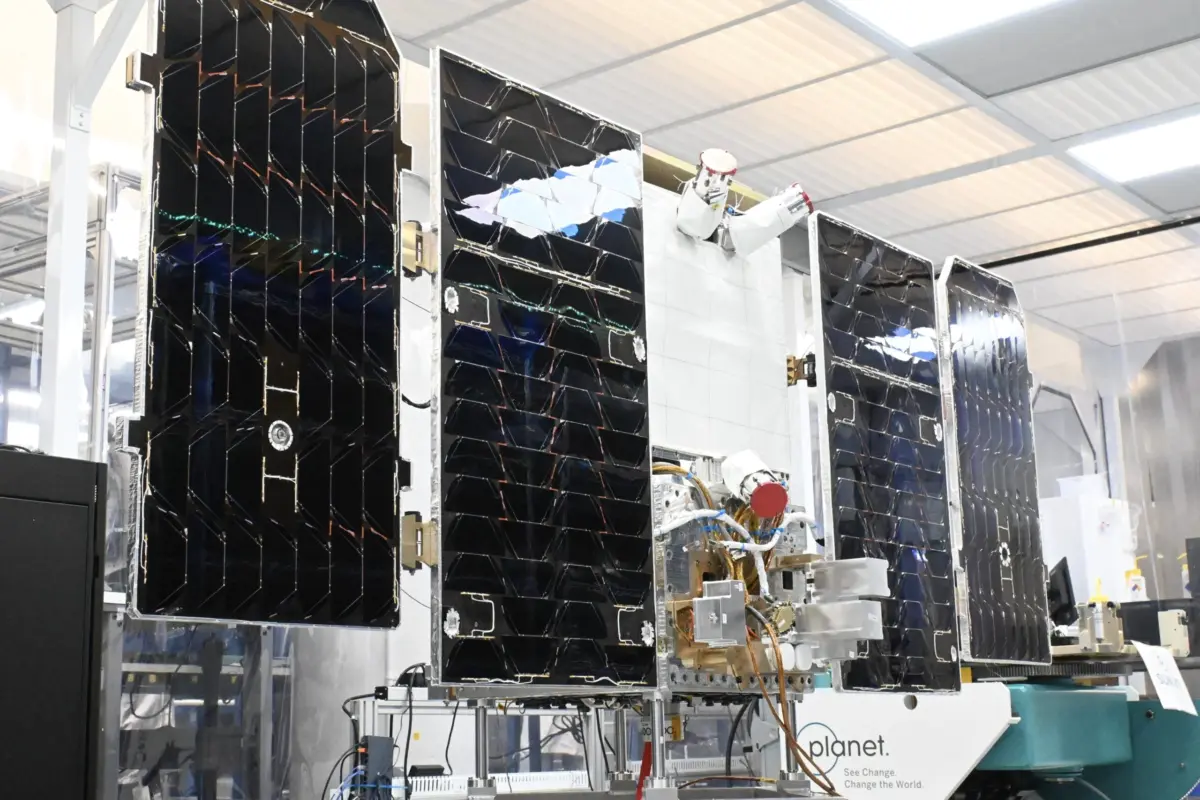
The mission, executed under Google’s Project Suncatcher, represents the company’s initial step toward evaluating whether high-performance AI accelerators, traditionally housed in massive water-and-power-hungry terrestrial data centers, can survive and operate in the harsh environment of Low Earth Orbit (LEO). Built on a satellite bus supplied by Planet Labs, the demonstration craft is designed to prove that custom enterprise silicon can handle the radiation, thermal stress, and power constraints of outer space.
While small-scale compute hardware has previously flown aboard satellites for remote sensing and basic telemetries, Google’s initiative is fundamentally distinct in scope and ambition. Suncatcher is not merely aimed at processing satellite imagery at the edge; it is a long-term research endeavor designed to establish the engineering foundation for multi-satellite, space-based data center clusters. As terrestrial data centers face growing resistance over grid capacities, land acquisition, and cooling water consumption, Project Suncatcher explores an alternative frontier: solar-powered, high-throughput compute swarms orbiting above Earth’s atmosphere.
Detailed Chronology: From Particle Accelerators to Space Demonstration
+-----------------------------------------------------------------------------------+
|                            PROJECT SUNCATCHER TIMELINE                            |
+-----------------------------------------------------------------------------------+
| Phase 1: Terrestrial Testing                                                      |
|   - TPU silicon exposed to particle accelerator radiation simulation.             |
|   - Shielding configuration reassessed after initial under-testing discovery.      |
|                                                                                   |
| Phase 2: Launch & Deployment (Current)                                            |
|   - Prototype satellite built by Planet Labs carrying Google TPU launched via     |
|     SpaceX Falcon 9 rideshare from California.                                    |
|   - Initial orbital commissioning and 15-minute burst operations begin.          |
|                                                                                   |
| Phase 3: Peer-Reviewed Scientific Analysis                                        |
|   - Concurrent publication of orbital compute white paper in *Joule*.             |
|   - Deep-dive into launch economics ($200/kg target) and hardware error rates.    |
|                                                                                   |
| Phase 4: Inter-Satellite Laser Link Demo (Next Flight)                            |
|   - Launch of two purpose-built satellites engineered for continuous compute.     |
|   - Demonstration of cross-satellite optical communications for distributed AI.  |
+-----------------------------------------------------------------------------------+
The trajectory of Project Suncatcher combines ground-based particle physics with aerospace engineering. Before reaching the launchpad, Google researchers conducted rigorous terrestrial testing to simulate orbital conditions.
- Ground Testing and Radiation Calibration: Google engineers subjected TPU chips to high-energy particle accelerators on Earth to mimic cosmic rays and solar particle events. During initial trials, researchers discovered that early chip mounting configurations inadvertently provided extra structural shielding, artificially dampening radiation impact. The team recalibrated its models and re-tested unshielded silicon, uncovering a higher frequency of radiation-induced bit-flips in logic circuits—a finding crucial for refining fault-tolerant software architectures.
- Spacecraft Fabrication: Planet Labs integrated Google’s modified TPU payload into a standardized satellite bus capable of delivering up to one kilowatt of continuous power to the payload.
- Orbital Insertion: The satellite launched as part of a SpaceX Transporter rideshare mission carrying over 100 payloads, including space-based AI hardware from emerging startups such as Satlyt and Cowboy Space Company.
- Commissioning and Duty Cycles: Upon achieving orbit, the satellite entered a commissioning phase. Because the baseline satellite bus must carefully balance electrical power generation with heat dissipation in a vacuum, the onboard TPU operates in controlled 15-minute operational bursts. This strategy prevents thermal throttling and power starvation while gathering operational diagnostics.
Supporting Context & Technical Metrics: Physics, Economics, and Radiation dynamics
Deploying enterprise AI accelerators in space requires addressing three primary challenges: thermal management, radiation tolerance, and launch economics.
+----------------------------------------------------------------------------------+
|                  CORE TECHNICAL & ECONOMIC METRICS AT A GLANCE                   |
+----------------------------------------------------------------------------------+
| Metric                             | Value / Requirement                         |
+------------------------------------+---------------------------------------------+
| Peak Payload Power Delivery        | 1.0 Kilowatt (Continuous)                   |
| Operational Burst Duration         | 15 Minutes (Thermal & Power Managed)        |
| Target Satellite Operational Lifespan| 5 Years                                   |
| Logic Circuit Error Rate (Inference)| ~1 in 1,000,000 Operations                  |
| Target Launch Cost (by 2035)       | ~$200 per Kilogram                          |
| Projected Starship Payload Scale   | 370,000 Metric Tons over 10 Years           |
| Required Starship Launch Cadence   | ~180 Flights/Year (~1,800 Total Launches)   |
| Proposed Constellation Architecture| 81 Satellites in Close Formation Swarm      |
+------------------------------------+---------------------------------------------+
Thermal Dissipation and Power Supply
In the vacuum of space, heat transfer cannot rely on air convection or liquid cooling loops connected to cooling towers. Heat can only be dissipated via infrared radiation. A TPU drawing hundreds of watts generates localized heat that must be channeled to large radiator panels without raising the overall temperature of the satellite. Generating one kilowatt of continuous power also requires solar arrays that significantly add to the craft’s total drag profile in LEO.
              [ Solar Radiation / Direct Sun ]
                         |
                         v
  +--------------------------------------------------+
  |              Solar Array Generation              |
  +--------------------------------------------------+
                         |
                         v  (1 kW Power Delivery)
  +--------------------------------------------------+
  |       TPU Payload Burst Cycle (15 Mins)          |
  +--------------------------------------------------+
                         |
                         v  (Conductive Heat Transfer)
  +--------------------------------------------------+
  |        Radiative Cooling Panels / Heat Sink       |
  +--------------------------------------------------+
                         |
                         v  (Infrared Thermal Radiation)
               [ Deep Space Sink Vacuum ]
Silicon Hardening vs. Error Tolerance
Rather than using expensive radiation-hardened custom silicon—which often lags several generations behind modern commercial nodes—Google elected to fly standard commercial-off-the-shelf (COTS) TPU silicon alongside software-level error mitigation.
The particle accelerator tests demonstrated that space radiation induces Single Event Upsets (SEUs)—spontaneous bit flips within the chip’s logic gates and memory registers.
- Inference Workloads: Google found the error rate settled at approximately one in a million operations. For inference tasks (such as running a pre-trained large language model or computer vision model), this error rate is acceptable, as minor floating-point deviations rarely corrupt the global output.
- Training Workloads: The same error rate poses risks for massive multi-month model training runs, where an uncorrected bit flip in a loss gradient can derail mathematical convergence across thousands of interconnected chips. Consequently, Google’s current orbital design targets inference rather than primary model training.
       [ Cosmic Rays / Solar Particle Events ]
                         |
                         v
         +-------------------------------+
         | Unshielded COTS Silicon TPU   |
         +-------------------------------+
                         |
           +-------------+-------------+
           |                           |
           v                           v
+--------------------+       +--------------------+
| SEU Error Rate:    |       | SEU Error Rate:    |
| ~1 in 1,000,000    |       | ~1 in 1,000,000    |
+--------------------+       +--------------------+
           |                           |
           v                           v
+--------------------+       +--------------------+
|  INFERENCE WORKLOAD |       | TRAINING WORKLOAD  |
|  Status: PASS      |       | Status: VULNERABLE |
|  Outputs tolerate  |       | Gradient updates   |
|  minor deviations  |       | risk divergence    |
+--------------------+       +--------------------+
Launch Economics and the "Joule" White Paper
Coinciding with the launch, Google published a peer-reviewed paper in the journal Joule, analyzing the economic feasibility of space-based computing.
Google’s models indicate that off-planet compute clusters become economically competitive with terrestrial data centers only if space transport costs fall dramatically. Analyzing SpaceX’s historical launch costs—which have exhibited a cost-reduction "learning curve" of roughly 20% annually since the Falcon 1 era—Google projects that launch prices must approach $200 per kilogram by 2035.
Achieving this target depends heavily on next-generation heavy-lift systems like SpaceX’s Starship. The paper estimates that to drive prices down to $200/kg, Starship would need to launch approximately 370,000 metric tons of cargo over a decade. Assuming a maximum capacity of 200 metric tons per launch, this equates to roughly 1,800 total flights, or an average launch cadence of 180 missions per year.
  Launch Cost ($/kg)
   $10,000 +----------------------------------------------+
           | * Falcon 1 Era                               |
    $5,000 |--------* Falcon 9 Baseline                   |
           |                                              |
    $1,000 |-------------------* Starship Initial Targets |
      $200 |---------------------------------------* 2035 Target Goal
           +---+-------+-------+-------+-------+-------+--+
             2008    2015    2020    2025    2030    2035
Official Statements & Industry Perspectives
Project leadership emphasizes that this initial mission serves as a stepping stone within a broader, long-term technological vision.
"We’ve done testing on the ground, but you know, there’s no test that’s completely as good as the real thing."
— Travis Beals, Google Executive managing Project Suncatcher
Beals noted that while ground testing provided baseline confidence, real orbital data is necessary to validate system longevity, radiative cooling efficiency, and bit-flip rates over time.
Addressing the trade-offs in radiation tolerance and operational scope, Beals clarified the hardware’s functional limits:
"The error rate is very low if you’re thinking about typical inference operations, right? Like one in a million. On the other hand, it was already problematic for doing, say, some mega-scale training run where you’re going to have many thousands of chips running for months."
Highlighting the necessity of looking beyond existing infrastructure, Beals outlined the multi-year engineering roadmap required for distributed orbital compute:
"The bandwidth and the latency between TPUs really, really matters when you’re trying to run a multi-rack workload… we’re trying to look ahead to not just what workloads exist today, but where they will be in five years."
Unlike commercial ventures focused on immediate edge-processing from low-resolution sensors, Google views Project Suncatcher as a foundational "moonshot" to build scalable infrastructure ahead of future orbital launch capabilities.
Future Outlook & Strategic Implications
The successful launch of Google’s prototype TPU payload represents Phase 1 of an incremental deployment plan.
  +-----------------------+     Laser Optical Link     +-----------------------+
  |  Suncatcher Node A    |<==========================>|  Suncatcher Node B    |
  |  (Planet-Designed Bus)|                            |  (Planet-Designed Bus)|
  +-----------------------+                            +-----------------------+
                                                                 /
                Inter-Chip Parallel Compute Processing Topology /
                v                                               v
  +----------------------------------------------------------------------------+
  |              81-Satellite Co-Orbiting Swarm Architecture                   |
  +----------------------------------------------------------------------------+
Phase 2: Dedicated Spacecraft and Optical Links
Google and Planet Labs are developing a follow-up demonstration scheduled for flight next year. This second iteration will feature:
- Purpose-Built Spacecraft: Moving away from standard off-the-shelf buses toward custom-engineered platforms tailored for sustained high-wattage heat dissipation.
- Inter-Satellite Laser Links: Deploying high-bandwidth optical transceivers between two co-orbiting satellites to evaluate inter-chip communication latencies across space. High-speed inter-satellite links are essential for distributing mathematical tensors across discrete nodes without routing data back through ground stations.
The 81-Satellite Swarm Architecture
The long-term vision described in Google’s technical publications centers on a co-orbiting formation of 81 satellites. Flying in a tight constellation, these nodes would function as a single distributed data center in LEO. Inter-satellite optical links would mirror the high-speed NVLink or inter-TPU interconnects found in terrestrial server racks, allowing parallel workloads to run across the constellation.
Strategic and Environmental Implications
If launch costs approach the projected $200/kg mark and inter-satellite optical networks prove viable, orbital compute clusters could offer several advantages:
- Unconstrained Solar Power: Orbital assets positioned in Sun-synchronous orbits can harvest solar energy almost continuously, bypassing terrestrial battery storage requirements.
- Terrestrial Grid Relief: Shifting compute-heavy inference tasks to space could reduce energy demand on ground-level electrical grids and eliminate cooling-water consumption.
- Direct Space Edge Processing: Orbital data centers could process data directly from earth-observation constellations, deep-space optical telemetry networks, and orbital sensors without bottlenecking downlink bandwidth.
While substantial engineering and economic hurdles remain, Project Suncatcher marks the transition of orbital compute from theoretical research to active, in-space technology demonstration.