Executive Overview
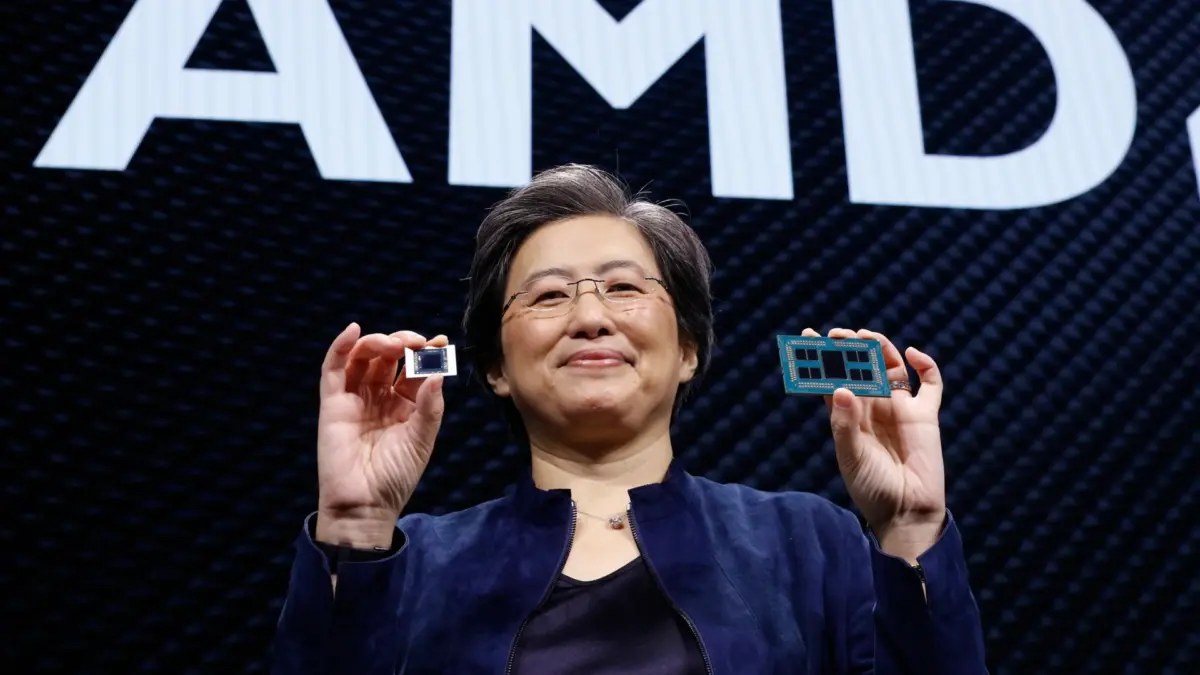
In a revealing series of statements made during a November 2026 financial interview with Yahoo Finance and a concurrent Q3 earnings call, Advanced Micro Devices (AMD) Chief Executive Officer Dr. Lisa Su cemented a major strategic evolution for the semiconductor giant. Su declared that AMD is now officially a "data center-first" enterprise, prioritizing enterprise AI infrastructure, large-scale cloud computing, and high-performance server architectures above traditional consumer hardware.
While this aggressive pivot has yielded tremendous fiscal growth—highlighted by a projected 50% sequential jump in data center revenue from Q3 to Q4—it has sent shockwaves through the consumer PC gaming community. Compounding the industry’s anxiety, Su forecasted a sharp, "double-digit percentage" slump in overall personal computer sales heading into 2027.
This strategic redirection underscores a broader, high-stakes ideological divide within the technology sector. On one side, corporate leadership views massive artificial intelligence investments as the foundational bedrock of future global intelligence and economic productivity. On the other side, consumers, hardware enthusiasts, and independent analysts express growing frustration over skyrocketing component costs, the artificial inflation of hardware pricing due to enterprise resource redirection, and a perceived over-infatuation with unpredictable AI monetization. As tech giants pour billions into server-grade infrastructure, everyday PC builders are left facing unprecedented hardware barriers, raising critical questions about the long-term sustainability of the AI gold rush.
Detailed Chronology of Events
The crystallization of AMD’s new corporate identity did not happen overnight, but its formal articulation reached a critical turning point in late 2026.
The Q3 Earnings Reveal and Financial Posture
During AMD’s Q3 2026 earnings conference call, executives laid bare the shifting revenue distribution of the company. Traditionally known as a titan of consumer CPUs (via the Ryzen line) and graphics cards (via Radeon), AMD’s financial disclosures painted a vastly different picture of the company’s immediate future. The company reported that enterprise-grade accelerators and EPYC server processors were rapidly eclipsing consumer-facing product lines in terms of resource allocation, fab capacity, and research and development focus.
The Yahoo Finance Interview on November 5, 2026
Following the earnings disclosures, Dr. Lisa Su sat down for an in-depth interview with Yahoo Finance on Thursday, November 5. Addressing recent market volatility—including a post-midterm election correction in tech and AI valuations—Su defended the company’s heavy forward-looking capital expenditures. She dismissed market turbulence as "short-sighted," doubling down on AMD’s multi-year vision where compute power and intelligence are inextricably linked.

Industry and Consumer Backlash
Within hours of the interview circulating across financial and tech media outlets (initially picked up and analyzed by industry trackers like TechRadar and PC Gamer), a fierce public relations firestorm erupted. PC enthusiasts and everyday consumers reacted with acute hostility toward the phrase "data center-first." For a user base already grappling with hardware inflation, the explicit prioritization of server farms over consumer gaming rigs felt like a formal corporate abandonment.
The backlash highlighted a widening gulf between executive boardrooms—which view AI infrastructure as an existential necessity—and the core grassroots consumer base that built brands like AMD over decades.
Supporting Context & Metrics: The AI Boom vs. The Consumer Squeeze
To fully grasp the gravity of Lisa Su’s announcements, one must examine the macroeconomic and technical forces driving the semiconductor industry in 2026.
The Data Center Growth Curve
AMD’s pivot is fundamentally driven by unprecedented demand from hyperscale cloud providers, enterprise AI developers, and sovereign computing initiatives. During her November interview, Dr. Su highlighted a staggering metric: AMD’s data center business is projected to grow by 50% sequentially from Q3 to Q4, with corporate goals aimed at more than doubling the entire segment entering the following fiscal year.
For semiconductor manufacturers, the profit margins on enterprise accelerators (such as AMD’s Instinct MI series competing against Nvidia’s Blackwell architecture) dwarf those of consumer desktop processors. Consequently, wafer allocations at major fabrication plants like TSMC are increasingly tilted toward high-margin enterprise silicon.
The Consumer PC Market and the "RAMpocalypse"
Conversely, the consumer PC market is bracing for a painful contraction. Su’s prediction of a double-digit percentage slump in PC sales for 2027 reflects a maturing hardware upgrade cycle compounded by severe supply chain pressures.
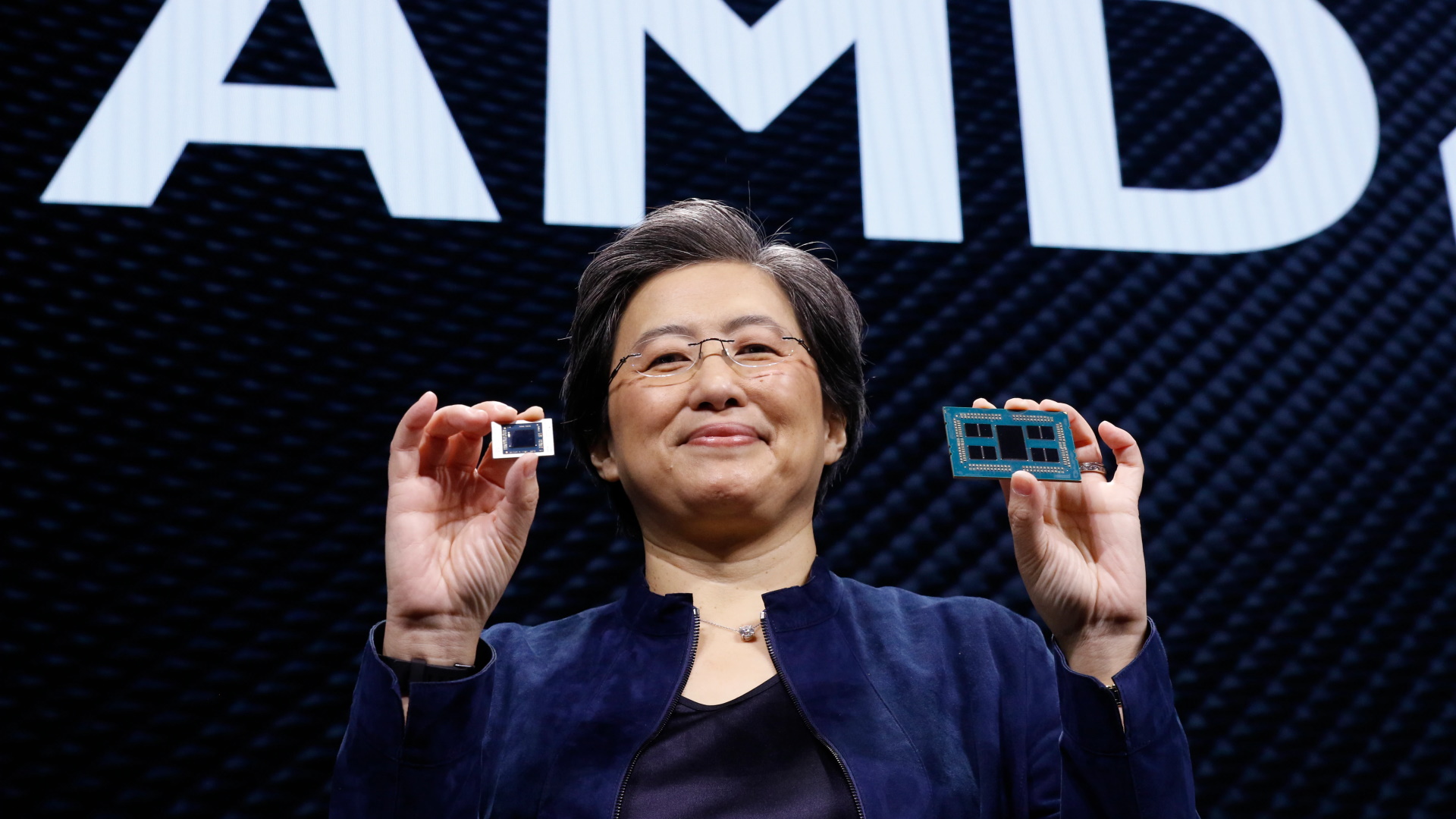
Industry analysts often refer to this era using terms like the "RAMpocalypse"—a cascading crisis of component pricing driven by memory manufacturers redirecting high-bandwidth memory (HBM) and advanced packaging lines toward enterprise AI accelerators rather than consumer RAM and GPU VRAM. As a result:
- Component Costs: Prices for high-end graphics cards, motherboards, and system memory have climbed to prohibitive levels.
- Adoption Stagnation: Everyday gamers and professionals are extending their hardware replacement cycles, balking at the inflated cost of building or upgrading standard desktop rigs.
- Market Polarization: The PC market is splitting into two distinct tiers: high-end corporate AI workstations subsidized by enterprise budgets, and a stagnant, priced-out consumer retail sector.
Official Statements and Perspectives
Dr. Lisa Su’s Vision for "Super Intelligence"
Defending AMD’s aggressive long-term strategy, Dr. Su articulated a philosophical framework that equates raw computational power directly with cognitive and business advancement:
"We’re a tech company that has a lot of resources and the ability to expand our supply and expand our ability to help our customers… Being able to say that my data center business is going to grow 50% sequentially from Q3 to Q4, it’s a big step up and it’s a testament to how important computing is in the industry today."
Addressing the recent correction in tech market valuations, Su maintained an unwavering posture:
"I think the market can sometimes be a little bit short-sighted… What I look at is in the long term, if you believe—which I do, deeply—that computing in many ways equates to intelligence. So the more compute you have, the more intelligent you are, the more intelligent your company is, the more problems you’re going to be able to solve, the more you’re going to accelerate your business."
Su emphasized that AMD operates on a three-, four-, and five-year horizon, asserting that over-the-horizon trends point unequivocally toward pervasive AI and superintelligence embedded in every facet of modern commerce and daily life.

The Consumer Advocate Critique
In direct counterpoint to corporate optimism, industry journalists and consumer advocates have raised sharp ethical and economic questions regarding the wisdom of the AI gold rush. Critics argue that tech executives are forcing an unproven, environmentally taxing technology onto an unwilling public while actively degrading the affordability of traditional computing.
Prominent hardware commentators have noted a profound disconnect: generative AI tools and enterprise models have largely failed to revolutionize daily consumer workflows in a manner proportional to their astronomical resource cost. Instead, the primary tangible output for everyday users has been hyper-inflationary hardware pricing and a drained consumer ecosystem.
Furthermore, financial analysts have raised alarms about systemic risk. With broad swaths of the global economy—including retirement accounts, mutual funds, and pension portfolios—deeply entangled in tech sector valuations, any severe correction or bursting of the AI bubble will distribute its financial hangover not just to Silicon Valley executives, but to everyday workers whose retirement funds were leveraged on perpetual exponential growth.
Future Outlook: Navigating the 2027 Precipice
As the industry looks ahead to 2027, the fault lines carved out by AMD’s new strategic posture will likely dictate the trajectory of consumer and enterprise technology for the remainder of the decade.
- Widening Chasm Between Sectors: The divergence between enterprise computing and consumer hardware will likely accelerate. While AMD, Nvidia, and Intel post record-breaking enterprise revenues fueled by sovereign AI and cloud data centers, retail channels may experience persistent stagnation and supply constraints.
- The Price of Progress: Consumers must prepare for a prolonged era where cutting-edge PC hardware commands a luxury premium. Unless fab capacity catches up with global demand—or enterprise AI investment cools significantly—building a high-end gaming or content creation PC will remain an increasingly exclusive hobby.
- The Looming Market Correction: The ultimate test of Dr. Su’s long-term thesis will be whether enterprise AI investments generate tangible, sustained revenue or if the market is currently experiencing an unsustainable infrastructure bubble. If the anticipated 2027 PC sales slump deepens into a wider systemic contraction, the pressure on tech leaders to balance consumer goodwill with enterprise ambition will reach a critical breaking point.
Ultimately, AMD’s evolution into a data center-first powerhouse signals the end of an era for personal computing. Whether this high-stakes gamble secures a golden age of machine intelligence or leaves consumer hardware permanently sidelined remains one of the defining economic questions of our time.