Executive Overview
For a quarter-century, the entry point to human curiosity on the internet was defined by a singular, minimalist design paradigm: a narrow rectangular input box, a blinking vertical cursor, and a static list of ten blue links. At its annual I/O developer conference, Google officially sunsetted that legacy model.
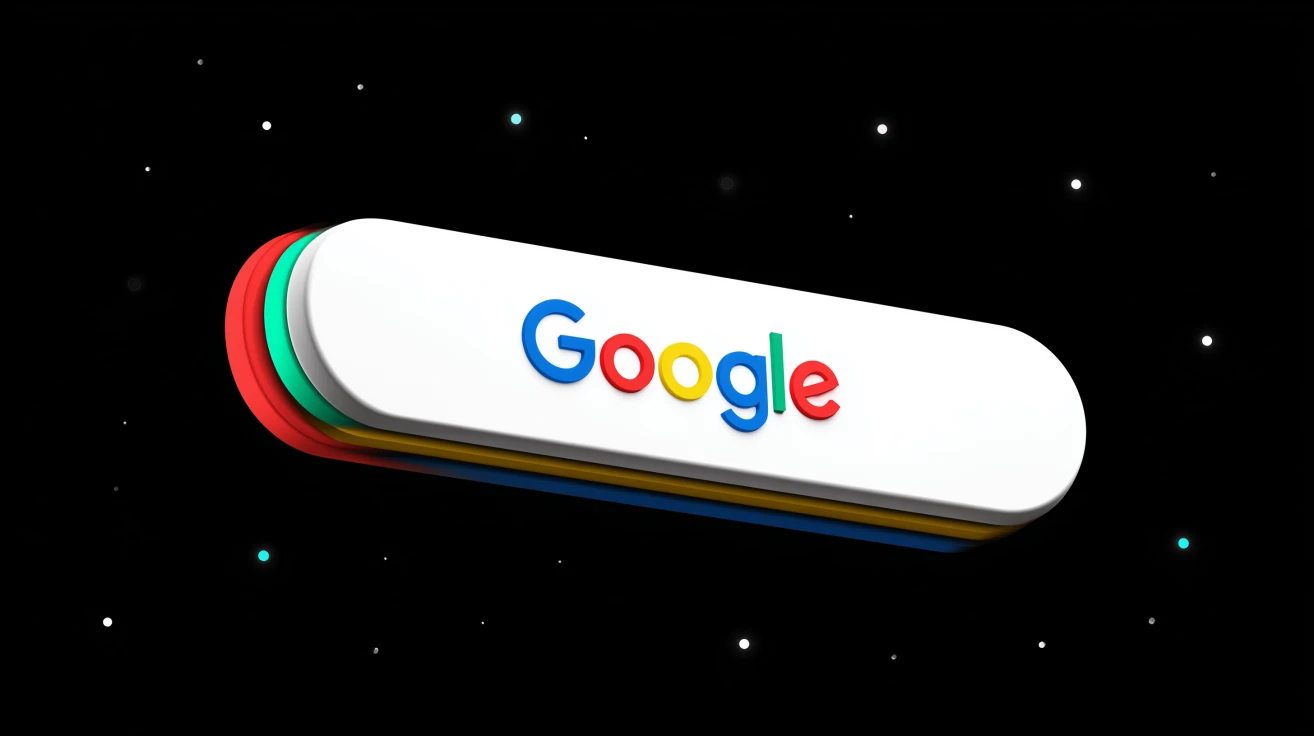
In its place, Alphabet unveiled a comprehensive structural redesign of the search box—the primary gateway through which billions of daily inquiries flow. The updated input field moves beyond a static keyword box, transforming into an expanding, multimodal computational portal capable of digesting raw text, high-resolution imagery, complex financial PDFs, raw video streams, and active Chrome browser tabs. Concurrently, Google collapsed the architectural wall between its legacy search pages, AI Overviews, and AI Mode, merging these once-disparate interfaces into a unified, continuous retrieval engine.
The strategic shift represents the most radical overhaul of Google’s core commercial engine since the company’s inception. Powered by the newly deployed Gemini 3.5 Flash model and backed by a projected 2026 infrastructure capital expenditure (CapEx) budget of $180 billion to $190 billion, the redesign signals a structural pivot: Google is repositioning search from an information indexer into a dynamic, agentic system capable of generating interactive applications, executing tasks, and deploying 24/7 web-monitoring agents on behalf of users.
Detailed Chronology
[1998–2024: Keyword Epoch] ──> [I/O 2025: Dual-Track UI] ──> [I/O 2026: Unified Canvas]
  • Static 10 Blue Links        • AI Overviews Introduced     • Single Multimodal Box
  • Fragmented Queries          • Standalone AI Mode          • Dynamic UI Generation
  • Text-Only Inputs            • Friction in Navigation      • 24/7 Web Agents
The Keyword Epoch (1998–2024)
For twenty-five years, Google’s search box trained global internet users to adapt their cognitive processes to the constraints of machine indexing. Users learned to compress complex real-world inquiries into fragmented, two- or three-word keyword phrases (e.g., "best running shoes flat feet"). The interface rewarded brevity, presenting an inventory of indexed web URLs ranked by algorithmic relevance.
The Transition Phase: Dual-Track Interfaces (I/O 2025)
At I/O 2025, Google introduced AI Mode alongside AI Overviews (the generative summary cards displayed atop traditional search results). While this dual-track deployment introduced advanced reasoning to search, it created friction. Users were forced to make a conscious pre-query choice: remain within the classic web-link interface or manually toggle to a separate, conversational AI environment. Despite this navigation hurdle, AI Mode surpassed 1 billion monthly active users (MAUs) within twelve months, with query volume doubling every quarter.
The Unified Canvas (I/O 2026)
At I/O 2026, Google formally dissolved the boundary between traditional search results and conversational AI. The new design introduces three major structural updates:
- Dynamic Field Expansion & Drag-and-Drop Multimodality: The text input box dynamically expands as users type complex, multi-sentence queries. Users can drag open Chrome tabs, slide in multi-page PDF documents, or drop raw video files directly into the input field.
- Predictive Query Coaching: Replacing basic autocomplete, Google deployed an AI query suggestion system designed to coach users toward formulating structured, deeply contextual questions rather than simple keyword fragments.
- Single-Flow Unified Navigation: Users submit queries directly into the upgraded search box and receive a synthesized output combining AI Overviews, interactive widgets, and traditional links, with the ability to jump straight into multi-turn follow-up conversations without switching tabs or modes.
Supporting Context & Metrics
The architectural shift is supported by usage statistics, custom hardware scaling, and underlying model performance data disclosed during the conference briefings.
+-----------------------------------------------------------------------+
|                        KEY PERFORMANCE METRICS                        |
+-----------------------------------------------------------------------+
|  AI Overviews Monthly Reach           |  2.5+ Billion Users           |
|  AI Mode Monthly Active Users         |  1.0+ Billion Users           |
|  AI Mode Query Growth Rate            |  2x Quarter-over-Quarter      |
|  Monthly Model Token Volume           |  3.2+ Quadrillion Tokens      |
|  2026 Projected Infrastructure CapEx  |  $180B – $190B                |
+-----------------------------------------------------------------------+
High-Throughput Model Architecture: Gemini 3.5 Flash
To run conversational, multi-turn AI for billions of global queries without introducing severe latency, Google upgraded the search backend to Gemini 3.5 Flash.
According to benchmark data referenced by Google from the Artificial Analysis index, Gemini 3.5 Flash outperforms the prior generation Gemini 3.1 Pro frontier model across core reasoning evaluation suites while operating at four times the output token speed. This ultra-low-latency profile allows the engine to parse multimodal inputs and construct synthesized responses in milliseconds.
                      Speed vs. Intelligence Quadrant
   High ^
        |                                       [ Gemini 3.5 Flash ]
        |                                     (Frontier Level Quality +
   I    |                                      4x Output Token Speed)
   N    |
   T    |                 [ Gemini 3.1 Pro ]
   E    |
   L    |
   L    |
        +------------------------------------------------------------>
                                    SPEED (Tokens/Sec)
Real-Time Code Execution & Generative UI
The unified interface introduces Generative UI, an architecture developed in collaboration with Google DeepMind. Using real-time code execution powered by Gemini 3.5 Flash, search no longer relies solely on static pre-rendered web assets. Instead, it compiles custom interactive visual widgets, dynamic charts, and micro-applications on the fly.
For example, a inquiry regarding astrophysics ("How do black holes distort spacetime?") immediately compiles an interactive visual simulation within the search view. Subsequent user questions trigger real-time code rewrites, adjusting the visual model on the fly. Generative UI capabilities are slated for global release to all users at no cost.
User Query ──> Gemini 3.5 Flash ──> DeepMind Real-Time Engine ──> Compiled Custom UIProactive Information Agents and the Antigravity Platform
For complex workflows, Google introduced two persistent capabilities:
- Stateful Workflows (Antigravity): Powered by Google’s Antigravity developer infrastructure, users can build persistent, multi-step mini-apps directly inside search using natural language (e.g., custom event planning dashboards, fitness trackers).
- Autonomous Information Agents: Users can configure 24/7 background agents within search to continuously monitor live web indexes, market feeds, or real estate databases, delivering proactive synthesized updates when preset conditions are triggered.
These advanced features will roll out to Google AI Pro and Ultra subscribers first.
[User Natural Language] ──> [Antigravity System] ──> Persistent Dynamic Workspace
                                                             │
                                                             ▼
                                                    [24/7 Information Agent]
Capital Expenditure & Token Scale
Google confirmed that its globally distributed model serving infrastructure now processes over 3.2 quadrillion tokens per month across its enterprise and consumer surfaces—a seven-fold increase year-over-year. To maintain this compute density, Alphabet projected its 2026 annual capital expenditures will reach $180 billion to $190 billion, up from $31 billion four years prior.
Official Statements
During executive briefings at I/O 2026, Google leadership framed the redesign as both a natural evolution of user behavior and an engine for commercial growth.
Liz Reid, Vice President and Head of Google Search, highlighted the friction-reduction logic behind unifying the interface:
"This is the biggest upgrade to our iconic search box since its debut over 25 years ago… For most users, they don’t actually want to have to think about whether they want more of a traditional page or an AI-forward search experience. They don’t have to think about where to go—they can just go to the search box they’re familiar with, and it feels like they get the best experience afterwards."
Addressing the fundamental evolution in query formation, Reid added:
"It’s not just that people are searching more, it’s that they’re searching differently. They’re fully expressing their questions in granular detail, asking those follow-up questions, and searching across modalities."
Sundar Pichai, CEO of Alphabet, addressed investor questions regarding search volume cannibalization, pointing to elevated engagement across AI-native features:
"When people use our AI-powered features in search, they use search more. I love how search has become less about individual queries and feels more like an ongoing conversation, giving users deeper insights and connecting you with the vastness of the web. Search is the most used AI product in the world."
Future Outlook & Ecosystem Implications
The retirement of the traditional keyword search box alters the broader economics of the digital ecosystem, introducing operational challenges for digital publishers, search engine optimization (SEO) strategists, and performance marketers.
                     ECOSYSTEM IMPACT MATRIX
+--------------------+---------------------------------------------------+
| Stakeholder Group  | Primary Strategic Impact                          |
+--------------------+---------------------------------------------------+
| Digital Publishers | Risk of declining referral traffic due to zero-   |
|                    | click, multi-turn AI interactions on Google UI.   |
+--------------------+---------------------------------------------------+
| SEO Professionals  | Pivot from keyword density to entity-level intent,|
|                    | deep topic coverage, and multimodal optimization. |
+--------------------+---------------------------------------------------+
| Advertisers        | Shift from keyword bidding to intent-based targeting|
|                    | within dynamic, multi-turn conversational flows.  |
+--------------------+---------------------------------------------------+
The Transition from Keyword SEO to Intent Architecture
For decades, search engine optimization relied on targeted keyword placements, backlink topology, and metadata formatting. As Google shifts to direct intent parsing via Gemini 3.5 Flash, exact-match keyword strategies yield diminishing returns.
Content optimization strategies must pivot toward:
- Comprehensive Topic Authority: Structuring information to answer complex, multi-layered inquiries that an AI model can reference.
- Multimodal Asset Optimization: Structuring images, raw video transcripts, and data tables for direct consumption by multimodal ingest pipelines.
- Direct Entity Resolution: Clear semantic structure optimized for real-time model extraction rather than simple crawler indexing.
Threat of Zero-Click Disintermediation for Publishers
For independent media outlets and digital publishers, the consolidation of AI Overviews and AI Mode inside the primary entry point compounds long-standing traffic concerns.
With multi-turn follow-up queries, dynamic code generation, and native file parsing occurring directly on the Google search page, user session duration within Google’s ecosystem increases. While Google maintains that integrated citation links send high-value traffic to external sources, publishers face an environment where a growing percentage of queries are fully answered without a user ever visiting an external URL.
Evolution of the Monetization & Advertising Model
Google’s primary business model remains rooted in digital ad placements tied to search intent. Conversational, multi-turn search interactions introduce both opportunities and complexities for ad delivery:
- Richer Intent Signals: Multi-sentence, conversational inputs provide contextual intent data, enabling highly targeted, personalized ad placements.
- Ad Insertion in Conversational Flows: Moving beyond static top-of-page sponsored links requires introducing sponsored nodes dynamically within multi-turn dialogues, real-time widgets, and agentic workflows without disrupting the user experience.
The Emerging Agentic Web
By linking the dynamic search interface to broader agentic infrastructure—such as Gemini Spark (24/7 personal agents running on cloud VMs), the cross-merchant Universal Cart, and the Agent Payments Protocol (AP2)—Google is transforming search into an execution engine.
Search is no longer merely a directory for locating third-party websites; it is becoming an active interface where intent formulation, task execution, data analysis, and financial transactions occur within a single unified workspace.