Executive Overview
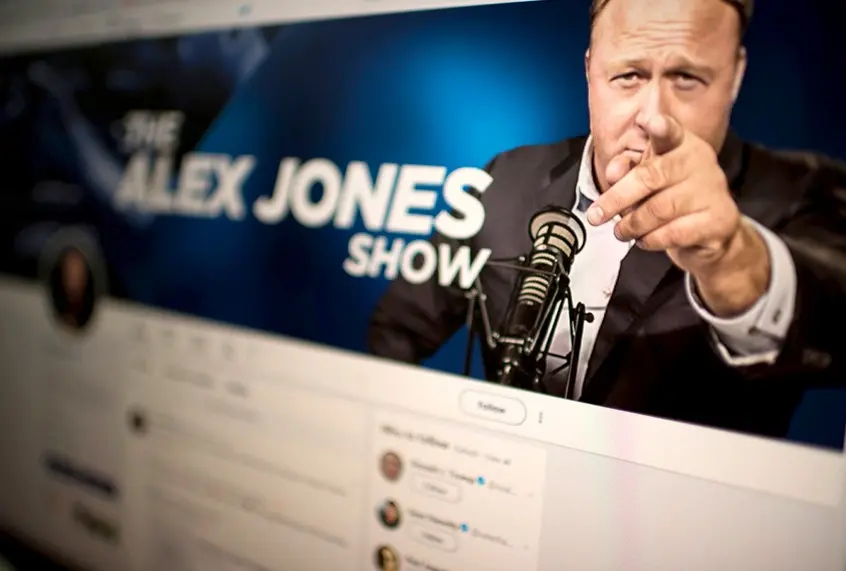
In August 2018, the digital public square underwent a seismic shift. For years, major social media companies had wrestled with the friction between absolute free expression and the societal harm caused by rampant misinformation, coordinated harassment, and conspiracy theories. At the epicenter of this philosophical and operational war was Alex Jones, the abrasive right-wing shock jock and founder of InfoWars.
On Tuesday, August 15, 2018, Twitter enacted a measure that marked a profound departure from its established protocols: it slapped Jones with a seven-day operational suspension—a "timeout"—for violating core safety rules. This action represented a sharp, undeniable reversal for the microblogging platform. For months, Twitter CEO Jack Dorsey and his trust and safety teams had aggressively defended their decision to keep Jones online, arguing that simply holding unpalatable or fringe views did not cross the line into bannable offenses.
Twitter’s hand was ultimately forced not just by internal policy shifts, but by a sweeping, coordinated crackdown across Silicon Valley. Within a span of days, tech giants including Apple, Facebook, Pinterest, Spotify, and YouTube (owned by Google) had purged Jones and InfoWars from their ecosystems, citing violations of hate speech policies and terms of service.
This deep dive examines the anatomy of Twitter’s pivot, the statements made by CEO Jack Dorsey during an exclusive interview with NBC News, the historical context of Jones’s violations, and the broader implications this watershed moment held for content moderation, platform accountability, and the future of online discourse.
Detailed Chronology of the Ban
The week of August 12, 2018, will forever be remembered as a turning point in modern content moderation. For years, mainstream platforms had treated fringe conspiracy theorists with kid gloves, leaning heavily on libertarian ideals of internet freedom and the fear of appearing politically biased. However, the cumulative weight of harassment campaigns orchestrated by Jones and his followers finally broke the dam.
The Silicon Valley Domino Effect
The crackdown began in earnest when Apple removed several InfoWars podcasts from its iTunes and Apple Podcasts directories, citing policies against hate speech and the promotion of discrimination. Shortly thereafter, Facebook took down four pages belonging to Jones and InfoWars, temporarily restricting his personal profile for posting content that glorified violence and used dehumanizing language against transgender people and Muslims.
Within 48 hours, Spotify removed large swaths of Jones’s podcast archive, and YouTube terminated the primary InfoWars channel—which boasted millions of subscribers—alongside channels associated with Jones personally. Pinterest followed suit, classifying InfoWars as a purveyor of hate speech and malicious hoaxes.
Twitter’s Holdout and Final Breaking Point
Amid this industry-wide housecleaning, Twitter remained the solitary major holdout. CEO Jack Dorsey and his team insisted that Jones’s accounts had not technically violated the platform’s Terms of Service. Twitter’s stance was that while Jones’s content was deeply objectionable, it fell under protected political speech and commentary, provided it stayed clear of explicit threats of violence or targeted harassment.
That defense crumbled on Tuesday, August 14, 2018. The tipping point arrived when Jones posted a video to his Twitter audience urging his supporters to get their "battle rifles" ready and prepare for physical combat against the mainstream media and various perceived political enemies.
This call to arms constituted a direct, indisputable violation of Twitter’s safety policies, which explicitly prohibit individuals or organizations from using or promoting violence against civilians to further their causes. Faced with this flagrant breach, Twitter swiftly locked Jones’s personal account and the official InfoWars account behind a seven-day suspension.
Official Statements and the Jack Dorsey Controversy
The suspension immediately vaulted Twitter and its chief executive into the media spotlight. On Wednesday, August 16, Jack Dorsey sat down for an exclusive interview with NBC News anchor Lester Holt to defend and explain the company’s sudden about-face.
Dorsey’s Defense of Due Process
During the interview, Dorsey conceded that he had personally resisted earlier calls to ban Jones. He explained that his hesitation stemmed from a principled reluctance to yield to public pressure or subjective interpretations of what constitutes acceptable speech.
"We can’t build a service that is subjective just to the whims of what we personally believe," Dorsey told Holt, emphasizing the immense difficulty of balancing platform health with an open, global infrastructure.
Dorsey framed the seven-day timeout as a corrective disciplinary measure designed to alter behavior rather than an act of ideological censorship. "I feel any suspension, whether it be a permanent or a temporary one, makes someone think about their actions and their behaviors," Dorsey stated.
When pressed by Holt on whether he genuinely believed a weeklong timeout would reform a figure as entrenched as Alex Jones, Dorsey offered a pragmatic, measured response:
"Whether it works within this case to change some of those behaviors and change some of those actions, I don’t know. But this is consistent with how we enforce."
The Backlash and Clarification on Twitter
The interview clips, when broadcast, triggered immediate criticism from both sides of the political aisle. Free-speech purists accused Dorsey of folding to mob rule, while safety advocates argued that a mere seven-day timeout was a slap on the wrist for a figure who had spent years inciting harassment.
Sensing the ambiguity of his remarks, Dorsey took to Twitter shortly after the interview aired to clarify his position. In a thread directed at his followers, he wrote:
"To clarify: I was speaking broadly about our range of enforcement actions, when asked why we timeout functionality on Twitter. I don’t assume everyone will change their actions. Enforcement gets tougher with further reported violations."
This clarification underscored a growing realization within executive suites across Silicon Valley: temporary suspensions were rarely silver bullets for bad behavior, but rather the opening steps in an escalating enforcement ladder.
Supporting Context and Metrics: The Legacy of Alex Jones
To understand why Twitter’s reversal was so momentous, one must examine the sprawling catalogue of falsehoods and malicious campaigns that defined the InfoWars brand. For over a decade, Alex Jones operated as a masterclass in monetizing outrage, utilizing digital platforms to spread conspiracy theories that frequently spilled over from the screen into real-world trauma.
A History of Harassment and Hoaxes
As highlighted by investigative reporting from outlets like Salon, Jones built his media empire on the back of cruelty:
- The 9/11 "Truther" Movement: Jones was an early and prominent promoter of theories claiming that the September 11 terrorist attacks were an "inside job" orchestrated by the United States government.
- Targeted Accusations of Pedophilia: Jones routinely weaponized baseless smears against political opponents, journalists, and government officials—including Special Counsel Robert Mueller and Facebook CEO Mark Zuckerberg—accusing them of heinous crimes without a shred of evidence.
- The Sandy Hook Massacre Denial: Perhaps most damagingly, Jones spent years telling his listeners that the 2012 mass shooting at Sandy Hook Elementary School—which claimed the lives of 20 first-graders and six educators—was a "false flag" operation staged by the government utilizing "crisis actors."
The real-world consequences of the Sandy Hook denials were catastrophic. Grieving parents were subjected to years of relentless harassment, death threats, and stalking by InfoWars acolytes who believed Jones’s fabrications. This campaign of terror ultimately led to multiple multi-million-dollar defamation lawsuits filed against Jones in Texas and Connecticut, severely threatening the financial viability of his enterprise.
Future Outlook: The Ongoing War Over Platform Accountability
The suspension of Alex Jones in August 2018 served as a watershed moment for internet governance. It effectively shattered the long-held Silicon Valley myth that social media platforms were merely passive, neutral "pipes" bearing zero responsibility for the content flowing through them. By stepping up to moderate, restrict, and ban high-profile bad actors, companies like Twitter, Facebook, and Apple crossed a historic threshold, accepting their roles as editors and arbiters of public safety.
However, the saga left several critical questions unanswered:
- Where is the Line? Critics continued to point out the inconsistency of platform enforcement. If Jones’s years of hate speech and targeted harassment warranted only a temporary timeout prior to his eventual permanent ban, what threshold was required for immediate, permanent removal?
- The Decentralization Dilemma: As major platforms locked their doors to Jones, he and his followers began migrating to alternative, less-moderated platforms and video-streaming services—such as Periscope, Gab, and BitChute—proving that deplatforming does not erase bad actors, but rather drives them into radicalized echo chambers.
- The Precedent of Power: The coordinated nature of the tech industry’s ban raised profound concerns regarding corporate power over public discourse. When a handful of unelected executives in Silicon Valley can collectively silence a media figure, it highlights the immense vulnerability of the modern digital public square.
Ultimately, Twitter’s temporary suspension of Alex Jones was never just about one man or a single tweet regarding "battle rifles." It was the messy, reluctant acknowledgement by a tech giant that absolute free speech on commercial platforms is incompatible with public safety, mutual respect, and the basic preservation of truth in a democratic society.