Executive Overview
When evaluating the pantheon of classic newspaper comic strips, literary and cultural critics often attempt to distill their appeal into universal human truths. For Charles Schulz’s Peanuts, the journey yields a meditation on melancholy, resilience, and childhood innocence. For Bill Watterson’s Calvin and Hobbes, it invokes a deeply philosophical examination of imagination, existentialism, and humanity’s relationship with the natural world. But turning this analytical lens toward Gary Larson’s legendary, single-panel masterpiece, The Far Side, breaks the traditional critical framework entirely.
Larson did not deal in deep existential wisdom, nor did he offer heartfelt, inspirational life lessons. Instead, his genius lay in a singular, twisted dedication to pure, unadulterated gag-writing wrapped in surrealism, anthropomorphic animals, and macabre scenarios. While readers frequently had to pause to decode his punchlines—such as parsing the visual of an artist painting a human-fly hybrid only to notice a dead insect smashed against the artist’s spectacles—the intellectual exercise was never about lofty philosophical inquiry. It was about appreciating a master craftsman engineering a punchline.
This article explores the rigorous, sometimes comical quest to unearth the single greatest quote in The Far Side’s rich history. By tracing the evolution of this selection process—discarding early attempts to find profound commentary on divinity and mortality—we arrive at a 1992 masterpiece that encapsulates Larson’s dark wit, satirical subversion of idioms, and unique reliance on text over image.
Detailed Chronology: The Quest for the Ultimate Far Side Quote
The pursuit of the definitive Far Side quote began with an analytical methodology applied to other strips: breaking down the emotional core of the creator’s body of work.
Phase One: The Search for the Divine
Initially, the investigation centered on Larson’s recurring depictions of God. Given The Far Side‘s frequent forays into celestial bureaucracy and divine intervention, it seemed plausible that a profound quote might emerge from the Creator’s mouth. However, a comprehensive review of these panels revealed a startling truth: Larson’s God was rarely wise, benevolent, or philosophically complex. More often than not, He was petty, unpredictable, and downright malicious—operating the universe with the casual cruelty of a bored child with a magnifying glass.
Phase Two: The Macabre and Mortality
With divine wisdom ruled out, the focus shifted to death. Given Larson’s signature dark humor, mortality served as the punchline for countless strips. From explorers boiling in cauldrons to suburban homeowners facing bizarre suburban terrors, death saturated the strip’s ecosystem. Yet, these panels consistently resisted solemnity. The fatal blow to this thematic approach came via a single, unforgettable panel: a snake hanging itself using its own serpentine body. Any lingering notion of finding a weighty, solemn meditation on the human condition evaporated in the face of such delightfully morbid absurdity.

Phase Three: The Battle of Visual vs. Textual Gags
Abandoning the pursuit of thematic depth, the search pivoted strictly toward comedic brilliance. However, selecting a top quote from thousands of syndicated strips required establishing strict criteria. Larson’s humor was heavily visual. Most single-panel cartoons rely on the drawing to set the scene, leaving the caption to deliver the twist.
Consider the iconic "Welcome to Hell… here’s your accordion" panel. Juxtaposing the peaceful arrival in Heaven (where newcomers receive harps) against the eternal damnation of being forced to play an accordion is brilliantly dark. Yet, upon closer inspection, the visual does the heavy lifting; the quote itself operates largely as a non-sequitur without the visual contrast of cherubs versus polka players.
Supporting Context & Metrics: Deconstructing the 1992 Masterpiece
After filtering through theological experiments, existential dread, and heavily visual dependencies, the search finally landed on a panel published in 1992. It represents the absolute pinnacle of Larson’s comedic architecture:

"Question: If a tree falls in the forest and no one’s around, and it hits a mime, does anyone care?"
Why This Quote Works on Every Level
- Subversion of Idiom: It brilliantly hijacks one of philosophy’s most famous acoustic thought experiments—the falling tree in an empty forest—and weaponizes it against a universally maligned performance art demographic.
- Emotional and Philosophical Vacancy: It proudly offers zero emotional growth, zero moral takeaway, and zero existential comfort. It is pure, concentrated comedy.
- Independence from the Visual: While the corresponding drawing of a silent, white-faced mime being crushed beneath a massive timber is undeniably funny, the joke functions entirely on its own. The text carries the comedic weight, a rarity in Larson’s predominantly visual catalog.
Comparative Metrics of The Far Side Tropes
| Thematic Category | Frequency in Strip | Depth Level | Memorable Example |
|---|---|---|---|
| Animals Acting Like Humans | Extremely High | Low (Absurdist) | Cows looking up and shouting "Car!" |
| The Supernatural & Hell | Moderate | Medium (Satirical) | The accordion hellscape |
| Scientists & Laboratories | High | Low (Nerdy Slapstick) | "School for the Gifted" door opening outward |
| Philosophical Idioms | Low | High (Subversive) | The falling tree and the mime |
Official Statements & Industry Legacy
Reflecting on the cultural footprint of The Far Side, media historians and cartoonists alike have marveled at how Gary Larson managed to secure a massive, mainstream daily newspaper audience while flouting every conventional rule of syndicated humor.
When Gary Larson officially retired The Far Side in 1995 after a 15-year run, he released a statement expressing gratitude to his readership while noting his desire to step away before the creative well ran dry. In subsequent interviews and retrospective collections, Larson frequently emphasized that his work was never meant to be over-analyzed. He was simply drawing what amused him—whether that meant cavemen inventing square wheels, ducks watching television, or a lone tree obliterating a street performer.
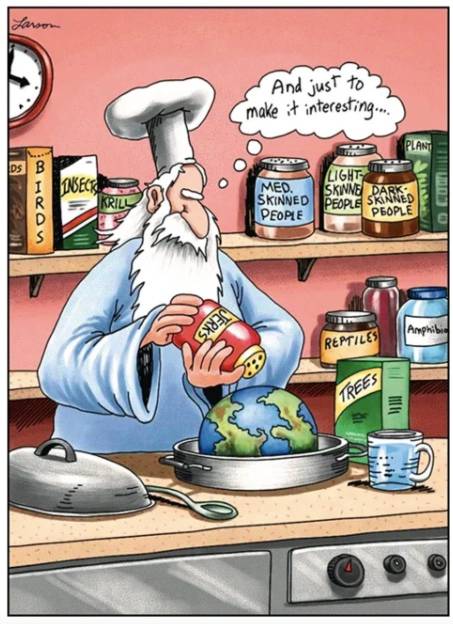
Industry peers have consistently credited Larson with opening the floodgates for alternative, geek-friendly, and surrealist humor in mainstream print media. Long before internet meme culture made non-sequitur absurdism a daily language, Larson was delivering strange, single-panel panels to breakfast tables across America.
Future Outlook: The Enduring Relevance of Larson’s Universe
Decades after its initial syndication run concluded, The Far Side continues to influence generations of cartoonists, writers, and digital content creators. In an era dominated by serialized webcomics and rapid-fire social media punchlines, the discipline required to tell a complete, hilarious story within the confines of a single square panel remains a masterclass in comedic timing.
As digital archives introduce Larson’s work to younger generations—and occasional new digital sketches keep older fans engaged—the strip proves entirely immune to aging. Absurdity, it turns out, never goes out of style. Whether pondering the inner thoughts of cows or wondering about the fate of forest-dwelling mimes under falling timber, Gary Larson’s unique vision ensures that humanity will always find laughter in the strange, the dark, and the utterly ridiculous.