By: Tech & Gaming Desk
Published: October 16, 2026
Executive Overview
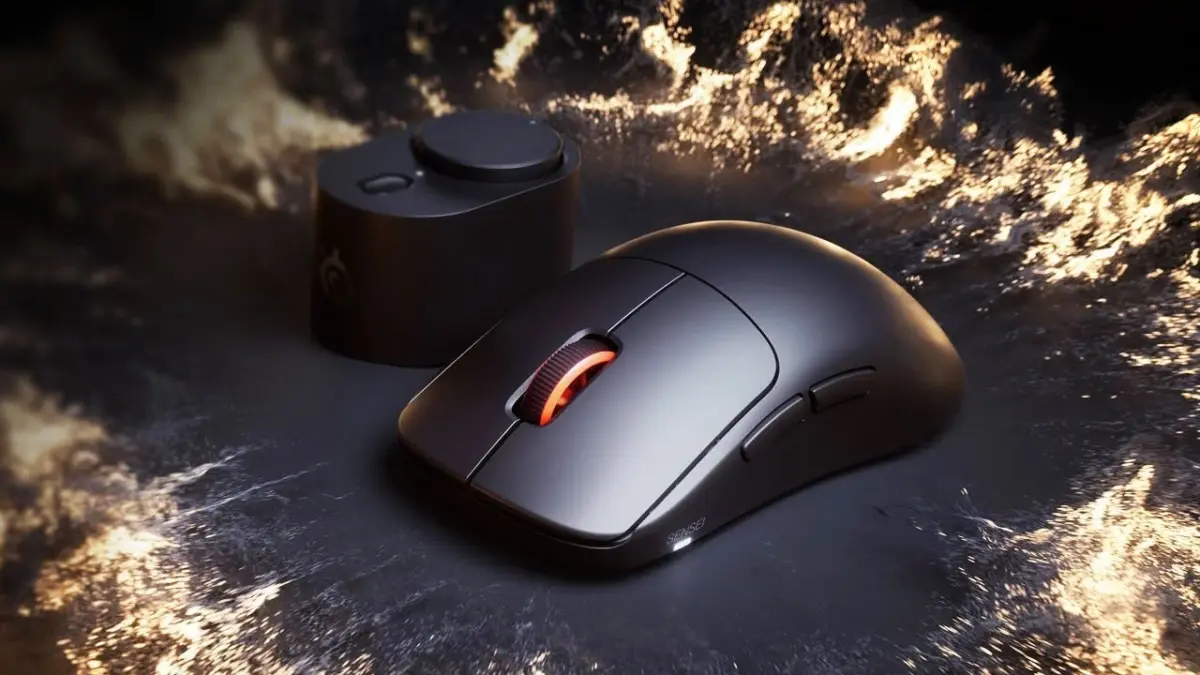
In a calculated move designed to disrupt the upper echelon of the competitive PC gaming hardware market, SteelSeries has officially announced its next-generation flagship mice: the Sensei Pro and the Rival Pro, alongside their downscaled Mini variants. Slated for an official global release on November 15, 2026, with a retail price point of $179.99, these peripherals represent a paradigm shift in how high-end manufacturers approach wireless performance, battery anxiety, and signal reliability.
For years, high-performance wireless gaming mice have forced enthusiasts to compromise. Gamers had to choose between the freedom of untethered movement and the psychological friction of plugging in a charging cable mid-match, or they faced the frustrating reality of wireless interference in densely populated 2.4GHz spectrums. SteelSeries’ new Pro ecosystem aims to obliterate these compromises entirely. By introducing an ingenious hot-swappable dual-battery system—adapted directly from the company’s critically acclaimed Arctis Nova Pro headsets—alongside cutting-edge Ultra Wideband (UWB) connectivity, the Sensei Pro and Rival Pro arrive not merely as incremental updates, but as engineering statements.
Weighing in at a featherlight starting point of just 49 grams while packing an 8,000Hz polling rate, a custom 42,000-DPI optical sensor, and zero-downtime power management, these devices are engineered to justify their premium price tag. This comprehensive report breaks down the technology, design philosophy, market context, and future outlook surrounding SteelSeries’ bold new hardware launch.
Detailed Chronology: The Evolution of the Pro Ecosystem
The path to the November 15 launch of the Sensei Pro and Rival Pro was paved by years of iterative design, consumer feedback, and technological maturation within the peripheral space.

- Late 2022 – Early 2024: SteelSeries establishes dominance in the audio sector with the Arctis Nova Pro wireless headset, proving that hot-swappable dual-battery systems could completely eliminate charging downtime. Gamers and reviewers alike begin speculating when—or if—this technology will scale down to the power constraints of a high-performance gaming mouse.
- Mid 2024 – 2025: The PC gaming market experiences a massive surge in ultra-lightweight mice. Competitors race to shave grams, dropping weights below 50 grams, but often at the expense of battery capacity, build rigidity, or reliable wireless stability. Meanwhile, 2.4GHz wireless congestion becomes an increasingly severe issue in urban gaming environments, tournament settings, and setups crowded with wireless keyboards, controllers, and headsets.
- October 15, 2026: SteelSeries breaks cover, formally unveiling the Sensei Pro, Rival Pro, and their respective Mini counterparts. Pre-orders open globally, accompanied by a targeted launch date of November 15, 2026, setting the stage for a major holiday showdown in the high-end peripheral market.
Supporting Context & Metrics: Unpacking the Hardware
At $179.99, the Sensei Pro and Rival Pro occupy the absolute pinnacle of consumer pricing for gaming mice. To command such a figure, SteelSeries has packed the chassis with industry-leading specifications and novel architectural choices.
1. Shape and Ergonomics: Symmetrical vs. Ergonomic
Understanding that hand shape and grip style dictate performance, SteelSeries is launching two distinct shell geometries:
- Sensei Pro: A legendary symmetrical (ambidextrous) shape designed to cater equally to right- and left-handed players, as well as fingertip and claw-grip users who favor agile, nimble movements.
- Rival Pro: A dedicated ergonomic right-handed contour engineered to support palm and relaxed claw grips, reducing fatigue during marathon gaming sessions.
- Mini Variants: Both models will feature downscaled "Mini" editions, ensuring that gamers with smaller hands or specific grip preferences do not miss out on top-tier internals.
2. Infinite Wireless Freedom via Hot-Swappable Batteries
The crown jewel of the new lineup is its power architecture. Traditional wireless mice require users to plug in a USB-C cable when the battery dips into critical levels, introducing drag and tethered inconvenience.
The Sensei Pro and Rival Pro bypass this entirely by housing a hot-swappable dual-battery system. The mouse utilizes one removable, rechargeable battery while its twin rests inside the dedicated base station, which doubles as a high-speed charger. When the mouse battery runs low, a quick swap takes mere seconds, resulting in literal zero downtime. Because each individual power cell delivers up to 120 hours of continuous use on a single charge, users can go weeks between swaps.
3. Evading 2.4GHz Congestion with Ultra Wideband (UWB)
Nearly every wireless gaming peripheral on the market—from mice and keyboards to wireless headsets and gamepads—operates on the crowded 2.4GHz frequency band. In modern desktop environments, this leads to packet loss, micro-stutters, and input latency spikes caused by signal saturation.

SteelSeries solves this by integrating Ultra Wideband (UWB) wireless connectivity operating at 6GHz and above. By migrating the mouse data stream entirely off the congested 2.4GHz highway, the Sensei Pro and Rival Pro maintain an uncompromised, military-grade connection. Combined with a blazing-fast 8,000Hz polling rate, the latency profile rivals—and in some cases surpasses—traditional wired connections.
4. Sensor, Switches, and Weight
Despite the inclusion of advanced wireless radios and dual-battery mechanisms, SteelSeries has managed to engineer an ultra-lightweight chassis starting at an astonishing 49 grams.
- Sensor: Equipped with the proprietary TrueMove 42K Pro optical sensor, offering microscopic tracking accuracy and intelligent automatic DPI switching that adapts dynamically to whether a player is navigating complex desktop menus or tracking fast-moving targets in a high-stakes FPS match.
- Switches: Six fully programmable buttons powered by optical micro-switches rated for an incredible 100 million clicks, ensuring crisp tactile feedback and zero double-clicking degradation over years of heavy use.
- Glides: Outfitted with pre-applied, virgin-grade pure PTFE feet for frictionless glide across any mousepad surface.
- Customization: Fully manageable via the robust SteelSeries GG PC application, allowing deep macro programming, polling rate adjustments, and sensor tuning.
Official Insights & Market Positioning
While brands like Logitech, Razer, and Finalmouse have fiercely contested the ultra-lightweight and high-polling-rate segments, SteelSeries’ strategy with the Pro series focuses heavily on quality-of-life infrastructure.
Industry analysts note that by bringing its proven hot-swappable battery ecosystem over from its headset division, SteelSeries has identified a unique psychological pain point for gamers: battery anxiety. While competitors rely on charging docks or magnetic pucks that still require the mouse to be taken off the desk, SteelSeries provides a continuous loop of power that keeps the hardware operational 24/7.
Furthermore, the adoption of UWB technology positions SteelSeries ahead of the curve as 2.4GHz airspace becomes increasingly untenable in modern smart homes and crowded apartment complexes.

Future Outlook: Setting a New Industry Standard
As the November 15 release date approaches, all eyes are on how the PC gaming community reacts to the $179.99 price tag. While the cost places these mice firmly in enthusiast territory, the convergence of an ultra-lightweight 49g chassis, an 8K polling rate, UWB interference-free connectivity, and infinite hot-swappable battery life creates a compelling value proposition for hardcore competitors and tech enthusiasts alike.
If the Sensei Pro and Rival Pro perform as advertised in real-world testing, they may well establish a new baseline expectation for flagship gaming peripherals. Competitors will undoubtedly be forced to look beyond standard 2.4GHz implementations and explore similar power-management innovations. For now, SteelSeries has positioned itself at the cutting edge of peripheral engineering, waiting to see if the market is ready to embrace the future of uncompromised wireless gaming.