Executive Overview
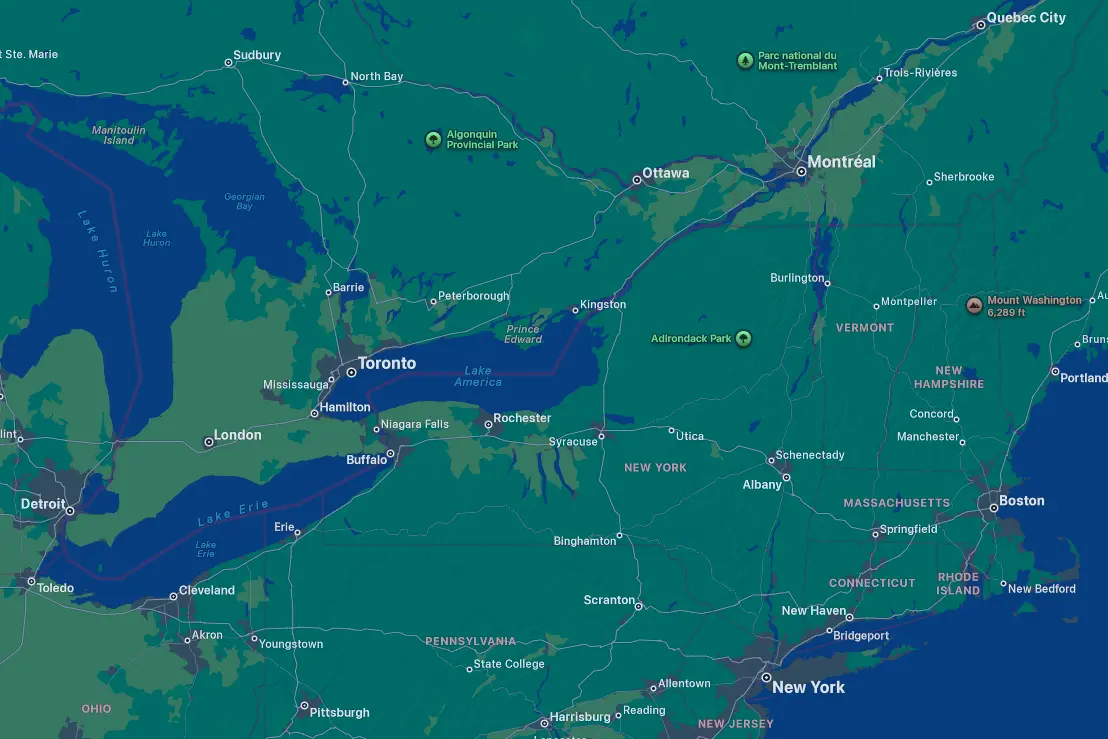
In a move that has intensified diplomatic friction between the United States and Canada, Apple has quietly updated its Apple Maps platform to rename Lake Ontario as "Lake America" for users within the United States. The tech giant’s compliance comes less than a week after President Donald Trump issued a sweeping executive order mandating the change across federal databases and geographic naming services. By altering its cartographic data, Apple follows in the footsteps of Google, which implemented a similar update days earlier.
The unilateral renaming of one of the five Great Lakes—a massive body of water shared between the U.S. state of New York and the Canadian province of Ontario—has sparked an international backlash. While U.S. users are now presented with "Lake America," Canadian users continue to see "Lake Ontario," and international users are shown a dual-labeled compromise. This localized cartographic division highlights a growing trend of "splinternet" geography, where digital map providers alter international borders and geographic names depending on the user’s physical location to comply with domestic political pressures.
While the tech industry’s largest players have capitulated to the White House directive, legacy navigation service MapQuest has staged a public resistance. By refusing to adopt the new name, MapQuest has tapped into a wave of consumer backlash, driving its mobile application to the number-one spot on the U.S. App Store. The resulting controversy highlights the complex intersection of corporate compliance, digital cartography, and bilateral diplomacy in an era of nationalistic trade policies.
Detailed Chronology of the Renaming Directive
The transition from Lake Ontario to Lake America on major digital platforms represents the rapid execution of a coordinated federal mandate. Below is the timeline of how a presidential directive transformed into digital reality within a matter of days.
[August 27, 2026]
President Trump signs Executive Order 14122, giving the Interior Department
30 days to officially rename Lake Ontario to "Lake America" in federal databases.
       │
       ▼
[Late August 2026]
The U.S. Geological Survey updates the Geographic Names Information System (GNIS).
       │
       ▼
[August 29, 2026]
Google Maps alters its platform, displaying "Lake America" to domestic U.S. users,
citing compliance with official government sources.
       │
       ▼
[August 31, 2026]
MapQuest publicly refuses to rename the lake, initiating a viral marketing campaign
on social media.
       │
       ▼
[September 1, 2026]
Apple Maps deploys its update. Simultaneously, MapQuest climbs to the No. 1 spot
on the iOS App Store, surpassing ChatGPT.
The Presidential Mandate
On August 27, 2026, President Trump signed an executive order titled "Honoring the American History of the Great Lakes and Renaming Lake Ontario as Lake America." The directive gave the U.S. Department of the Interior and the Board on Geographic Names (BGN) a strict 30-day window to update all federal databases, maps, and geographic services.
The administration framed the renaming as a matter of economic patriotism and national identity. The executive order stated:
"In recognition of this flourishing economic resource and its critical importance to our Nation’s economy and its people, I am directing that the Lake officially be renamed as Lake America."
Google’s Preemptive Compliance
Following the executive order, the U.S. Geological Survey (USGS) updated its Geographic Names Information System (GNIS), the official repository of domestic geographic names. Citing its long-standing policy of aligning its mapping data with official host-nation registries, Google adjusted its platform almost immediately. By late August, Google Maps users in the United States searching for the body of water were greeted with the name "Lake America."
Apple’s Silent Update
Apple followed suit on September 1, 2026. Unlike Google, which issued a public explanation of its database alignment policies, Apple rolled out the change silently. The company did not respond to multiple requests for comment regarding the editorial control of its maps or the geopolitical implications of the update.
The technical implementation by both Apple and Google relies on IP-based geofencing:
- United States IP Addresses: The body of water is labeled exclusively as "Lake America."
- Canadian IP Addresses: The body of water remains labeled as "Lake Ontario."
- Rest of the World IP Addresses: The maps display a dual designation, showing both "Lake Ontario" and "Lake America" to reflect the disputed naming conventions.
Supporting Context & Market Metrics
The renaming of Lake Ontario is not an isolated incident; it represents a repeating pattern of nationalistic cartography. The business fallout has created unexpected market disruptions, most notably the sudden revival of MapQuest.
The "Gulf of America" Precedent
This is the second time the Trump administration has successfully leveraged federal naming authorities to pressure tech platforms into altering international geography. In 2025, an executive order directed the renaming of the Gulf of Mexico to the "Gulf of America" within U.S. jurisdictions.
┌──────────────────────────────────────────────────────────────────────────┐
│                      U.S. Cartographic Policy Shifts                     │
├──────────────────────┬──────────────────────────┬────────────────────────┤
│ Original Name        │ New U.S. Designation     │ Year of Executive Order│
├──────────────────────┼──────────────────────────┼────────────────────────┤
│ Gulf of Mexico       │ Gulf of America          │ 2025                   │
│ Lake Ontario         │ Lake America             │ 2026                   │
└──────────────────────┴──────────────────────────┴────────────────────────┘
In 2025, both Apple and Google complied with the directive after the GNIS updated its records. MapQuest, however, maintained the "Gulf of Mexico" label, establishing a corporate policy of adhering to international standards rather than localized political mandates.
The MapQuest Resurgence
MapQuest’s decision to reject the "Lake America" mandate has triggered a massive consumer migration. For years considered a legacy brand overshadowed by Google Maps and Apple Maps, the System1-owned navigation service positioned itself as an objective alternative to "politicized" mapping.
The strategic refusal to rename the lake went viral on social media. On August 31, MapQuest posted a GIF of an apple on X (formerly Twitter) with the caption "Them Too," taking a direct swipe at Apple’s compliance.
The public response was immediate:
- iOS App Store: MapQuest skyrocketed to the No. 1 position in the U.S. App Store’s free navigation charts on September 1, 2026, even surpassing the perennial chart-topper, OpenAI’s ChatGPT.
- Google Play Store: MapQuest reached the No. 6 position overall across all apps and games.
- Daily Active Users (DAU): Preliminary market intelligence suggests a double-digit percentage increase in MapQuest’s active user base within the United States over a 72-hour period.
In a follow-up social media post featuring a screenshot of their chart-topping status, MapQuest wrote: "The people have spoken. We are working."
U.S. iOS App Store Rankings (September 1, 2026):
1. MapQuest (▲ From No. 84)
2. ChatGPT (▼ From No. 1)
3. Threads
4. TikTok
5. Google Maps
Official Statements and Corporate Positions
The divergence in corporate behavior highlights the differing legal, operational, and philosophical approaches of major technology companies when navigating geopolitical disputes.
Google’s Database-Driven Defense
Google has consistently defended its cartographic changes by pointing to automated data pipelines and standard operating procedures. In a statement addressing the transition, Google noted that its mapping services are designed to reflect the official naming conventions of host governments:
"Google Maps updates its geographic designations to maintain consistency with official national and international gazetteers, such as the U.S. Geographic Names Information System (GNIS). When a sovereign government officially alters a geographic name within its databases, our localized platforms reflect those changes to ensure compliance with local regulatory authorities."
This policy has historically allowed Google to navigate territorial disputes worldwide—such as showing different borders in Crimea to Russian users versus Ukrainian users—but critics argue it abdicates editorial responsibility in favor of political convenience.
MapQuest’s Standardization Stance
MapQuest has taken a contrasting approach, prioritizing international consensus and historical continuity over localized political decrees. A spokesperson for MapQuest confirmed the company would not alter the name of Lake Ontario or the Gulf of Mexico:
"MapQuest remains committed to providing accurate, reliable, and universally recognized cartographic data. Our policy is to maintain the geographic names that are globally recognized, historically established, and familiar to the public. We believe that maps should serve as objective navigational tools, free from localized political revisions."
The Canadian Diplomatic Backlash
In Ottawa, the renaming of a shared international body of water has been received as a direct provocation. The Great Lakes are governed by several bilateral treaties, most notably the Boundary Waters Treaty of 1909, which established the International Joint Commission (IJC) to prevent and resolve disputes over the use of shared waters.
A representative from the Canadian Department of Foreign Affairs issued a stern rebuke of the U.S. executive action:
"Lake Ontario is a shared, binational body of water critical to the ecology and economy of both Canada and the United States. No single nation has the authority to unilaterally rename shared geographic features. This action undermines over a century of cooperative transboundary water management and does not change the legal, historical, and international name of the lake, which remains Lake Ontario."
Canadian officials have reportedly raised the issue with the International Hydrographic Organization (IHO) and are considering retaliatory measures, further straining trade talks that had already broken down earlier this year.
Future Outlook: The "Splinternet" of Geography
The renaming of Lake Ontario to Lake America on major digital platforms signals a broader, more concerning shift in how physical reality is represented online. As national governments increasingly view digital platforms as extensions of state sovereignty, cartography is becoming a key battleground for geopolitical leverage.
Technical and Operational Fragmentation
The practice of geofencing geographic names creates a fragmented user experience. A tourist driving from Niagara Falls, New York, to Niagara-on-the-Lake, Ontario, will witness their navigation system dynamically rewrite the geography of the region as they cross the border.
This localized cartographic division poses several operational risks:
- Maritime and Aviation Coordination: While commercial vessels and aircraft rely on specialized charts from agencies like the National Oceanic and Atmospheric Administration (NOAA) and the Canadian Hydrographic Service, the divergence in consumer-facing maps can lead to confusion in recreational boating, search-and-rescue operations, and local tourism.
- Data Integrity for Logistics: Global supply chain software that relies on consumer-grade mapping APIs (such as Google Maps or Apple Maps) must now account for localized nomenclature, introducing potential software conflicts and database mismatches for logistics companies operating across the U.S.-Canada border.
- Precedent for Future Disputes: By complying with unilateral renaming orders, tech giants have established a precedent that other sovereign nations may exploit. Countries with active territorial disputes—such as those in the South China Sea, the Persian Gulf, or East Asia—may demand similar localized naming rights under threat of blocking access to app stores or digital services.
The Commercial Viability of Cartographic Neutrality
The market’s reaction to MapQuest’s defiance suggests there is a substantial commercial appetite for cartographic neutrality. While Apple and Google prioritize maintaining favorable regulatory standing with the U.S. federal government, MapQuest has demonstrated that defying political pressure can yield significant brand equity and user acquisition.
However, the long-term sustainability of MapQuest’s strategy remains to be seen. If federal agencies enforce compliance by requiring all software operating on government contracts or within federal jurisdictions to use GNIS-approved naming conventions, MapQuest could face regulatory hurdles or exclusion from lucrative government procurement channels.
For now, the waters between New York and Ontario remain divided—not by physical barriers, but by the digital code of the devices used to navigate them. As the 30-day deadline for the full integration of the "Lake America" name into all federal databases approaches, the diplomatic and technological standoff shows no signs of receding.