Executive Overview
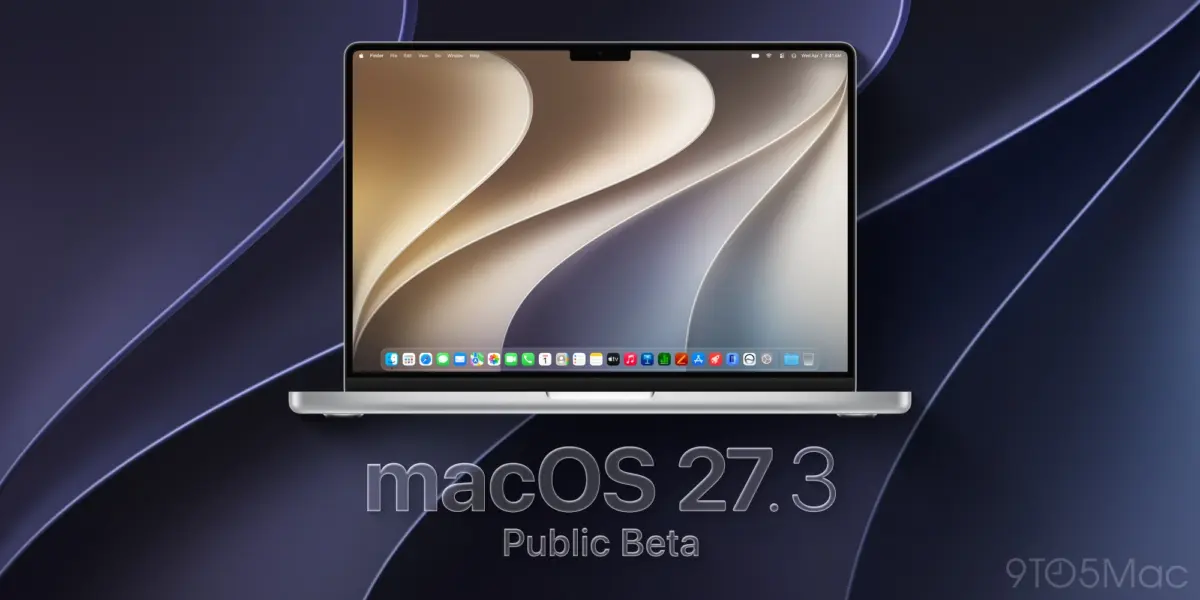
Following hot on the heels of the developer build released earlier this week, Apple has officially initiated the rollout of the macOS 27.3 Golden Gate public beta 2. Carrying the build number 26C5047e—which mirrors its developer counterpart—this release marks a critical milestone in the development cycle of Apple’s flagship desktop operating system. While the preceding macOS 27.2 update was characterized by incremental bug fixes and minor stability patches, macOS 27.3 is shaping up to be the most substantial software drop since the initial launch of macOS 27.
Packed with major architectural upgrades, robust privacy controls, expansive Apple Intelligence features, and deep Safari refinements, macOS 27.3 brings the platform closer to its official public debut slated for next month. For enthusiasts and early adopters enrolled in Apple’s complimentary software program, this Golden Gate public beta provides a stable, near-final window into the future of the Mac experience. This report examines the comprehensive scope of the macOS 27.3 public beta 2, analyzing its features, security implications, regional expansions, and developer-centric capabilities.
Detailed Chronology: The Road to macOS 27.3
The development arc of macOS 27.3 has been iterative and deliberate, tracking closely with Apple’s broader winter software update strategy across iOS, iPadOS, and macOS.
The First Wave: Beta 1 and Foundational Innovations
The journey began in early November when Apple dropped macOS 27.3 beta 1. This initial release surprised analysts by introducing high-impact user-facing features that typically reserve themselves for major .0 upgrades. Among the most notable additions were long-requested interface adjustments in Safari, including vertical tabs and an adaptive dark mode designed to dynamically harmonize web content styling with user system preferences.
Beta 1 also introduced native Live Activities support to the desktop environment, bridging a long-standing gap between iOS productivity widgets and macOS notifications. For developers and technical writers, the inclusion of native Markdown rendering in Quick Look proved to be an immediate workflow win, allowing instant previews of raw text documentation without opening dedicated text editors. Furthermore, beta 1 laid the groundwork for expanded internationalization, bringing localized Siri AI support to Traditional Chinese, Norwegian, Turkish, and Vietnamese users.

The Second Wave: Beta 2 and Golden Gate Refinements
Building directly upon the foundations laid in early November, Apple released developer beta 2 earlier this week, swiftly translating it into the Golden Gate public beta 2 covered in this report. This phase of the beta cycle focuses heavily on stress-testing system telemetry, refining background automations, and fine-tuning newly introduced privacy guardrails.
With build 26C5047e matching across both developer and public channels, Apple signals that the software has entered its stabilization phase. Barring any critical regressions discovered by public testers over the coming days, this build is expected to serve as the direct candidate for the general public release next month.
Core Feature Breakdown: What’s New in macOS 27.3
The breadth of features packed into macOS 27.3 positions it as an essential upgrade for Mac owners. The update can be systematically categorized into four distinct pillars: interface evolution, security and privacy enhancements, intelligence expansions, and developer tools.
1. Safari and Productivity Enhancements
Safari continues to evolve as a productivity powerhouse in macOS 27.3. The introduction of vertical tabs caters directly to power users managing dozens of concurrent tabs, offering a layout optimization akin to specialized browser alternatives. Combined with the new adaptive dark mode, which automatically inverts poorly styled web elements to match system themes without breaking site layouts, browsing the web on macOS has become significantly more cohesive.
Beyond the browser, Quick Look’s native Markdown rendering ensures that .md files are instantly readable with full formatting, headers, and code blocks rendered natively within the macOS Finder ecosystem.
2. Deepening Privacy and Security Controls
Security remains a cornerstone of Apple’s operating system philosophy, and macOS 27.3 introduces critical shifts in how users manage system access:

- Full Disk Access Privacy Controls: Apple has overhauled the granular permissions framework governing Full Disk Access. Users are now presented with more transparent, context-aware prompts when applications attempt to query sensitive directories, mitigating the risk of unauthorized background data harvesting.
- iCloud Link Safety Checks: Mirroring privacy updates across iOS, macOS 27.3 introduces automated safety verification checks for public iCloud sharing links. The system acts as a protective barrier against potentially harmful content distributed via shared cloud URLs, scanning payloads for malicious patterns without compromising end-to-end user encryption standards.
3. Apple Intelligence and Siri Evolution
Apple Intelligence receives its most ambitious desktop expansion yet in macOS 27.3. The update scales up Siri’s cross-application operational capacity, allowing users to execute complex, multi-step natural language commands. Siri can now perform intricate organizational tasks within Apple native applications, including:
- Messages & Music: Composing context-aware replies, searching deep chat archives, and curating dynamic playlists based on conversational prompts.
- Calendar & Reminders: Parsing unstructured meeting details from emails or notes and seamlessly building synchronized schedules.
- Photos & File Management: Executing semantic image searches (e.g., "Find photos of my dog running in the park last summer") and managing local or cloud-synced files and folders entirely through conversational voice or text prompts.
Crucially, Apple Intelligence beta testing is officially expanding its footprint internationally. Following recent rollouts, Apple is actively expanding regional availability, most notably pushing Apple Intelligence beta testing infrastructure into mainland China for compatible Macs and iPads, pending localized regulatory approvals.
4. Developer Tools and Advanced App Skills
Apple is not keeping its artificial intelligence advancements locked within first-party applications. macOS 27.3 introduces robust developer tools that empower third-party software creators to build advanced App Skills for Siri AI.
Utilizing lightweight, Markdown-based instructions, developers can seamlessly hook their applications into Siri’s semantic understanding engine. This allows users to control third-party utilities using the exact same natural language fluidity traditionally reserved for Apple’s native app suite.
Supporting Context and Technical Metrics
To understand the weight of macOS 27.3, one must look at the cadence of Apple’s software deployment metrics over recent years. Historically, “.3” point releases function primarily as maintenance patches designed to squash legacy bugs and prepare hardware for spring product cycles.
However, the inclusion of architectural shifts—such as deep Markdown integration, native Live Activities on desktop, and massive localized AI rollouts—suggests a strategic shift. Apple is accelerating feature deployment cycles to ensure hardware platforms remain competitive against aggressive multi-modal AI offerings from competing desktop ecosystems.

| Metric / Parameter | Specification |
|---|---|
| Operating System Target | macOS 27.3 |
| Public Beta Build Number | 26C5047e |
| Developer Build Parity | Exact match with current developer build |
| Primary Focus Areas | Privacy controls, Siri AI expansion, Safari layout engines |
| Expected Public Release | Next month |
| Enrollment Portal | beta.apple.com |
Official Statements and Industry Reception
While Apple maintains its traditional posture of letting the software speak for itself prior to official general availability, early telemetry data and developer forum sentiment indicate strong approval for the direction of macOS 27.3.
Industry analysts have noted that the rapid rollout of the Golden Gate build points to a high degree of internal code stability. Privacy advocates have similarly praised the tightened controls surrounding Full Disk Access and iCloud link scanning, viewing them as necessary steps forward in combating modern social engineering and unauthorized data extraction vectors.
Conversely, developers have expressed overwhelming enthusiasm for the new Markdown-based App Skills framework for Siri. Early testing suggests that implementing deep AI capabilities into third-party Mac applications has become exponentially less complex, paving the way for a wave of intelligent, deeply integrated productivity tools upon the software’s public launch.
Future Outlook: Preparing for the Official Launch
As macOS 27.3 enters the final home stretch of its beta lifecycle, attention naturally turns toward next month’s official public rollout. With build 26C5047e demonstrating solid performance across Apple Silicon and remaining Intel-supported architectures alike, users can anticipate a smooth transition from the public beta channel to the standard production release.
For those eager to experience these features ahead of the official release, joining Apple’s free public beta program is straightforward. Interested users can navigate to beta.apple.com to register their Apple ID, enroll their Mac via System Settings, and download the Golden Gate build immediately.
As always, users are advised to back up critical data via Time Machine before installing pre-release software, even at the Golden Gate stage. As we look ahead to next month’s launch, macOS 27.3 stands as a clear indicator that Apple is committed to aggressively pushing the boundaries of what desktop operating systems can achieve through privacy-first artificial intelligence and thoughtful user-interface design.