Executive Overview
Despite the official transition into the cooler months of the year, unseasonably high temperatures continue to sweep across vast regions of the country, catching millions of residents off guard. In areas traditionally spared from prolonged autumn heatwaves—such as the San Francisco Bay Area—meteorological forecasts project some of the highest temperatures of the entire calendar year, with mercury readings consistently pushing past the 90-degree threshold. As climate patterns shift and localized heat events become more frequent and erratic, consumers are urgently seeking practical, low-cost interventions to maintain thermal comfort both indoors and outdoors.
Traditional climate control systems, such as central air conditioning and heavy-duty window units, offer an effective defense against extreme heat, but they come with significant financial and environmental drawbacks. Skyrocketing utility bills during unexpected temperature spikes place a heavy burden on household budgets, while cooling entire homes or offices is often inefficient when an individual only requires localized relief. Enter the personal cooling market—a rapidly expanding sector driven by advancements in micro-motor technology and high-density battery storage.
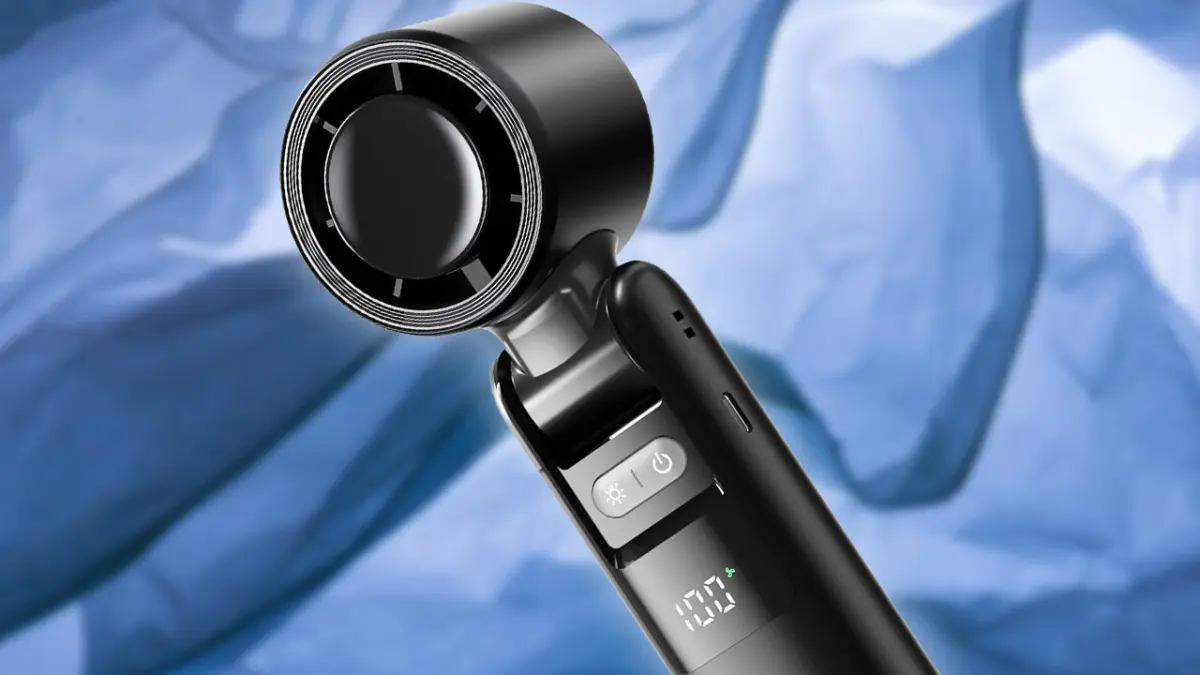
Recognizing this seasonal demand, major online retailers have introduced steep promotional discounts on essential micro-climate hardware. Most notably, Amazon has slashed the price of the Lerat Rechargeable Portable Turbo Fan, reducing it to an unprecedented $5.99 for shoppers who apply the exclusive checkout coupon code "4T9KD4NQ". Notably, this bargain is available to the general public without requiring an active Amazon Prime subscription.
This comprehensive report examines the technical specifications, real-world utility, and broader economic context of the Lerat Portable Turbo Fan. Beyond evaluating its raw airflow performance and battery longevity, we explore why compact personal cooling devices have transitioned from seasonal novelties into indispensable year-round tools for travelers, outdoor enthusiasts, and heavy-duty computer gamers navigating sweltering indoor microclimates.
Detailed Chronology: The Evolution of Personal Cooling and the Rise of the Micro-Turbo
To understand the significance of a $5.99 high-performance handheld fan, it is necessary to examine how portable cooling technology has evolved over the past decade. Historically, personal cooling devices were divided into two categories: bulky, battery-draining box fans meant for tabletops, and flimsy, low-torque novelty fans powered by cheap alkaline batteries that offered little more than a gentle, ineffective breeze.
The Shift Toward Brushless DC Motors and Lithium-Ion Power
The turning point for the personal cooling industry arrived with the widespread commercialization of brushless DC (BLDC) electric motors and compact lithium-ion battery cells, originally developed for the smartphone and electric vehicle industries. These technological breakthroughs allowed manufacturers to miniaturize high-RPM motors while retaining significant torque and energy efficiency.
By the mid-2010s, early iterations of handheld rechargeable fans began appearing in Asian consumer electronics markets, eventually gaining global traction through cross-border e-commerce platforms. However, these early models suffered from severe limitations: short battery lifespans, fragile plastic impellers, and single-speed configurations that forced users to choose between inadequate airflow and rapid battery depletion.
The Turbo-Fan Revolution
The current generation of personal fans—typified by the "turbo" designation—represents a massive leap forward. By incorporating multi-bladed impeller designs inspired by aviation engineering and aerodynamic ducting, modern portable fans can compress and accelerate air columns to velocities previously reserved for household desk fans.
The introduction of the Lerat Rechargeable Portable Turbo Fan marks the latest milestone in this evolutionary timeline. Operating at a blistering 14,550 RPM (revolutions per minute), the device bridges the gap between pocket-sized convenience and industrial-grade airflow. Its arrival on the promotional marketplace for under six dollars reflects not only the commoditization of micro-motor manufacturing but also the fierce competition among online merchants eager to capture consumer attention during unexpected off-season heatwaves.
Supporting Context & Metrics: Engineering and Performance Analysis
At first glance, a $5.99 electronic device might invite skepticism regarding its build quality, safety, and operational durability. However, a closer examination of the Lerat Portable Turbo Fan’s technical specifications reveals a surprisingly robust engineering profile designed to maximize utility across diverse environments.
Physical Dimensions and Ergonomics
Weighing a mere 7.4 ounces, the Lerat turbo fan is exceptionally lightweight—roughly half the weight of standard wearable neck fans, which can induce neck strain during prolonged use. Its compact chassis is engineered to slide easily into a pocket, backpack pouch, or purse, making it an ideal travel companion.
For users who require hands-free operation or want to prevent accidental drops while navigating crowded spaces, the manufacturer includes a durable wrist lanyard. This allows the fan to be suspended securely around the neck or wrist for immediate, zero-latency deployment. Furthermore, the housing features a flat-bottomed multi-angle base design, enabling users to set the device down on a desk, nightstand, or tray table and pivot the airflow directly toward their face or torso.
Power, Speed Settings, and Airflow Dynamics
The beating heart of the Lerat fan is its high-velocity motor capable of spinning up to 14,550 RPM. To accommodate varying thermal comfort levels, the device features a five-stage adjustable speed control system:

- Low-to-Medium Speeds (Levels 1–3): Designed for quiet, energy-efficient operation in office environments, libraries, or indoor living spaces. These settings provide a gentle, steady breeze while conserving battery power and keeping acoustic output to a minimum.
- High Speeds (Levels 4–5): Unleashes the full aerodynamic potential of the turbo architecture, producing a concentrated air velocity of up to 8 meters per second (8m/s). While this maximum setting generates noticeable ambient noise—characteristic of high-RPM ducted fans—it delivers an instantaneous cooling shock that rivals larger desktop units.
Battery Capacity and Charging Infrastructure
Energy management is often the primary failure point of cheap electronics, but the Lerat fan addresses this by housing a substantial 4,000mAh internal lithium-ion battery pack. Depending on the selected speed setting, this capacity yields an impressive operating lifespan of up to 12 hours on a single charge.
Recharging is handled via a modern USB-C port, aligning with current universal charging standards. This ensures that users can easily replenish the battery using standard smartphone power bricks, portable power banks (power banks), or laptop USB ports while on the move.
Practical Applications: Beyond the Outdoor Commute
While portable fans are universally recognized as essential gear for summer theme park visits (such as navigating the humid expanses of Orlando’s resorts) or waiting on sun-baked commuter platforms, their utility extends far beyond outdoor tourism. In particular, modern lifestyle habits—specifically PC and console gaming—have created distinct indoor microclimates that make personal cooling accessories uniquely valuable.
The Gamer’s Thermal Dilemma
For gaming enthusiasts, high ambient room temperatures present a dual-front battle. On one hand, human bodies generate metabolic heat; on the other, high-performance gaming rigs, custom desktop PCs, and current-generation consoles (such as the PlayStation 5 and Xbox Series X) act as localized space heaters. As internal components work overtime to render complex graphics and maintain high frame rates, they exhaust massive volumes of heated air into the immediate vicinity, causing small gaming dens and bedrooms to heat up rapidly.
In these enclosed spaces, running a whole-house air conditioner can be economically wasteful if the heat is concentrated entirely in one room. A targeted personal cooling device like the Lerat turbo fan offers an elegant micro-solution: it can be stationed directly on a gaming desk to maintain personal thermal equilibrium without chilling the entire house.
Mitigating Headset-Induced Discomfort
Another common friction point for intensive gamers, streamers, and remote professionals is the phenomenon of "headset heat." Wearing over-ear gaming headphones for hours at a time traps natural body heat and perspiration around the ears and scalp, leading to discomfort, skin irritation, and distraction during competitive matches.
Directing a focused stream of air from a compact turbo fan toward the head or neck region effectively counteracts the insulating properties of thick acoustic ear cushions, keeping the user dry and focused during extended gaming sessions or marathon work shifts.
Future Outlook: The Intersection of Climate Trends and Consumer Tech
As global climate patterns continue to evolve, the frequency of unseasonal heat events is projected to rise. Meteorological data indicates that shoulder seasons—spring and autumn—are experiencing higher average temperatures and more volatile fluctuations. Consequently, consumer behavior is shifting away from seasonal purchasing habits toward year-round preparedness.
The Democratization of Personal Micro-Climate Tech
The availability of high-performance tools like the Lerat Rechargeable Portable Turbo Fan at sub-$6 price points signals a broader democratization of micro-climate technology. What was once considered a luxury or specialty item is now accessible to virtually any consumer, regardless of socioeconomic status.
As battery density improves and motor manufacturing becomes increasingly streamlined, future iterations of personal cooling devices will likely feature even greater energy efficiency, quieter acoustic profiles, and smart integration capabilities. However, for immediate relief during unexpected heatwaves, the combination of a 14,550 RPM motor, a 4,000mAh power reserve, and an aggressive promotional discount makes current-generation turbo fans an unbeatable value proposition.
For consumers currently sweltering in unseasonal heat—whether battling the elements outdoors or sweating over high-end gaming hardware indoors—securing a versatile, pocket-sized cooling solution represents a minor financial investment with an immediate, tangible return in comfort and productivity.
Editorial Note: Deals and coupon codes referenced in this report are subject to inventory availability and expiration terms set by third-party retailers. The author and publishing platform maintain strict editorial independence regarding product evaluations.