Executive Overview
To the average citizen, the inner workings of an animal research laboratory remain largely invisible—a sealed-off ecosystem operating quietly on the periphery of everyday life. For most, the very phrase "primate lab" conjures abstract ethical debates or sterile scientific abstracts, safely removed from public consciousness. However, a groundbreaking and deeply personal new book, Marshmallows Are Their Favorite: Undercover at a Primate Lab by award-winning investigator Lindsay Oliver, aims to shatter that insulation.
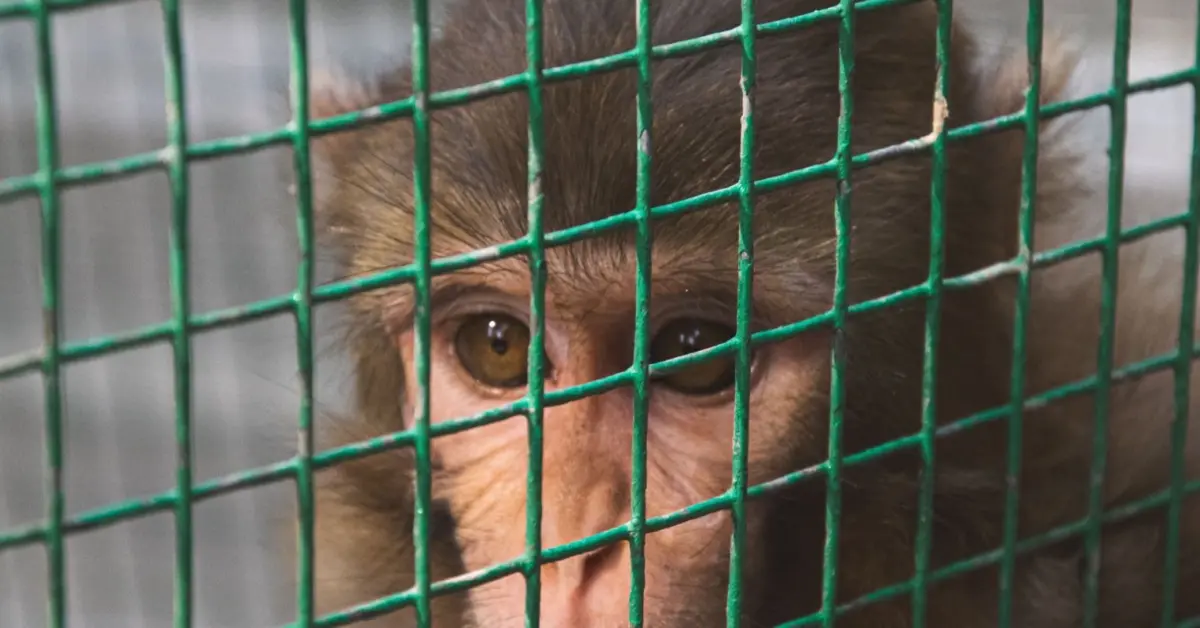
Rather than relying purely on dry academic studies or policy analysis, Oliver pulls back the curtain by going where few outsiders are ever permitted: directly inside the facility. Working undercover as a laboratory technician, Oliver spent months navigating the strange, unsettling duality of a primate research facility nestled unassumingly in an everyday American town. Flanked by familiar commercial landmarks like a Starbucks and a Target, this facility housed thousands of nonhuman primates locked behind bars—a surreal juxtaposition where everyday workplace watercooler gossip coexisted with the echoing screams of caged animals.
This long-form investigative feature explores Oliver’s harrowing journey, the complex psychological landscape of the humans and animals trapped inside these facilities, and the broader scientific and regulatory shifts challenging the foundational necessity of animal testing in the 21st century.
Detailed Chronology: The Evolution of an Undercover Investigator
From Disillusionment to the Field
Lindsay Oliver’s path to becoming an undercover investigator began in her youth, rooted in a childhood aspiration shared by many animal lovers: wanting to become a veterinarian. However, her dream collided with institutional reality during her college years, serving as her first direct exposure to the mandatory requirements of animal testing within veterinary medicine.
For a young woman who had previously walked out of a high school science class in protest of dissecting a frog, the curriculum presented an insurmountable moral contradiction. Unable to reconcile the welfare of living creatures with the experimental mandates of traditional animal-based medicine, Oliver walked away from the veterinary track. Instead, she redirected her passion toward animal cruelty investigation, choosing to confront institutionalized mistreatment head-on.
Despite her extensive background in investigative work, the assignment that forms the basis of Marshmallows Are Their Favorite was her very first laboratory case. Entering the assignment, Oliver admits she had no intellectual roadmap for the profound emotional impact the facility’s nonhuman residents would have on her.
Walking Through the Employee Entrance
Unlike many historical exposés that approach animal testing from a distance, Oliver’s methodology relied on complete immersion. She secured employment as an entry-level technician, learning the day-to-day routines, wearing hidden cameras, mastering the intricacies of facility machinery, and integrating herself into the social fabric of the workforce.
The reality of undercover work, as Oliver describes it, bore little resemblance to the polished espionage depicted in Hollywood thrillers. It was characterized instead by unglamorous realities: dingy budget motels, repetitive microwave meals, and the constant, high-stakes anxiety of equipment refusing to stay covert.
Day after day, she walked the line between her true mission and her survival as an employee. She made friends, navigated nuanced workplace dynamics, and built surprising, poignant relationships with her coworkers—all while working covertly to document conditions and alleviate the suffering of the primates without blowing her cover.
The Normalization of the Abnormal
One of the most chilling psychological insights emerging from Oliver’s narrative is the alarming ease with which profoundly abnormal environments become ordinary.
Upon first stepping onto the facility floor, Oliver was struck by the visual weight of the environment: rows upon rows of cages lining the cinderblock walls, with primates watching every move through iron bars. Yet, within a remarkably short period, this dystopian scene blurred into the background of a standard workday.
The lab functioned as a workplace complete with mundane human rhythms. Employees clocked in on time, complained about administrative schedules, gossiped about office romances, swapped weekend plans, and navigated office politics. All the while, just feet away, primates screamed and pounded in distress against the metal walls of their enclosures. What registered to an outsider as a surreal, waking nightmare was treated by staff as "just another Tuesday at the lab."
This psychological compartmentalization is heavily reinforced by linguistic dehumanization. Within the industry, living, feeling primates are routinely referred to by sterile identification numbers or clinical terms like "subjects."
Yet, Oliver’s account insists on restoring their individuality. She chronicles specific animals with distinct personalities, preferences, and agency. Among them was Bo, a primate who systematically inspected everything handed to him, consuming most items with enthusiasm—except for pretzels, which he would cast to the floor with an air of absolute personal offense. These small, idiosyncratic moments cut through the bureaucratic fog, revealing vibrant, sensitive minds trapped inside a cold system.
Supporting Context & Metrics: Challenging the Scientific Narrative
The Scientific Disconnect: Promise Versus Reality
For decades, the public has been fed a comforting, foundational narrative regarding animal experimentation: while the process may cause distress to animals, it represents an unavoidable, life-saving sacrifice necessary for human medical progress and drug safety.
However, hard institutional data increasingly contradicts this longstanding justification. In a striking policy shift, the U.S. Food and Drug Administration (FDA) released a landmark roadmap aimed at substantially reducing reliance on animal testing. The data underpinning these regulatory changes is stark: over 90% of drugs that appear entirely safe and effective in animal trials ultimately fail to receive FDA approval for human use, primarily due to critical safety or efficacy failures.
This profound predictive failure highlights a dangerous disconnect. Continuing to rely on animal models that fail to accurately mirror human biological systems not only inflicts widespread suffering on nonhuman subjects but actively delays the development of safe, effective cures for human patients. Inertia, institutional habit, and regulatory lag have kept an outdated paradigm afloat far past its expiration date.
Shifting Tides in Research Technology
Fortunately, the scientific landscape is undergoing a necessary transformation. Federal agencies like the FDA and the National Institutes of Health (NIH) are gradually beginning to prioritize advanced, human-relevant technologies—such as organ-on-a-chip systems, advanced computer modeling, and human cell-based assays.
The primary challenge facing the scientific community is no longer technological capability, but institutional execution: turning evolving regulatory policy into standardized daily practice. By humanizing the victims of animal testing through narrative journalism, books like Marshmallows Are Their Favorite aim to provide the public pressure and emotional catalyst required to accelerate this transition.
Official Statements & Industry Perspectives
The release of Oliver’s book has reignited intense conversations among ethicists, researchers, and animal advocates regarding the hidden human and nonhuman costs of laboratory work.
-
On the Emotional Toll on Workers:
A central theme of Oliver’s investigation is the unexpected complexity of the laboratory workforce. Popular assumptions often paint lab employees as callous or devoid of empathy. Oliver’s firsthand experience complicates this monolithic view. While some workers fully internalized the institutional detachment, many others wrestled with profound internal conflicts. Numerous employees demonstrated deep affection for the primates under their care, inventing covert, small-scale ways to improve their daily lives while quietly struggling with the psychological weight of what their job descriptions demanded of them. Oliver directs a specific message toward these conflicted insiders: caring too much does not make you bad at your job. -
On Audience and Accessibility:
When asked about her target audience, Oliver rejects the notion of a narrow demographic, arguing that the primates deserve a universal readership. The book is intentionally structured to appeal on multiple levels—whether readers are drawn in by the adrenaline of the undercover element, the mechanics of hidden-camera investigations, the raw human drama of workplace dynamics, or the emotional core of the relationships formed behind bars.
Future Outlook: A Call to Re-evaluate the Status Quo
As Marshmallows Are Their Favorite reaches a broader public, its ultimate legacy may lie in its ability to bridge the gap between abstract bioethics and visceral human empathy.
For too long, the inner workings of primate laboratories have been shielded behind institutional walls and sanitized clinical terminology. By dragging these realities into the light, Lindsay Oliver challenges readers to confront uncomfortable truths about how systemic cruelty becomes normalized in modern society.
The path forward depends on confronting institutional inertia head-on. As modern science increasingly validates non-animal methodologies that map accurately onto human biology, the justification for maintaining primate colonies in research labs grows weaker by the day.
Ultimately, Oliver’s work serves as both an investigative achievement and a moral invitation. By introducing readers to sensitive, distinct individuals like Bo—complete with their unique preferences, fears, and eccentricities—the book transforms faceless "subjects" back into living beings. In doing so, it provides readers with a powerful, undeniable reason to re-evaluate their views, question long-held industrial assumptions, and demand a more humane, scientifically accurate future for medicine.