Executive Overview
Half a century after its explosive birth in the sweltering summer of 1973 in the Bronx, hip-hop has transcended its hyper-localized origins to become an undisputed global hegemon. Its pioneering electronic production techniques, percussive cadence, and rhythmic poetry have entirely re-architected the modern pop landscape, permeating fashion, vernacular, and political discourse across every continent. Yet, as the genre’s commercial footprint expands infinitely outward, a vital question remains for historians, purists, and contemporary fans alike: What did the culture look like when it was still a closely guarded secret, sustained entirely by a tight-knit ecosystem of New York visionaries?
Opening at London’s prestigious Saatchi Gallery, the landmark exhibition Beyond the Streets endeavors to answer this exact question. Running through May 2027, the expansive showcase strips away decades of commercial myth-making, corporate sanitization, and retroactive folklore. Instead, it presents an unfiltered, deeply intimate visual chronology of hip-hop’s formative years, drawing heavily from private photo archives, rare Polaroids, and forgotten ephemera. Curated by two foundational architects of the culture—‘Prime Minister’ Pete Nice (co-founder of the seminal 1980s group 3rd Bass) and Paradise Gray (historian, archivist, and former staff photographer for The Hip Hop Hit List)—the exhibition acts as both a corrective and a celebration.
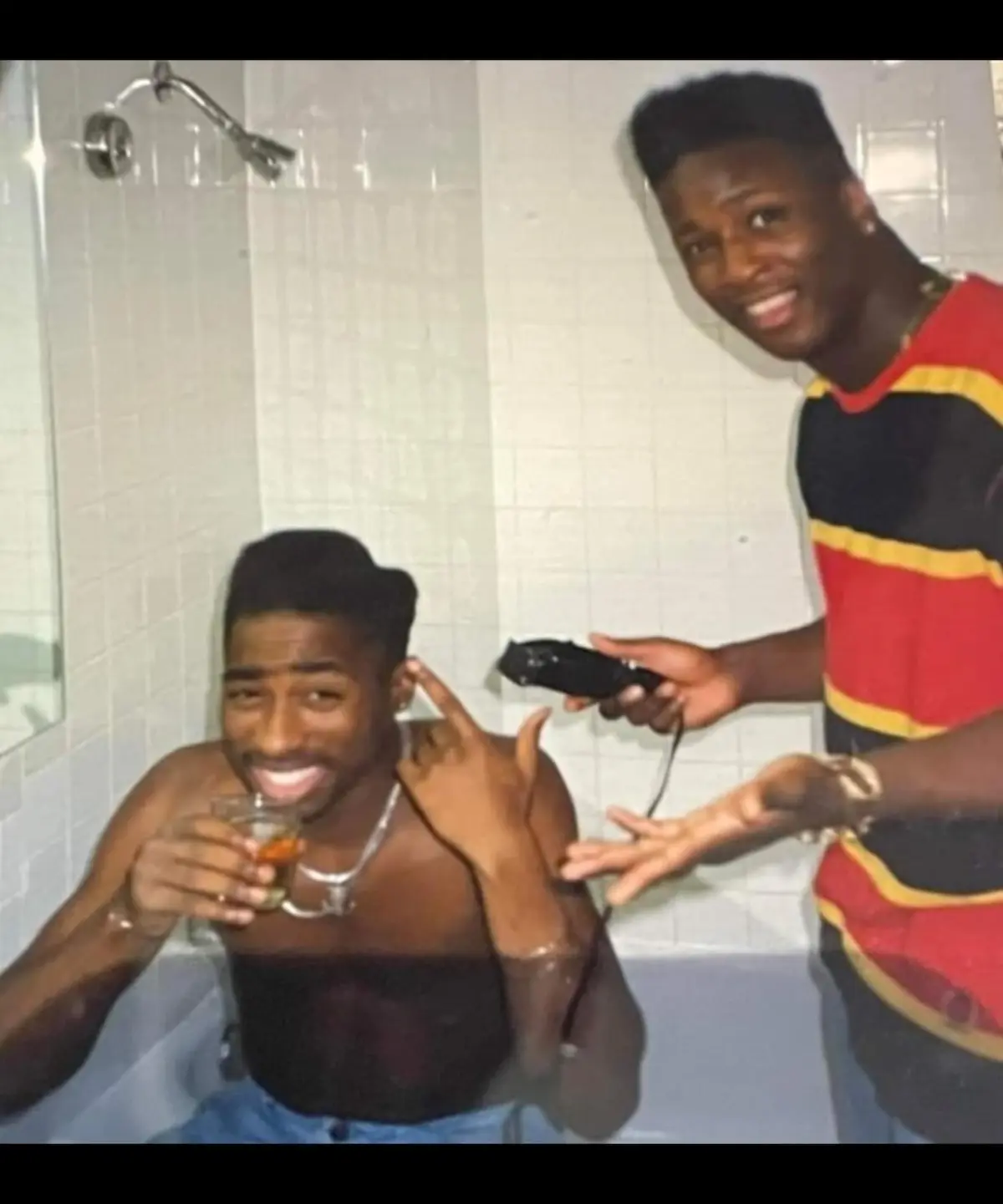
Featuring never-before-seen snapshots—such as a suited Nas cutting a sharp figure at DMX’s wedding, or a young Tupac Shakur receiving an impromptu haircut inside Pete Nice’s apartment bathtub courtesy of rapper D-Nice—Beyond the Streets transports viewers back to an era when hip-hop was not a multi-billion-dollar global enterprise, but a fiercely protective, intensely creative New York neighborhood subculture. This comprehensive feature explores the curatorial philosophy behind the exhibition, the granular history of hip-hop’s early incubation, and what these newly unearthed artifacts reveal about a community that changed the world.
Detailed Chronology: From Bronx Basements to Global Dominance
To fully comprehend the weight of the artifacts assembled at the Saatchi Gallery, one must retrace the precise timeline of hip-hop’s evolution—a trajectory preserved not in pristine museum vaults, but in the shoeboxes, disposable camera rolls, and scrapbooks of the culture’s earliest practitioners.
The Pre-Commercial Genesis (1971–1976)
Long before the first commercial rap record spun on vinyl, hip-hop existed as a subterranean auditory and physical movement flickering across New York’s neglected urban centers. One of the most significant triumphs of Beyond the Streets is its exhaustive excavation of this murky, pre-commercial epoch.
Curators Nice and Gray have successfully unearthed "receipts"—visual and documentary evidence—dating back to the absolute dawn of the movement. Among these are rare items documenting DJ John Brown rocking the decks at the Plaza Tunnel in 1971, legendary sonic pioneer Kool Herc igniting parties at the Hevelow in 1975, and DJ Smokey and the Smoke-A-Trons commanding the room at the Over The Dover Club between 1974 and 1975. These early years were defined by makeshift setups: stolen electricity running through park lamp-posts, dual-turntable mixing boards wired together with ingenuity, and community rec centers serving as cathedrals for disenfranchised youth.
The Park Jam Era and the Rise of the MC (1977–1983)
As the decade progressed, the localized party scene metastasized. Disco King Mario shaking Rosedale Park in the Bronx in 1977 serves as a vital bridge toward the structured party formats that would birth modern MCing. By the early 1980s, the culture had begun developing its own distinct visual identity.
It was during this period that foundational moments of private camaraderie occurred—moments preserved by the candid lenses of those living inside the whirlwind. The striking 1983 photograph of a young Tupac Shakur sitting casually in Pete Nice’s bathtub while rapper D-Nice meticulously trims his hair captures the profound domesticity underlying a movement often viewed strictly through the lens of grit and street survival. These artists were teenagers and young adults sharing apartments, clothes, and dreams long before corporate record executives began knocking on Brooklyn and Bronx doors.
The Golden Age and the Latin Quarter Epicenter (1984–1990)
The mid-to-late 1980s are universally canonized as hip-hop’s "Golden Age," an era characterized by stylistic diversification, sociopolitical consciousness, and the establishment of its first major institutional hubs. At the epicenter of this creative explosion in Manhattan was the Latin Quarter, a legendary New York nightclub managed by Paradise Gray.
The Latin Quarter functioned as the crucible where competing crews, nascent moguls, and visionary producers converged. It was here that Gray, balancing his managerial duties with his passion for photography, documented the embryonic stages of careers that would eventually dominate global charts. Artists like Big Daddy Kane, Biz Markie, MC Lyte, Boogie Down Productions (BDP), and Eric B. & Rakim passed through its doors nightly.
Crucially, the exhibition captures the paradoxical nature of this tight-knit community: an environment where intense artistic rivalries coexisted with deep familiarity. A prime example highlighted in the collection is Gray’s 1987 photograph uniting KRS-One and Scott La Rock of BDP alongside MC Shan of The Juice Crew. Captured at the height of "The Bridge Wars"—one of the most fiercely contested regional rap feuds in history—the image stands as the only known photographic proof of these warring factions sharing the same physical space during the heat of their battle. The tension is palpable, etched across MC Shan’s face, yet the physical proximity underscores an undeniable truth: the scene was once so intensely concentrated that its fiercest combatants could not escape each other on a weekend night out.
Supporting Context & Metrics: Preserving the Ephemera of a Movement
The curation of Beyond the Streets is grounded in an urgent imperative: archiving history before time, neglect, and commercial mythologization rewrite it. In the wake of hip-hop’s heavily televised, corporate-backed 50th-anniversary celebrations in 2023, Nice and Gray recognized a growing disconnect between public perception and historical reality.
The Shift from Oral Tradition to Tangible Archives
For decades, hip-hop’s history was transmitted largely through oral tradition—interviews, documentaries, and legendary anecdotes passed down through generations. While vital, this methodology left ample room for embellishment, revisionist history, and the erosion of foundational contributors.

Beyond the Streets corrects this by treating hip-hop history with the same archival rigor traditionally reserved for classical fine art or mid-century photography. The exhibition draws upon:
- Over 40 years of accumulated personal archives: Original prints taken on disposable cameras, early Polaroid snapshots, and unedited contact sheets.
- Direct acquisitions: Artifacts sourced directly from pioneering practitioners, their immediate descendants, and inner-circle confidants.
- Foundational print media: Original issues and archival materials from The Hip Hop Hit List, launched in 1985 as one of the very first dedicated print publications for the genre.
- Early broadcast history: Documentation surrounding the first-ever commercial hip-hop radio shows established in 1987 by Pete Nice and DJ Clark Kent.
The Human Ecosystem Behind the Lens
What separates this exhibition from standard pop-culture retrospectives is its authorship. Paradise Gray and Pete Nice are not external observers, academics, or journalists peering into a subculture from the outside; they are charter members of the ecosystem they are displaying.
Gray’s transition from staff photographer to nightclub manager, and Nice’s concurrent journey from DJ booths to co-founding 3rd Bass, imbued them with unprecedented access. When Gray photographed Salt-N-Pepa hanging out in his living room, or captured LL Cool J inside the original Rush and Def Jam offices, he was not executing an assignment—he was chronicling his daily life. This insider vantage point eliminates the voyeuristic gaze often found in mainstream documentation of marginalized communities, replacing it with warmth, authenticity, and profound mutual respect.
Official Statements and Curatorial Perspectives
The philosophy driving Beyond the Streets is articulated passionately by its creators, who view the exhibition not merely as a walk down memory lane, but as an educational and cultural reclamation project.
Reflecting on the motivations behind the curation, Paradise Gray emphasizes the necessity of grounding public knowledge in verifiable reality:
"After what I call the ceremonial 50th birthday of hip-hop in 2023, it became important for us to focus on the actual facts and evidence of hip-hop, not the tall tales and mythology. Rather than just debate this, we felt this was a great way to lay out the visual history—the images speak for themselves."
Gray’s journey into documentation began at home, shaped by familial influence:
"My mum and brother were both photographers, and I followed in their footsteps and took my camera everywhere. Salt-n-Pepa in my crib; LL at the first Rush and Def Jam offices; Run DMC and Kurtis Blow in the studio—I was able to document the incubation of hip-hop’s golden era. When I managed the Latin Quarter, I was booking Big Daddy Kane, Biz Markie, MC Lyte, BDP, Eric B and Rakim, and everyone else. My photos captured the beginnings of their careers."
Pete Nice echoes this sentiment, highlighting the meticulous effort required to unearth the rarest visual fragments of the pre-commercial era:
"What we are most proud of is how we unearthed the rarest early images of the pre-hip-hop era in the early-to-mid-70s. We can show the receipts from the pioneers like DJ John Brown at the Plaza Tunnel in 1971; Kool Herc at the Hevelow in 1975; Disco King Mario at Rosedale Park, Bronx in 1977; and DJ Smokey and the Smoke-A-Trons at the Over The Dover Club in 1974 and 1975. We have been fortunate to acquire these directly from the practitioners, their descendants, and their closest friends—our hip-hop family."
Future Outlook: The Legacy of Beyond the Streets
As Beyond the Streets opens its doors at London’s Saatchi Gallery and sets its sights on an extended run stretching through May 2027, its implications extend far beyond the gallery walls.
In an era where hip-hop culture is routinely commodified by algorithms, fast fashion, and streaming platforms, exhibitions of this caliber serve as crucial anchors. They remind contemporary audiences that culture is built by human hands, sustained by localized communities, and preserved through conscious archival stewardship. By honoring the sweat, creativity, and fragile camaraderie of 1980s New York, Nice, Gray, and the team behind Beyond the Streets have ensured that the foundational architects of the genre will never be reduced to mere footnotes in pop-culture history.
As hip-hop continues to evolve across international borders, finding new voices in Tokyo, London, Lagos, and São Paulo, the message of the Saatchi Gallery exhibition remains resonant: to understand where the culture is going, one must first look unblinkingly at where it began—in a Bronx basement, a Manhattan club, or an apartment bathtub, among friends who had no idea they were about to conquer the world.