Executive Overview
In late October and early November 2026, the technology, finance, and geopolitical landscapes were rocked by one of the most high-profile corporate-intelligence scandals of the decade. Jensen Huang, the billionaire co-founder and Chief Executive Officer of Nvidia—the preeminent engine behind the global artificial intelligence boom—publicly admitted to an extramarital affair with a woman identified by intelligence agencies as a Chinese state operative. The unfolding controversy, colloquially dubbed the "Jensen Huang Chinese Spy Cheating Controversy" or the "Nvidia Honeypot Scandal," instantly transcended traditional tabloid gossip, morphing into a major national security crisis.
The scandal broke following an investigative report by The New York Times, which detailed how U.S. intelligence officials had flagged a close associate of Huang’s named Alice Huang—an executive at the Singapore-based data infrastructure firm Megaspeed—as a suspected Chinese intelligence asset. The revelations prompted an immediate emergency response from Nvidia’s Board of Directors, a dramatic dip in the company’s market capitalization, and a wave of internet memes and satirical commentary across social media platforms.
While Nvidia’s leadership and external legal counsels work to determine whether proprietary intellectual property or sensitive artificial intelligence frameworks were compromised, the incident has exposed the intense intersection of corporate power, personal vulnerability, and global espionage in the semiconductor sector. This comprehensive review examines the background of the investigation, the official corporate and personal disclosures, the immediate market fallout, and the viral cultural phenomenon that accompanied the crisis.
Detailed Chronology
The Prelude and Intelligence Flags (2025–October 2026)
Long before the story broke to the public, the currents of counterintelligence were swirling around the periphery of Nvidia’s vast supply and partner network. According to later reports by The New York Times, U.S. intelligence agencies had spent months mapping the activities of Megaspeed, a Singapore-based data center enterprise that had spent billions of dollars procuring advanced Nvidia hardware.
U.S. officials grew increasingly suspicious that Megaspeed was acting as a sophisticated conduit, helping Chinese entities bypass stringent U.S. trade restrictions and export controls on advanced AI chips. Among the focal points of the counterintelligence probe was Alice Huang, a prominent executive within Megaspeed. Investigators asserted that Alice Huang had successfully cultivated a deeply personal relationship with Nvidia CEO Jensen Huang.
Intelligence assessments reportedly indicated that the relationship went far beyond standard corporate networking. Surveillance and communication analysis suggested that Alice Huang was feeding intelligence directly to Beijing, potentially gaining a backchannel into high-level discussions regarding U.S. technology policy and Nvidia’s proprietary product roadmaps. Though U.S. President Donald Trump’s administration was reportedly briefed on these findings as early as 2025, no immediate regulatory or executive actions were taken at that time, and Nvidia maintained that its official interactions with Megaspeed executives remained strictly professional and free of sensitive disclosures.
The Breaking Story (October 29, 2026)
The quiet surveillance operations erupted into public view on October 29, 2026, when The New York Times published an explosive exclusive report. The article detailed the intelligence community’s findings regarding Alice Huang’s alleged ties to Chinese intelligence services and her intimate association with the head of the world’s most valuable chipmaker.
The report instantly destabilized market sentiment and placed immense pressure on Nvidia’s executive suite. Megaspeed swiftly denied any wrongdoing, announcing that it would initiate its own internal review to clear its name. Simultaneously, Chinese government officials officially rejected the espionage allegations, dismissing them as politically motivated smears designed to curb China’s technological advancement.
The November 8 Disclosures: Confession and Investigation
The crisis reached a definitive turning point on November 8, 2026. Facing mounting investigative pressure and impending media disclosures, Jensen Huang took the unprecedented step of releasing an internal memo to Nvidia employees, which was subsequently made public. Titled "A Message to Our Company," the statement offered a blunt, unfiltered admission of infidelity. Huang acknowledged that he had engaged in an affair with Alice Huang, apologized to his wife Lori Huang and their children, and took total accountability for the personal fallout.
Crucially, the CEO’s statement addressed the national security dimensions head-on. Huang confirmed that Nvidia’s Board of Directors had formally initiated an independent investigation into the matter. He expressed his full cooperation with the probe, emphasizing his dedication to protecting the company and upholding American national security interests.
Simultaneously, the Nvidia Board of Directors issued a complementary statement announcing the formation of a special committee of independent directors. Advised by outside legal counsel, the committee was tasked with reviewing all available information to determine whether corporate secrets or national security parameters had been breached.
Later that same day, The New York Times published a follow-up feature cementing the narrative, detailing how the affair had transformed into a primary vector of concern for U.S. counterintelligence due to Alice Huang’s direct communication lines with Beijing. Despite the gravity of the allegations, it was confirmed that Jensen Huang would remain in his role as CEO while the independent investigation proceeded.
Supporting Context & Metrics
Market Impact and Financial Fallout
The intersection of national security investigations and corporate governance invariably sends shockwaves through equity markets. On November 9, 2026—just one day after the dual admissions by Huang and the Nvidia Board—Nvidia’s share price experienced a sharp downturn.
Market analysts noted that while Nvidia’s foundational dominance in the GPU and artificial intelligence ecosystem remains robust, the prospect of heightened regulatory scrutiny, potential export control violations linked to Megaspeed, and the distraction of executive-level investigations created severe short-term volatility. Institutional investors expressed concern over how an ongoing federal or internal probe might impact future product pipelines, compliance audits, and government subsidies under initiatives like the CHIPS Act.
The Megaspeed Connection and Export Control Evasion
At the heart of the corporate investigation lies the shadowy ecosystem of secondary and tertiary semiconductor distribution. Megaspeed’s multi-billion-dollar acquisitions of Nvidia hardware had previously attracted the attention of trade enforcement agencies. The core dilemma facing investigators was twofold:
- The Leakage of Technical Data: Whether Jensen Huang’s personal relationship provided Alice Huang with early insights into upcoming microarchitecture designs (such as successor iterations to the Blackwell architecture) or strategic shifts in Nvidia’s U.S. supply chain.
- Chip Smuggling and Circumvention: Whether Megaspeed utilized its legitimate commercial frontage to funnel high-performance AI accelerators to restricted entities within mainland China, including tech giants like Alibaba, thereby undermining U.S. trade embargoes.
Official Statements
To fully understand the gravity and tone of the crisis, the verbatim statements released by Jensen Huang and the Nvidia Board of Directors on November 8, 2026, serve as primary historical records of accountability.
Jensen Huang’s Statement to Employees ("A Message to Our Company")
"I owe my family and all of you an apology. I was unfaithful to my wife. My actions hurt her and our children. There is no excuse for what I did. I am deeply sorry.
Throughout my life, my family has given me love and support. They deserve my honesty and loyalty. Instead, I let them down and damaged the life we built together. I take full responsibility for what I did and the hurt I caused, and I accept the criticism that comes with it.
To my wife and family: I love you. I know an apology cannot undo what I have done. I hope our family will heal and that, over time, I can earn back your trust.
To my colleagues at NVIDIA, including those I have worked alongside for decades, and to our board, partners, and shareholders around the world: you deserve better from me. Leading NVIDIA is the privilege of my life. My responsibility is to serve you and be worthy of your trust. I have fallen short of that responsibility. I am fully committed to NVIDIA and will work to earn back your confidence.
Regarding the national security concerns raised in news reports, NVIDIA’s Board of Directors has initiated an independent investigation. I support the investigation and will cooperate fully. I love our country and our company. I am committed to protecting NVIDIA and supporting America’s national security. I am proud and grateful to be an American.
My family bears no responsibility for my choices. I do. Please give them privacy."
— Jensen
The Nvidia Board of Directors Statement
"The NVIDIA Board is initiating an independent investigation in light of recent reporting that founder and CEO Jensen Huang has been the target of a foreign intelligence effort.
A committee of independent directors, assisted by outside independent counsel, will oversee the investigation.
The Board prioritizes U.S. national and economic security, which is paramount to the interests of NVIDIA and its shareholders.While the Board has no reason to believe that either national security or NVIDIA secrets were compromised, the Board’s inquiry will examine all available information.
Jensen fully supports the review and has committed to cooperating with it.
The Board has confidence in Jensen and his leadership team and will provide further updates as appropriate."
Cultural Impact and Online Reactions
While financial analysts dissected balance sheets and intelligence agencies reviewed communications logs, the broader internet community converted the geopolitical scandal into a cultural phenomenon. Within hours of the November 8 disclosures, platforms like X (formerly Twitter), Instagram, Reddit, and YouTube were flooded with memes, satirical video edits, and commentary exploring the classic tropes of espionage and corporate misjudgment.
Viral Memes and Satire
The narrative of a tech titan being compromised by a foreign operative immediately drew comparisons to classic spy thrillers and historical honeypot tropes. Several distinct meme formats emerged:
- "If She’s a 10, You’re an Asset": On November 8, X user @Dogetothemoon published an AI-generated video depicting Jensen Huang locking eyes with Alice Huang at a concert, captioned with the viral phrase, "If she’s a 10, you’re an asset," which quickly amassed thousands of likes.
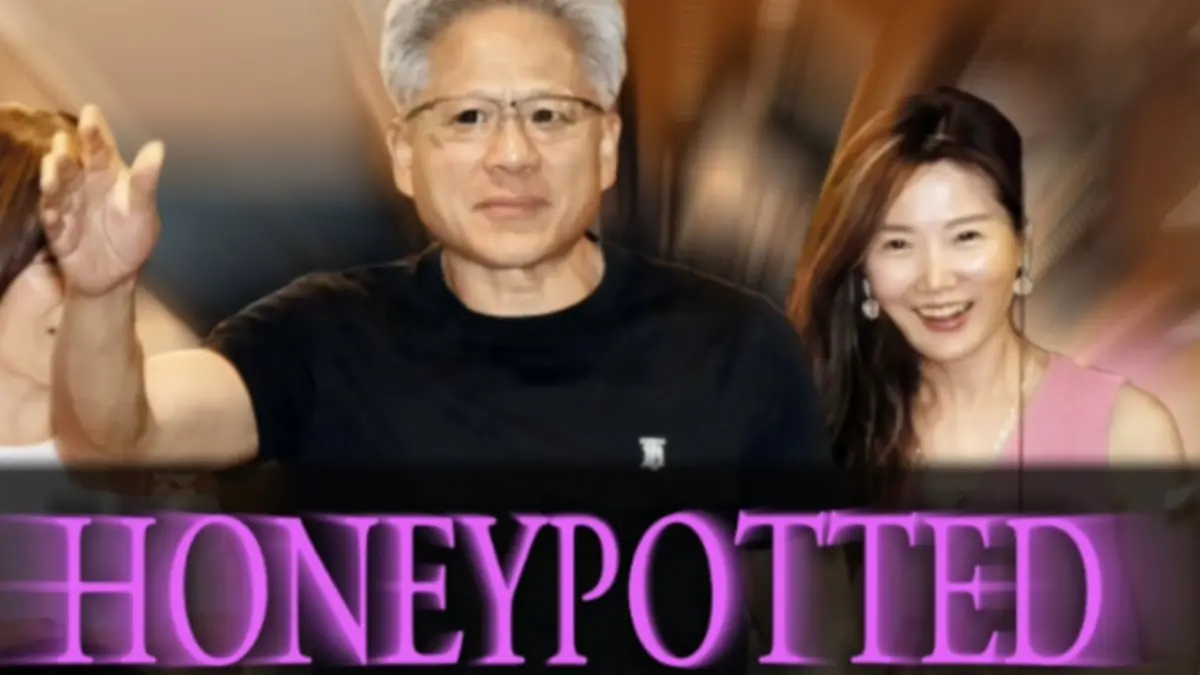
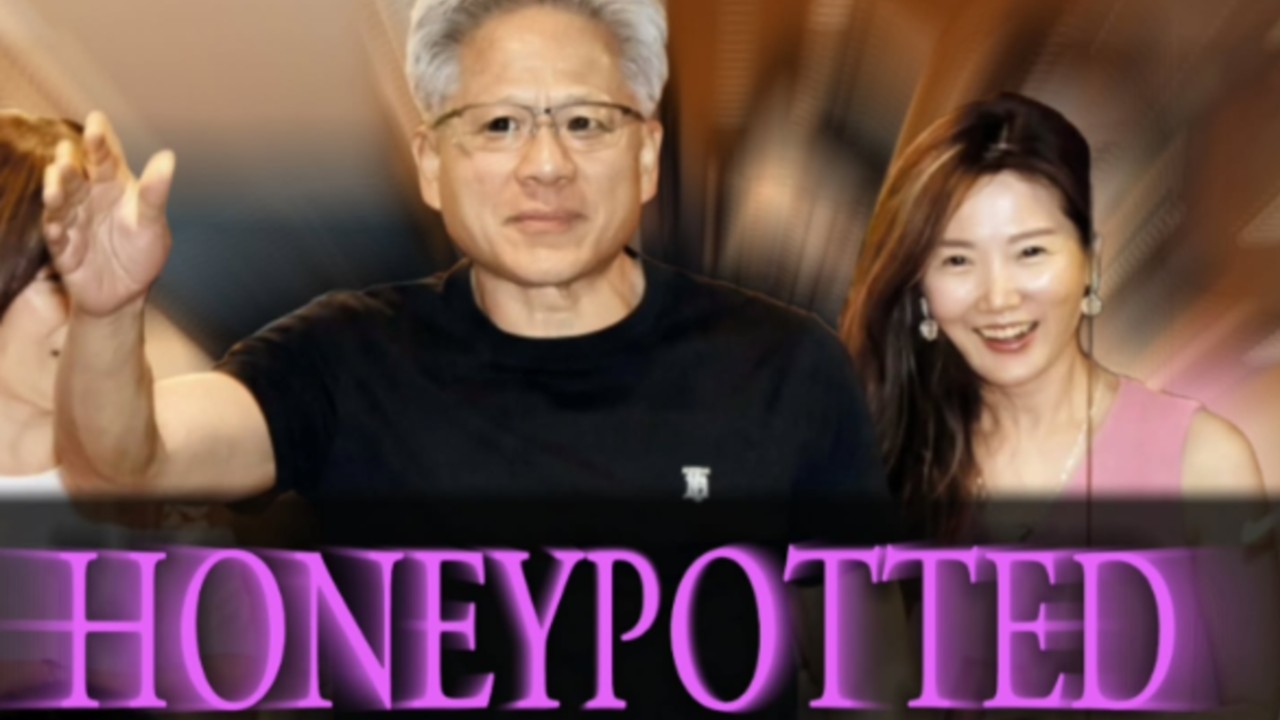
- Soulslike and Pop Culture Image Macros: Instagram meme page
irl_loading_screensuploaded a stylized video game interface overlay reading "HONEYPOTTED" across an image of the two figures, generating tens of thousands of engagements. Other users recreated the famous "Why Would I Deceive You" meme format featuring Elizabeth Holmes and Nathan Fielder, substituting Jensen and Alice into the narrative. - The "Succulent Chinese Meal" Parody: On the
/r/memessubreddit, user REAL__NOWHEREMAN posted a photo-manipulation referencing the iconic "Democracy Manifest" (Succulent Chinese Meal) viral video, superimposing Jensen Huang’s face onto the protagonist with the caption, "this is controversy manifest." - Content Creator Commentary: Major digital commentators weighed in swiftly. YouTuber MoistCr1TiKaL (penguinz0) released a breakdown titled "He Fell for the Oldest Trick in the Book," which garnered over 2.1 million views within 24 hours, analyzing the sheer improbability of a multi-billionaire CEO falling victim to a textbook intelligence honeytrap.
Future Outlook
As the independent board-led investigation continues through late 2026, the long-term ramifications for both Jensen Huang and Nvidia remain under intense scrutiny. Key questions that will shape the narrative in the coming months include:
- The Findings of the Special Committee: Whether the independent legal counsel finds definitive proof that sensitive AI architectures, codebases, or proprietary trade secrets were accessed or exfiltrated by Alice Huang.
- Federal and Regulatory Investigations: How the U.S. Department of Justice, the Department of Commerce, and congressional oversight committees will respond to the revelations regarding Megaspeed’s alleged role in circumventing chip export controls.
- Executive Stability: Whether institutional shareholders will maintain confidence in Huang’s long-term stewardship, or if the convergence of personal scandal and geopolitical friction will necessitate a leadership transition at the world’s most critical semiconductor manufacturer.
Ultimately, the Jensen Huang Chinese Spy Controversy serves as a watershed moment for the technology sector—a stark reminder that as artificial intelligence becomes the defining geopolitical battleground of the 21st century, the human vulnerabilities of corporate leaders are matters of paramount national security.