For nearly a century, the political landscape of Kansas has operated under one of the most reliable certainties in American electoral history: the state has not elected a Democrat to the United States Senate in 94 years. In small towns across the sunflower state—such as Ellsworth, where Donald Trump has historically dominated by 50-point margins—campaign lawn signs for Democratic candidates have been virtually nonexistent.
Today, however, that political gravity is being tested in ways that have caught both national parties off guard.
At the center of this electoral earthquake is the Rev. Adam Hamilton, a nationally prominent United Methodist megachurch pastor running as an "independent-minded Democrat" for the US Senate. Challenging the incumbent Republican Senator, Roger Marshall, Hamilton has leveraged his three decades of spiritual leadership, a message of "radical love," and a deeply heterodox policy platform to turn a safe Republican seat into a dead-heat toss-up.
As national political investments flood the state, Hamilton’s campaign has forced pollsters, political scientists, and national strategists to confront a high-stakes question: Can an openly religious, moderate candidate offer a blueprint for Democrats looking to reclaim faith-based messaging and compete in the rural heartland?
This comprehensive report examines the trajectory of the 2026 Kansas Senate race, detailing the campaign’s evolution, the broader sociological shifts underpinning it, the fierce partisan clashes over character and theology, and the potential national ramifications for both major political parties.
Detailed Chronology: The Making of a Toss-Up
Spring 2026: The Unlikely Launch
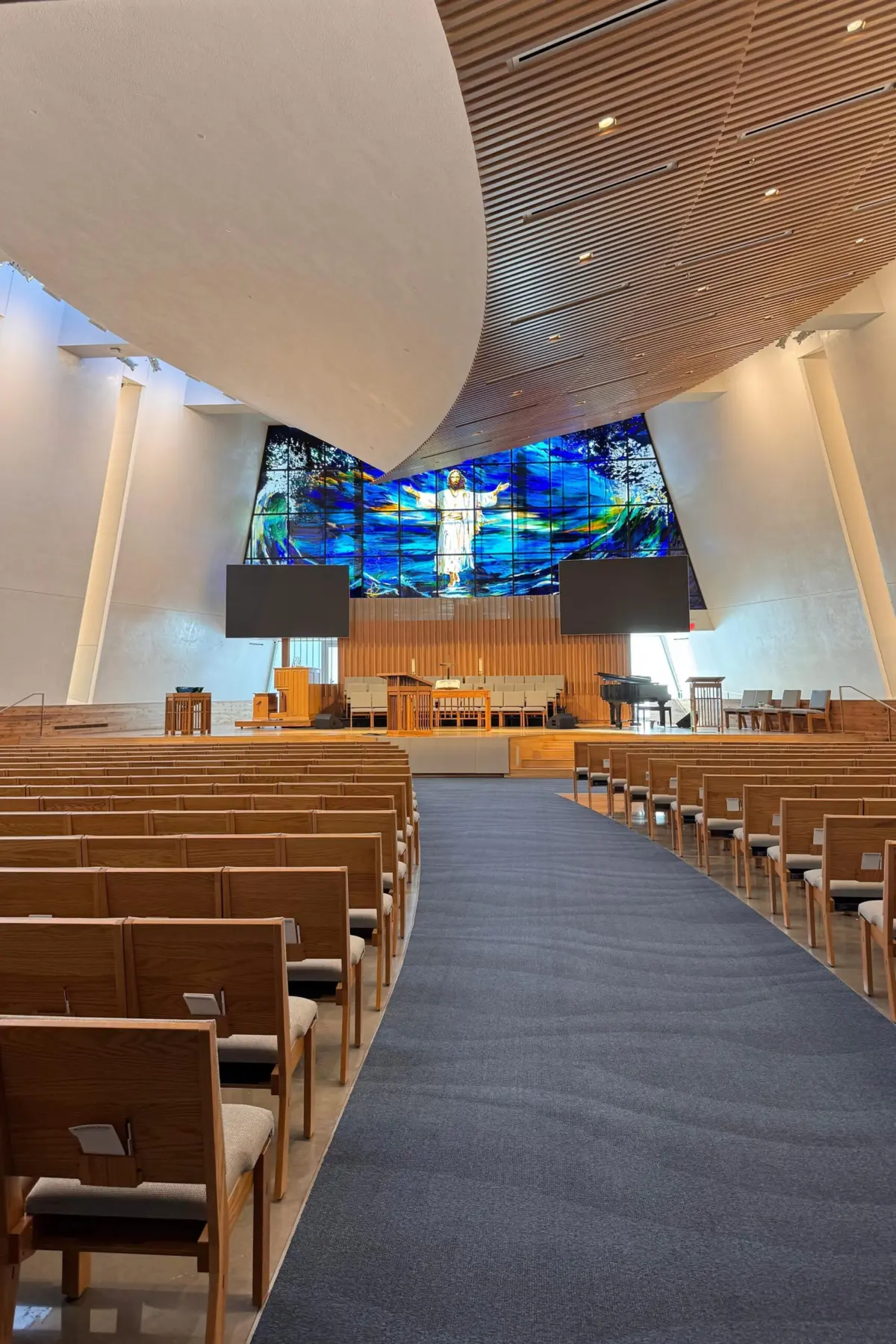
When Adam Hamilton announced his candidacy for the United States Senate earlier this year, political pundits initially dismissed the bid as a long-shot symbolic gesture. Running as a Democrat in a deep-red state is a notoriously uphill battle. Yet, Hamilton entered the race not as a career politician, but as a seasoned community leader and the founding pastor of the Church of the Resurrection—the largest Methodist congregation in the United States, spanning multiple campuses across Kansas and Missouri with roughly 24,000 members.
For voters like David and Dina Rankin of Ellsworth—lifelong Republicans who had never previously displayed a political yard sign—Hamilton’s entry signaled an opportunity to break with party lines. Frustrated by congressional stagnation and a perceived loss of political decency, the Rankins hammered a Hamilton sign into their front lawn, embodying a quiet rebellion brewing across rural precincts.
September 2026: The Turning Point
The race fundamentally shifted in September, upended by a dual-pronged crisis of policy missteps and personal controversies surrounding incumbent Senator Roger Marshall.
The Financial and Medical Debt Scrutiny: A major investigative report published by The New York Times revealed that Marshall, a former OB-GYN, had filed lawsuits against more than 700 former patients—including new mothers—over unpaid medical bills. The report detailed instances where patients faced 18 percent interest rates and subsequent arrests tied to missed court dates. The revelations dominated local airwaves, sparking a fierce debate over empathy and economic justice.
National Attacks and Clergy Pushback: Seeking to shore up support for Marshall, Vice President JD Vance delivered a sharply worded attack at a Kansas City-area rally, describing Hamilton’s campaign as "left-wing radicalism dressed in the skin suit of our religion" and characterizing the pastor as someone who would "insult your faith and spit on your religion to accrue donations to himself."
The backlash was swift. More than 100 Methodist clergy signed an open letter defending Hamilton’s pastoral ministry and rebuking Vance and Marshall for sowing division within the body of Christ. Concurrently, President Donald Trump took to social media and rally stages to label Hamilton a "Radical Left LUNATIC Dumocrat" who was disconnected from evangelical values.
Fall 2026: The State Fair Clash and Surging Polls
Right as the medical debt controversy broke, Hamilton faced off against Marshall in a debate at the Kansas State Fair. Video clips of Marshall being met with widespread boos circulated rapidly online, juxtaposed against viral clips of Hamilton articulating a nuanced, bridge-building political philosophy.
By October, a series of national and local polls—including averages from CNN and regional tracking surveys—showed Senator Marshall locked in a desperate fight for survival, weighed down by low approval ratings, the fallout from the medical debt stories, and voter fatigue over pocketbook issues like fuel costs, tariff impacts, and healthcare cuts.
Supporting Context & Metrics: Sociological Shifts and Voter Alignment
The Realignment of Religion and Politics
To understand the significance of Hamilton’s campaign, political scientists point to a decades-long realignment of religious voters in America.
The Evangelical Shift (1960s–1990s): Historically, Democrats could routinely count on substantial support from white evangelical Protestants in congressional and presidential elections. By the 1990s, however, a profound sociological shift solidified white evangelicals as a dependable voting bloc for the Republican Party, particularly across the South and the heartland.
The Secular-Religious Polarization: As the Democratic Party grew increasingly secularized and aligned with college-educated, nonreligious voters, it largely ceded religious outreach and messaging to the GOP. This strategic vacuum made it exceptionally difficult for Democrats to compete in rural, faith-heavy states.
Where the Opportunity Lies
According to religious researcher and professor Ryan Burge, while Democrats are unlikely to capture the white evangelical coalition, significant growth margins remain untapped among white Catholics and mainline Protestant voters—those belonging to traditional institutional denominations such as Presbyterian, Lutheran, Episcopal, and Methodist churches.
$$textTraditional Heartland Denominations implies textPrime Demographic for Moderate Faith-Based Messaging$$
Burge’s data suggests that messages rooted in traditional mainline institutional values resonate strongly in states like Kansas, Iowa, Nebraska, Wisconsin, and Missouri, even if they lack broad appeal on a national coastal scale. Furthermore, research from the Pew Research Center indicates that religiously unaffiliated Americans ("nones") are not monolithically hostile to religion; atheists represent less than one in five of that group, leaving many open to spiritual language that emphasizes community care, poverty alleviation, and ethical governance.
Official Statements and Campaign Rhetoric
The ideological battle lines of the 2026 race have been drawn sharply around definitions of faith, moral character, and economic compassion.
Rev. Adam Hamilton (Democratic Candidate)
Hamilton’s stump speeches frequently draw a direct line between his Christian faith and his policy priorities, contrasting them with the rhetoric of Christian nationalism:
"Our faith is respectful… it reflects the ideas of justice and fairness, things that are just fundamental to the Bible. Two thousand verses in the Bible talk about poverty and taking care of the poor. That’s not what you hear from Christian nationalists."
Addressing his approach to hot-button social issues like abortion—where he describes himself as "pro-life with a heavy heart" due to personal family history while supporting legal and safe access due to compassion for crisis pregnancies—Hamilton emphasizes common-sense moderation:
"There are things that are clearly black and white, but there’s a lot where there’s room; I may not ever get to where you are, but I can see where you’re coming from and I can respect you for that… People on the extremes on either end, they don’t want me telling the story about my mom. But in the broad center, the folks on the left say, ‘You know what? That’s real,’ and on the right, people say, ‘I appreciate the fact that you understand the moral tension.’"
Senator Roger Marshall (Republican Incumbent)
The Marshall campaign has consistently pushed back against the challenger’s framing, characterizing Hamilton’s platform as out-of-step with Kansas values and pointing to controversies within his church administration regarding historical governance and handling of local disputes:
On Campaign Characterizations: Marshall’s press team and national surrogates have framed the incumbent as a defender of traditional conservative principles, contrasting him with what they describe as a "woke megachurch CEO."
On Legal and Financial Allegations: Responding to investigative reporting regarding past debt-collection lawsuits, Marshall’s campaign press secretary, Abbi Enders, dismissed claims of patient imprisonment as "a blatant lie," citing the Kansas Bill of Rights provision prohibiting imprisonment for debt.
Future Outlook: National Implications and the Post-Trump Political Lexicon
Regardless of whether Adam Hamilton successfully breaks the 94-year Democratic Senate drought in Kansas, his candidacy provides a compelling case study for the future of American politics.
A New Blueprint for Rural Democrats: Hamilton demonstrates that candidates who possess deep institutional roots and speak authentically from a faith-based, centrist perspective can neutralize traditional Republican advantages in rural redoubts. However, analysts caution that Hamilton’s specific skill set—honed by decades of leading a massive megachurch and addressing thousands of congregants weekly—is a rare political "unicorn" that may prove difficult to replicate elsewhere.
The Battle for Moral Character: The race highlights an emerging trend in post-Trump politics: elections increasingly hinge on questions of personal integrity and character. With polls in several red-leaning states showing voters leaning toward candidates perceived as possessing higher moral standing, the 2026 midterms may signal a recalibration of how character metrics influence voting behavior.
Internal Party Reckoning: For the national Democratic Party, Hamilton’s campaign serves as a challenge to integrate religious voters more intentionally. By bridging the gap between progressive economic safety nets and traditional mainline Christian ethics, candidates like Hamilton and Texas Senate nominee James Talarico suggest that spiritual language, when deployed authentically, can expand the electoral map and heal fractured community divides.
As election day approaches in the heartland, the small yellow and blue yard signs scattered across Ellsworth stand as silent witnesses to a shifting political landscape—one where the intersection of faith, moderation, and public service is being rewritten on the Kansas plains.