Executive Overview
In an era dominated by relentless hustle culture and the grueling demands of extreme athletic preparation, the narrative surrounding endurance sports is undergoing a fundamental paradigm shift. For decades, the archetype of the marathon runner was inextricably linked to images of pre-dawn suffering, austere sacrifices, and an unyielding, monochromatic focus on mileage. However, a growing movement of modern athletes is proving that high-level performance and personal comfort do not have to be mutually exclusive.
Enter Hong, a Berlin-based designer, international flight attendant, and veteran endurance athlete currently preparing for her seventh marathon. Hong’s journey offers a fascinating case study in modern sports physiology, lifestyle integration, and psychological resilience. Far from the stereotypical image of the tortured runner, Hong approaches her training with a philosophy rooted in coziness, community, and holistic well-being. By seamlessly balancing a demanding, jet-setting career with a rigorous athletic schedule, she challenges the traditional boundaries of what it means to be a dedicated runner.
This in-depth feature explores Hong’s weekly training regimen, dissecting how she successfully merges high-intensity track workouts, comprehensive cross-training, and professional obligations without sacrificing her mental health or social life. Through an analytical lens, we examine the physiological importance of recovery, the psychological impacts of running communities, and the modern gear innovations that make pushing past personal limits a more comfortable and sustainable endeavor.
Detailed Chronology: A Week in the Life of a Marathon-Training Flight Attendant
To understand how Hong maintains her athletic momentum while navigating an unpredictable schedule, one must examine the micro-level mechanics of her week. Her routine is not a rigid military operation; rather, it is a fluid, adaptable masterpiece of time management and self-care.
Monday: Combating Fatigue with Rhythms and Canines
The workweek begins with a familiar obstacle for millions of urban professionals: the gravitational pull of the snooze button and the prerequisite dependency on morning coffee. As both a graphic designer and a commercial flight attendant, Hong’s professional life is characterized by shifting time zones, irregular hours, and high-stress environments. Consequently, her primary adversary on a Monday morning is not physical fatigue, but psychological inertia.
To combat low energy levels, Hong relies on an auditory anchor: her customized running playlist. Featuring an eclectic mix of disco, house, and techno, the music serves as an immediate neurological stimulus, shifting her mental state from lethargic to active.
Yet, Hong’s approach to running is remarkably forgiving. When mid-run fatigue inevitably threatens to derail her pace, she employs an unconventional psychological and physiological hack: she sings.
- “If I go out of breath, I dial it back and start singing,” Hong explains.
- This spontaneous vocalization forces her to consciously regulate her breathing, naturally lowering her pace while dramatically increasing her enjoyment. It transforms a grueling training session into a joyful, communal experience, often eliciting smiles from unsuspecting passersby on the Berlin streets.
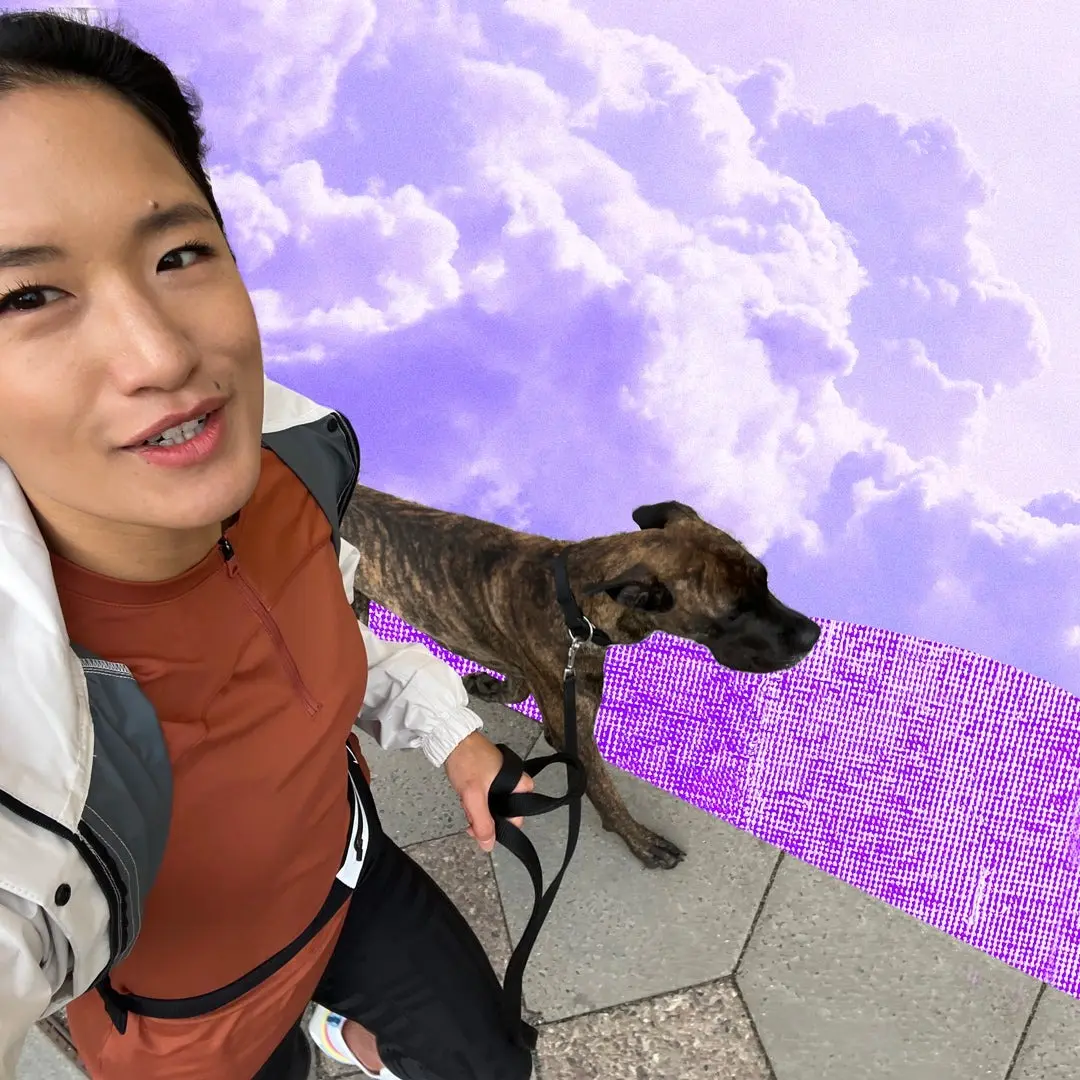
Adding another layer of dynamic engagement to Monday’s run, Hong occasionally borrows a friend’s dog, Mia. Canine running companions introduce an element of unpredictability and mutual motivation. In the opening kilometers, Mia pulls the pace forward with boundless energy; in the closing stages, Hong’s steady endurance takes over. This symbiosis underscores a vital principle in her training philosophy: movement does not have to be a solitary, humorless pursuit.
Tuesday: The Architecture of Prevention (Yoga, Strength, and Recovery)
High-performance running places immense repetitive stress on the musculoskeletal system, particularly the knees, hips, and lower back. Recognizing that durability is just as important as speed, Hong dedicates her Tuesdays away from the asphalt and onto the yoga mat and weight room.
Her Tuesday regimen focuses heavily on functional strength training and targeted physiotherapy. This holistic methodology is designed to bulletproof her body against the common overuse injuries that plague long-distance runners. By building a robust muscular foundation, Hong ensures that when she does step out of her comfort zone during high-intensity runs, her structural integrity remains uncompromised.
Crucially, Hong views these cross-training days not as secondary chores, but as equal partners to her running miles. This multi-disciplinary approach allows her body to adapt systematically, ensuring that after grueling workouts, she avoids total physical depletion.
Wednesday: Global Horizons and Social Integration
As a flight attendant, Hong’s passport is frequently stamped with destinations across the globe, cutting into her time at home. Therefore, when she is grounded in Berlin, cultivating her social network and maintaining interpersonal connections take center stage.
Wednesday serves as an intentional buffer day—a deliberate pause in her physical training cycle. Rather than forcing an unwanted workout, she redirects her energy toward the arts, often visiting local galleries and exhibitions with friends. This psychological decompression is vital; mental burnout can be just as detrimental to athletic longevity as physical overtraining. By feeding her intellectual and social curiosities, Hong preserves the mental bandwidth required for her upcoming high-intensity sessions.
Thursday: Pushing Limits on the Track
Thursday represents the crucible of Hong’s weekly physical training. While her overarching philosophy embraces comfort, marathon preparation inherently demands moments of discomfort and boundary-pushing.
Equipped with the Nike Invincible 3—a footwear choice celebrated for its high-energy foam and supreme cushioning across unpredictable urban terrains—Hong hits the track. Today’s session is designed to test anaerobic thresholds, velocity, and pace-maintenance capabilities over extended intervals.
Even during these intense sessions, Hong’s commitment to comfort remains unwavering. She argues that utilizing high-end, supportive gear minimizes the micro-traumas associated with hard track surfaces, allowing her to lean into competitive challenges with confidence. Her affection for the sport stems precisely from this duality: the thrill of self-discovery through controlled suffering, anchored by the reassurance of proper preparation.
Friday: Active Recovery and Urban Exploration
The physiological toll of Thursday’s track workout demands a measured response. Friday is designated for active recovery—typically light stretching or a restorative yoga session—followed by more urban exploration. Because her career keeps her away from her adopted hometown for days at a time, Hong treats her days in Berlin as opportunities to deeply engage with the city’s vibrant cultural fabric, meeting friends for coffee, gallery tours, and casual strolls.
Saturday: The Landwehrkanal Ritual and Sensory Immersion
The weekend kicks off with Hong’s signature long-distance route along Berlin’s historic Landwehrkanal. This path offers a rich tapestry of surfaces—varying from unforgiving asphalt to soft grass and muddy tracks—testing ankle stability and core strength organically.
Saturday runs are defined by sensory flexibility. Sometimes, Hong listens to immersive long-form podcasts, letting narrative journalism carry her miles forward. Other times, she eschews audio entirely, choosing to soak in the ambient acoustic landscape of the city: the clatter of bicycles, the chatter of café terraces, and the distant hum of traffic.
Upon completing her mileage, Hong engages in her favorite ritualistic reward: a specialty coffee and a fresh pastry from a local market stall in Kreuzberg. This post-run culinary celebration acts as positive reinforcement, cementing the psychological loop between effort and reward.
Sunday: Community and Culmination in the Tiergarten
If Saturday is for personal reflection and local immersion, Sunday is entirely about community. As a proud member of the Joy Run Collective, a local Berlin running group, Hong tackles her weekly long run through the sprawling expanse of the Tiergarten alongside fellow endurance enthusiasts.
Running in a collective during colder months introduces external environmental challenges, requiring strategic layering and mental fortitude. However, the collective energy of the group neutralizes the climatic hurdles.
The culmination of Sunday’s long run is a well-earned, highly anticipated ritual: a post-run brunch with the collective. This week, the gathering features homemade dumplings—a culinary carrot that Hong admits sustained her morale through the physical challenges of the preceding training days.
Supporting Context and Metrics: The Science of "Cozy Running"
Hong’s journey from a self-proclaimed non-runner to a seasoned marathon athlete training for her seventh race is more than an inspiring personal anecdote; it aligns closely with emerging trends in sports science and consumer psychology.
The Psychology of Adherence in Endurance Sports
Traditional sports coaching often emphasizes a "no pain, no gain" mentality, which psychological studies have repeatedly shown leads to high rates of burnout and attrition among amateur athletes. According to behavioral sports psychology, perceived enjoyment is one of the single most reliable predictors of long-term exercise adherence. By intentionally integrating elements of comfort—such as engaging playlists, canine companionship, and post-run culinary rewards—Hong reduces the cognitive friction associated with starting a workout.
Holistic Cross-Training and Injury Mitigation
Statistics from running medicine indicate that up to 79% of runners sustain an overuse injury in any given year. Hong’s balanced weekly schedule—incorporating dedicated yoga, strength training, and mandatory rest days—mirrors the protocols used by elite endurance coaches. By strengthening stabilizing muscles and prioritizing nervous system recovery, she mitigates the repetitive impact forces that typically sideline runners accumulating high weekly mileage.
Official Perspectives and Expert Insights
To contextualize Hong’s approach within the broader athletic landscape, industry experts and coaches increasingly endorse the integration of lifestyle and performance.
“The archaic notion that an athlete must suffer in silence to achieve greatness is rapidly fading,” notes Dr. Lena Martens, a sports physiologist based in Munich. “Athletes like Hong demonstrate that sustainable high performance requires a harmonious ecosystem. When you lower psychological barriers to entry through comfort, community, and enjoyment, the physiological output naturally improves because the athlete is operating from a place of biological safety rather than chronic stress.”
Furthermore, community-led running initiatives, such as the Joy Run Collective, have fundamentally transformed urban running culture. No longer viewed as an isolated test of individual willpower, running has evolved into a vibrant social medium where human connection is prioritized over split-second pacing.
Future Outlook: The Next Horizon
As Hong looks ahead to her seventh marathon, her trajectory offers a blueprint for the future of recreational endurance sports. The modern runner is no longer willing to sacrifice their social life, mental health, or personal comfort at the altar of athletic achievement. Instead, the future belongs to those who master the art of integration.
By proving that consistency and comfort are not mutually exclusive, Hong has dismantled the intimidation factors that prevent many beginners from lacing up their first pair of running shoes. Her philosophy is deceptively simple yet profoundly effective: wear supportive shoes, curate a soundtrack that moves your soul, find a route that inspires you, and always keep a delicious reward waiting at the finish line.
As she steps out for her next training block, Hong stands as a testament to the fact that you do not need to surrender your lifestyle to become an elite endurance athlete. You simply need to redefine the journey on your own terms.