Executive Overview
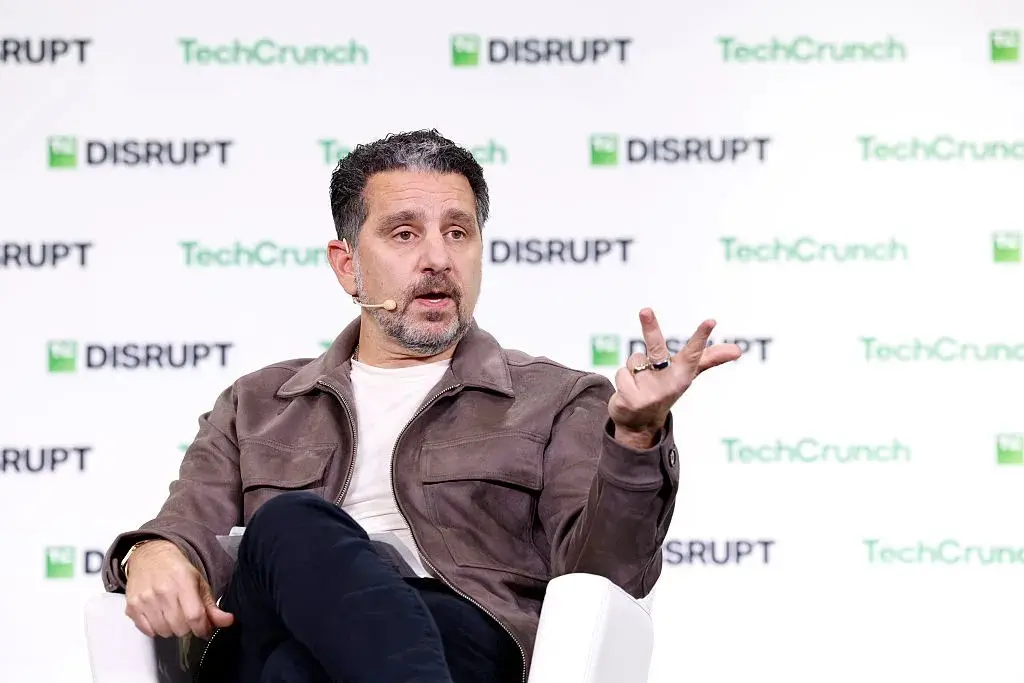
At TechCrunch Disrupt, Amazon articulated a strategic pivot in personal computing: the future belongs not to screens, software application stores, or transactional text prompts, but to ambient computing. Led by Panos Panay, Amazon’s Senior Vice President of Devices, Alexa & Leo, the tech giant signaled a departure from the traditional smartphone interaction loop, advocating instead for background-operating artificial intelligence integrated directly into everyday life.
Central to this vision is the unveiling of Bee, a brand of specialized personal AI hardware starting at $75. Designed to passively log context, extract actionable tasks, and maintain encrypted digital records, Bee represents Amazon’s attempt to bypass the dominant Apple and Google app ecosystems. Rather than forcing users into a cycle of unlocking phones, navigating menus, and inputting manual queries, Amazon’s ambient hardware relies on multi-sensor continuous audio processing to operate autonomously in the background.
This initiative comes at a turning point for personal technology. As rival AI hardware efforts face scrutiny over battery life, compute latency, and consumer utility, Amazon is betting on low-friction, privacy-focused hardware nodes that enhance human presence rather than competing for human attention.
Detailed Chronology: Amazon’s Ambient AI Evolution
[Echo Era] ───► [Panay Appointment] ───► [Disrupt Unveiling] ───► [The Bee Ecosystem]
 (Voice Home)    (Microsoft Surface Trans.)   (Ambient Strategy)      (Invisible Hardware)
The Foundations: From Smart Home Speakers to On-Body Hardware
Amazon’s push into ambient computing is the continuation of a decade-long trajectory that began with the introduction of the Echo smart speaker line in 2014. While original smart home devices established voice interaction inside the domestic sphere, their utility remained localized. Over the subsequent decade, Amazon attempted to bridge the mobile gap through smart glasses (Echo Frames), fitness tracking (Halo), and ring accessories (Echo Loop), with varying market success.
The Leadership Shift
In late 2023, Amazon brought in Panos Panay, former Chief Product Officer at Microsoft who spent nearly two decades defining the Surface line of devices. Panay took control of Amazon’s unified Devices, Alexa, and Leo divisions, tasked with overhauling Amazon’s consumer hardware matrix for the generative AI era. His mandate focused on synthesizing hardware execution with next-generation large language models (LLMs) and context-aware sensors.
The Disrupt Announcement & Bee Unveiling
Taking the main stage at TechCrunch Disrupt, Panay formally launched the Bee line of ambient AI wearables. Positioned as zero-friction computing nodes, the hardware introduces two primary form factors:
- The Modular Band/Pendant ($75): A lightweight device designed to be worn on the wrist or detached to function as a minimalist chest pendant.
- The Smart Magnetic Card: A ultra-thin form factor, engineered to attach directly to the back of standard smartphones using magnetic arrays.
Both form factors eschew high-resolution touchscreens in favor of continuous passive listening, contextual audio processing, and background note synthesis.
Technical Architecture & Privacy Engineering
Ambient computing relies on continuous context gathering—a paradigm that naturally raises security and surveillance concerns among consumers and regulators. To counter these vulnerabilities, Amazon’s Bee division designed a privacy framework based on ephemeral audio buffers and client-side encryption keys.
+-----------------------------------------------------------------------------------+
|                            BEE HARDWARE DATA PIPELINE                             |
+-----------------------------------------------------------------------------------+
|  [ Passive Audio Stream ]                                                         |
|             │                                                                     |
|             ▼                                                                     |
|  [ Local Ephemeral Buffer ]  ──► (Processed in Real-Time for Context Extraction)    |
|             │                                                                     |
|             ▼                                                                     |
|  [ Immediate Audio Deletion ] ──► (NO raw audio saved locally or on cloud servers) |
|             │                                                                     |
|             ▼                                                                     |
|  [ Extracted Transcripts & Insights ]                                             |
|             │                                                                     |
|             ▼                                                                     |
|  [ Hardware-Generated Encryption Key ] (Zero-Knowledge Architecture)              |
+-----------------------------------------------------------------------------------+
On-Device Ephemeral Audio Processing
Unlike legacy recording devices that save continuous MP3 or WAV files to local memory or cloud servers, Bee hardware processes incoming audio through a local, volatile buffer:
- Real-Time Synthesis: The device converts speech into structured text representations instantly.
- Immediate Purging: Once the contextual extraction (such as identifying action items, names, dates, or tasks) is complete, the raw audio file is permanently deleted from the system buffer.
- Zero Audio Retention: Neither the local hardware storage nor Amazon’s remote servers retain copies of raw voice data.
Client-Controlled Encryption Keys
To safeguard processed transcripts and summaries, Amazon deployed a zero-knowledge architecture. The Bee hardware unit creates and maintains encryption keys locally on the device’s secure element.
Because these keys are managed at the client level, third parties—including Amazon engineers, cloud administrators, and external attackers—are technically barred from decrypting customer logs. Data access requires explicit authorization and key sharing initiated by the device owner.
Supporting Context & Market Metrics
The Failure of the "Point, Shoot, Return" Model
Modern consumer computing relies heavily on application-centric, manual interactions. Panay framed this current reality as a source of digital fragmentation, characterizing smartphone usage as a transactional routine:
$$textUser Intent longrightarrow textDevice Unlock longrightarrow textApp Search longrightarrow textManual Input longrightarrow textData Fetch longrightarrow textContext Loss$$
This operational friction—termed "point, shoot, return" by Panay—forces users to continually manage the tool rather than letting the technology autonomously handle background administration.
TRADITIONAL MOBILE COMPUTING
[ User Intent ] ──► [ Unlock Phone ] ──► [ Open App ] ──► [ Manual Search/Input ] ──► [ Task Execution ]

AMBIENT COMPUTING PARADIGM
[ Passive Background Audio ] ──► [ Context Extraction ] ──► [ Autonomous Action Engine ] ──► [ Real-Time Task Ready ]
Market Comparison: Ambient Hardware vs. Mobile Native AI
The ambient market has seen mixed results from early hardware entries. Amazon’s approach directly counters the design choices of competitors:
| Metric / Dimension | First-Gen AI Pin / Badges | Standalone AI Handhelds | Amazon Bee Ambient Lineup |
|---|---|---|---|
| Primary Interaction | Voice / Laser Projection | Touchscreen / Voice Wheel | Passive Audio / Automatic Extraction |
| App Model | Cloud API Wrapper | Web Operating System | Zero-App Ambient Layer |
| Price Point | $600 – $700+ | $200 – $250 | Starting at $75 |
| Hardware Dependency | Complete Smartphone Replacement | Standalone Cellular Device | Smartphone Companion / Wearable Node |
| Data Retention | Cloud Audio Storage | Cloud Transcript Logs | Local Ephemeral Buffer & Deletion |
By pricing the Bee baseline hardware at $75, Amazon lowers the adoption barrier. Instead of asking consumers to replace their $1,000 smartphones or pay heavy monthly hardware subscriptions, Amazon introduces Bee as a background utility that attaches magnetically or attaches to the wrist.
Official Statements & Executive Perspectives
Speaking live at TechCrunch Disrupt, Panos Panay outlined his core thesis on why ambient devices mark a fundamental transition in human-computer interaction.
On the Limits of the Smartphone Paradigm
"A lot of times, what you’re doing right now — what we all do right now — is we have to remember what we’re asking our tool to do for us. It’s like point, shoot, return. I think where we’re headed is a world [that] starts with ambient devices."
On Preserving Human Presence
"As it works in the background, you’re able to stay more present. You’re able to get more done. You’re able to spend more time with people… you’re not afraid if you miss something. It’s incredibly powerful."
On Designing for Absolute Data Privacy
"You have to give customers that control. Every product is different, but for Bee specifically, as an example in the ambient space like that, you have to design with privacy in mind. And that’s what we do. That’s critical."
On the Obsolescence of "App for That" Ecosystems
"Do I think we have a future where there’s a bit of a balance — a whole generation that doesn’t say ‘give me the app’ for that, but says it should just understand what I need? Yeah, I do. I think that transformation is coming. I think that is the next generation."
On Form Factors and Multi-Device Coexistence
"I’m not a proponent that says one form factor is going to replace another. I don’t think that’s the case. I think there’s an intelligence layer that connects it all… and it has to be useful."
Future Outlook & Strategic Implications
Amazon’s bet on ambient computing represents an intentional attempt to bypass the dominant mobile operating platforms: Apple’s iOS and Google’s Android.
By prioritizing ambient sensors over application icons, Amazon aims to make the underlying operating system invisible, shifting value away from app native stores to background artificial intelligence models.
+--------------------------------------------------------------------+
|                FUTURE MULTI-DEVICE INTELLIGENCE LAYER               |
+--------------------------------------------------------------------+
|                                                                    |
|    +------------------+    +------------------+    +-----------+   |
|    |  Wearable Band   |    |  Magnetic Card   |    | Smart Echo|   |
|    |  (Wrist/Pendant) |    |  (Phone Backing) |    | (Home/Car)|   |
|    +--------+---------+    +--------+---------+    +-----+-----+   |
|             │                       │                    │         |
|             +───────────────────────┼────────────────────+         |
|                                     │                              |
|                                     ▼                              |
|                    =================================               |
|                      UNIFIED AMBIENT AI ENGINE                     |
|                    =================================               |
|                                     │                              |
|                                     ▼                              |
|             +───────────────────────+────────────────────+         |
|             │                       │                    │         |
|             ▼                       ▼                    ▼         |
|     [ Task Automation ]   [ Context Memories ]   [ Action Logs ]   |
|                                                                    |
+--------------------------------------------------------------------+
Key Trends to Watch
- Decline of the Transactional App Economy: As ambient agents absorb tasks like calendar scheduling, transcription, task management, and communication routing, single-purpose utilities in app stores risk disintermediation.
- Context-Aware Hardware Networks: Future consumer environments will rely on interconnected, low-power nodes (pendants, smart glasses, magnetic attachments, spatial speakers) that continuously aggregate context to serve a central intelligent agent.
- The Zero-Knowledge Standard in AI: As continuous context collection becomes widespread, security frameworks featuring client-controlled encryption keys and local ephemeral buffer clearance will be critical for consumer adoption.
- Form Factor Pluralism: Rather than a single "smartphone killer," personal computing is moving toward a multi-device ecosystem bound together by a unified intelligence layer.