Executive Overview
In the bustling urban sprawl of Berlin, where the morning mist rolls off the Landwehrkanal and the city’s creative pulse beats in tandem with its transit networks, a quiet revolution is taking place in the world of endurance sports. Hong, a Berlin-based designer and flight attendant, represents a new archetype of the modern endurance athlete. Once firmly self-identified as a "non-runner," Hong is now meticulously preparing for her seventh marathon—a milestone that underscores a profound shift in how everyday athletes approach high-performance training.
For decades, the narrative surrounding marathon preparation has been dominated by images of monastic discipline, pre-dawn suffering, and unyielding self-deprivation. The conventional wisdom dictated that to conquer 42.195 kilometers, one had to sacrifice comfort, social connection, and personal equilibrium at the altar of the stopwatch. Hong’s journey shatters this archaic paradigm. By championing a philosophy where rigorous consistency coexists harmoniously with comfort, community, and creativity, she is charting a new course for urban athletes navigating the hyper-demanding schedules of the modern workforce.
This investigative profile explores Hong’s weekly training regimen, dissecting how she balances a high-stakes, international career with elite-level amateur endurance training. Through a granular examination of her Monday-to-Sunday routine, this article explores the intersection of holistic conditioning, mental resilience, and the indispensable role of community in modern running culture. Furthermore, we examine the broader physiological and psychological implications of her approach, offering actionable insights for anyone looking to bridge the gap between casual fitness and endurance excellence.
Detailed Chronology: A Week in the Life of an Urban Marathoner
To understand Hong’s success, one must examine the intricate mechanics of her weekly schedule. Far from being a rigid military operation, her routine is a masterclass in dynamic time management, emotional regulation, and physical preservation.
Monday: Setting the Tone and Finding the Rhythm
The operational week begins amidst the logistical turbulence of dual careers. Juggling the unpredictable time zones of a flight attendant with the precise visual demands of a graphic designer leaves little margin for error.
"I am definitely not a morning person," Hong confesses, echoing the sentiments of millions who struggle to engage before their first cup of coffee. To counteract the sluggishness of a Monday morning, she relies heavily on auditory motivation. Her running playlist—a carefully curated sonic landscape featuring disco, house, and techno—serves as a vital psychological anchor.
When fatigue threatens to derail a session midway through, Hong employs a unique behavioral hack: she sings. "If I run out of breath, I shift down a gear and start singing," she explains. This instinctive pacing mechanism not only forces her to regulate her respiratory rate and bring her heart rate back under control, but it also injects levity into the workout. Passersby frequently offer amused smiles at the sight of a designer belting out melodies mid-stride.
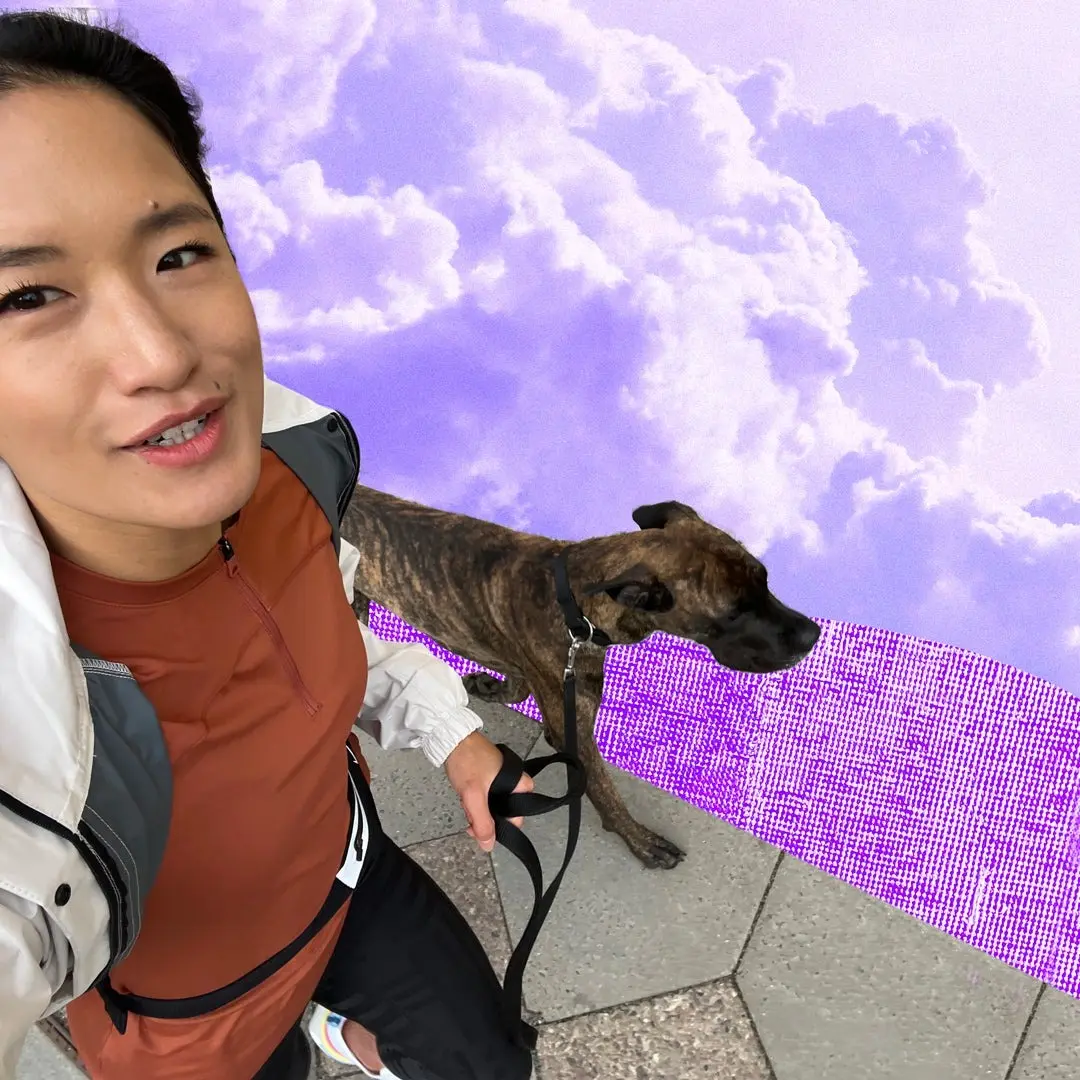
Monday’s run also features a borrowed companion: Mia, a friend’s high-energy dog. Incorporating canine companionship introduces an element of dynamic unpredictability. "At the beginning, she pulls me; at the end, I pull her," Hong notes. While the dog may hold the advantage in raw sprinting speed, Hong’s superior aerobic endurance ultimately wins the day, turning a standard recovery jog into a masterclass in pacing.
Tuesday: The Foundation of Longevity—Cross-Training and Care
Marathon training is frequently misunderstood as a pursuit exclusive to the legs. Hong’s Tuesday routine dismantles this misconception entirely. Rather than logging miles on the asphalt, she redirects her energy toward holistic physical maintenance.
Tuesday is dedicated to a triad of complementary disciplines: yoga for mobility, targeted strength training to fortify joints and prevent the overuse injuries common in high-mileage runners, and physiotherapy sessions. This triad forms an impenetrable defensive wall around her musculoskeletal system.
By investing time in structural integrity, Hong ensures that when she does push her limits during high-intensity track workouts, her body possesses the baseline stability required to absorb the shock. Crucially, this multidisciplinary approach prevents the catastrophic burnout that sidelines so many amateur runners. A scheduled day away from running is not viewed as a missed opportunity, but as an essential investment in future velocity.
Wednesday: The Art of the Rest and Cultural Integration
Midweek brings a deliberate tactical pause. Operating within an intensive travel schedule means that when Hong is physically present in Berlin, her social capital is in high demand.
Wednesday is designated for cultural nourishment and interpersonal connection. Rather than forcing a mediocre workout on tired legs, Hong opts to visit a local art exhibition with friends. This deliberate decoupling of self-worth from daily mileage is critical to her longevity in the sport. By nurturing her intellectual and social appetites, she replenishes the psychological reserves required to endure the solitary mental landscapes of long-distance running.
Thursday: Pushing Boundaries on the Track
If the early week is about rhythm and maintenance, Thursday is the crucible in which speed is forged. Track workouts demand absolute physiological and psychological commitment.
"Some people think marathon runners bounce out of bed at 5:00 AM and effortlessly knock out 20 kilometers," Hong observes. The reality is far more nuanced. Even elite amateurs require an intentional architecture of motivation to face punishing intervals.
On Thursday, Hong tests her anaerobic thresholds. Wearing the Nike Invincible 3—a shoe engineered for maximum energy return and secure footing across variable urban terrain—she hones in on speed endurance. The "bouncy" sole provides both propulsion and protection, allowing her to lean into high-velocity repeats without sacrificing joint comfort. These sessions are where her competitive spirit thrives; chasing splits on a synthetic track provides a visceral thrill that feeds her ambition for race day.
Friday: Recovery, Reflection, and Re-engagement
The physical toll of Thursday’s track session demands a respectful response. Friday mirrors Wednesday in its emphasis on restoration and social reconnection.
Following a brief, restorative yoga flow, Hong spends her time exploring Berlin’s vibrant cultural scene. As a frequent flyer who spends significant portions of her life aloft, grounding herself in the local geography of her home city is a vital grounding mechanism.
Saturday: The Meditative Urban Long Run
Saturday morning belongs to the Landwehrkanal. This iconic Berlin artery serves as Hong’s primary testing ground. The route offers a dynamic sensory tapestry: shifting textures of asphalt, packed dirt, and grass demand constant micro-adjustments from the stabilizing muscles of the foot and ankle.
Armed with an engaging podcast or simply tuning into the ambient symphony of the awakening metropolis, Saturday runs are an exercise in moving meditation. "I love watching the people around me," she reflects.
The run’s conclusion is marked by a sacred ritual: a carefully chosen post-workout reward consisting of artisanal coffee and a light snack from a local market stall in Kreuzberg. This intentional transition from exertion to indulgence reinforces positive neurological loops associated with training.
Sunday: Collective Endurance and Culinary Anticipation
Sunday is defined by community and endurance. As a proud member of the Joy Run Collective, Hong tackles her long run through the historic expanse of Tiergarten alongside a tight-knit peloton of like-minded athletes.
Running in sub-optimal weather conditions requires tactical preparation, from thermal layering to hydration strategies. Yet, the collective energy of the group transforms a grueling long-distance effort into a shared triumph.
The physical payoff of the Sunday long run is mirrored by a culinary one: a post-run brunch featuring meticulously crafted homemade dumplings. "I’ve been looking forward to these dumplings all week," Hong admits, highlighting how anticipation—whether for a personal best or a hearty meal—acts as a powerful motivational engine.
Supporting Context & Metrics: The Physiology of Sustainable Running
Hong’s journey from reluctant beginner to seasoned marathoner offers a compelling case study that aligns with modern sports science. Her trajectory provides valuable quantitative and qualitative lessons for the broader athletic community.
The Age-Performance Curve and Late-Onset Athletics
Beginning her running journey at age 26 and preparing for her seventh marathon in her early thirties, Hong exemplifies a growing demographic: the late-onset endurance athlete. Sports physiologists note that while peak physiological metrics (such as $textVO_2$ max) often stabilize in one’s twenties, endurance capacity, pacing acumen, and psychological resilience frequently peak much later.
At 30, Hong reports feeling healthier and fitter than she did in her twenties. This phenomenon is supported by the cumulative development of slow-twitch muscle fibers, increased capillary density, and, crucially, superior emotional regulation. Older athletes are statistically less prone to ego-driven overtraining, allowing them to structure recovery protocols more effectively than their younger counterparts.
The Biomechanics of Comfort
Hong’s insistence on footwear technology—specifically citing models like the Nike Invincible 3—highlights a fundamental shift in sports engineering. Modern maximalist footwear with high-energy-return foam compounds has fundamentally altered how runners manage impact forces.
By prioritizing footwear that offers a secure lockdown and dynamic cushioning, runners can mitigate the repetitive micro-trauma associated with high-mileage urban training. When runners feel physically secure and cushioned, perceived exertion decreases, leading to improved movement efficiency and a lower incidence of running-related injuries.
The Psychology of Consistency Over Intensity
In sports science, the principle of consistency consistently outperforms episodic intensity. Many novices fall into the trap of running too hard on easy days and burning out. Hong’s weekly blueprint avoids this trap by balancing high-stress track sessions and long runs with yoga, strength work, rest days, and cultural pursuits.
This tripartite division of training (Hard Days, Recovery Days, Life Days) creates a sustainable feedback loop. By refusing to let running consume her entire identity, Hong safeguards her mental health, ensuring that burnout remains an impossibility rather than an occupational hazard.
Official Perspectives and Expert Insights
To contextualize Hong’s approach within the broader landscape of endurance sports, we consulted leading figures in sports science, physiotherapy, and run-culture leadership.
Dr. Elena Vance, a sports psychologist specializing in endurance athletes, notes that Hong’s integration of joy and comfort into rigorous training is a textbook example of intrinsic motivation.
"Traditional training models rely heavily on extrinsic or punitive motivators—guilt over missed workouts, rigid caloric tracking, or the fear of failure," Dr. Vance explains. "When an athlete reframes their training around sensory pleasures, such as a favorite playlist, the company of a dog, or post-run dumplings, they engage the brain’s reward circuitry in a positive way. This drastically improves long-term adherence and reduces the incidence of exercise addiction or depressive troughs post-marathon."
Marcus Weber, a Berlin-based physical therapist who treats dozens of marathoners annually, emphasizes the wisdom of Hong’s cross-training habits.
"The most common mistake we see in amateur runners is the ‘junk miles’ syndrome combined with zero supplemental strength work," Weber states. "Hong’s incorporation of yoga, physiotherapy, and deliberate rest days is precisely why she can target her seventh marathon without debilitating injuries. She is building a resilient chassis to support an aggressive engine."
Members of the Joy Run Collective echo these sentiments, emphasizing that contemporary running culture has evolved far beyond the solitary, stopwatch-obsessed runner of the 1980s. Modern run culture is deeply social, intersectional, and experiential. It treats the run as a vehicle for community building, urban exploration, and cultural expression.
Future Outlook: The Next Horizon
As Hong toes the start line for her upcoming seventh marathon, her journey serves as a powerful manifesto for modern athletes. She proves definitively that excellence does not require misery, and that high-performance output can coexist harmoniously with a rich, multifaceted life.
The future of endurance sports belongs to those who can successfully navigate the complexities of modern work-life integration without sacrificing their physical and mental well-being. As urban centers become increasingly dense, and professional demands continue to encroach upon personal time, the lessons embodied by Hong’s weekly routine will become the gold standard for amateur and elite athletes alike.
Her three golden rules for running joy—wear comfortable shoes, curate an inspirational soundtrack, and always pair a scenic route with a delicious reward—are deceptively simple. Yet, within their simplicity lies the secret to a lifetime of sustainable, joyful movement.
For Hong, the finish line of her seventh marathon is not a destination, but merely another waypoint on a continuous journey of self-discovery, fueled by good company, great music, and the unwavering belief that consistency and comfort can—and must—go hand in hand.