Executive Overview
Paris Fashion Week concluded its Spring/Summer 2027 (SS27) calendar on the evening of October 6, 2026, with a cinematic, highly anticipated finale at the Cour Carrée of the Louvre. Against the backdrop of classical French architecture, Louis Vuitton’s Artistic Director of Women’s Collections, Nicolas Ghesquière, presented a collection that bridged historical craftsmanship with an aerodynamic, human-centric vision of the future.
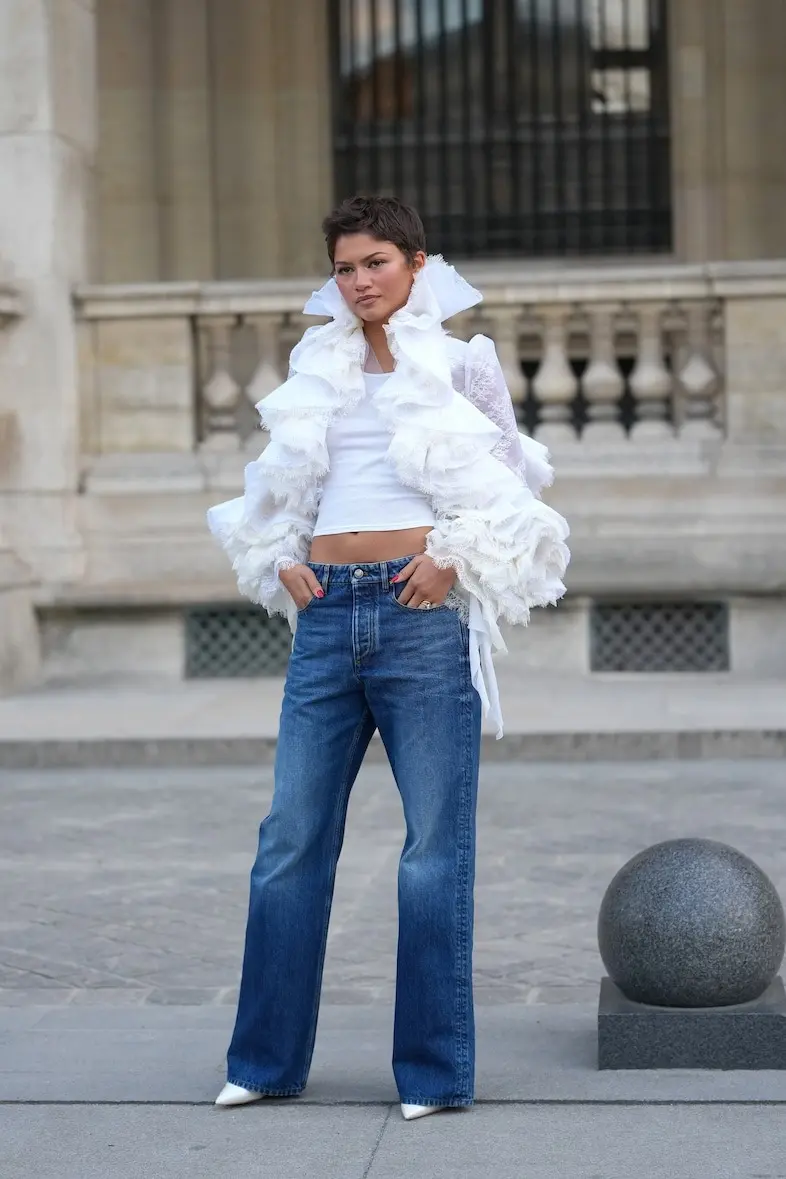
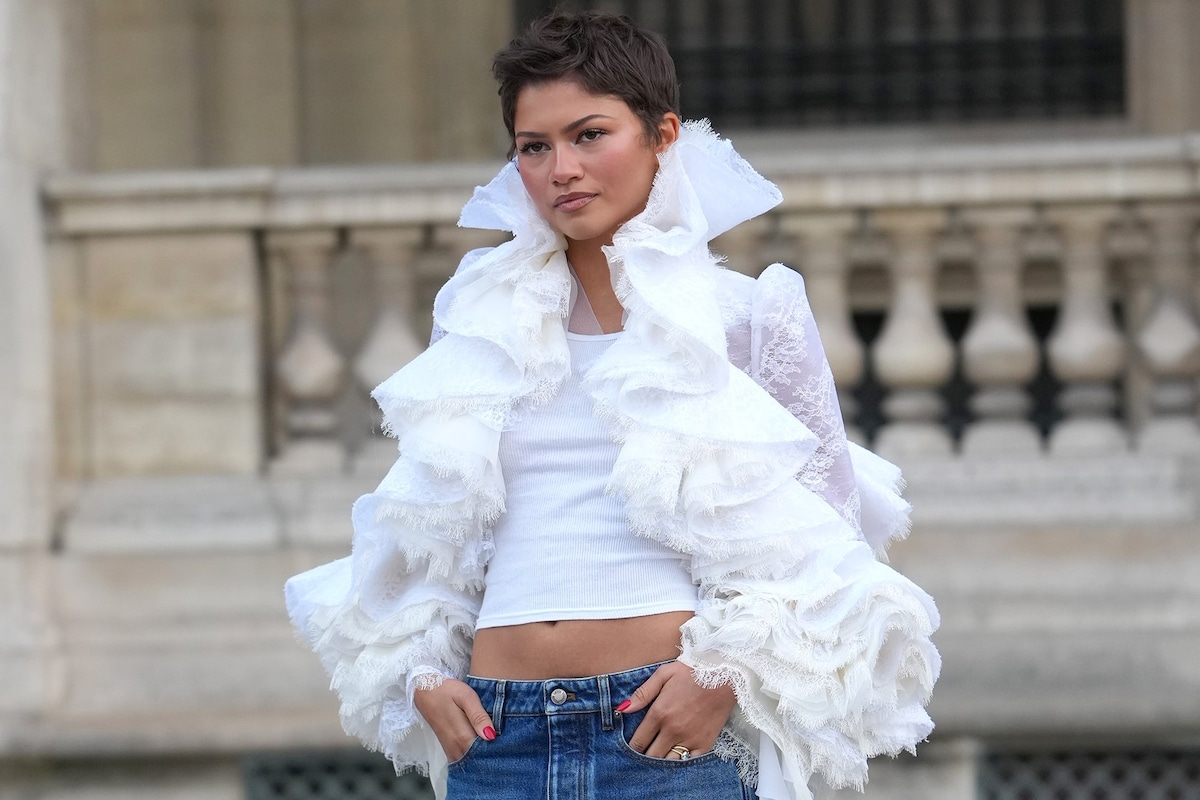
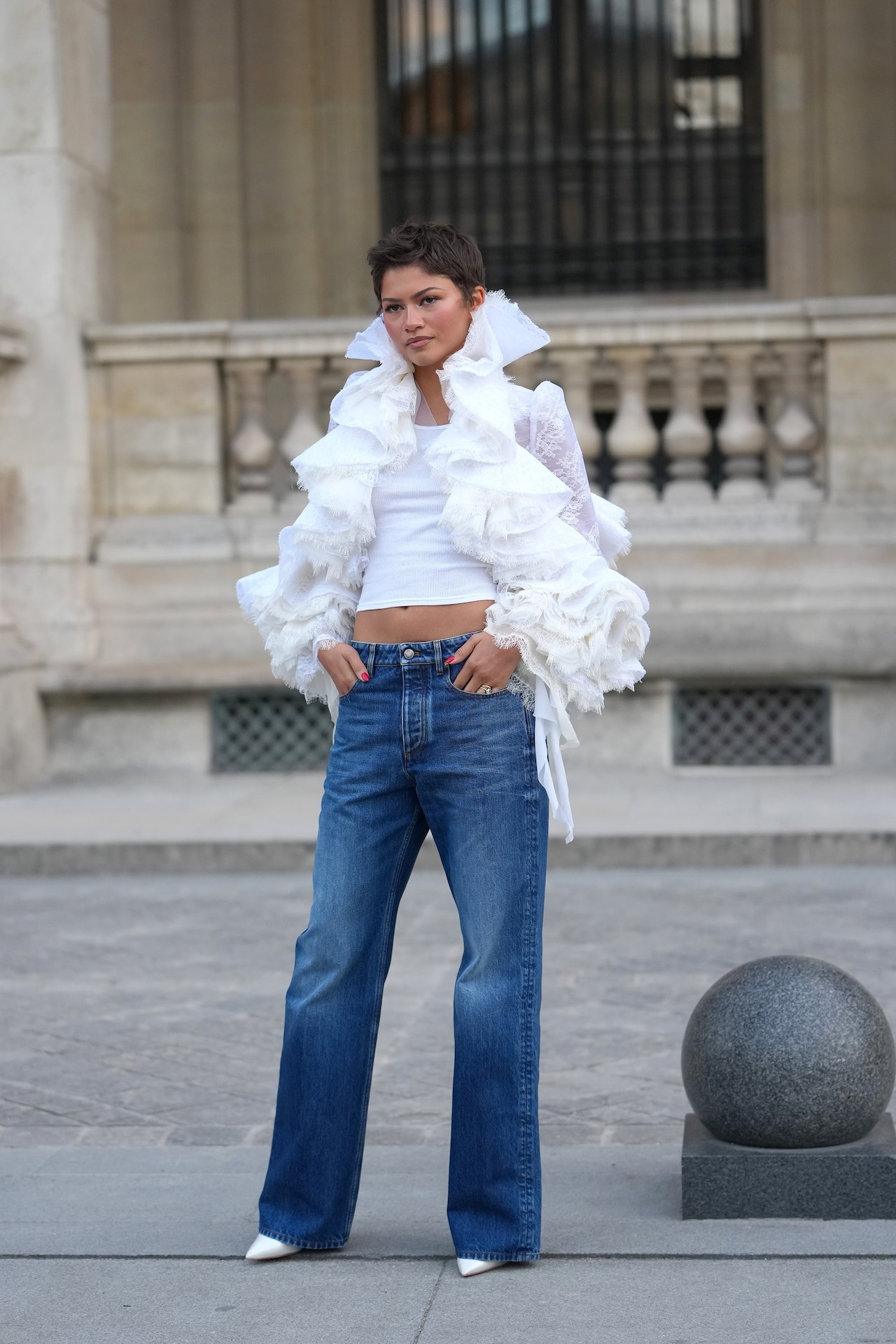
The event was a masterclass in modern luxury messaging, seamlessly uniting high-concept design, surrealist set architecture, and a front-row guest list dominated by global house ambassadors and cultural icons. Notable among them was actor and fashion icon Zendaya, who made headlines by resourcefully repurposing a bespoke white lace bolero jacket from her The Odyssey press tour—pairing it casually with classic blue denim and a white vest.
Beneath the celebrity spectacle, however, lay a profoundly technical design study. Ghesquière shifted away from the raw, craggy textures of previous outings, turning instead toward a softer, gossamer-light exploration of movement. Centered around the concept of "the ergonomic," the SS27 collection redefined luxury travel wear through the lens of human anatomy, advanced material science, and subtle retro-futurism. This comprehensive review examines the collection’s structural foundations, aesthetic dialogue, and cultural resonance as Paris Fashion Week drew to a definitive close.
Detailed Chronology: An Evening at the Cour Carrée
The Arrival and Redefining Sustainability in Celebrity Style
As twilight settled over the cobblestones of the Louvre’s Cour Carrée on October 6, the fashion world converged on what has become one of the most coveted invitations on the global calendar. The red carpet—or rather, the industrial runway-edge—was graced by a constellation of Louis Vuitton house ambassadors and global influencers, but it was Zendaya who captured the evening’s spirit of resourceful elegance.
Rather than commissioning an entirely fresh look destined to be archived after a single flashbulb-lit moment, Zendaya and her styling team opted for sartorial sustainability paired with high-impact contrast. She revived the intricate white lace bolero jacket—complete with its dramatic, Elizabethan-style folded ruff lapels—originally crafted by Ghesquière earlier in the summer for The Odyssey press tour. Grounding the ethereal, ornate outerwear with a casual foundation of classic blue jeans and a clean white vest, Zendaya demonstrated how contemporary luxury can embrace circularity without sacrificing theatricality.
Front-Row Power Dynamics: The Ambassadors Assemble
Zendaya was far from the only heavy-hitter commanding attention in the front row. Fellow house ambassador Emma Stone kept her look understated yet sharp, sporting a tailored cobalt blazer paired with matching shorts. Meanwhile, Saoirse Ronan turned heads with a daring beauty transformation, rocking blunt baby bangs alongside vibrant, color-blocked knitwear. K-pop powerhouse Lisa infused a touch of playful romanticism into the evening, wearing a voluminous, textured frou-frou top offset by a sleek leather mini-skirt.
The broader guest list spanned cinematic royalty and emerging generational icons. Adults star Owen Thiele made his highly anticipated Louis Vuitton front-row debut, while Sinners actress Wunmi Mosaku cut an imposing, elegant figure in a flowing camel cape. Actresses Sophie Turner and Sophie Thatcher reinforced their status as quintessential Ghesquière muses, and French cinematic icon Catherine Deneuve infused the proceedings with timeless Parisian class.
Adding an international pop-culture dimension, Yoonchae Jeung and Daniela Avanzini of the breakout girl group Katseye made their formal Louis Vuitton debuts. Following bandmates Lara Raj and Megan Skiendiel’s appearances at Loewe earlier in the weekend, Katseye’s strategic "divide and conquer" approach across major PFW shows highlighted the increasing synergy between luxury fashion houses and global pop phenomena.
The Runway: Ergonomics, Ethereal Motion, and Retro-Futurism
Softening the Silhouette: The Shift to Gossamer Textures
When the house lights dimmed and the first models stepped onto the runway, it became immediately clear that Ghesquière was steering the maison in a new stylistic direction. Where previous collections—most notably the heavy, raw, and earth-toned ready-to-wear outings of recent seasons—leaned into the ruggedness of the natural world with hulking silhouettes and craggy textures, SS27 introduced a gentler, more atmospheric vocabulary.
The show opened with a sequence of light, gossamer garments. Dresses, skirts, and fluid shirts drifted and fluttered effortlessly in the brisk Parisian breeze, setting a tone of weightlessness. This physical lightness was not merely aesthetic; it was structural. According to post-show press notes, the foundational principle of the collection was "the ergonomic"—a design philosophy fundamentally shaped by the conditions, capabilities, and movement of the human body. Ghesquière sought to liberate the wearer, engineering garments that moved in absolute synchronization with human anatomy rather than imposing rigid geometric constraints.
Navigating Tomorrow: Space-Age Subtleties and Retro-Futurism
True to Ghesquière’s signature design DNA, the collection gradually evolved to incorporate subtle, sophisticated nods to futurism and space-age tailoring. Sleek, aerodynamic suits and highly reflective, mirrored shades appeared alongside structural shift dresses inlaid with shimmering silver lamé foil.
Intriguing details emerged upon closer inspection: coats featuring elaborately ruffled, tentacle-like sleeves hinted at speculative biology and life beyond Earth, while pieces constructed from layered diamond-patterned fabrics and complemented by beaded fringe headpieces leaned into a refined, nostalgic retro-futurism. These elements successfully avoided gimmickry, instead grounding futuristic concepts in high-end atelier execution.
Supporting Context & Metrics: The Surrealist Set Design
The Highway of the Future: Architecture Meets Concept Art
The garments themselves were elevated by an immersive, conceptual set that transformed the historic Cour Carrée into a surrealist highway. Models navigated a specially constructed runway designed to mimic a futuristic transit route.
Suspended at varying heights on gleaming metal stilts across the venue were the geometric shapes of Damier Check hovercars—a futuristic reimagining of the house’s iconic motif. The juxtaposition of classical French Renaissance architecture with floating concept vehicles provided a jarring yet poetic visual metaphor.
| Set Element | Design Inspiration | Thematic Purpose |
|---|---|---|
| The Runway | Modern transit infrastructure / Highways | Evoking motion, travel, and forward momentum. |
| Hovercars | Louis Vuitton’s iconic Damier Check | Merging heritage branding with speculative technology. |
| Metal Stilts | Industrial architecture | Creating a multi-level, surreal spatial experience. |
Official Statements and Industry Reception
In its official post-show communication, the fashion house encapsulated the dual nature of the presentation:
"Louis Vuitton imagines a surreal runway punctuated by suspended concept cars — an invitation to consider travel beyond the paths already taken. At the crossroads of classical architecture and an imagined future, [the set] offers a surreal evocation of Louis Vuitton’s Art of Travel."
Industry critics were quick to praise Ghesquière’s ability to balance commercial wearability with avant-garde conceptualism. By shifting the maison’s focus toward ergonomic design—garments engineered for physical ease without sacrificing architectural integrity—Louis Vuitton has positioned itself at the vanguard of post-pandemic luxury desires, where comfort and high design are no longer mutually exclusive.
Future Outlook: The Trajectory of Louis Vuitton Ready-to-Wear
As Paris Fashion Week 2026 closes its doors, the industry is left evaluating the long-term implications of Ghesquière’s SS27 vision. The collection signals a broader pivot across luxury houses toward human-centric functionality—garments that prioritize biological movement, breathable textiles, and adaptable styling (as demonstrated by Zendaya’s archival remix).
Furthermore, the strategic deployment of a diverse, cross-generational roster of brand ambassadors—spanning Hollywood prestige, French cinema, K-pop idols, and emerging pop groups like Katseye—proves that Louis Vuitton continues to master the art of cultural omnipresence. As these designs transition from the runway to international red carpets and high-end retail floors, the SS27 collection establishes a high-water mark for how heritage luxury brands can successfully dialogue with an uncertain, rapidly evolving future.