Executive Overview
Horse racing has long been recognized as one of the most perilous professional sports in existence. Operating at the intersection of extreme speed, colossal biological power, and uncompromising athletic competition, the sport places extraordinary demands on its dual athletes: the thoroughbred horse and the human jockey. Piloting a half-ton animal across a dirt or turf oval at speeds approaching 40 miles per hour leaves an infinitesimally small margin for error. In this high-stakes environment, a momentary lapse in focus, a biomechanical failure, or an undetected physical ailment can result in catastrophic consequences for both horse and rider.
For decades, the traditional approach to managing these risks relied heavily on visual inspections, empirical experience, and post-injury intervention. However, a profound cultural and technological evolution is currently underway within the industry. Propelled by breakthroughs in wearable biometric technology, advanced sports medicine, and rigorous biomechanical analysis, stakeholders across the racing ecosystem are shifting from a reactive safety model to a proactive, data-driven paradigm.
Today, microscopic sensors track equine stride mechanics in real time, while sophisticated physiological monitoring evaluates jockey fatigue and physical symmetry. By identifying risks before they manifest as catastrophic injuries, these innovations are redefining what it means to protect the ultimate athletes of the turf. This report examines the intersection of technology, veterinary science, and human kinesiology driving this safety revolution, drawing on insights from elite practitioners, academic researchers, and professional jockeys on the front lines of the sport.
Detailed Chronology: A Morning at Belmont Park
To understand the mechanics of modern racehorse conditioning and the integration of cutting-edge safety protocols, one must observe the daily rhythm of the stable area before dawn breaks. At Belmont Park—one of the crown jewels of American thoroughbred racing—the morning mist still clings to the vast expanse of the training tracks as exercise riders and jockeys put million-dollar athletes through their paces.
[04:30 AM] Stable Arrival & Initial Veterinary Screenings
       │
       ▼
[05:15 AM] Application of Wearable Biometric Sensors (Equine & Human)
       │
       ▼
[06:00 AM] Track Workout: High-Speed Gallop (~40 MPH)
       │
       ▼
[07:30 AM] Post-Workout Biometric Data Offload & Analysis
       │
       ▼
[09:00 AM] Multi-Disciplinary Consultation (Vets, Researchers, Jockeys)
The Early Morning Protocol
The morning routine at Belmont begins long before the first horse steps onto the racing surface. Veterinarians, trainers, and exercise physiologists assemble under the dim lights of the stable barns.
- 04:30 AM: Initial visual and manual assessments begin. Vets check for heat in the legs, assess gait fluidity during a short hand-walk, and review resting vital signs.
- 05:15 AM: Modern preparation diverges from historical traditions here. Selected horses are fitted with lightweight, non-invasive wearable sensors—often integrated into traditional girth straps or specialized leg wraps—designed to measure impact forces, stride frequency, and symmetry. Simultaneously, participating jockeys don smart-textile vests that monitor core body temperature, heart rate variability, and postural stability.
- 06:00 AM: The horses take to the track for their morning gallops and breezes. At full extension, sweeping down the stretch at nearly 40 miles per hour, the biometric units transmit continuous streams of telemetry data to trackside monitoring stations and cloud-based analytics platforms.
- 07:30 AM: Following the workout, horses return to the cool-down stalls. The gathered data is immediately offloaded, allowing practitioners to flag any micro-anomalies—such as a slight asymmetry in stride duration or an unexpected spike in heart recovery rates—that would be entirely invisible to the naked human eye.
- 09:00 AM: A multi-disciplinary debriefing takes place. Medical professionals, equine veterinarians, and academic researchers cross-reference the morning’s telemetry with qualitative feedback from the riders. This collaborative feedback loop forms the bedrock of contemporary risk mitigation.
Supporting Context & Metrics: The Biomechanics of Risk
To fully grasp why technological intervention is so vital to modern racing, one must examine the physiological realities governing both the thoroughbred and the jockey.
The Equine Athlete Under Stress
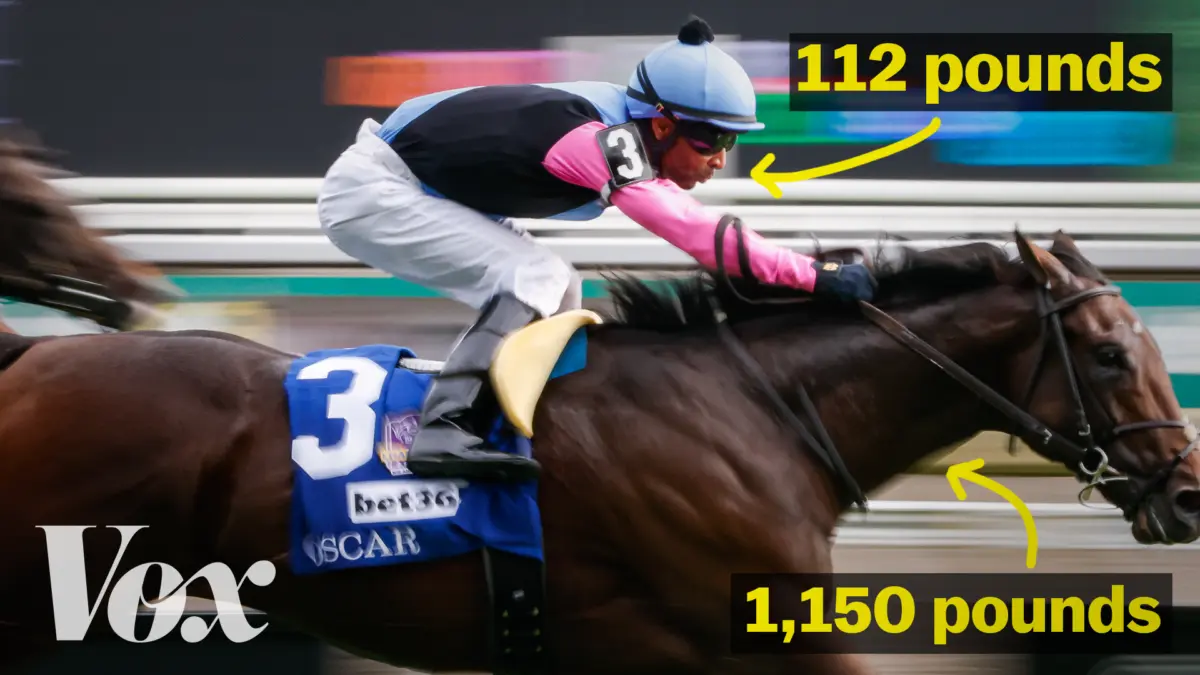
A thoroughbred racehorse is an engineering marvel of selective breeding, capable of generating immense power through relatively slender lower limbs. At a full gallop, the forces exerted on a horse’s lead leg can exceed several times the animal’s body weight.
- Load Dynamics: A 1,000-pound horse traveling at 40 mph concentrates immense kinetic energy through its hooves upon every strike of the track surface.
- The Fatigue Factor: When a horse begins to tire, its neuromuscular coordination degrades. If a rider lacks the physical conditioning or technical equilibrium to balance their weight effectively over the horse’s center of gravity, it exacerbates the animal’s fatigue. This compounding stress can lead to micro-fractures in the bone, which, if undetected, can propagate into catastrophic breakdowns.
The Jockey as an Elite Tactician and Athlete
Public perception has occasionally mischaracterized jockeys as mere passengers. In reality, they are elite endurance and power athletes who must maintain near-isometric contractions for the duration of a race while managing a forward-crouched, aerodynamic posture known as the "bridge."
- Reflex Requirements: A jockey must possess lightning-quick reflexes to navigate chaotic traffic on the track, where multiple horses and riders are moving at high speeds in close quarters.
- Weight Management: The rigorous demands of maintaining strict riding weights often place jockeys under chronic nutritional and physiological stress. Without targeted sports science and physical therapy, this stress leads to muscular imbalances, slower reaction times, and increased vulnerability to falls and subsequent trauma.
Official Statements & Expert Perspectives
Gaining insight into this evolving landscape requires listening directly to the specialists who dedicate their careers to safeguarding equine and human athletes. During our investigation at Belmont Park, key leaders in veterinary medicine and sports science shared their perspectives on how technology is bridging historical gaps in safety.
Dr. Sara Langsam: Equine Perspective
Dr. Sara Langsam, a prominent equine veterinarian and chair of the American Association of Equine Practitioners (AAEP) Racing Committee, emphasizes that the primary goal of modern veterinary medicine is early detection before clinical signs become irreversible.
"For years, our diagnostic capabilities were limited to what we could see with the naked eye or feel with our hands during a physical examination," Dr. Langsam explains. "By the time a horse showed a visible, head-bobbing lameness, the pathological process within the bone or soft tissue was often advanced. Today, wearable technology and advanced imaging allow us to intercept injuries at the microscopic level—long before the horse feels pain or the risk becomes catastrophic."
Dr. Langsam points out that these tools do not replace traditional horsemanship; rather, they amplify it.
"Good horsemen have an intuitive feel for their animals. What wearable sensors and objective biomechanical data do is validate that intuition and provide a quantitative baseline. It gives us a common language shared by trainers, vets, and track safety officials."
Michaela Keener: Human Kinesiology and Jockey Health
Shifting the focus to the human side of the equation, Michaela Keener, a jockey health researcher at the University of Kentucky, highlights the historical oversight regarding rider wellness. For generations, jockeys were treated as independent contractors largely responsible for their own conditioning and rehabilitation.
"We are finally recognizing that a jockey is an industrial athlete operating in an extreme occupational environment," says Keener. "If a rider is dealing with undetected fatigue, asymmetrical muscle development from years of riding in a specific direction, or sub-concussive neurological strain, their ability to pilot a 1,000-pound animal safely is compromised."
Keener’s research utilizes wearable inertial measurement units (IMUs) and force-plate testing to evaluate jockey biomechanics.
"When we monitor a jockey’s posture and stability in real time, we can design targeted physical therapy and conditioning programs. A stronger, more balanced rider reduces the physical burden on the horse, creating a symbiotic safety loop where protecting the jockey inherently protects the horse."
ReyLu Gutiérrez: The Professional Rider’s Viewpoint
With over 6,000 career starts under his belt, veteran jockey ReyLu Gutiérrez offers a firsthand account of how the culture around safety and fitness has transformed during his time in the saddle.
"When I started out, staying fit meant running a few miles, sweating in a hot box to make weight, and just riding as many horses as you could," Gutiérrez reflects. "Today, it’s completely different. We work with physical therapists, look at data on our mobility and core strength, and pay attention to how our bodies recover. We realize that our longevity in the sport—and our safety on the track—depends on treating ourselves like professional athletes in any other major sport."
Gutiérrez notes that technology has also altered how riders approach race strategy and physical preservation.
"When you’re out there at forty miles an hour, fractions of a second matter. Knowing that the horse underneath you has been cleared by objective diagnostic tools gives you peace of mind, and knowing that your own body is trained to handle the G-forces makes you a sharper, safer competitor."
Future Outlook: The Next Horizon in Racing Safety
As artificial intelligence, machine learning, and sensor miniaturization continue to advance at a rapid pace, the future of horse racing safety points toward total integration and predictive modeling.
Predictive Analytics and Artificial Intelligence
The massive influx of telemetry data generated by wearable devices is currently paving the way for predictive AI models. By aggregating historical data from thousands of workouts and races across multiple jurisdictions, algorithms will soon be able to forecast the exact probability of an injury based on subtle deviations in stride kinematics or physiological strain markers. This capability will empower regulatory bodies and track veterinarians to issue mandatory rest periods or diagnostic check-ups before an injury ever occurs.
Advanced Track Surface Diagnostics
Beyond biological wearables, the racing surfaces themselves are becoming "smart." Research initiatives are exploring the integration of subsurface sensors beneath racing strips to measure moisture levels, cushion consistency, and impact absorption in real time. Because environmental factors heavily influence equine biomechanics, correlating track condition data with wearable telemetry will provide an unprecedented, holistic view of safety variables.
Comprehensive Wellness Ecosystems
The artificial divide between equine veterinary care and human sports science is rapidly dissolving. State-of-the-art training facilities are increasingly housing multi-disciplinary teams—comprising equine orthopedic specialists, human physical therapists, biomechanists, and data scientists—under one roof. This collaborative model ensures that every variable influencing the safety of the race is addressed comprehensively.
Conclusion
Horse racing will inherently retain an element of risk; the fusion of supreme velocity, athletic competition, and powerful biological animals ensures that absolute elimination of danger is impossible. However, the convergence of wearable technology, advanced sports medicine, and a progressive cultural shift toward proactive care is fundamentally transforming the sport.
By listening closely to the data emitted by equine strides and human telemetry—and by honoring the insights of dedicated professionals like Dr. Sara Langsam, Michaela Keener, and elite riders like ReyLu Gutiérrez—the industry is proving that tradition and innovation can gallop hand in hand toward a safer, more sustainable future.